Results for “river”
Type a name: scientific, common, or one a species used to go by. Or narrow the catalogue with the filters.
Filters
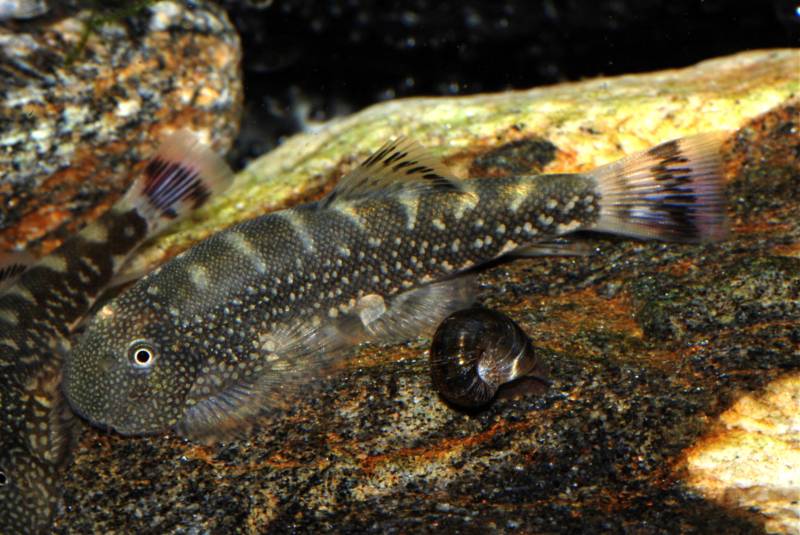
Gastromyzon farragus
Tan & Leh, 2006
Max length40mm SL1.6in SLTank60 × 30cm24 × 12inTemp20–24°C68–75°FpH6.0–7.5In fact G. farragus and G. ocellatus represent one of 12 pairs of cryptospecies to be found in the genus, differing in subtle aspects of patterning. Cryptospecies are defined as morphologically similar, but reproductively isolated species which in fishes often inhabit adjacent river basins but in some cases occur sympatrically. The phenomenon may be a result of parallel evolution, and is not normally considered to represent an early stage of speciation.
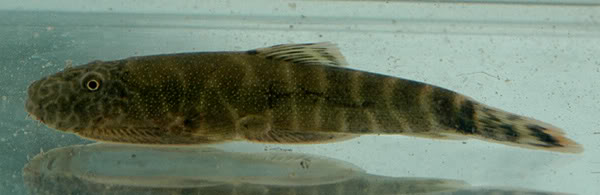
Gastromyzon introrsus
Tan, 2006
Max length95mm SL3.7in SLTank120 × 30cm48 × 12inTemp20–24°C68–75°FpH6.0–8.0The type locality was a fast-flowing, shallow (50 - 80 cm deep) river between 5-10 metres in width with a substrate of gravel and large rocks. PH was measured at 7.7 and the habitat was unshaded with on...
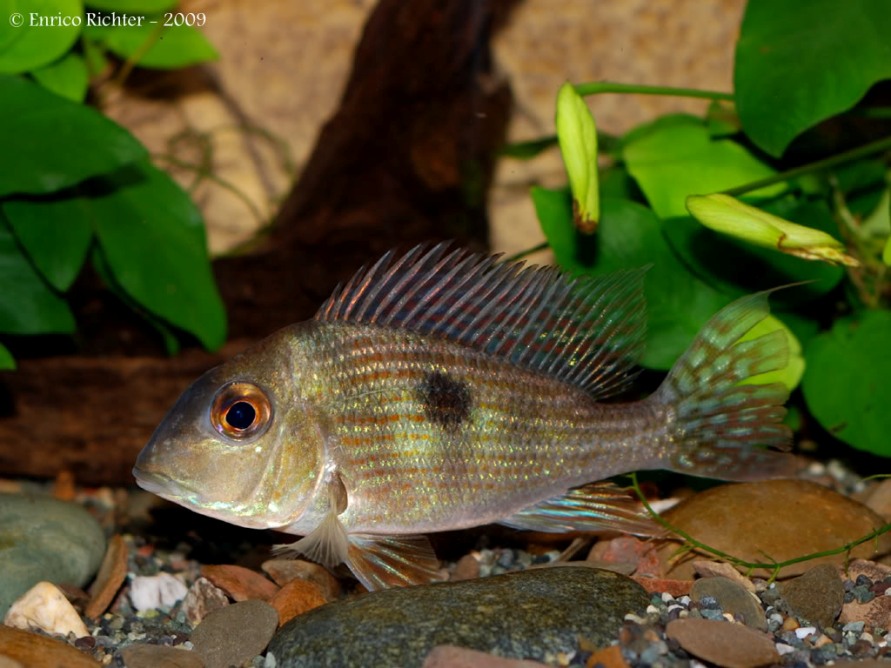
Geophagus sp. 'Pindaré'
authority not recorded
Max length150mm SL6in SLTank150 × 45cm60 × 18inTemp26–29°C79–84°FpH6.0–7.0Known only from the rio Pindaré in Maranhão state, north-eastern Brazil which drains into the Baía de São Marcos (St. Mark's Bay) along with the rios Mearim, of which it is sometimes considered a tributary, and Grajaú. Some sections of the Pindaré have been heavily degraded via removal of riparian vegetation for agriculture and habitats destroyed due to resultant siltation. The river is poorly-studied and the conservation status of its fishes mostly unconfirmed so su...
Gobioides broussonnetiiViolet Goby
authority not recorded
Max length625mm SL25in SLTank120 × 60cm48 × 24inTemp22–26°C72–79°FpH7.5–9.0This fish is also commonly sold as the dragon or Peruvian goby, or dragon fish, and its bizarre appearance has made it popular in the trade. This is unfortunate, as not only does it grow very large, but it has specialised feeding requirements and does not survive for very long in freshwater. When provided with the correct conditions, however, it makes a unique and fascinating captive subject. There is a smaller species in the genus, G. peruanus, that does survive in freshwater, being a riverine ...
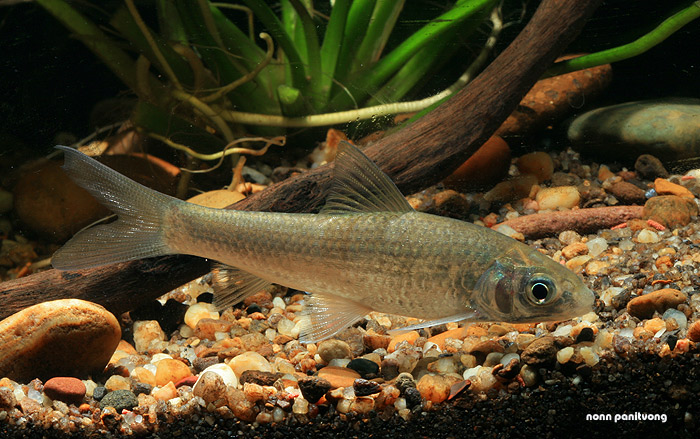
Gymnostomus lineatus
Smith, 1945
Max length150mm SL6in SLTanknot recordedTempnot recordedpHnot recordedRecorded from the middle to lower Mekong river basin in southern China (Yiunnan province), Laos, Thailand, and Cambodia, plus the Chao Phraya watershed in central Thailand. Type locality is 'Thailand: Lam Ton Lang, a tributary of Menam Sak [Mae Nam Pa Sak; Ban Lam Thong Lang, village northwest of Pakjong'.
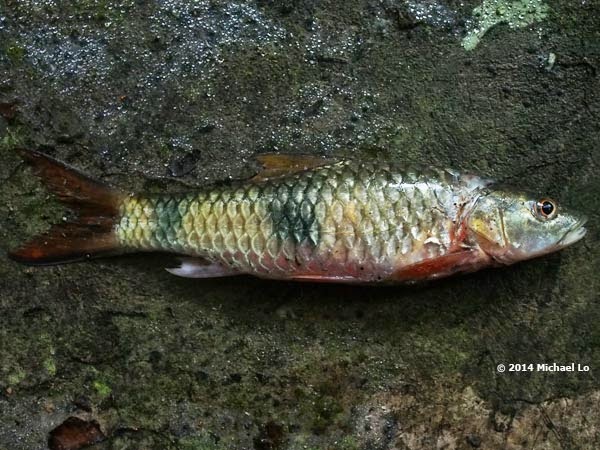
Hampala bimaculata
Popta, 1905
Max length500mm SL20in SLTanknot recordedTempnot recordedpHnot recordedPredominantly a riverine fish preferring clear, well-oxygenated, running waters with substrates of sand, gravel, rock or mud, typically flowing through tropical forest. In the habitat seen in our images sympatric fish species included Barbonymus balleroides, B. collingwoodi, Cyclocheilichthys repasson, C. apogon, Diplocheilichthys pleurotaenia, Garra borneensis, Leptobarbus hosii, and an unidentified Gastromyzon sp.
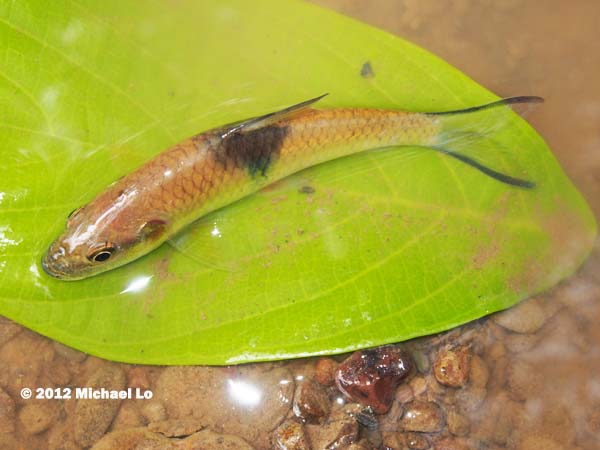
Hampala sabana
Inger & Chin, 1962
Max length410mm SL16in SLTanknot recordedTempnot recordedpHnot recordedPredominantly a riverine fish preferring clear, well-oxygenated, running waters with substrates of sand, gravel, rock or mud, and apparently displays a preference for deeper, slower-moving stretches. In Sabah such habitats typically flow through tropical forest, although in recent years freshwater habitats throughout much of the state have been extensively modified by human activity such as conversion to palm or rubber plantations.
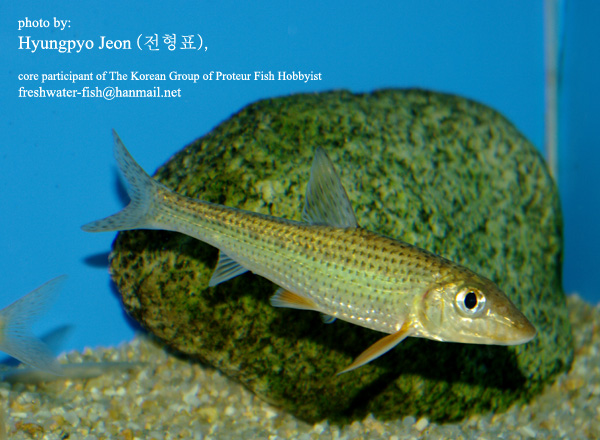
Hemibarbus longirostris
Regan, 1908
Max length250mm SL10in SLTanknot recordedTempnot recordedpHnot recordedA predominantly riverine fish preferring clear, well-oxygenated, running waters with substrates of sand, gravel, rock or mud, where adults tend to form schools just above the substrate in slower-moving sections.
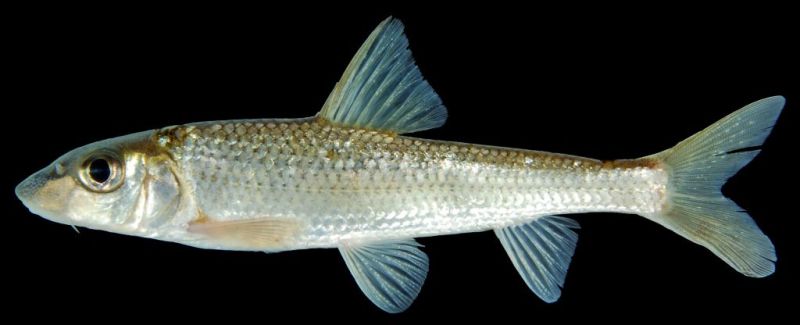
Hemibarbus maculatusSpotted Steed
Bleeker, 1871
Max length400mm SL16in SLTanknot recordedTempnot recordedpHnot recordedWidepread in eastern Asia between the Yangtze and Amur river basins, including China (mainland and islands of Taiwan and Hainan), Korea, Mongolia, Russia, and Japan. It probably been introduced to Vietnam and Laos, or records from these countries represent another species.
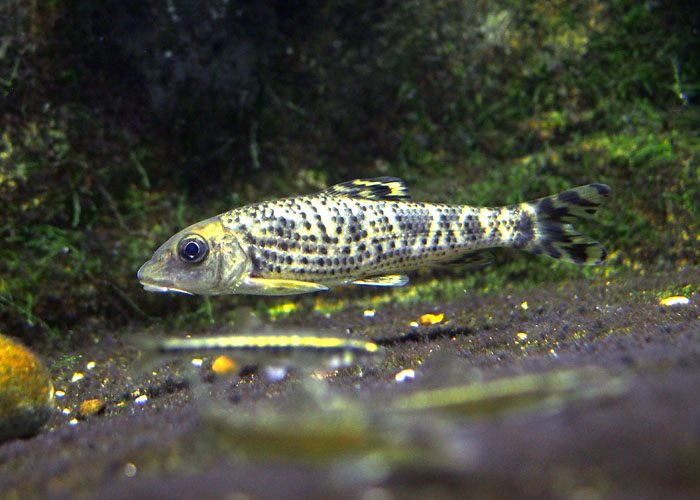
Hemibarbus mylodon
Berg, 1907
Max length350mm SL14in SLTanknot recordedTempnot recordedpHnot recordedEndemic to the Korean peninsula where it occurs throughout North Korea and South Korea. Type locality is 'Keumsan River, near Pusan, South Korea.'
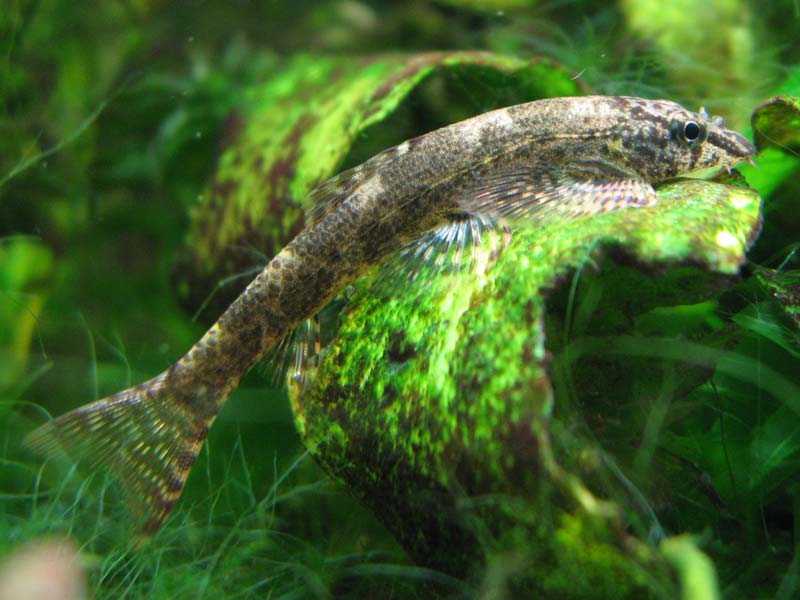
Homalopteroides smithi
Hora, 1932
Max length60mm SL2.4in SLTank60 × 30cm24 × 12inTemp20–25.5°C68–78°FpH6.0–7.5Described from close to the village of Ban Khiri Wong, Nakhon Si Thammarat Province, southern (peninsular) Thailand but since recorded throughout much of the country, including the Chao Phraya and Mekong river systems. It's also known from Peninsular Malaysia and parts of the Mekong basin in Laos, Cambodia and Vietnam. Rainboth (1996) considered it 'probably the commonest member of the genus in the Mekong' and in a 2008 study of balitorid habitats in centra...
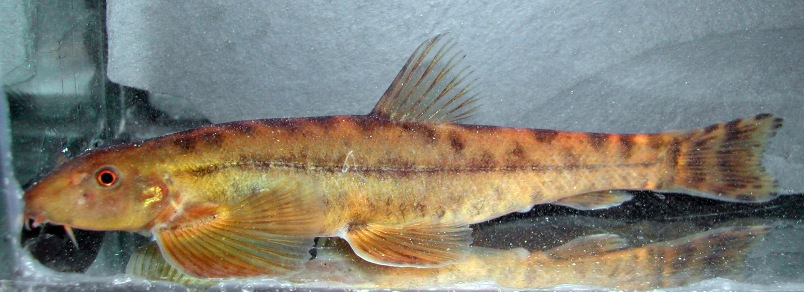
Homalopterula gymnogaster
Bleeker, 1853
Max length65mm SL2.6in SLTank80 × 30cm31 × 12inTemp20–27°C68–81°FpH6.0–7.5Type locality is given as 'Lake Meninju, Sumatra, Indonesia', currently known as Danau (lake) Maninjau, but conceivably the fish may have been obtained from the outflowing Antokan river rather on its western side than the lake itself.
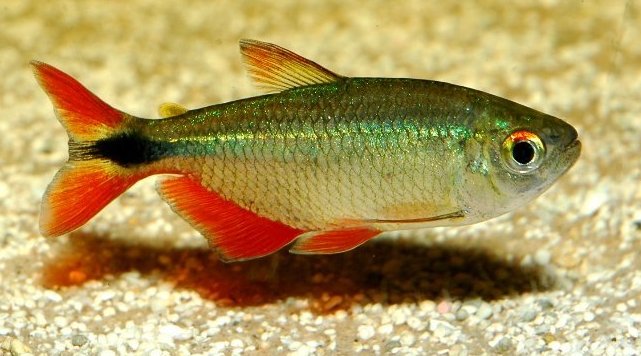
Hyphessobrycon anisitsiBuenos Aires Tetra
Eigenmann, 1907
Max length60mm SL2.4in SLTank90 × 30cm36 × 12inTemp16–28°C61–82°FpH5.5–8.5Widely-distributed throughout much of the Paraná and Uruguay river systems in Brazil, Paraguay, Argentina and Uruguay. Some records from Buenos Aires province, Argentina are now considered to refer to the congener H. togoi (Miquelarena and López, 2006) so the common vernacular name 'Buenos Aires tetra' may not...
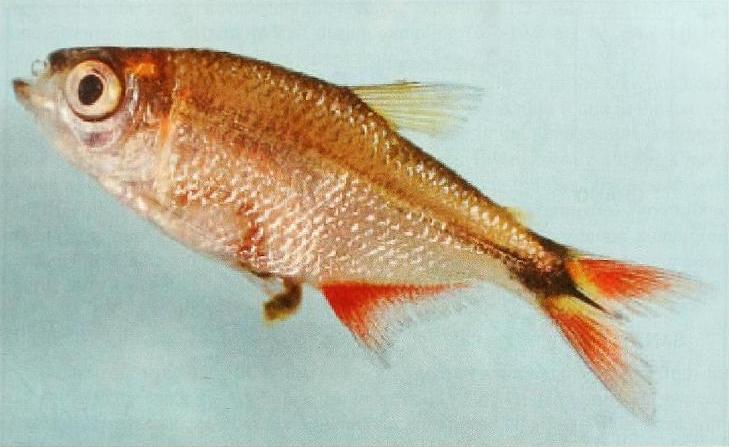
Hyphessobrycon auca
Almirón, Casciotta, Bechara & Ruíz Díaz, 2004
Max length55mm SL2.2in SLTanknot recordedTempnot recordedpHnot recordedThe two ponds where H. auca was collected were located on a sand bar deposited by the nearby Paraná river during the Pleistocene. At time of collection the substrates were composed of sand with submerged vegetation dominated by Egeria najas plus floating Eichhornia in marginal areas.
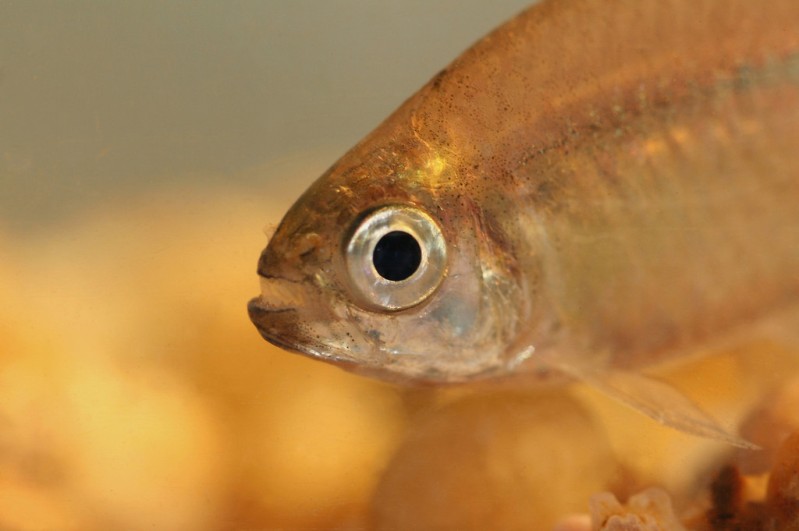
Hyphessobrycon balbus
Myers, 1927
Max length50mm SL2.0in SLTanknot recordedTempnot recordedpHnot recordedKnown only from headwaters of the upper Paraná river basin in the Federal District plus the neighbouring state of Goiás, central Brazil. Type locality is 'Planaltina, Lagoa Fervedeira, Goiás, Brazil' with additional records existing mostly from the rio São Bartolomeu including the Bananal, Santa Maria-Torto and Gama tributary systems.
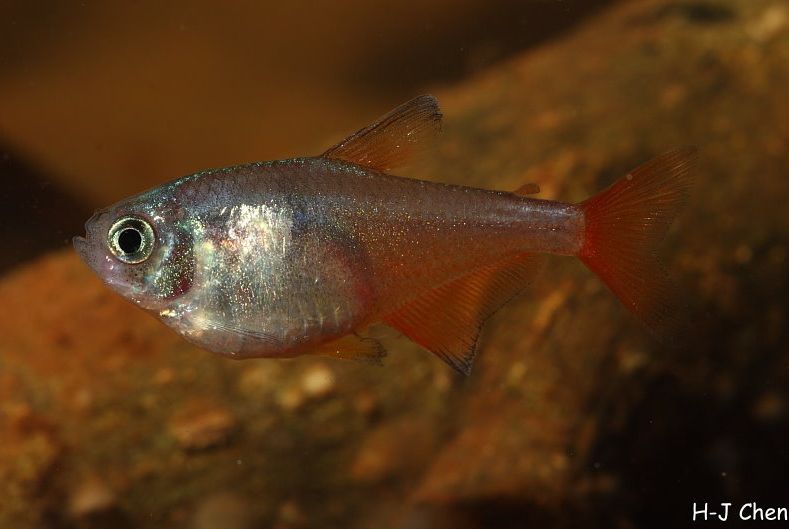
Hyphessobrycon flammeusFlame Tetra
Myers, 1924
Max length25mm SL1.0in SLTank60 × 30cm24 × 12inTemp20–26°C68–79°FpH5.5–7.5Its native rivers flow through one of the most densely-populated and industrialised parts of Brazil, and have suffered greatly from dam construction, water abstraction, pollution, introduced species (including over 40 exotic freshwater fishes in the rio Paraíba do Sul alone), and other forms of anthropogenic degradation. H. flammeus is now uncommon or even extinct across much of its putative natural range, and in Rio de Janeiro state only a handful of highly-fragmented populations remain at best, with the mo...
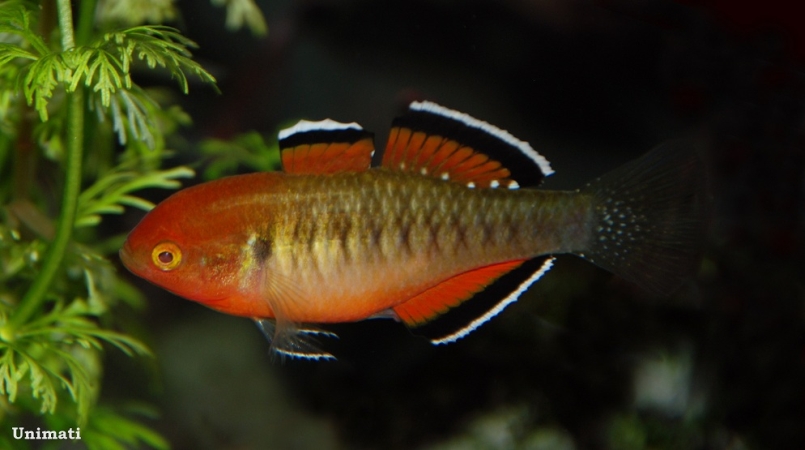
Hypseleotris compressaEmpire Gudgeon
Krefft, 1864
Max length120mm SL5in SLTank80 × 30cm31 × 12inTemp20–35°C68–95°FpH5.0–9.1Occurs in northern and eastern Australia and southern New Guinea. In the former its range extends from the Pilbara and Kimberley regions of Western Australia state around the northern and eastern coastlines of the continent as far as the Towamba river system in New South Wales state.
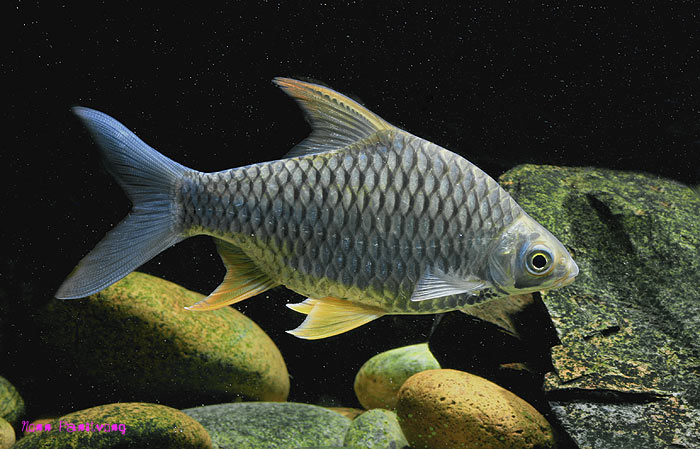
Hypsibarbus lagleri
Rainboth, 1996
Max length350mm SL14in SLTank240 × 60cm96 × 24inTemp20–26°C68–79°FpH6.0–8.0This species is migratory on a seasonal basis; during the dry season it can be found in larger river channels, whereas during drier months it moves into smaller tributaries and flooded forests. Apparently displays a preference for rocky habitats and is not known to adapt to reservoirs or other artificial impoundments.
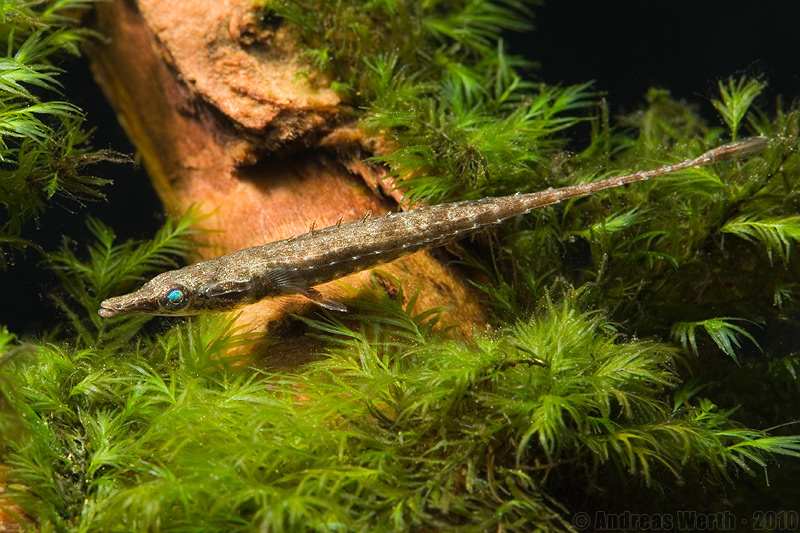
Indostomus crocodilus
Britz & Kottelat, 1999
Max length30mm SL1.2in SLTank40 × 20cm16 × 8inTemp22–27°C72–81°FpH5.0–7.0The type series was collected from a blackwater stream in Toh Daeng Peat swamp forest with the fish found in slow-moving or standing habitats among submerged shoreline roots and leaf litter. In the Tapi River floodplain it was collected from stagnant waters, one of which was an oxbow lake approximately 200 m long and 30 m across at its widest point, surrounded by 'freshwater scrub and swamp trees'. The substrate was composed of mud, woody structures including fallen twigs and branches, and decomposing plant material.
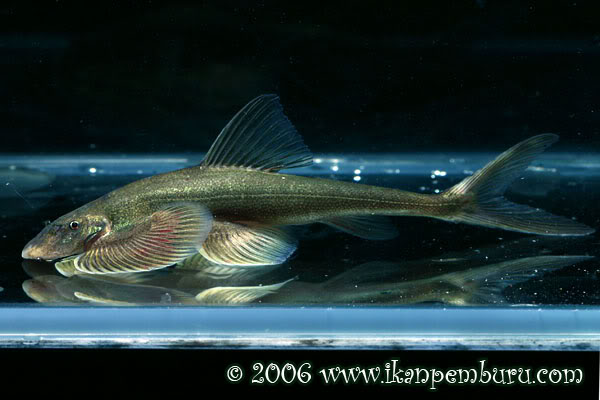
Jinshaia sinensis
Sauvage & Dabry de Thiersant, 1874
Max length75mm SL3.0in SLTank90 × 30cm36 × 12inTemp20–24°C68–75°FpH6.0–7.5This species may not yet have been seen in the aquarium trade outside its native country but has been maintained by a few private collectors. There are currently three species recognised in the genus, all endemic to the Yangtze river drainage, and they're separated from other balitorids by a combination of characters including: relatively long, deeply-forked caudal-fin; roun...