Results for “sp.”
Type a name: scientific, common, or one a species used to go by. Or narrow the catalogue with the filters.
Filters
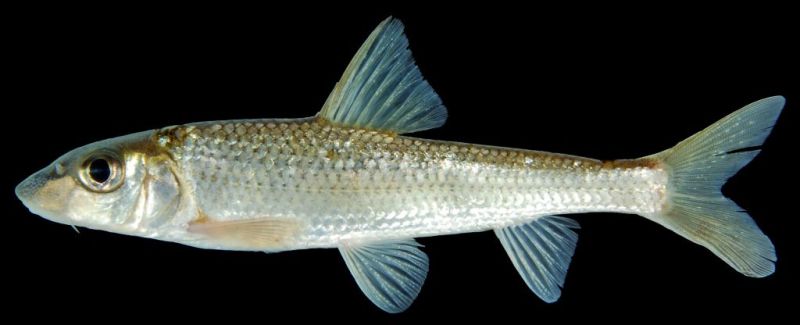
Hemibarbus maculatusSpotted Steed
Bleeker, 1871
Matched on the common name Spotted Steed
Max length400mm SL16in SLTanknot recordedTempnot recordedpHnot recordedWidepread in eastern Asia between the Yangtze and Amur river basins, including China (mainland and islands of Taiwan and Hainan), Korea, Mongolia, Russia, and Japan. It probably been introduced to Vietnam and Laos, or records from these countries represent another species.
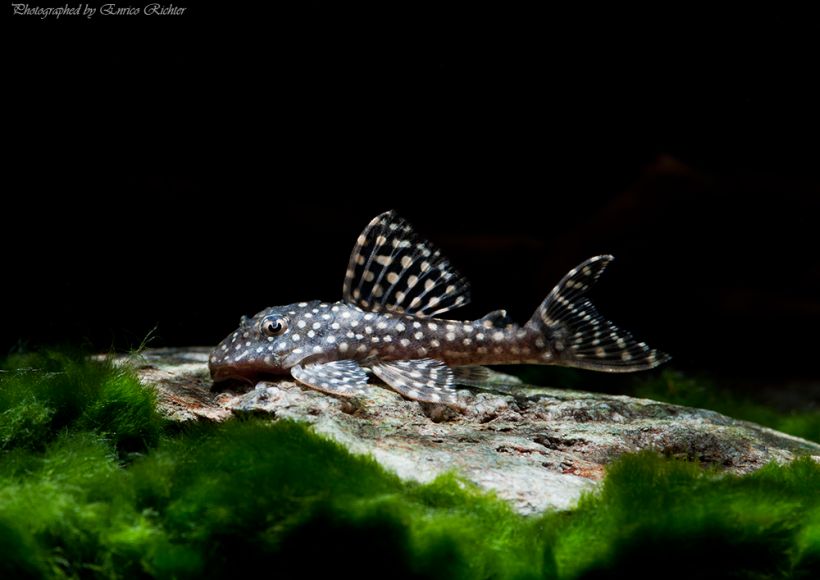
Hypancistrus sp.L136
authority not recorded
Max length90mm SL3.5in SLTank90 × 30cm36 × 12inTemp23–29°C73–84°FpH5.0–7.0L136 and its variants are collected in the rio Negro basin, Amazonas state, Brazil, and in particular the rio Demini, a northern tributary flowing into the central Negro in the municipality of Barcelos. Collection details for LDA05 and LDA06 are currently unclear but presumably in the vicinity. This unidentified 'species' is highly variable in terms of colour pattern, and it has been assigned a ser...
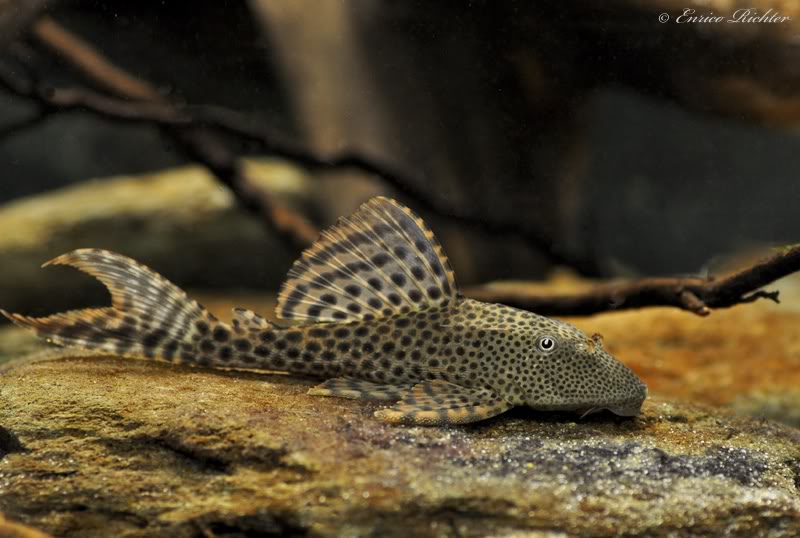
Hypostomus sp.L231
authority not recorded
Max length300mm SL12in SLTank180 × 60cm72 × 24inTemp22–28°C72–82°FpH6.0–7.5Supposedly exported from the upper Amazon region in Peru but precise details are lacking. It's unclear whether this unidentified species is conspecific with the similarly nameless congener L266 or not.
Lamprologus speciosus
authority not recorded
Max length65mm SL2.6in SLTanknot recordedTemp23–27°C73–81°FpH7.5–9.0This species is very similar to L. ocellatus and often carries the trade name "black ocellatus". It is found living alongside L. stappersi in nature....
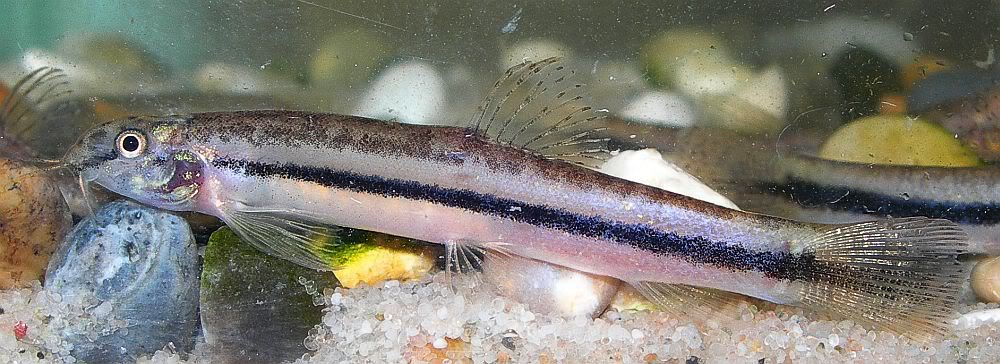
Lepidocephalichthys sp. 'LE2'
authority not recorded
Max length60mm SL2.4in SLTank45 × 30cm18 × 12inTemp26°C79°FpH6.0–7.5This fish may only have been exported for aquaria on a single occasion to date. It exhibits characters reminiscent of both L. alkaia and L. guntea, and has been referred to as L. cf. guntea) but is most likely an undescribed species (Havird, pers. comm.).
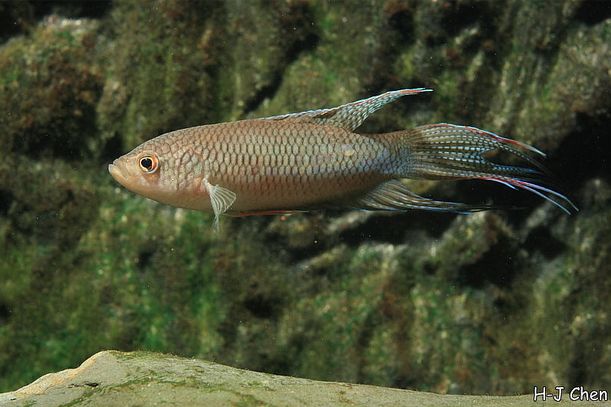
Macropodus erythropterus
Freyhof & Herder, 2002
Max length80mm SL3.1in SLTank80 × 30cm31 × 12inTemp20–30°C68–86°FpH6.0–8.0This species is frequently mistaken for the similar-looking congener M. spechti Schreitmüller 1936, which is easily-identified by the absence of reddish pigmentation in the dorsal, anal, and caudal fins. There has been some debate as to whether these two represent the same taxon, however, with Winstanley and Clements (2008) proposing that M. erythropterus be considered a synonym of M. spechti because they were unable to separate the two species by morphological characters, and specimens with red pigmentation on the unpaired fins were coll...
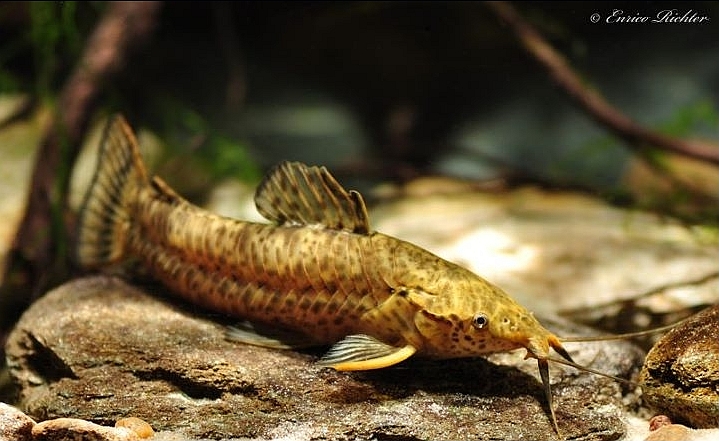
Megalechis pictaBar-tailed Hoplo
Müller & Troschel, 1849
Max length120mm SL5in SLTank120 × 45cm48 × 18inTemp18–28°C64–82°FpH5.0–7.5This species was previously referred to as M. thoracata, but that name is now applied to the species with a relatively short dorsal-fin spine which was formerly known as M. personata. M. picta can be told apart from M. thoracata by presence of a dark vertical bar in the caudal-fin, a comparatively longer dorsal-fin spine (52.0-64.0% vs. 32.0-48.0% of dorsal-fin base in specimens measur...
Mystus bimaculatusTwo Spot Mystus
authority not recorded
Matched on the common name Two Spot Mystus
Max length65mm SL2.6in SLTank45 × 30cm18 × 12inTemp23–30°C73–86°FpH4.0–6.5A delightful little species that deserves greater popularity in the hobby. All attempts at captive breeding should be encouraged, as its natural habitat is in danger of destruction by human activity.
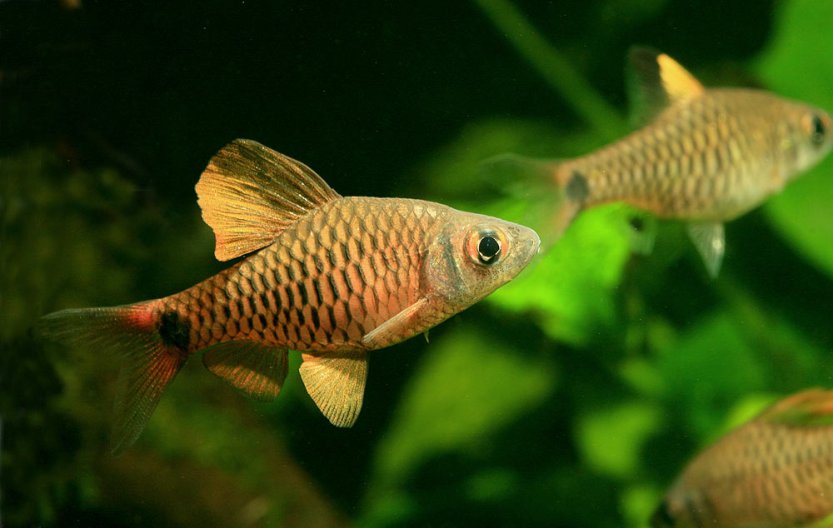
Oreichthys sp. 'Myanmar Redfin'
authority not recorded
Max length40mm SL1.6in SLTank60 × 30cm24 × 12inTemp24–28°C75–82°FpH6.5–7.5This fish is one of several sometimes imported and sold as Oreichthys cosuatis or O. parvus which has led to considerable confusion. It appears to be an undescribed species and can be most easily identified by the absence of a dark marking in the dorsal-fin of adult males (vs. presence in O. cosuatis and O. parvus) and possession of a large, well-defined black blotch on the caudal peduncle ( vs. absent in O. cosuatis, smaller and less well-defined in O. parvus).
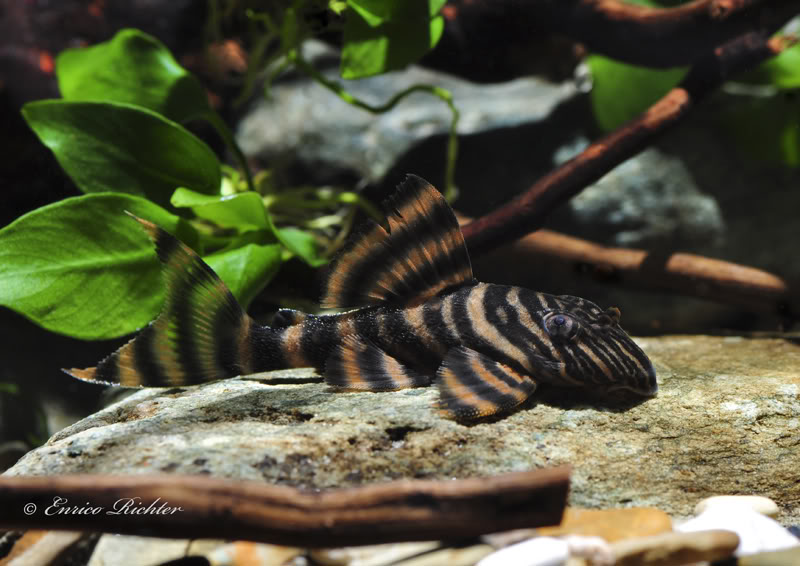
Panaqolus sp.L403
authority not recorded
Max length120mm SL5in SLTank120 × 30cm48 × 12inTemp24–30°C75–86°FpH6.0–7.0Not difficult to maintain under the correct conditions; we strongly recommend keeping it in a tank designed to simulate a flowing stream with a substrate of variably-sized rocks, sand, fine gravel, and some water-worn boulders. This can be further furnished with driftwood branches, terracotta pipes, plant pots, etc., arranged to form a network of nooks, crannies, and shaded spots, thus providing broken lines of sight.
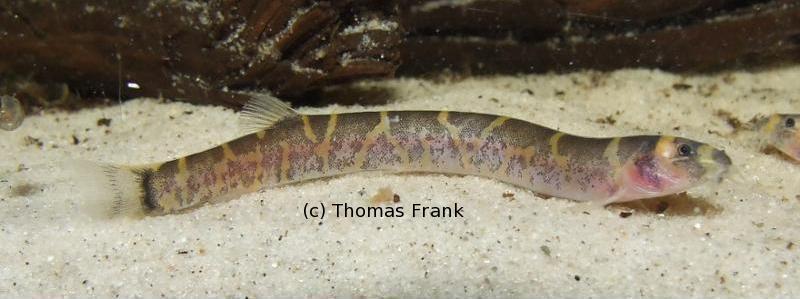
Pangio sp. 'PAN03'
authority not recorded
Max length80mm SL3.1in SLTank60 × 30cm24 × 12inTemp21–26°C70–79°FpH3.5–7.0Pangio species are often generically referred to as 'kuhli' or 'coolie' loaches in the aquarium hobby, the latter a variation of the former which was itself derived from the surname of German naturalist Heinrich Kuhl (1797-1821). Ichthyo...
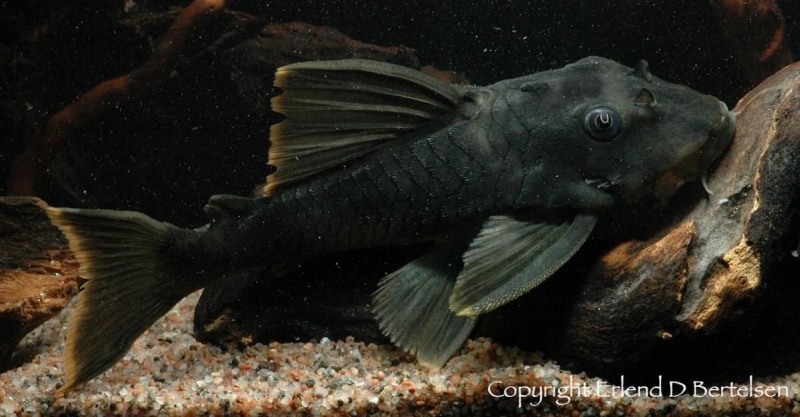
Peckoltia sp.L076
authority not recorded
Max length140mm SL6in SLTank120 × 45cm48 × 18inTemp25–29°C77–84°FpH5.5–7.5L076 and L099 appear to be the same species with the former exhibiting a darker diurnal colour pattern than the latter, though both appear similar at night.
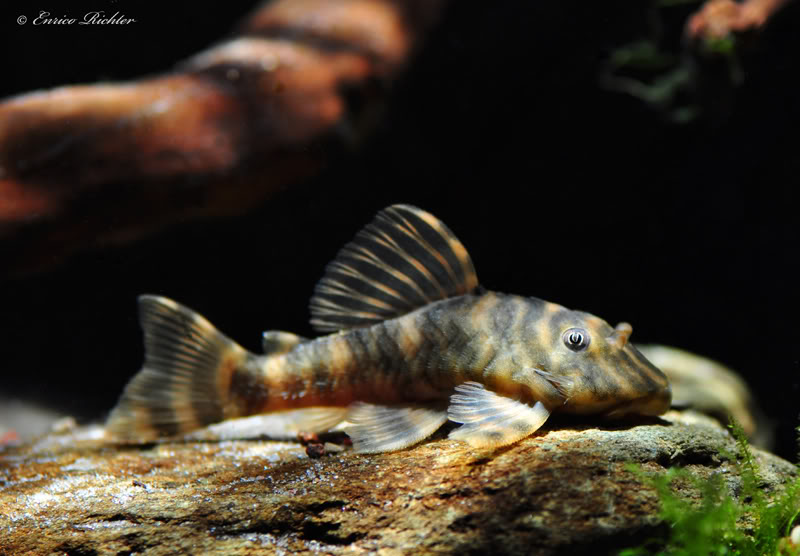
Peckoltia sp.L038
authority not recorded
Max length120mm SL5in SLTank120 × 30cm48 × 12inTemp23–29°C73–84°FpH6.0–7.5Wild specimens are probably omnivorous foragers but with a preference for aquatic invertebrates and suchlike. In the aquarium it does best when offered a varied diet comprising sinking dried foods, frozen Daphnia, mosquito larvae, chironomid larvae (bloodworm), and prawn/shrimp, for, example, plus some fresh fruit, parboiled potato, etc.
Potamotrygon falkneriLarge Spot Stingray
authority not recorded
Matched on the common name Large Spot Stingray
Max length470mm SL19in SLTank180 × 60cm72 × 24inTemp23.9–28.9°C75–84°FpH6.0–7.5P. falkneri is arguably among the most beautiful Potamotrygonids seen in the hobby. It's not imported with any great degree of regularity, and is usually expensive when available. There are currently three genera in the family Potamotrygonidae, all of which hail from South America. Paratrygon and Plesiotrygon are both monotypic genera (contain only a single described species) and are rarely seen in the hobby. The vast majority of imported rays belong to the biggest genus, Potamotrygon. T...
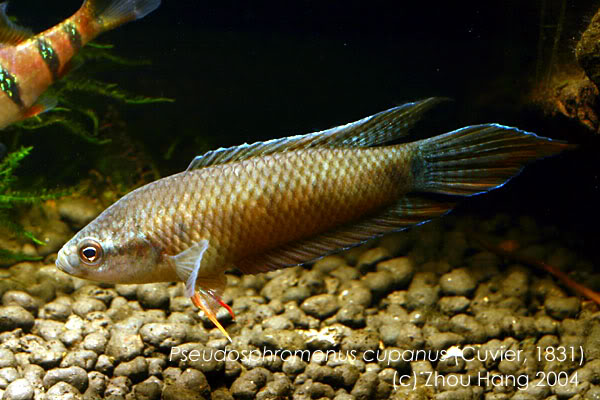
Pseudosphromenus cupanusSpiketail Paradisefish
Cuvier, 1831
Matched on the common name Spiketail Paradisefish
Max length65mm SL2.6in SLTank60 × 30cm24 × 12inTemp20–28°C68–82°FpH6.0–7.5This species is most easily told apart from its only congener P. dayi by lacking (vs. possessing) two dark, irregular lateral stripes on the head and body, and a shorter caudal-fin in males. The results of phylogenetic analyses by Rüber et al. (2006) suggest that Pseudosphromenus is most closely-related to Malpulutta in an evolutionary sense.
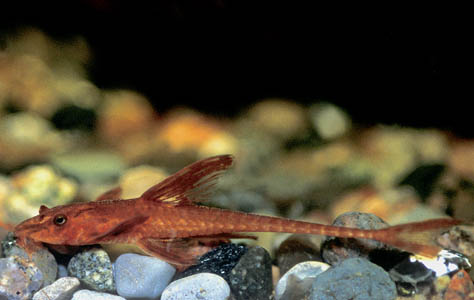
Rineloricaria sp.Red Lizard Catfish
authority not recorded
Max length110mm SL4in SLTank75 × 30cm30 × 12inTemp24–29°C75–84°FpH6.0–7.5As mentioned above, this fish may or may not be a man-made, or even hybrid, species. There are a few theories regarding this currently in circulation. Some believe that the fish are derived from a true wild caught fish, possibly of Paraguayan origin. These wild-caught red whiptails are supposed to breed true, producing all red fry, although there is no concrete evidence that they actually exist. The second possibility is that it's a selectively-bred form of Rineloricaria lanceolata, but thi...
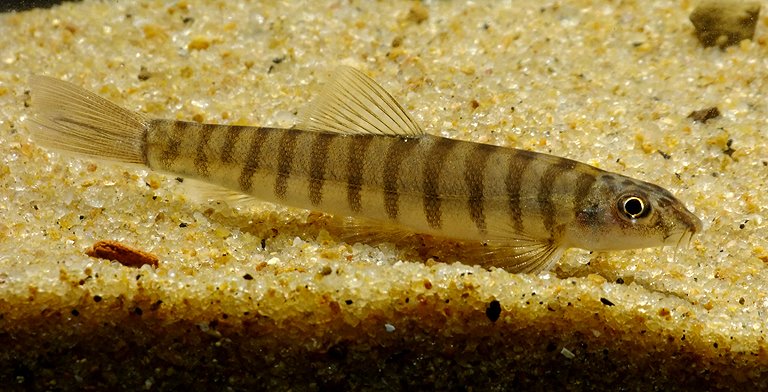
Schistura sp. 1Ring Loach
authority not recorded
Max lengthnot recordedTank75 × 30cm30 × 12inTemp18–24°C64–75°FpH6.0–7.5The identity of this fish is somewhat unclear although it's available in the aquarium trade on an occasional basis. It's been considered to represent various species including Schistura beavani, S. montana and S. himachalensis but there exi...
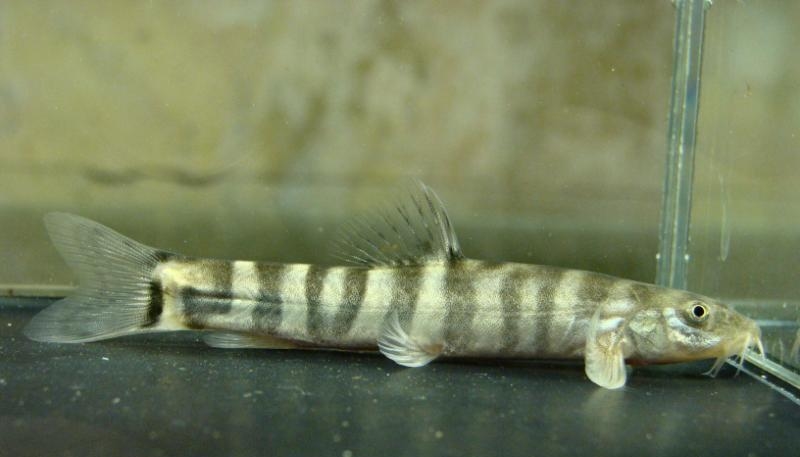
Schistura sp. 3
authority not recorded
Max length50mm SL2.0in SLTank80 × 30cm31 × 12inTemp20–26°C68–79°FpH6.0–7.5The identity of this fish is unclear but it has been traded as Schistura scaturigina M'Clelland, 1839 but does not appear to be that species based on its original description plus Vishwanath and Laisram (2001). The latter describe S. scaturigina as possessing a yellowish-white body with 12 transverse, triangu...
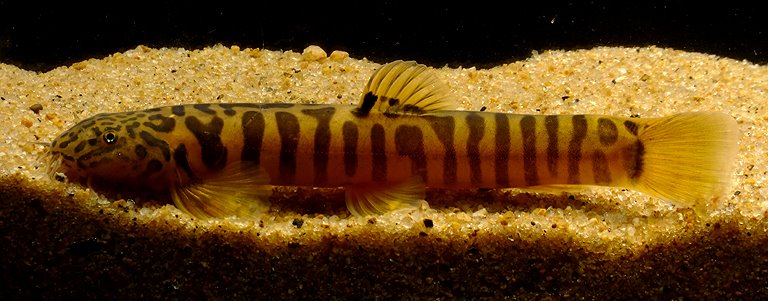
Schistura sp. 4Grizzled Loach
authority not recorded
Max length100mm SL3.9in SLTank120 × 30cm48 × 12inTemp12–20°C54–68°FpH7.0–8.5This species has been collected for the aquarium hobby, albeit in small numbers at time of writing, but its identity is unclear. Though obtained from close to the type local...
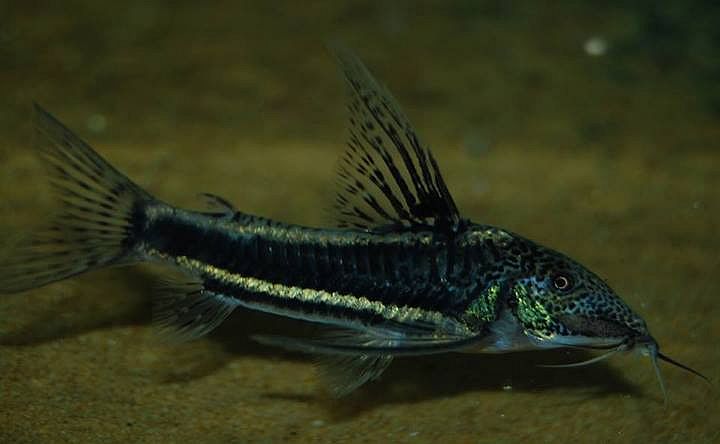
Scleromystax sp. C113
authority not recorded
Max length65mm SL2.6in SLTank120 × 30cm48 × 12inTemp16–24°C61–75°FpH5.0–7.5This fish is one of a number of apparently unidentified Scleromystax species known in the aquarium hobby. The genus Scleromystax is included in the family Callichthyidae, of which members are often referred to collectively as 'armoured' or 'mailed' catfishes group due to the presence of bony plates in place of scales on the body.