Results for “predator”
Type a name: scientific, common, or one a species used to go by. Or narrow the catalogue with the filters.
Filters
Lamprologus lemairiiLemaire's Lamprologus
authority not recorded
Max length250mm SL10in SLTank120 × 45cm48 × 18inTemp23–27°C73–81°FpH7.5–9.0A highly piscivorous, predatory species unsuited to the general aquarium. It is an ambush predator in nature, often being seen hanging motionless around rocky structures or on the floor of the lake. It is a sedentary species and does not move around a lot. This is a behavioural adaptation known as thanatosis, or 'playing dead'. This strategy is usually used as a defensive means in other animals, but in L. lemairii it is adapted for offensive means. The fish has a mottled colour pattern...
Melanochromis chipokae
authority not recorded
Max length120mm SL5in SLTank120 × 45cm48 × 18inTemp24–28°C75–82°FpH7.6–8.8This species belongs to the group of Melanochromis often called "Pike Auratus". These species predate on the fry of other species, although M. chipokae will also eat crustaceans and algae. Female and juvenile male M. chipokae are easily confused with M. auratus. However, it can be distinguished by its noticeably more pointed mouth, denoting the predatory nature of this species (auratus has a rounded mouth which is designed for feeding on algae). The striped patterning in the also exten...
Synodontis nigriventrisUpside-down Catfish
authority not recorded
Max length100mm SL3.9in SLTanknot recordedTemp24–28°C75–82°FpH6.0–7.5One of the commonest Synos seen for sale, S. nigriventris is occasionally confused with S. contractus. However, on close inspection the species are easy to tell apart as S. nigriventris lacks the large head and mouth and larger eye of S. contractus. The scientific name nigriventris refers to the fact that the belly of this fish is darker than the dorsal area. This is a form of camouflage, making the fish harder to spot by predators above, such as predatory fish, birds etc. It is a basic re...
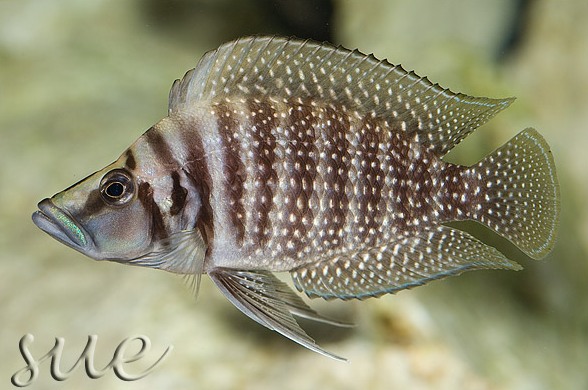
Altolamprologus calvusCalvus Cichlid
Poll, 1978
Max length138mm SL5in SLTanknot recordedTemp24–27°C75–81°FpH7.5–9.0A. calvus is a predator by nature and its body shape has been adapted to allow it to enter small crevices and gaps in the rockwork of Lake Tanganyika to prey on eggs, fry and small fish. Its laterally compressed shape makes the fish hard to spot head on, giving it an advantage over would be predators and prey alike. It is also quite well-armoured, possessing thick scales which can be turned towards potential attackers. These can cause real damage with their serrated edges. Several colour form...
Neolamprologus fasciatusBarred Lamprologus
authority not recorded
Max length150mm SL6in SLTank90 × 38cm36 × 15inTemp23–27°C73–81°FpH7.5–9.0N. fasciatus is a predator by nature and its body shape has been adapted to allow it to enter small crevices and gaps in the rockwork of Lake Tanganyika to prey on invertebrates, eggs, fry and small fish. The lateral compression exhibited by this fish also makes the fish hard to spot head on, giving it an advantage over both its predators and prey. It hunts in a head down position a few feet above the substrate, moving its body in sinuous motions to counteract the water currents. It is sometimes...
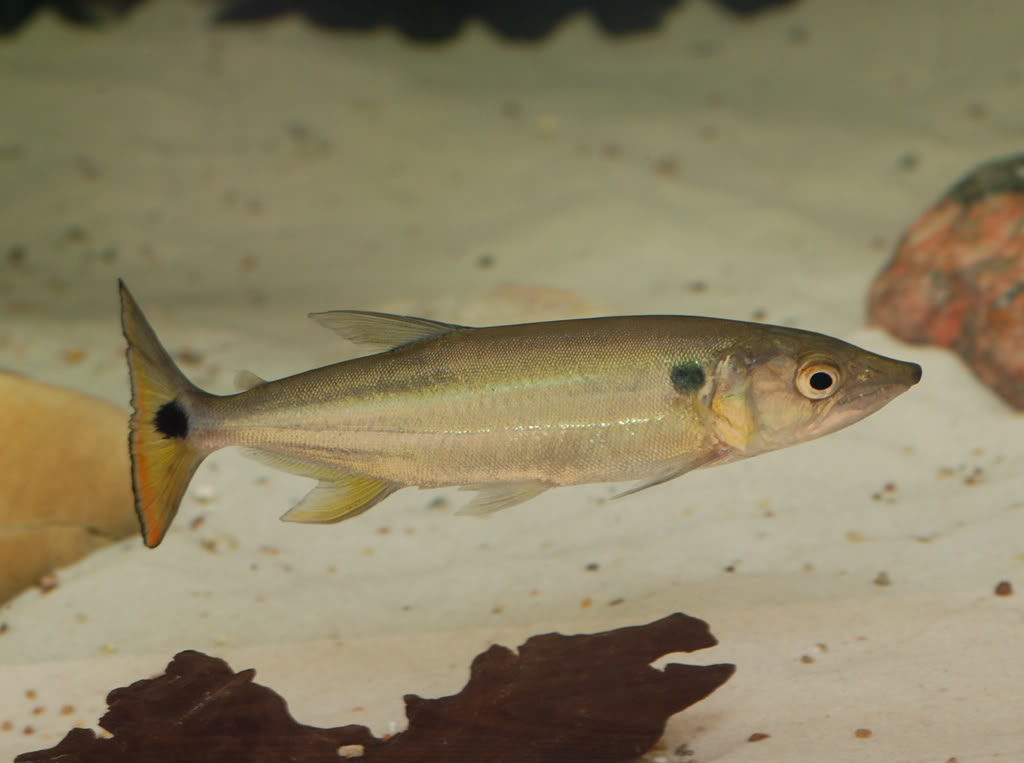
Acestrorhynchus pantaneiroPantanal Barracuda Tetra
Menezes, 1992
Max length240mm SL9in SLTank250 × 90cm98 × 36inTemp22–28°C72–82°FpH6.0–7.5An obligate piscivore capable of consuming surprisingly surprisingly large prey. Newly-imported specimens may refuse to accept anything but live fishes although most can be weaned onto dead alternatives once they recognise them as edible, and some even learn to accept dried foods- Like the vast majority of predatory fishes this specie...
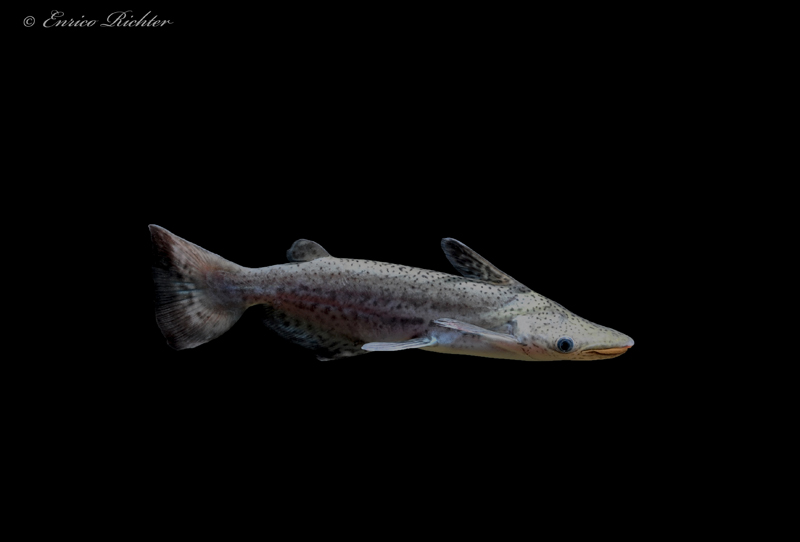
Ageneiosus marmoratusBottlenose Catfish
Eigenmann, 1912
Max length185mm SL7in SLTank150 × 60cm60 × 24inTemp22.5–26°C73–79°FpH6.0–7.0This species may also be seen on sale as 'Guyana slopehead catfish' 'dolphin catfish' or 'hammerhead catfish'. The attractive juvenile patterning is largely lost as the fish grow but this nevertheless remains an impressive predatory species for the larger aquarium. The genus Ageneiosus was at one point classified in the family Ageneiosidae alongside the genus Tetranematichthys, but this was not accepted by all...
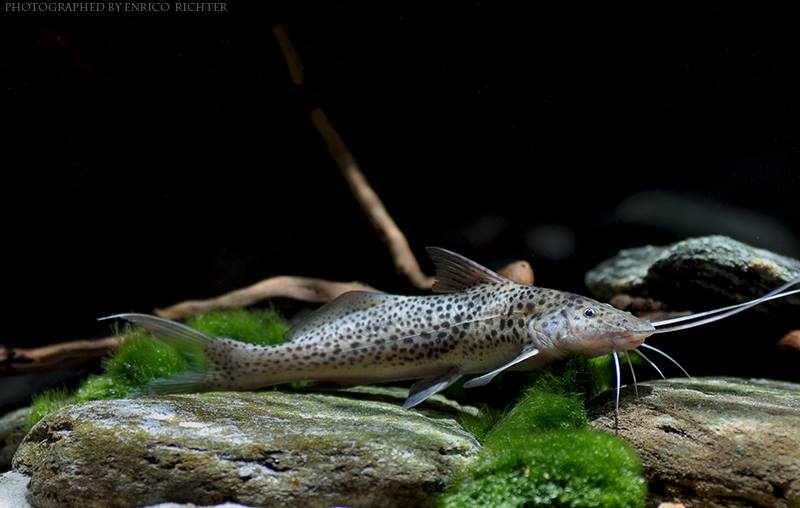
Aguarunichthys torosusBolt Catfish
Stewart, 1986
Max length346mm SL14in SLTanknot recordedTempnot recordedpHnot recordedAn obligate predator feeding on other fishes in nature, but quality dried foods are normally accepted in captivity. It should also be offered meaty fare such as strips of white fish, live earthworms, shrimp, etc., for optimum health.
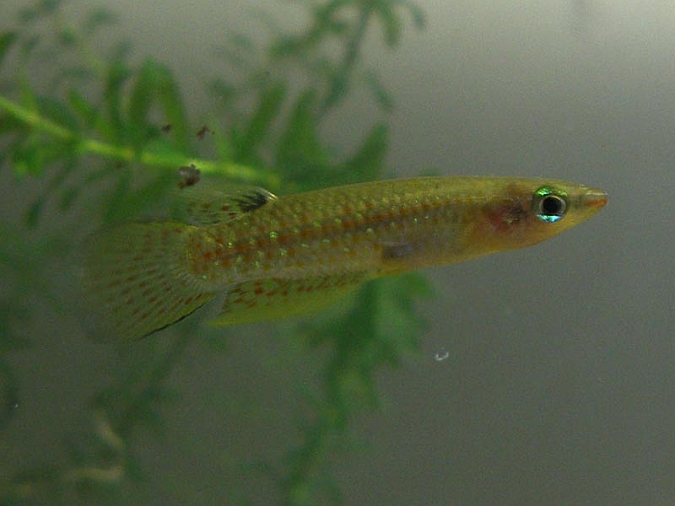
Aplocheilus parvusDwarf Panchax
Sundara Raj, 1916
Max length40mm SL1.6in SLTank45 × 30cm18 × 12inTemp20–28°C68–82°FpH6.0–8.5Aplocheilus spp. are surface-dwelling predators preying on both aquatic and terrestrial invertebrates. In the aquarium they will learn to accept dried foods in most cases but should also be offered regular meals of small live or frozen fare such as Artemia, Daphnia, chironomid larvae (bloodworm), etc.
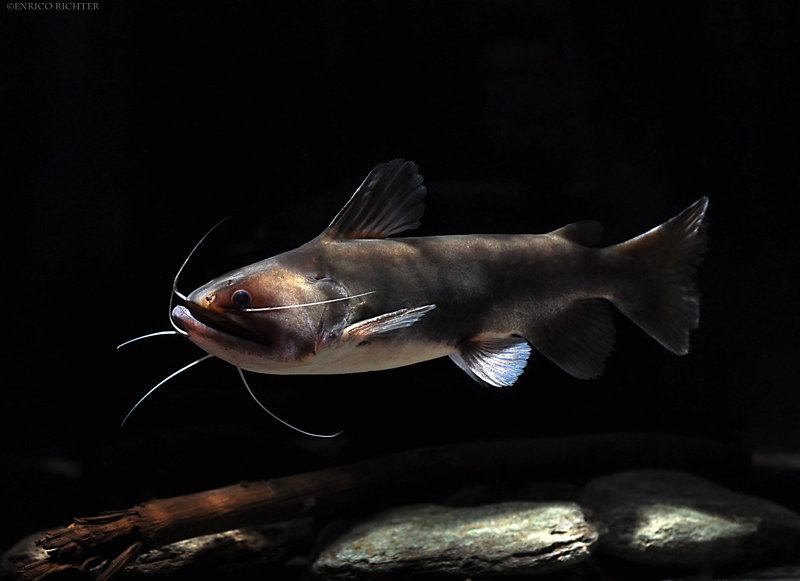
Asterophysus batrachusGulper Catfish
Kner, 1858
Max length250mm SL10in SLTank150 × 60cm60 × 24inTemp22–28°C72–82°FpH5.0–7.0An obligate predator by nature, but captive specimens readily accept strips of white fish, whole shrimp, earthworms, and similar once they are recognised as food. Adult individuals are unlikely to require feeding on a daily basis with 1-2 meals per week sufficient.
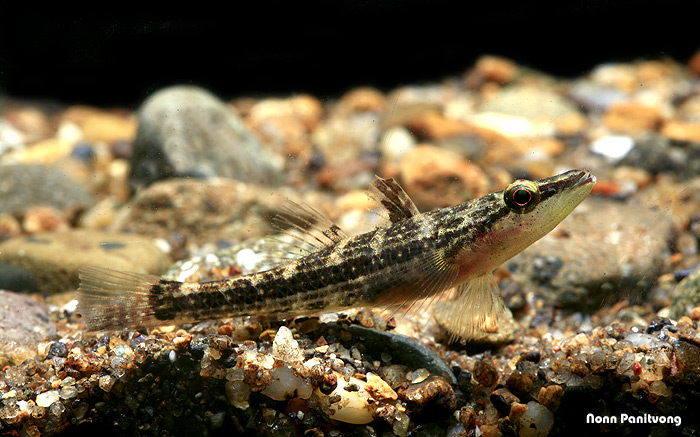
Butis amboinensisOlive Flathead Gudgeon
Bleeker, 1853
Max length140mm SL6in SLTank75 × 30cm30 × 12inTemp22–28°C72–82°FpH7.0–8.5This species is not traded for aquaria but is occasionally exported as bycatch among shipments of other species. It differs from congeners in that the outermost row of teeth are not enlarged plus the interorbital space and cheek below eye are not scaled. Butis spp. are largely nocturnal ambush predators with cryptic...
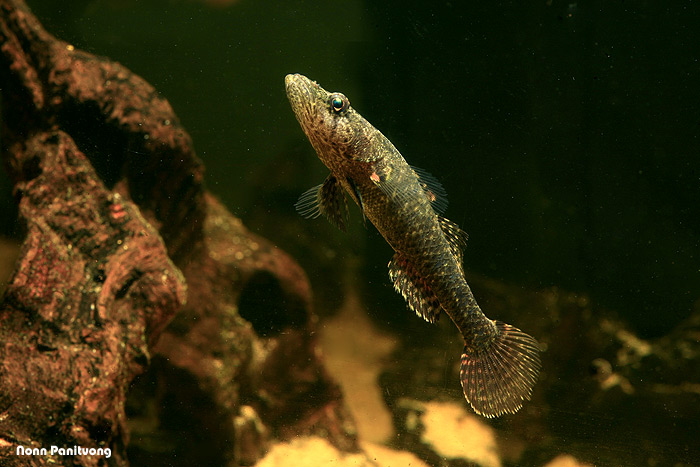
Butis butisCrazy Fish
Hamilton, 1822
Max length120mm SL5in SLTank75 × 30cm30 × 12inTemp22–27°C72–81°FpH7.0–8.5Butis spp. are largely nocturnal ambush predators with cryptic patterning to help them blend in with their surroundings. They can also lighten and darken their body colouration to an extent, have a habit of aligning themselves with solid surfaces whether horizontal, vertical, or inverted, and often swim in an upside-down position. The genus is usually included in the family Eleotridae of which members are often referred to...
Champsochromis spilorhynchus
authority not recorded
Max length350mm SL14in SLTank180 × 60cm72 × 24inTemp24–27°C75–81°FpH7.5–8.5This species is only occasionally offered for sale, as it is difficult to collect, living a predominantly solitary lifestyle. As a result, it is much sought after by enthusiasts. It may be confused with the other species in the genus, C. caerulus, but can be distinguished by its deeper body shape and very distinctive black markings on its snout. Champsochromis have widely spaced teeth compared to some other pelagic predatory cichlids found in Lake Malawi, such as Buccochromis species....
Corydoras paleatusPepper Cory
authority not recorded
Max length70mm SL2.8in SLTank61 × 38cm24 × 15inTemp22–26°C72–79°FpH6.0–7.0Corydoras are members of the armoured catfish family. The genus name means "helmet skin" and the fish live up to this name as they are rather tough little fish. They also have spines in the leading rays of the pectoral fins to deter larger predators from eating them. Corydoras are sometimes observed taking a gulp of air at the water surface: this is because they can absorb oxygen through their gut. It is not known why cories do this even on oxygen rich waters. Along with the bronze ...
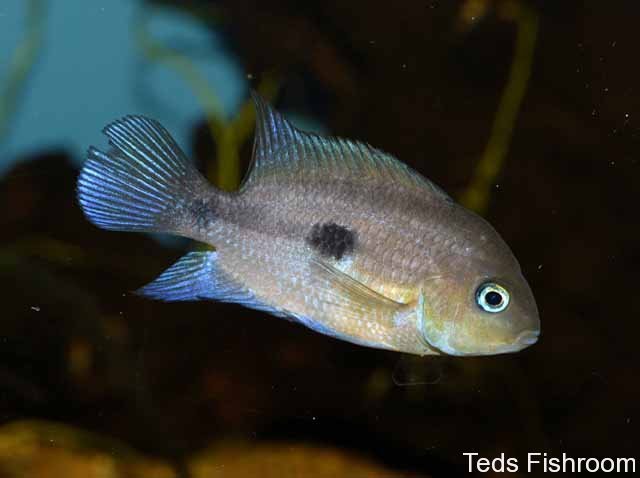
Cryptoheros myrnae
Loiselle, 1997
Max length♂ 100 · ♀ 80mm SL♂ 3.9 · ♀ 3.1in SLTank90 × 30cm36 × 12inTemp23–26°C73–79°FpH7.0–8.5In its natural waters, females have been observed caring for mixed broods containing both their own fry and those of another cichlid, Amphilophus bussingi. It is unknown if these are mixed by accident (as the two species have also been recorded tending broods in close proximity to one another) or if this represents an adaptive behaviour to increase numbers in a brood and therefore decrease the chance of predation.
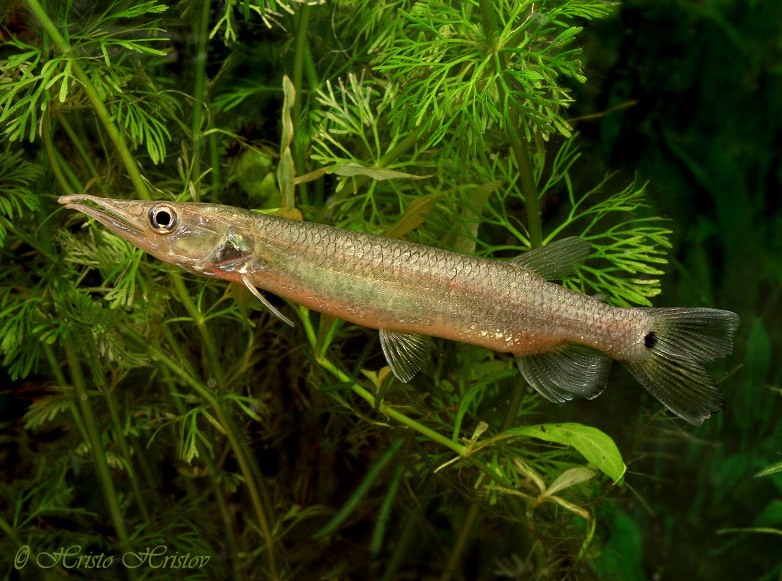
Ctenolucius hujetaGar 'Characin'
Valenciennes, 1850
Max length250mm SL10in SLTank180 × 60cm72 × 24inTemp22–28°C72–82°FpH5.0–7.5C. hujeta is traded under various names including 'slant-nosed gar', 'hujeta gar', 'rocket gar' and 'freshwater barracuda' but it and other members of the family Ctenoluciidae have traditionally been referred to as 'pike characids'. They're all predatory fishes native to South America, included in the order Characiformes and currently spread across two genera; Ctenolucius with two species and Boulengerella with five. The two genera are ...
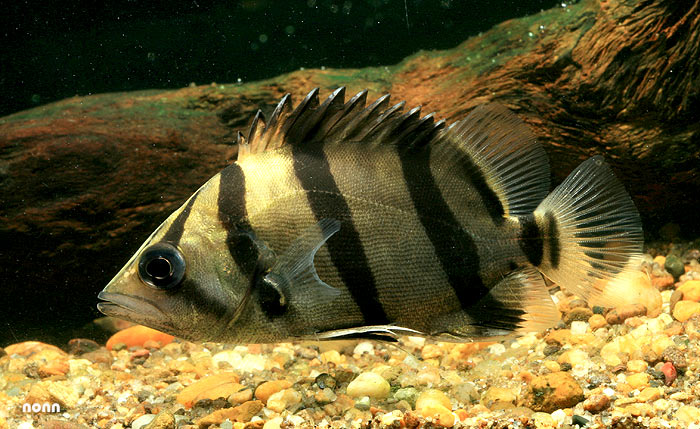
Datnioides undecimradiatusMekong Tiger Perch
Roberts & Kottelat, 1994
Max length300mm SL12in SLTank180 × 60cm72 × 24inTemp20–28°C68–82°FpH5.5–7.5An efficient, largely piscivorous, predator with highly protrusible mouthparts. In the aquarium, juveniles can be offered chironomid larvae (bloodworm), small earthworms, chopped prawn, and suchlike, while adults will accept strips of fish flesh, whole prawns, mussels, live river shrimp, larger earthworms, etc. Older individuals do not require feeding on a daily basis, with 2-3 times per week sufficient.
Dimidiochromis compressicepsMalawi Eye-Biter
authority not recorded
Max length250mm SL10in SLTank150 × 38cm60 × 15inTemp23–28°C73–82°FpH7.5–8.8D. compressiceps is an ambush predator in nature, its laterally compressed shape and head-down hunting position allowing it to remain hidden among Vallisneria beds and making it tricky to spot in open water. It has a dark stripe running from the snout along the back to the tail which serves to provide further camouflage. Despite its common name, it does not prey solely on the eyes of other species, preferring to hunt small fish (particularly juvenile Copadichromis sp.). It swallows these tai...
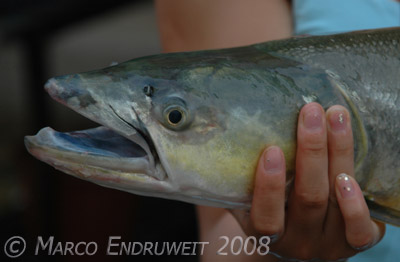
Elopichthys bambusa
Richardson, 1845
Max length2000mm SL79in SLTanknot recordedTempnot recordedpHnot recordedThe adult size and power of this impressive predator preclude it from consideration as an aquarium species, but young individuals are nevertheless available in the ornamental trade on an irregular basis therefore it is included here. It is an entirely unsuitable choice for the home aquarium and the majority of zoos and public aquaria would probably struggle to maintain it in adequate conditions.
Exodon paradoxusBucktooth Tetra
authority not recorded
Max length150mm SL6in SLTank120 × 45cm48 × 18inTemp23–28°C73–82°FpH5.5–7.5The genus Exodon is currently monotypic, with this single species having uniquely designed teeth. These allow it to rip the scales from other species. It's an ideal choice for those wishing to keep a large shoal of a predatory species without possessing the massive amount of tank space needed for a shoal of piranha or similar. A tank full of these makes for a very colourful and active display....