Every species
Every freshwater profile, A–Z.
Filters
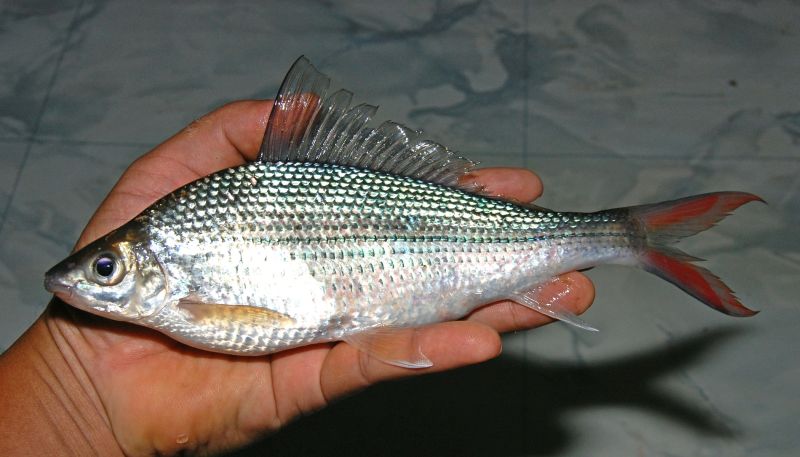
Labiobarbus fasciatus
Bleeker, 1853
Max length200mm SL8in SLTanknot recordedTempnot recordedpHnot recordedKnown from the Pahang River system in southern Peninsular Malaysia, and the Greater Sunda Islands of Sumatra and Borneo. On the latter records exist from the Kapuas, Barito, and Mahakam watersheds in Kalimantan, the Indonesian portion of the island Type locality is 'Pangabuang, Lampong Province, Sumatra, Indonesia'.
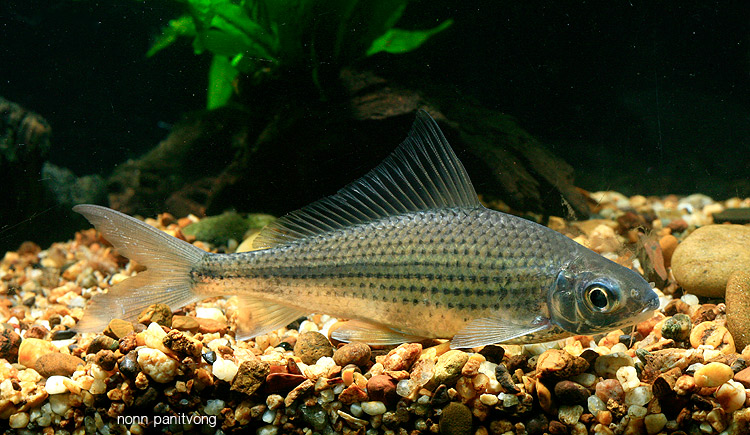
Labiobarbus leptocheilus
Valenciennes, 1842
Max length260mm SL10in SLTank240 × 60cm96 × 24inTemp20–26°C68–79°FpH6.0–8.0Different populations vary in appearance somewhat (see image of Salween specimen for example), and L. leptocheilus may turn out to represent a group of closely-related species rather than a single taxon. The population from the Cambodian Mekong has been considered to represent a distinct species, Labiobarbus lineatus, although that name is currently a synonym of L. leptocheilus following Kottelat (2013). It is widely used in the ornamental trade, however.
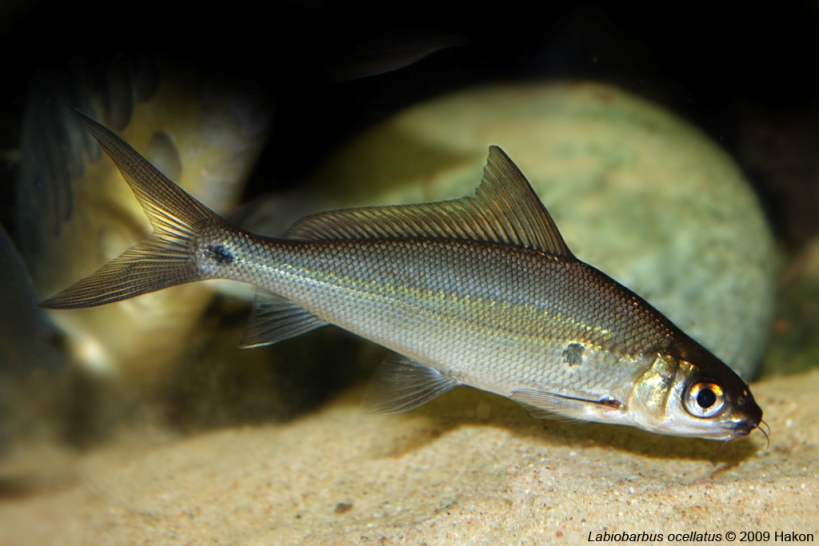
Labiobarbus ocellatus
Heckel, 1843
Max length180mm SL7in SLTank150 × 45cm60 × 18inTemp20–28°C68–82°FpH6.0–7.5It can be distinguished from congeners by the following combination of characters: 61-68 scales in the lateral series; a small, well-defined, sometimes ocellated black spot on the shoulder and another in the centre of the caudal peduncle; body without longitudinal stripes formed by spots on scales; caudal fin uniformly dusky or colourless, lobes without stripes or black margins.
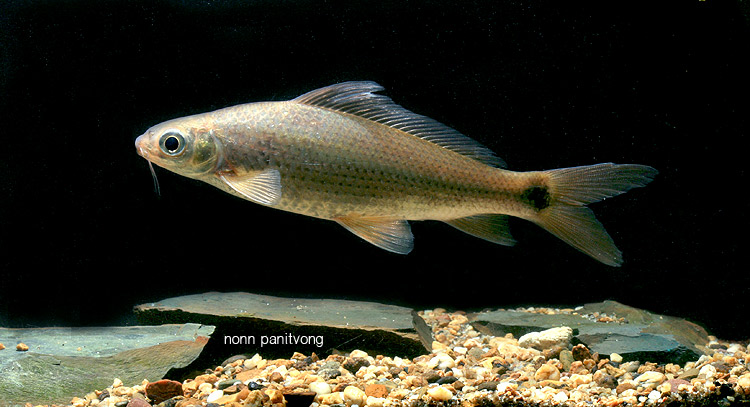
Labiobarbus siamensis
Sauvage, 1881
Max length200mm SL8in SLTanknot recordedTempnot recordedpHnot recordedL. siamensis can be distinguished from congeners by the following combination of characters: 39-42 scales in the lateral series; shoulder spot usually absent, but sometimes well-defined; body with longitudinal stripes formed by a spot on each scale; dorsal fin with dusky median stripe and no red coloration; caudal fin dusky, sometimes with reddish coloration, but no well-defined stripes; 20-23 circumpeduncular scales...
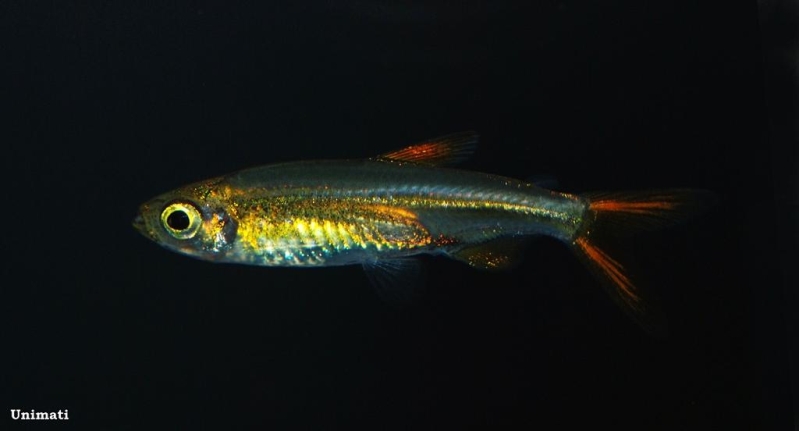
Ladigesia roloffiJelly Bean Tetra
Géry, 1968
Max length31mm SL1.2in SLTank60 × 30cm24 × 12inTemp20–26°C68–79°FpH5.0–7.0This species is sometimes referred to as 'Sierra Leone dwarf characin' and is the only member of its genus which can be distinguished from other alestids by lacking dorsal scales anterior to the adipose-fin insertion. The family Alestidae is the most spe...
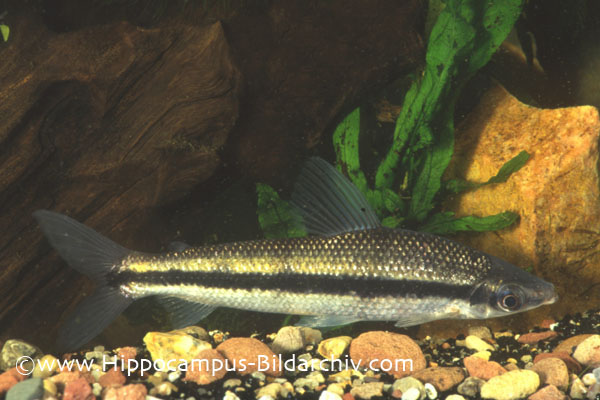
Laemolyta taeniataStriped Headstander
Kner, 1858
Max length288mm SL11in SLTank120 × 60cm48 × 24inTemp20–28°C68–82°FpH4.0–7.5L. taeniata is the largest-growing and second most widely-distributed member of the genus although it's a rarely-seen in the aquarium trade. It can be distinguished from all congeners since it uniquely possesses 5 lateral scale rows between the lateral line and dorsal-fin origin (vs. 4 or 6–8 in the remaining species).
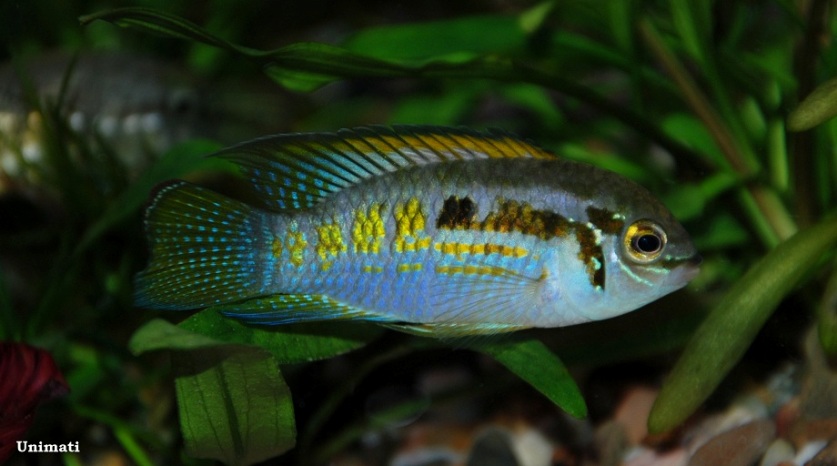
Laetacara araguaiae
Ottoni & Costa, 2009
Max length35mm SL1.4in SLTanknot recordedTempnot recordedpHnot recordedThis species was known as L. sp. 'Buckelkopf' in the aquarium hobby prior to publication of its official description. It's distinguished from all congeners by possessing 7-8 dorsal-fin rays (vs. 9–10 in L. dorsigera, L. fulvipinnis and L. thayeri, 8–9 in L. curviceps and L. flamannellus, and 9–11 in L. flavilabris).
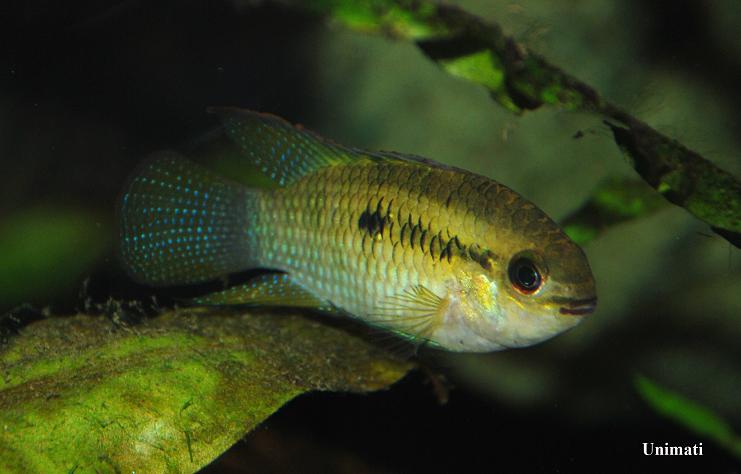
Laetacara curvicepsDwarf Flag Cichlid
Ahl, 1924
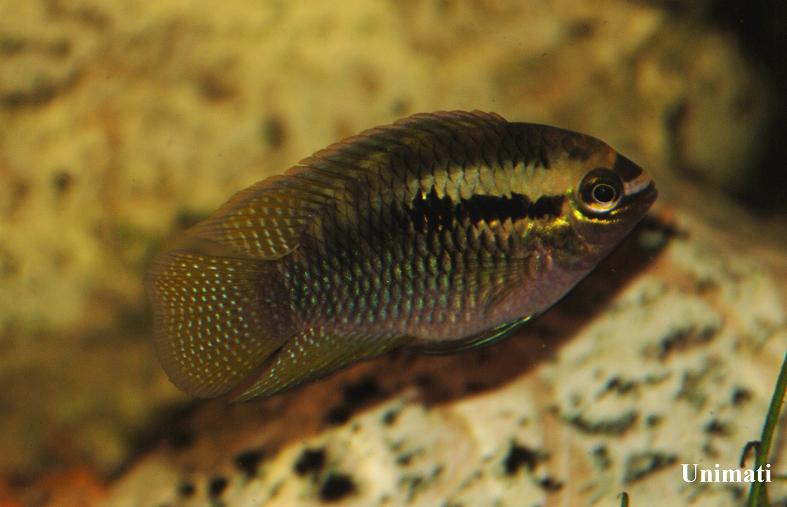
Max length50mm SL2.0in SLTanknot recordedTemp20–28°C68–82°FpH4.5–7.5Native to the lower Amazon river basin in Brazil with some populations exhibiting differences in colour pattern to one another, particularly in respect of the degree of red and blue pigmentation on the body and fins. Type locality is given simply as 'Amazon River, Brazil'. Field observations suggest it to display a pref...
Laetacara dorsigeraRedbreast Acara
Heckel, 1840
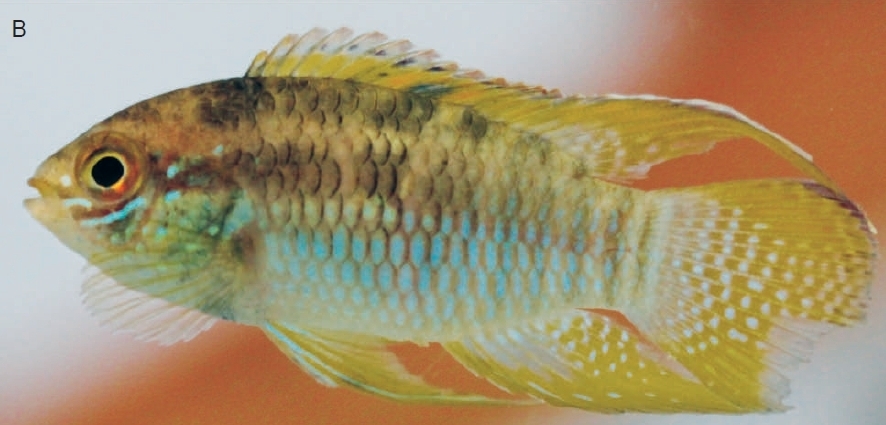
Max length37mm SL1.5in SLTanknot recordedTemp20–28°C68–82°FpH5.0–7.5Wild fish are probably foragers feeding on algae, organic detritus, small insects, worms, crustaceans, and other zooplankton. In the aquarium it's easily-fed but the best condition and colours offer regular meals of small live and frozen foods such as bloodworm, Daphnia, and Artemia, alongside good quality dried flakes and granules, at least some of which should include additional plant or algal content.
Laetacara flamannellus
Ottoni, Bragança, Amorim & Gama, 2012
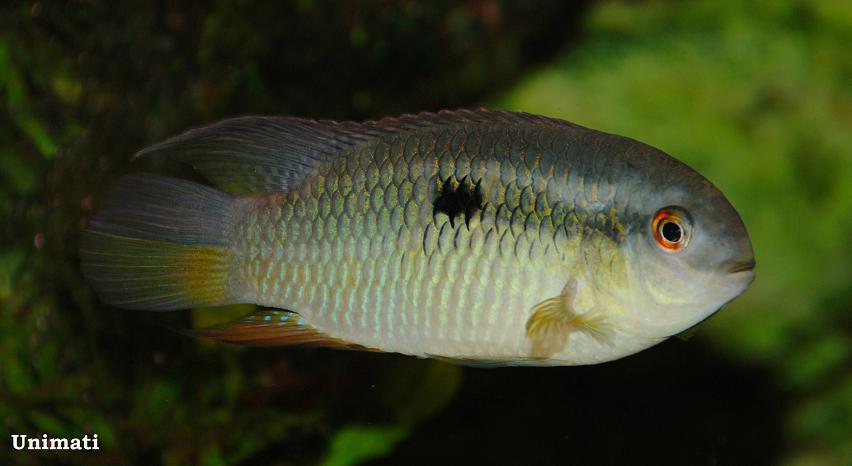
Max length40mm SL1.6in SLTanknot recordedTempnot recordedpHnot recordedSympatric fish species in the grasslands include Rivulus schuncki, juveniles of Hoplerythrinus unitaeniatus and an unidentified Nannostomus sp. One contrasting locality was a flowing igarapé with the fish collected from shallow water alongside Apistogramma gossei, Crenicichla inpa,unidentified...
Laetacara fulvipinnis
Staeck & Schindler, 2007
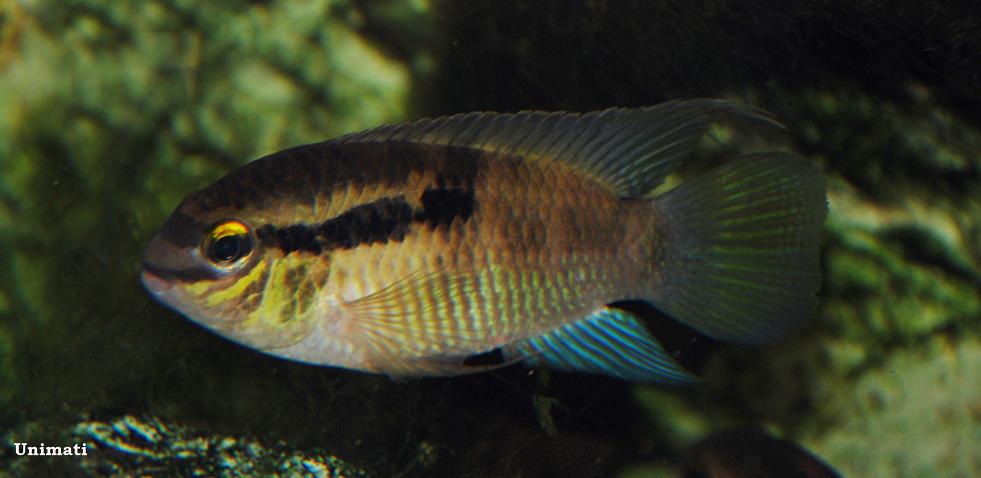
Max length75mm SL3.0in SLTanknot recordedTemp20–28°C68–82°FpH4.0–7.0Has been collected from habitats containing clear, soft, acidic, tea-coloured blackwater, most typically among leaf litter or submerged vegetation in very shallow (10-50 cm depth) water along the margins of streams and other minor tributaries. At a village called El Niñal close to the mouth of the rio Pasimoni in the Casiquiare drainage pH was...
Laetacara thayeri
Steindachner, 1875
Max length65mm SL2.6in SLTanknot recordedTemp20–28°C68–82°FpH4.5–7.5This species is relatively rare in the aquarium trade. It can be differentiated from all congeners by a combination of possessing ctenoid (vs. cycloid) scales on the sides of the head plus lacking a dark spot at the caudal-fin base.
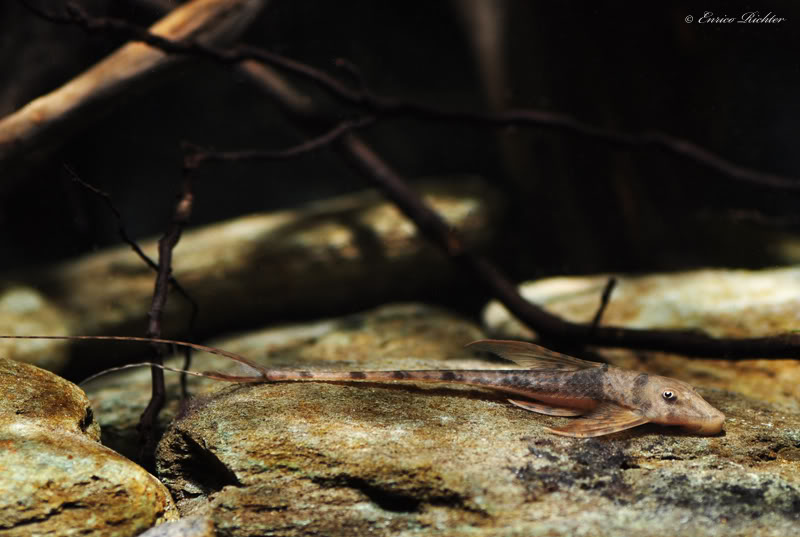
Lamontichthys filamentosusSturgeon Catfish
La Monte, 1935
Max length167mm SL7in SLTank120 × 45cm48 × 18inTemp22–30°C72–86°FpH5.5–7.5This species is relatively common in the aquarium hobby but is not easy to maintain and recommended only for experienced aquarists. It can be told apart from all congeners by specimens larger than 60 mm SL possessing an extended pectoral-fin spine forming an extremely long filament that may be more than four times the length of the first branched pectoral-fin ray (vs. not possessing such a filament in other species of Lamontichthys).
Lamontichthys llanero
authority not recorded
Max length200mm SL8in SLTank120 × 30cm48 × 12inTemp24–27°C75–81°FpH6.0–7.0A rarely seen species in the hobby.
Lamprologus callipterus
authority not recorded
Max length150mm SL6in SLTank90 × 30cm36 × 12inTemp24–27°C75–81°FpH7.5–9.0In nature, the spawning nests of large male fish may measure several meters across and contain hundreds of snail shells. Interestingly, when they are protecting brooding females males do not eat and eventually become so weak that their territories are taken over by stronger fish. Immature and sub-dominant males can be seen over areas of open substrate where they feed voraciously in large shoals. Females are only ever found in areas containing the nests of dominant males. It appears that the ...
Lamprologus congoensisCongo Lamprologus
authority not recorded
Max length150mm SL6in SLTank120 × 30cm48 × 12inTemp23–25°C73–77°FpH6.0–7.5An interesting species which resembles the popular Steatocranus species, both physically and in lifestyle. It has several physiological adaptations to allow it to live in rapids and fast-moving waters. The body is very streamlined, with strong pectoral fins. The swimbladder is also modified, being much reduced in size. This makes the fish less buoyant and thus less likely to be swept away by strong currents. In the aquarium it spends most of its time on the substrate, where it swims in a comical...
Lamprologus kungweensisOcellated Shell-dweller
authority not recorded
Max length80mm SL3.1in SLTank75 × 30cm30 × 12inTemp23–27°C73–81°FpH7.5–9.0L. kungweensis can be distinguished from similar species such as L. hecqui by the gold colour on the top of the eye. It also has a distinctive black spot towards the back of the dorsal fin. It is not often seen in the hobby....
Lamprologus lemairiiLemaire's Lamprologus
authority not recorded
Max length250mm SL10in SLTank120 × 45cm48 × 18inTemp23–27°C73–81°FpH7.5–9.0A highly piscivorous, predatory species unsuited to the general aquarium. It is an ambush predator in nature, often being seen hanging motionless around rocky structures or on the floor of the lake. It is a sedentary species and does not move around a lot. This is a behavioural adaptation known as thanatosis, or 'playing dead'. This strategy is usually used as a defensive means in other animals, but in L. lemairii it is adapted for offensive means. The fish has a mottled colour pattern...
Lamprologus ocellatusOcellated Shell-dweller
authority not recorded
Max length60mm SL2.4in SLTanknot recordedTemp23–27°C73–81°FpH7.5–9.0A charming little cichlid with real character, L. ocellatus is a deservedly popular hobbyists' fish. It has an endearing habit of burying its shell and defending it against all-comers. Many an unsuspecting hobbyist has recieved a sharp nip from an ocellatus who feels its territory is being invaded. Neighbouring shells may also be buried to prevent other fish moving in. Koning has hypothesisesd that the burying of the shell and the resultant pile of sand around it not only provides additiona...
Lamprologus signatus
authority not recorded
Max length55mm SL2.2in SLTanknot recordedTemp23–27°C73–81°FpH7.5–9.0Care must be taken when purchasing this species as females look so different to males that the sexes were initially described as separate species!