Every species
Every freshwater profile, A–Z.
Filters
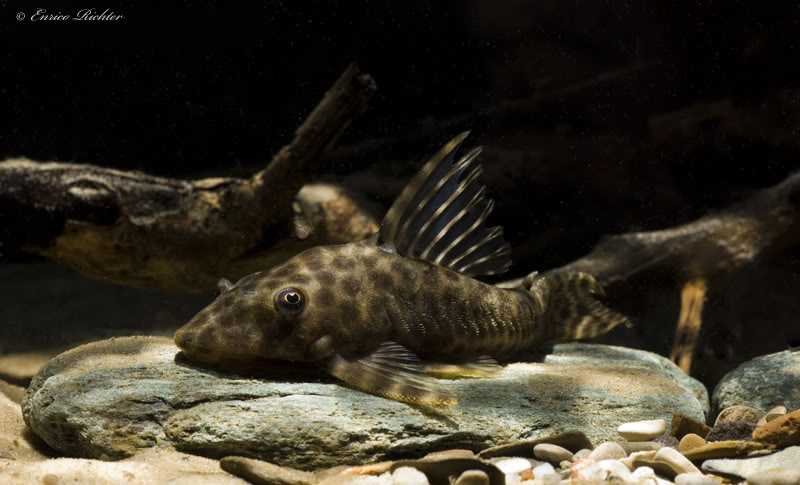
Peckoltia bachiL146
Boulenger, 1898
Max length130mm SL5in SLTank120 × 45cm48 × 18inTemp22–29°C72–84°FpH6.0–8.0This species has had several L-numbers assigned to it, with L146 collected from an unspecified locality in Colombia and L232 from the Río Putomayo/Içá. It's exported for the aquarium trade under a number of different generic names including Hemiancistrus, Sophiancistrus and Peckoltichthys. Following Armbruster (2008) it can be to...
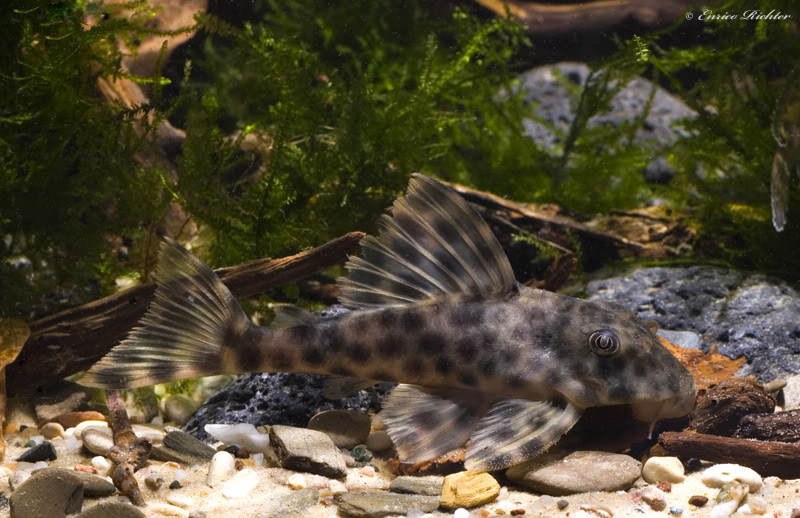
Peckoltia oligospilaL006
Günther, 1864
Max length100mm SL3.9in SLTank120 × 30cm48 × 12inTemp24–30°C75–86°FpH5.5–7.5This species can be distinguished from all congeners except P. bachi and some specimens of P. furcata by possessing only faint spots and saddles on the body. It can be told apart from P. bachi by possession of narrow (vs. wide) pelvic-fin spines, having the eyes positioned high (vs. low) on the head, and distinctly round (vs. appearing more as a mottling) spots on the body.
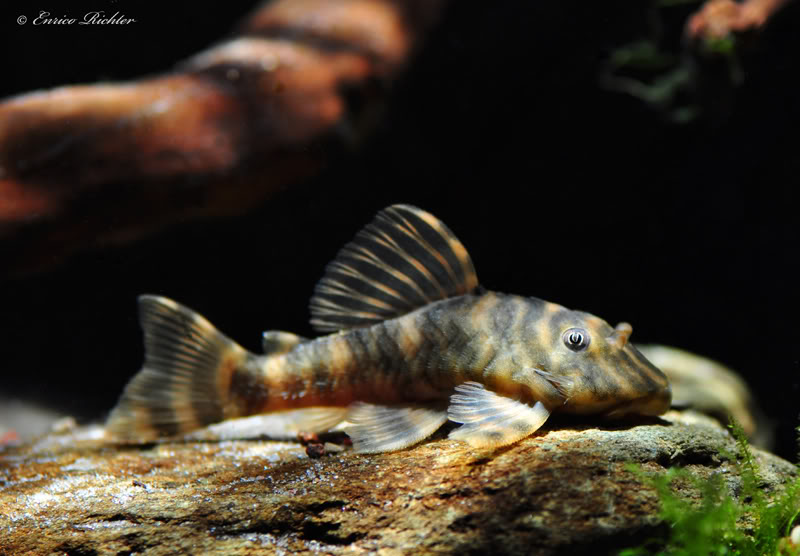
Peckoltia sp.L038
authority not recorded
Max length120mm SL5in SLTank120 × 30cm48 × 12inTemp23–29°C73–84°FpH6.0–7.5Wild specimens are probably omnivorous foragers but with a preference for aquatic invertebrates and suchlike. In the aquarium it does best when offered a varied diet comprising sinking dried foods, frozen Daphnia, mosquito larvae, chironomid larvae (bloodworm), and prawn/shrimp, for, example, plus some fresh fruit, parboiled potato, etc.
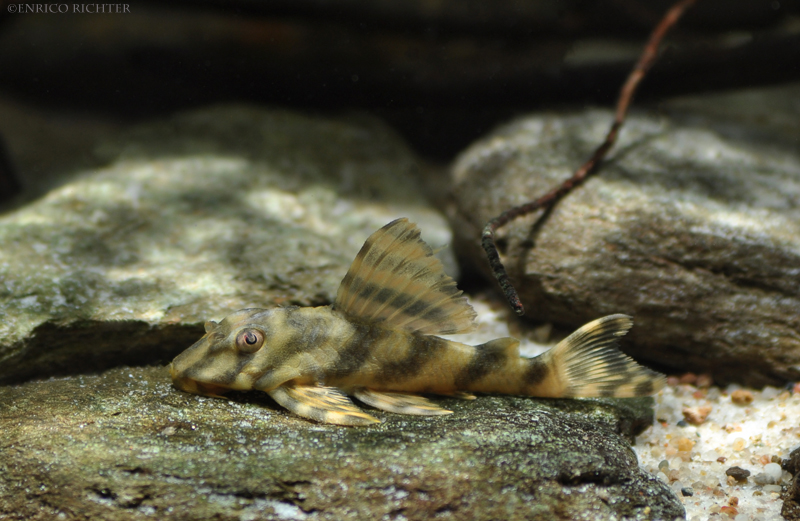
Peckoltia sp.L243
authority not recorded
Max length120mm SL5in SLTank120 × 30cm48 × 12inTemp25–29°C77–84°FpH5.5–7.5Known only from parts of the Río Orinoco drainage in Amazonas state, southern Venezuela. Sometimes confused with Peckoltia lineola (Armbruster, 2008) alongside which it's often exported for the aquarium trade.
Peckoltia sp.Big Spot Peckoltia
authority not recorded
Max length110mm SL4in SLTank75 × 30cm30 × 12inTemp23–26°C73–79°FpH6.5–7.2Commonly known as the big spot peckoltia, there is ongoing argument that this species should be included in the genus Hemiancistrus. As things stand, there has not yet been any scientific confirmation of this and the species remains undescribed. It's also often confused with the very similar-looking L013, another undescribed fish. These two species can only easily be distinguished as they mature, as L163 retains its spotted patterning, while L013 tends to become somewhat duller. When b...
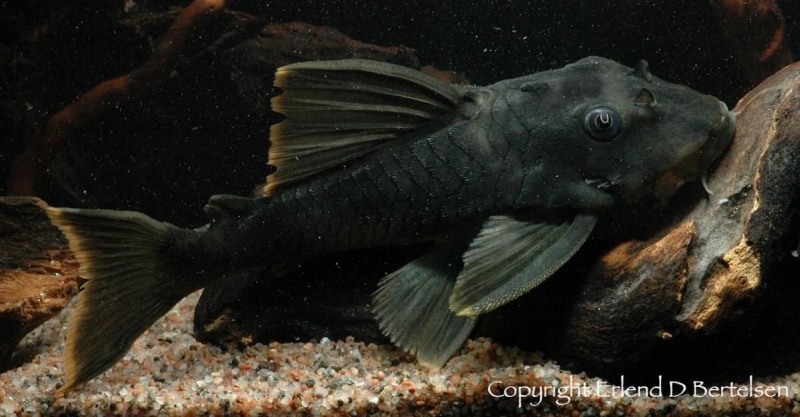
Peckoltia sp.L076
authority not recorded
Max length140mm SL6in SLTank120 × 45cm48 × 18inTemp25–29°C77–84°FpH5.5–7.5L076 and L099 appear to be the same species with the former exhibiting a darker diurnal colour pattern than the latter, though both appear similar at night.
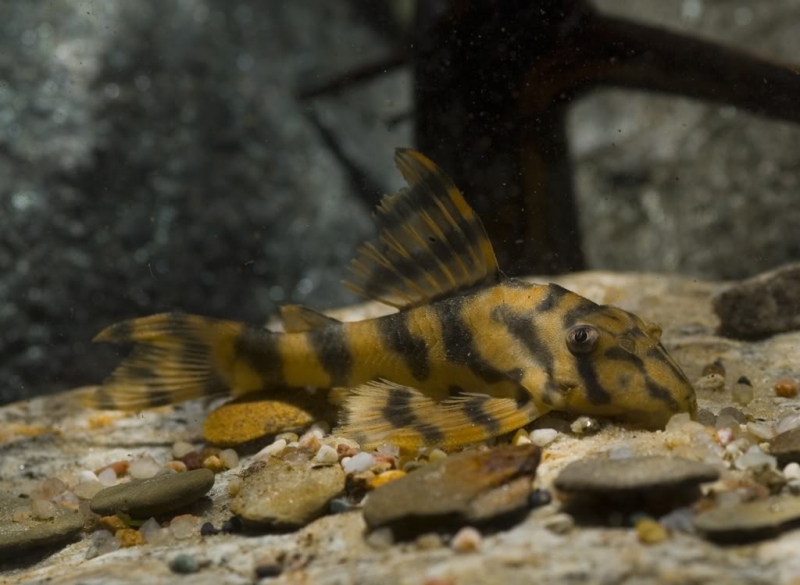
Peckoltia sp.L288
authority not recorded
Max length100mm SL3.9in SLTank80 × 30cm31 × 12inTemp26–30°C79–86°FpH5.0–7.0Currently known only from the rios Curuá Una and Uruará in Pará state, Brazil. The Curuá Una is a tributary flowing into the main lower Amazon channel downstream of Santarém and there is a large hydroelectric power plant constructed on it which supplies power to the city. The Uruará joins the Curuá Una around 30 km upstream of its mouth and confluence with the Amazon.
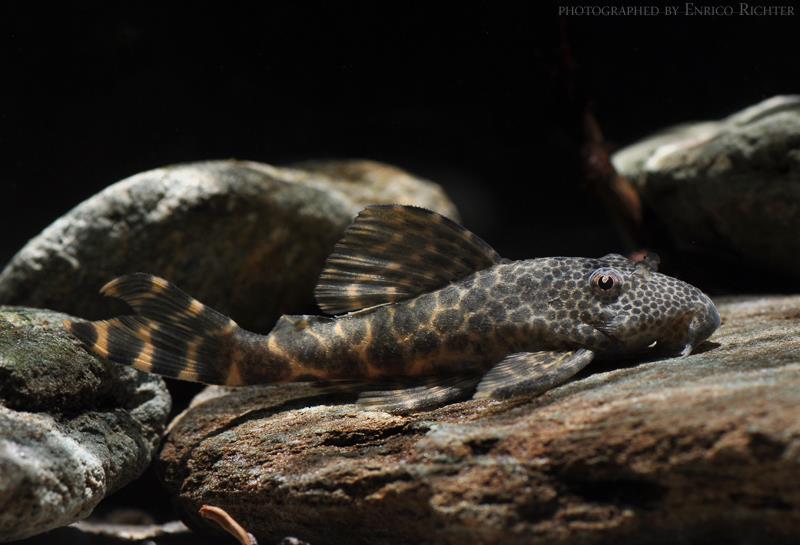
Peckoltia sp.L147
authority not recorded
Max length150mm SL6in SLTank120 × 45cm48 × 18inTemp22–30°C72–86°FpH5.0–7.5Known with certainty from tributaries of the middle Río Orinoco between the city of Puerto Ayacucho, Amazonas state, Venezuela and the lower Río Meta, Colombia. It may have a wider distribution within the Meta system since some reports suggest it to occur around Villavicencia, Colombia, some 600 km upriver.
Pelvicachromis humilisYellow Kribensis
authority not recorded
Max length125mm SL5in SLTanknot recordedTemp24–27°C75–81°FpH5.0–7.0A rare species in the hobby, P. humilis is also the largest known species in the genus. Several morphs are available, including "Guinea" and "Liberia red". Some of these may eventually be described as distinct species, as they are quite different in colouration and, to a lesser extent, morphology. This has already occured with P. rubrolabiatus and P. signatus, both of which were originally assigned to the humilis complex but have recently been reclassified. The easiest wa...
Pelvicachromis pulcherKribensis
authority not recorded
Max length100mm SL3.9in SLTanknot recordedTemp24–27°C75–81°FpH5.0–7.5One of the most common and popular Cichlid species in the hobby, the vast majority of Kribensis (often simply called "Krib" by many fishkeepers) seen in the hobby today are captive bred and are far more adaptable in terms of water chemistry than the wild fish. They also tend to be less aggressive when breeding. An aquarium sport albino form is available and is fairly popular. This fish is one of the best choices for newcomers to both Cichlids and fish breeding, being of a manageable...
Pelvicachromis subocellatusOcellated Kribensis
authority not recorded
Max length80mm SL3.1in SLTanknot recordedTemp22–26°C72–79°FpH5.5–7.5This is one of the less commonly seen Pelvicachromis species in the hobby. There are a few morphs available, including "Matadi" and "Moanda". Males and females of these should not be cross bred in order to keep the lines pure. It can be distinguished from others in the genus by it's higher, shorter body shape and by the fact that the spotting in the upper part of the is much lighter in this species than in others. A female condition is hard to confuse with anything else....
Pelvicachromis taeniatusStriped Kribensis
authority not recorded
Max length80mm SL3.1in SLTanknot recordedTemp22–26°C72–79°FpH5.0–7.5This stunning species is now much more readily available than it once was. There are over a dozen morphs available, including "Dehane", "Moliwe", "Kienke", "Lobe", "Wouri", "Nigeria Red" and "Calabar". Males and females of these should not be cross bred in order to keep the lines pure. It can be distinguished from others in the genus by the more pronounced upper lip, which is often bright yellow in colour. Males of this spe...
Periophthalmus barbarusAtlantic Mudskipper
authority not recorded
Max length150mm SL6in SLTanknot recordedTemp25–30°C77–86°FpH7.0–8.5Due to its highly amphibious nature this must be one of the most interesting, endearing species that can be kept in aquaria. Some specimens rarely enter deep water, preferring to sit in the shallows with the body submerged and eyes protruding above the surface. Others seem to favour resting completely exposed on rocks, sand or bogwood, returning to the water periodically to wet themselves. Subdominant individuals (those that are unable to secure a favourable territory) tend to attach themselves ...
Periophthalmus novemradiatusDwarf Indian Mudskipper
authority not recorded
Max length100mm SL3.9in SLTanknot recordedTemp25–30°C77–86°FpH7.0–8.5Due to its highly amphibious nature this must be one of the most interesting, endearing species that can be kept in aquaria. Some specimens rarely enter deep water, preferring to sit in the shallows with the body submerged and eyes protruding above the surface. Others seem to favour resting completely exposed on rocks, sand or bogwood, returning to the water periodically to wet themselves. Subdominant individuals (those that are unable to secure a favourable territory) tend to attach themselves ...
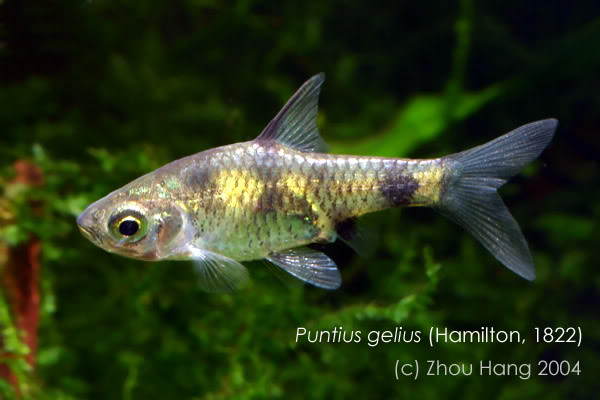
Pethia aurea
Knight, 2013
Max length25mm SL1.0in SLTank45 × 30cm18 × 12inTemp18–24°C64–75°FpH6.0–7.0This species was considered to be a phenotype of the similar-looking P. gelius prior to its description. Following Knight (2013) it is included a group of closely-related species alongside P. gelius and P. canius, the trio being distinguished from other members of the genus Pethia by the following combination of characters: lateral line incomplete with 3-4 por...
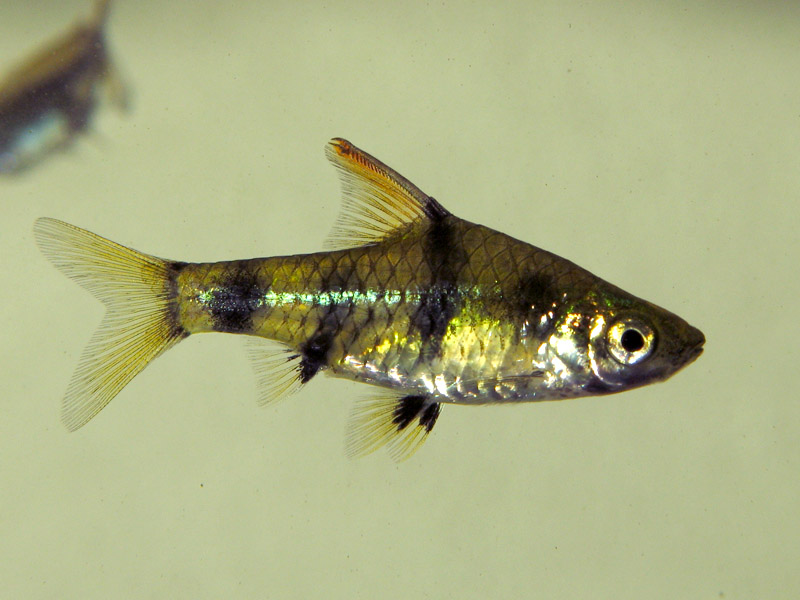
Pethia canius
Hamilton, 1822
Max length30mm SL1.2in SLTank60 × 30cm24 × 12inTemp18–24°C64–75°FpH6.0–7.0This species' identity was settled and a neotype designated by Knight (2013), with its validity having been discussed since the late 19th century. P. canius and the closely-related P. gelius were both described by Hamilton (1822) and share the type locality of 'northeastern Bengal'. Although Hamilton did not provide drawings M'Clelland (1839) included colour illustrations depicting two quite different-looking species.
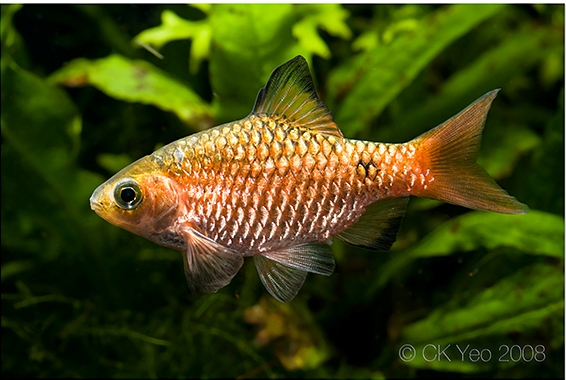
Pethia conchoniusRosy Barb
Hamilton, 1822
Max length100mm SL3.9in SLTank100 × 30cm39 × 12inTemp16–24°C61–75°FpH6.0–8.0Generally considered one of the hardiest small cyprinids available in the aquarium hobby, P. conchonius is an excellent choice for the beginner. Selective breeding has produced various ornamental strains including long-finned, 'veil-tail', 'super red', 'neon', and 'golden' forms. It's also been hybridised with some congeners although the offspring of such experiments are apparently infertile. It was formerly included in th...
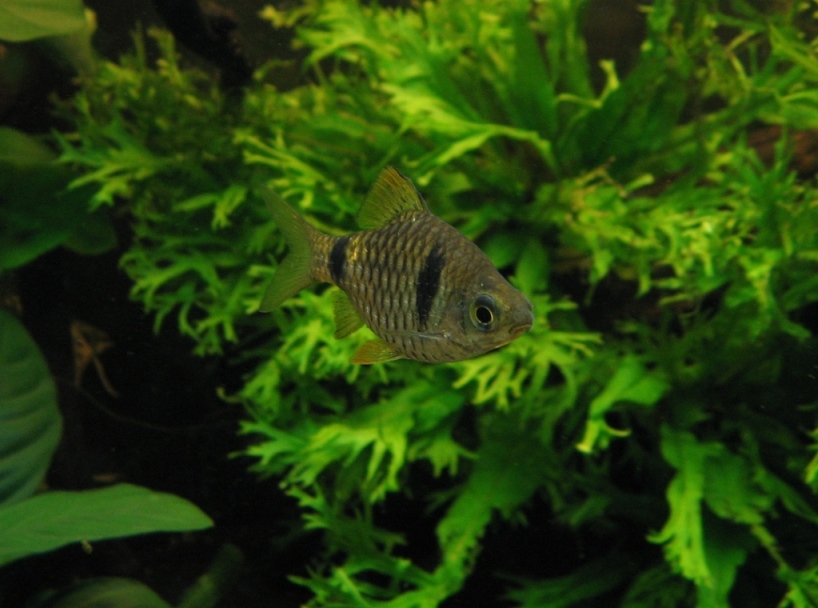
Pethia cumingiiCuming's Barb
Günther, 1868
Max length41mm SL1.6in SLTank60 × 30cm24 × 12inTemp20–27°C68–81°FpH5.5–7.0For many years this species was considered to occur in two colour forms with yellow or red dorsal, anal, and pelvic fins, respectively, but the red-finned variant has now been elevated to full species status as P. reval (Meegaskumbura et al. 2008). The latter is a smaller fish with a maximum SL of 33.6 mm recorded to date. As well as the obvious differences in body size and fin colour P. cumingii can be told apart from P. reval by the following...
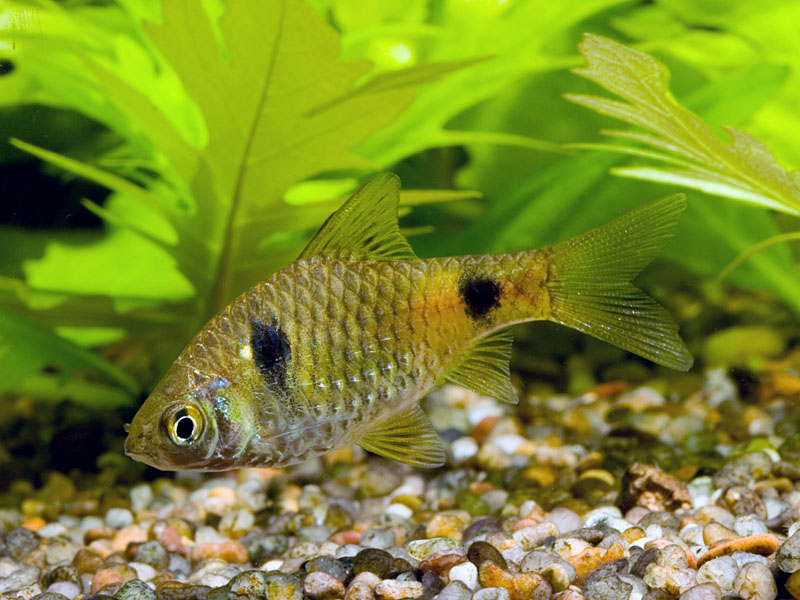
Pethia didi
Kullander & Fang, 2005
Max length41mm SL1.6in SLTank60 × 30cm24 × 12inTemp15–25°C59–77°FpH6.5–9.0The type locality is a stream with a mixed substrate of mud and stones which flows swiftly through an area of bamboo forest so is quite well-shaded. At time of collection the water was clear but slightly tannin-stained and sympatric species included Pethia thelys, Puntius sophore, Devario strigillifer, Rasbora daniconius, R. rasbora, Acanthocobitis botia, Notopterus notopterus, plus unidentified species of Oreichthys, Parambassis, Xenentodon, and Mastacembelus.
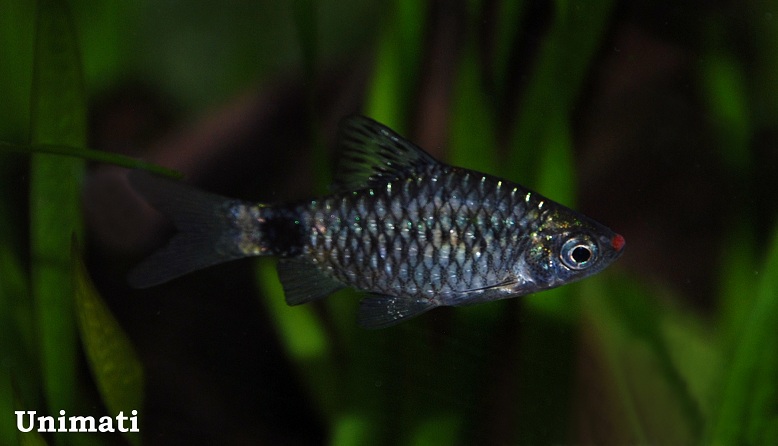
Pethia erythromycterLipstick Barb
Kullander, 2008
Max length35mm SL1.4in SLTank90 × 30cm36 × 12inTemp18–24°C64–75°FpH7.0–7.5This species first appeared in the aquarium hobby in 2006 and is sometimes traded under the name 'Tulip barb'. It was officially described by Kullander in early 2008 in a paper describing five new Puntius species from Kachin, all of which are superficially similar in possession of a dark band or blotch on the caudal peduncle. P. erythromycter can be distinguished b...