Results for “congener”
Type a name: scientific, common, or one a species used to go by. Or narrow the catalogue with the filters.
Filters
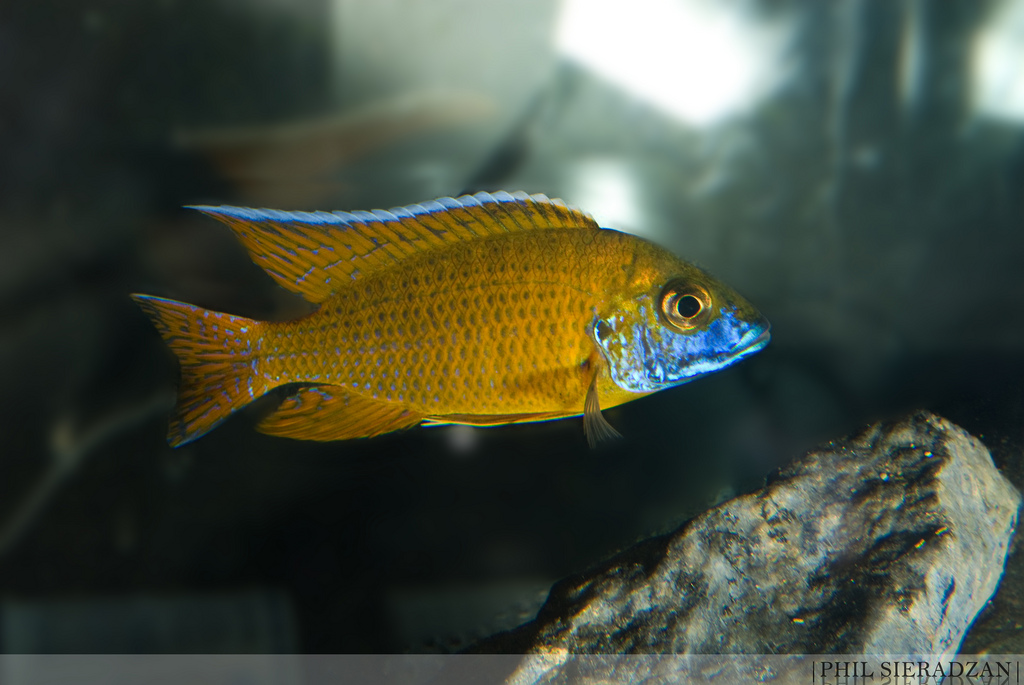
Aulonocara baenschiNew Yellow Regal Peacock
Meyer & Riehl, 1985
Max length♂ 120 · ♀ 90mm SL♂ 5 · ♀ 3.5in SLTank120 × 45cm48 × 18inTemp25–29°C77–84°FpH7.5–9.0This species may also be sold variously as 'yellow regal cichlid', 'Baensch's peacock', 'sunshine peacock' and 'Nkhomo-Benga peacock'. The easiest way to distinguish it from similar-looking congeners is to look at the profile of the snout, which is steeper and more curved than that of its congeners. Aulonocara spp. are benthophagous by nature employing a method of feeding whereby mouthfuls of substrate are taken and sifted for edible items with the remaining material expelled via the gills and mouth. They're equally-skilled at hunting as grazing, tending to hover above the substrate until tiny movements are detected, and possess enlarged sensory pores on the head which assist in this technique.
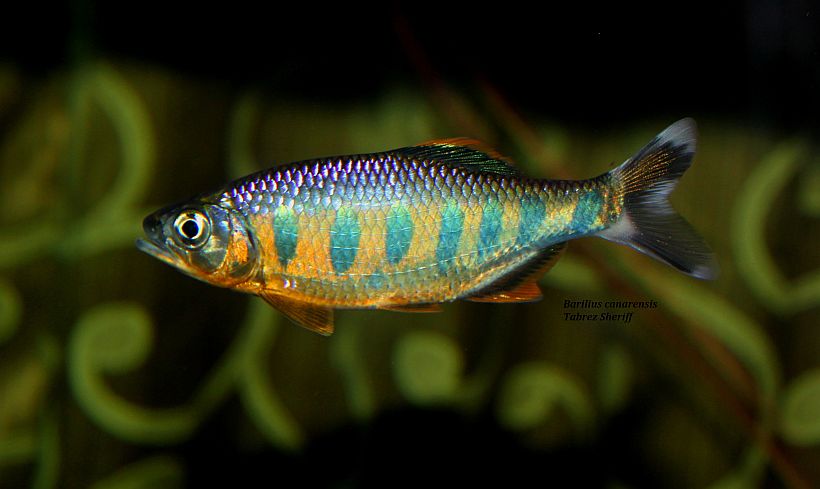
Barilius ardens
Knight, Rai, d'Souza & Vijaykrishnan, 2015
Max length105mm SL4in SLTank150 × 60cm60 × 24inTemp18–26°C64–79°FpH6.0–7.5Prior to its description this species was typically identified as the congener B. canarensis in the ornamental trade. It can be distinguished from congeners by the following combination of characters: uni...
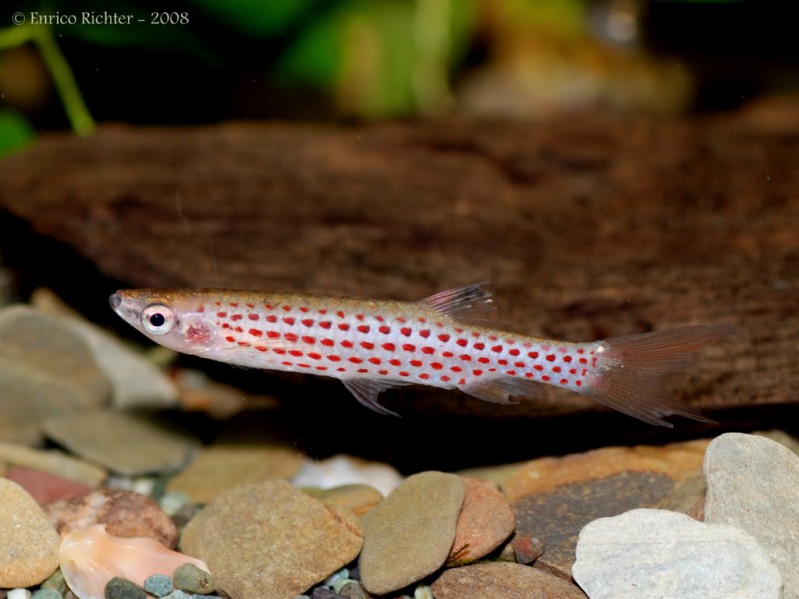
Copella meinkeniSpotted Splashing Tetra
Zarske & Géry, 2006
Max length45mm SL1.8in SLTank60 × 30cm24 × 12inTemp20–28°C68–82°FpH4.0–7.0This species has been widely referred to as the congener C. nattereri in aquarium literature both prior to and post-publication of its official description in 2006. The two can be told apart quite easily by the fact that C. nattereri possesses a dark lateral stripe while C. meinkeni does not. C. meinkeni can be distinguished from all congeners by the followi...
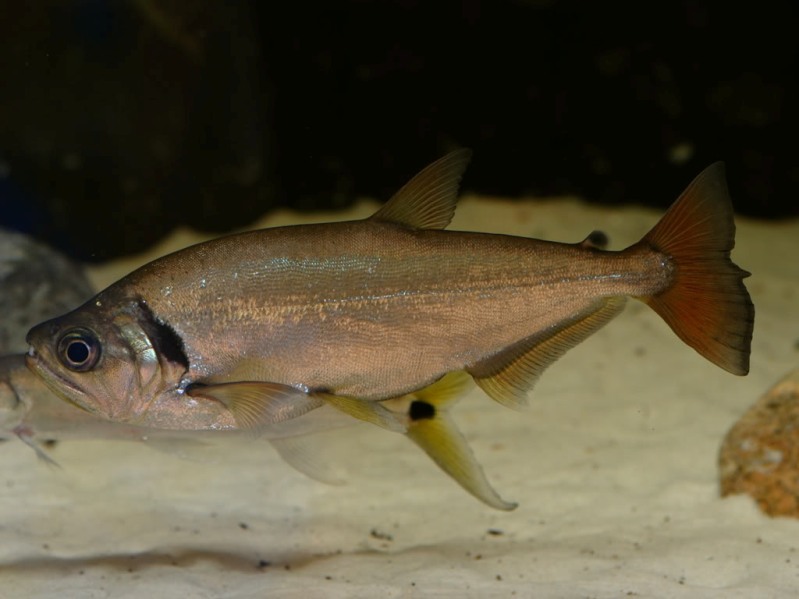
Hydrolycus tatauaia
Toledo-Piza, Menezes & Santos, 1999
Max length455mm SL18in SLTanknot recordedTemp24–28°C75–82°FpH6.0–8.0Vernacular names in Brazil include 'Cachorra' or 'Pirandirá', although these are also applied to congeners. It can be told apart from all congeners by the following combination of characters: head and body silvery with dark dorsal surface; an elongate dark blotch posterior to the opercle; dorsal, caudal and anal-fin rays reddish to orange proximally with some individual variation in intensity and tonality; adipose fin dark, with diffuse black pigmentation.
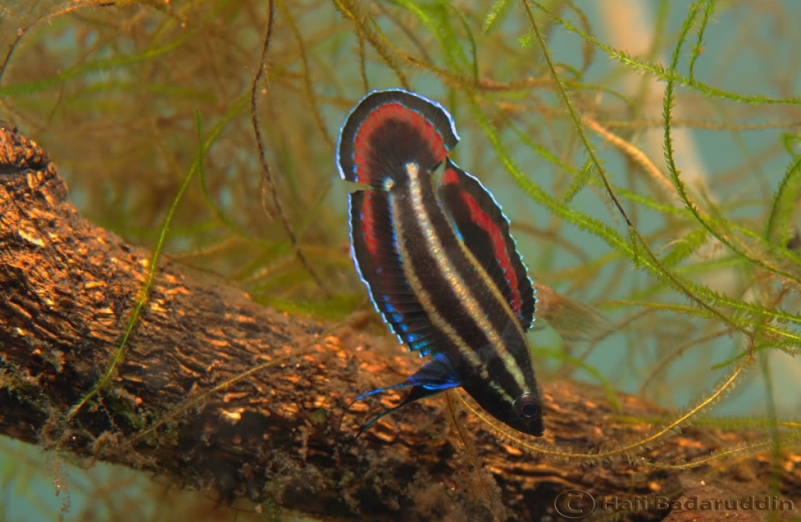
Parosphromenus tweediei
Kottelat & Ng, 2005
Max length35mm SL1.4in SLTank40 × 20cm16 × 8inTemp22–28°C72–82°FpH3.0–6.5This species has been known in the aquarium hobby since the mid-twentieth century but has almost always been identified as the congener P. deissneri and appears as such in the majority of aquarium literature. It can be told apart from congeners by the colour pattern in adult males (see 'Sexual Dimorphism') plus possession of 11-12 spinous dorsal-fin rays, 13-14 spinous anal-fin rays and 6-8 segmented anal-fin rays.
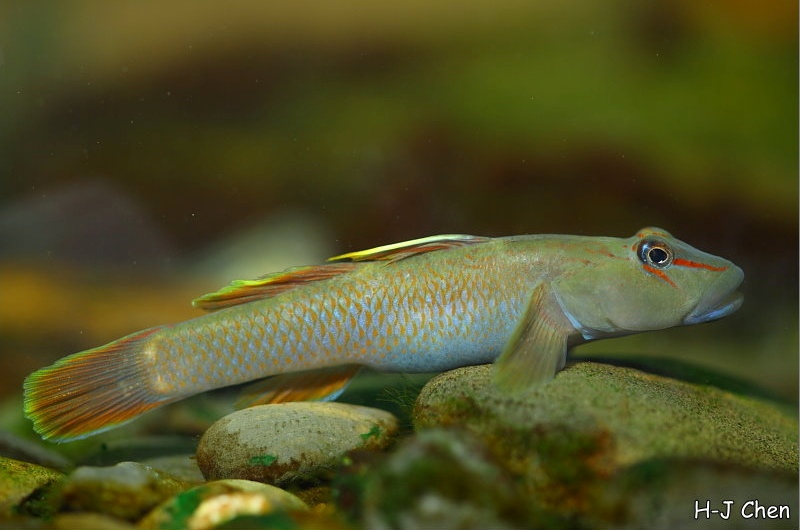
Rhinogobius candidianus
Regan, 1908
Max length80mm SL3.1in SLTank80 × 30cm31 × 12inTemp18–28°C64–82°FpH6.0–8.0This species is normally imported alongside a smaller-growing, near-identical congener currently listed as R. cf. nantaiensis with both traded as R. candidianus. They can be separated by snout length, which is noticeably longer in R. candidianus, and adult size with R. cf. nantaiensis reaching just 50-55 mm. R. candidianus can be distinguished from other congeners by a combination of cha...
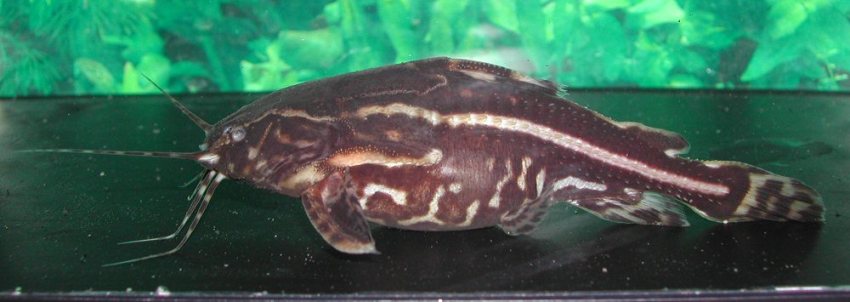
Acanthodoras cataphractusChocolate Talking Catfish
Linnaeus, 1758
Max length115mm SL5in SLTank120 × 30cm48 × 12inTemp22–26°C72–79°FpH6.0–7.5This species, which may also be referred to by the alternative vernacular names 'spiny catfish', 'painted talking catfish' or 'chocolate raphael', isn't particularly common in the trade and most often exported only as bycatch among shipments of Platydoras armatulus. It appears very similar to the congener A. spinosissimus with the most useful external distinguishing character being the presence of pale blotches on the dorsal surface, between the dorsal and caud...
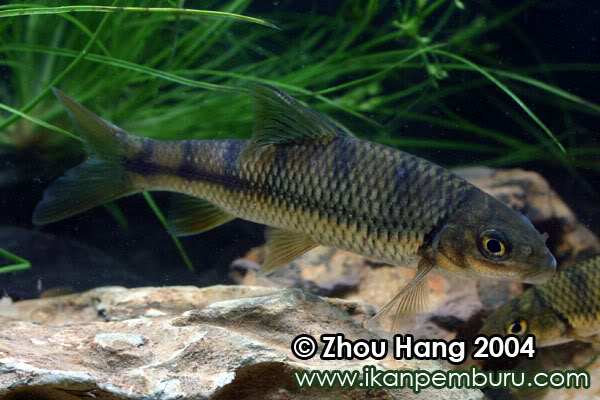
Acrossocheilus parallens
Nichols, 1931
Max length160mm SL6in SLTanknot recordedTempnot recordedpHnot recordedMembers of the genus are characterised by possessing a particular number of dark vertical bar on each flank, and A. parallens belongs to a group of species with five or six such bars, each of which is two scales in width. Congeners sharing this pattern include A. fasciatus, A. hemispinus (in juveniles only), A. jishouensis, A. kreyenbergii, A. paradoxus, A. spinifer, A. wenchowensis, and A. wuyiensis.
Akysis vespertinusWestern Stream Catfish
Ng, 2008
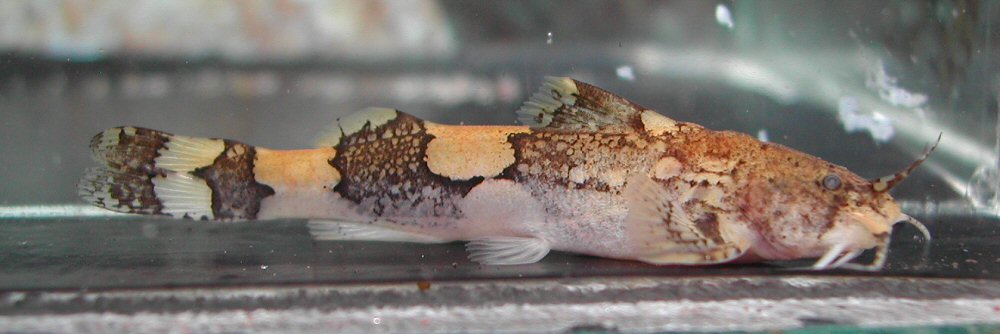
Max length35mm SL1.4in SLTank45 × 30cm18 × 12inTemp16.5–24°C62–75°FpH6.0–7.5This species is exceptionally rare in the aquarium trade and can be distinguished from congeners by the following combination of characters: snout narrow with head appearing triangular as a resul...
Alestopetersius brichardiCherry Red Congo Tetra
Poll, 1967
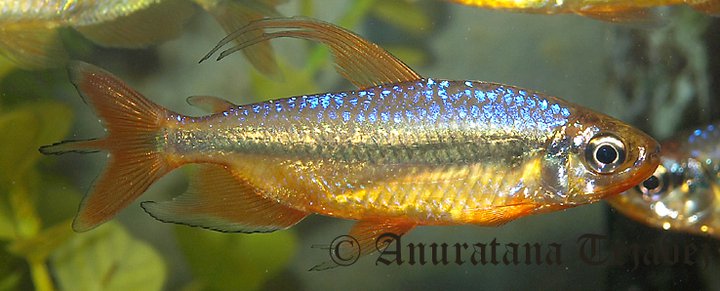
Max length80mm SL3.1in SLTank120 × 30cm48 × 12inTemp20–28°C68–82°FpH5.0–7.0This species is sometimes traded as 'cherry red Congo tetra' or 'super red Congo tetra' and has also been referred to using the misapplied names Alestopetersius nigropterus (a valid congener) and A. ansorgii (a synonym of Nannopetersius ansorgii).
Alestopetersius caudalisYellow-Tailed Congo Tetra
Boulenger, 1899
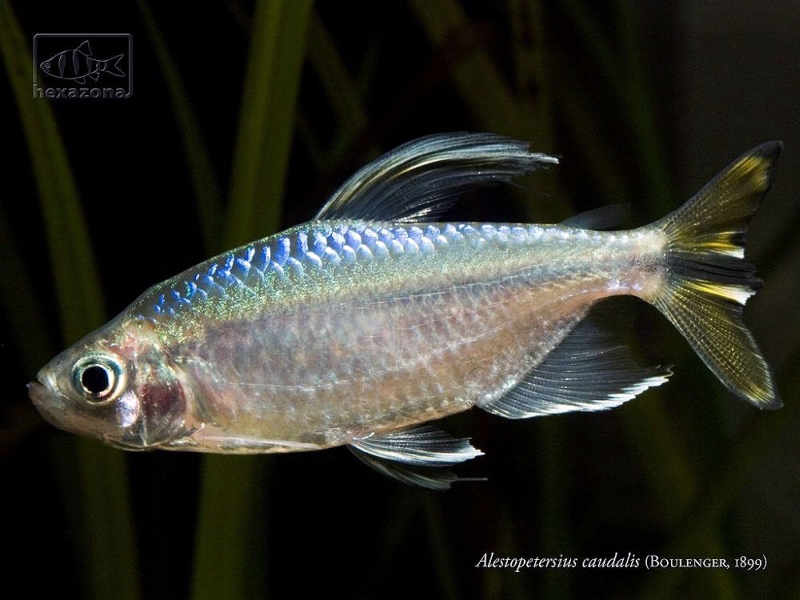
Max length60mm SL2.4in SLTank120 × 30cm48 × 12inTemp22–26°C72–79°FpH5.0–7.5This species is also traded as 'yellow-finned', 'yellowtail' or 'blue Congo' tetra and is occasionally bred on a commercial basis, although not on a scale comparable to its better-known relative Phenacogrammus interruptus. No recent key to the genus exists but based on Géry (1977) and images in Mbimbi Mayi Munene and Stiassny (2012) it can be told apart from congeners by a combination of: extended median caudal-fin rays in adult males; absence of prominent dar...
Alestopetersius nigropterusAfrican Rainbow Tetra
Poll, 1967
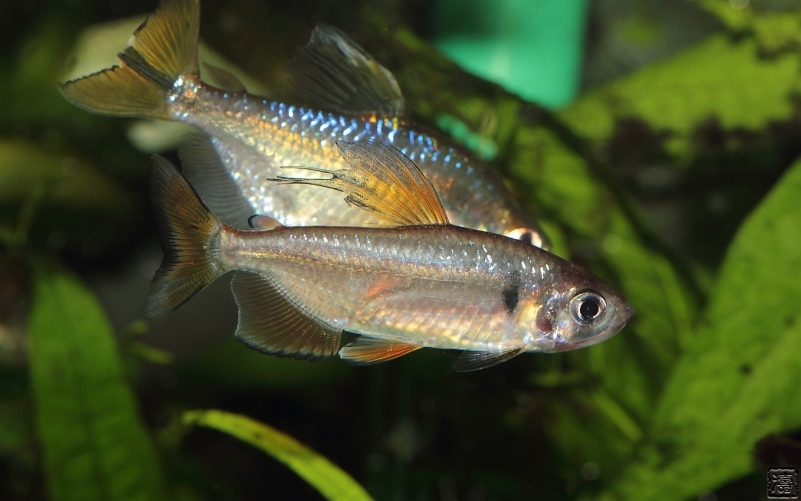
Max length60mm SL2.4in SLTank120 × 30cm48 × 12inTemp22–26°C72–79°FpH5.0–7.0This fish is normally traded as A. nigropterus or A. cf. ansorgii although neither appears to be its correct name meaning it remains unidentified at present. A. nigropterus is a valid congener that is not in the aquarium trade with little to no export from Lake Mai-Ndombe, to which it is endemic, while A. ansorgii is a synonym of Nannopetersius ansorgii.
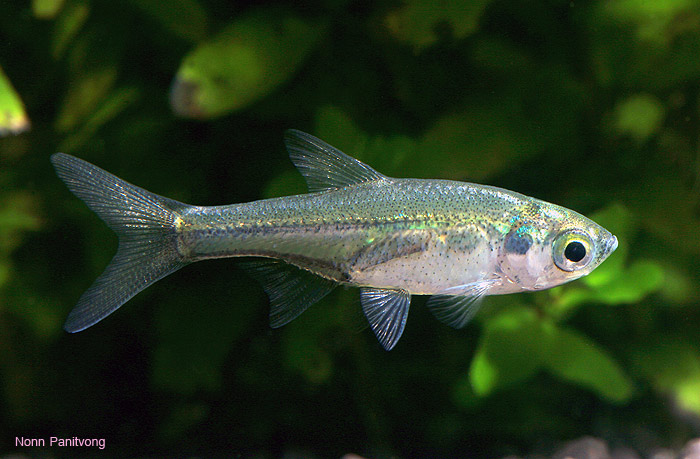
Amblypharyngodon chulabhornaePrincess Carplet
Vidthayanon & Kottelat, 1990
Max length40mm SL1.6in SLTank90 × 30cm36 × 12inTemp18–28°C64–82°FpH6.0–8.0The genus Amblypharyngodon currently contains five valid species, and A. chulabhornae can be distinguished from congeners by the following combination of characters: 42-50 (vs. 50-79) scales in the lateral row; lateral line incomplete with 6-7 (vs. 7-23) perforated scales; 4-5 scales on a transverse row between the lateral line and pelvic-fin base. All members of the genus lack barbels.
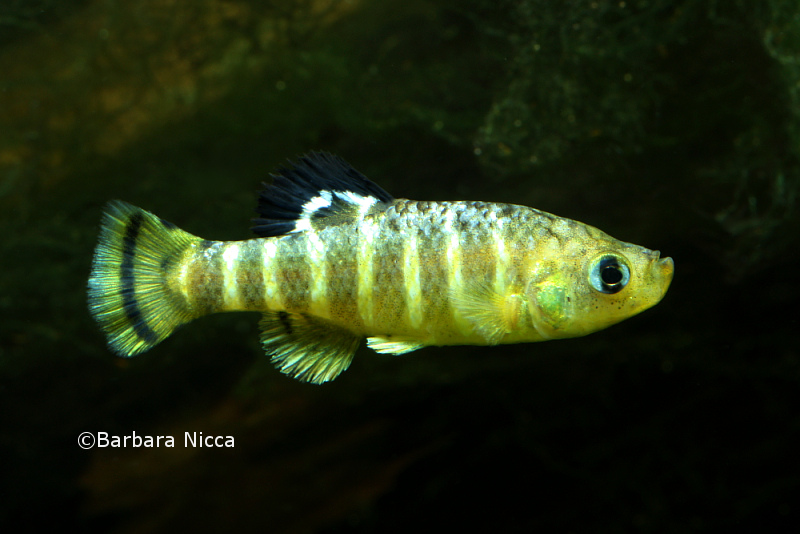
Anatolichthys anatoliaeAnatolian Toothcarp
Leidenfrost, 1912
Max length55mm SL2.2in SLTank120 × 30cm48 × 12inTemp2–30°C36–86°FpH7.0–8.5A. anatoliae is the most widely-distributed of the Anatolian Aphanius species although like most of its congeners is not easy to come by in the hobby. You are unlikely to find it on sale in aquatic stores although it may be available via specialist breeders or associations from time-to-time. While Aphanius spp. are certainly not as colourful as some of their relatives their interesting behaviour and continuous activity make them fascinating aquarium subjects and well worth a try if you possess the de...
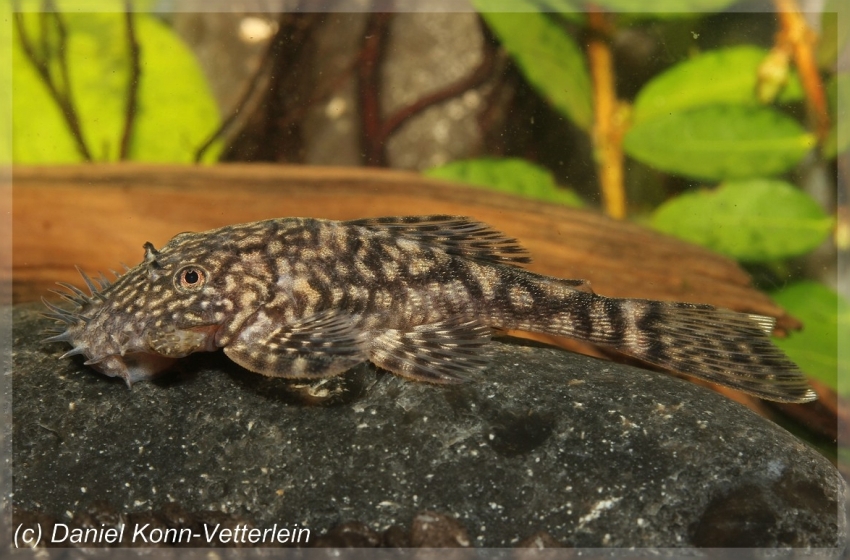
Ancistrus claroLDA 008
Knaack, 1999
Max length70mm SL2.8in SLTank60 × 30cm24 × 12inTemp23–28°C73–82°FpH6.0–7.5This species is sometimes confused with unidentified fishes such as A. sp. 'L352'. It can be told apart from closely-related congeners by possession of relatively long maxillary barbels which are free from the lower lip, and a colour pattern consisting of small spots on the head and vermiform lines on the body in males, and small spots all over the head and body in females.
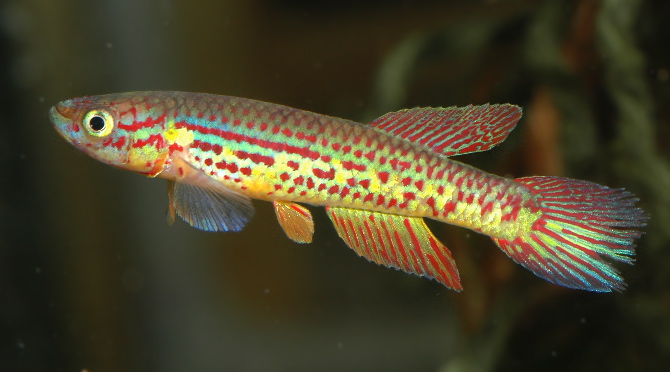
Aphyosemion bochtleriBochtler's Lyretail
Radda, 1975
Max length50mm SL2.0in SLTanknot recordedTemp18–22°C64–72°FpH6.0–7.0Described from a rainforest stream near the settlement of Mintoum, northern Gabon and has a wider distribution in the upper Ivindo River basin, a tributary of the larger Ogooué system. Thi species was considered synonymous with the congener A. herzogi Radda 1975 for a number of years but is currently recognised as distinct.
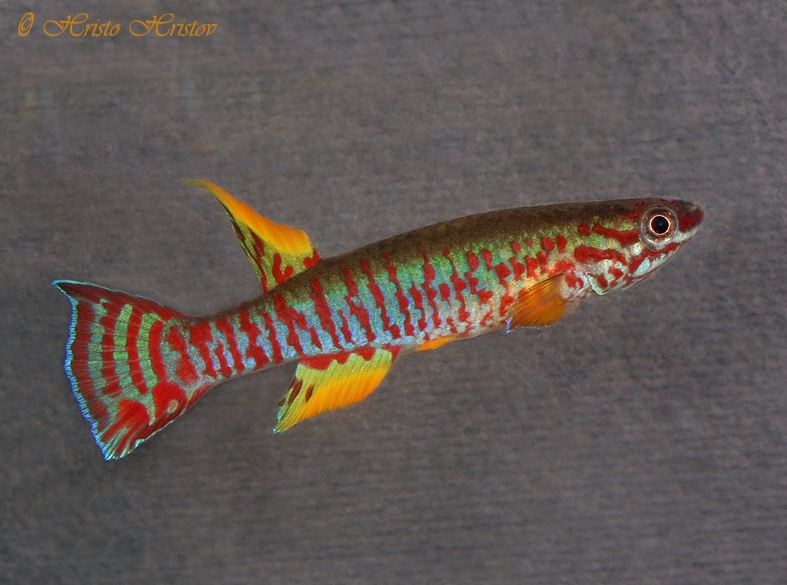
Aphyosemion bualanumBouala Lyretail
Ahl, 1924
Max length50mm SL2.0in SLTanknot recordedTempnot recordedpHnot recordedDescribed from 'Buala, Cameroon', which corresponds to modern-day Bouala in Central African Republic. It's known distribution includes parts of northern Cameroon, western Central African Republic, southeastern Chad and possibly eastern Nigeria in the upper Benue and Mayo Kébbi river systems. The specific name was mis-used to refer to various populations of the congener A. elberti prior to 1990, and we've been unable to confirm if the specimen pictured here is correctly identified or not. It is listed as 'endangered' by the IUCN.
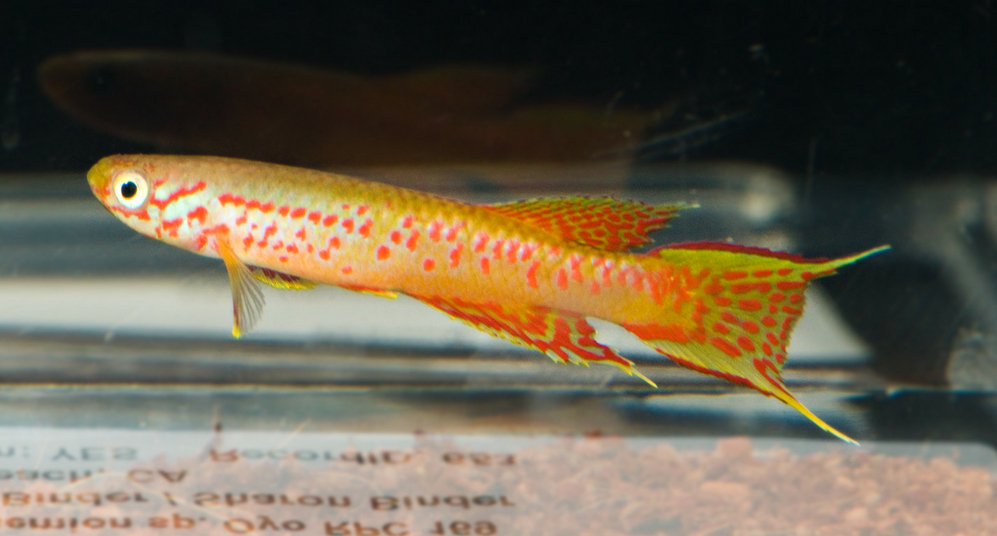
Aphyosemion sp. 'Oyo' RPC 91/8
authority not recorded
Max length50mm SL2.0in SLTank45 × 30cm18 × 12inTemp18–23°C64–73°FpH5.5–7.0This fish may be synonymous with the congener A. castaneum. Collected for the aquarium hobby in 1991 from close to the town of Oyo, Cuvette department, Republic of the Congo. The town lies on the Alima River, a right bank tributary of the middle Congo system.
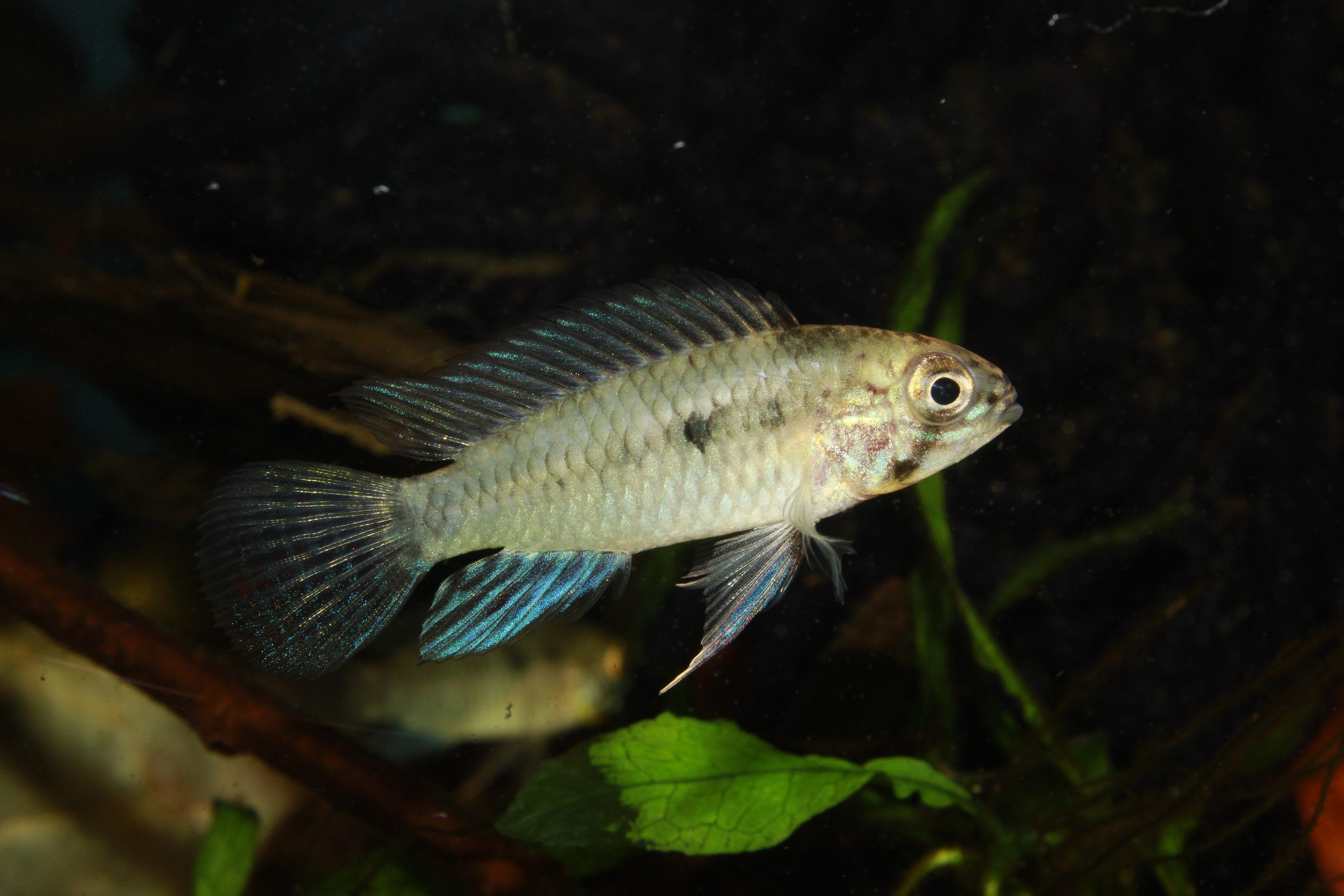
Apistogramma commbraeA93
Regan, 1906
Max length♂ 50 · ♀ 30mm SL♂ 2.0 · ♀ 1.2in SLTank60 × 30cm24 × 12inTemp15–27°C59–81°FpH6.0–7.4Apistogramma commbrae and other members of the commbrae complex can be distinguished from congeners by the conspicuous double caudal peduncle spot. This species may also be polymorphic, with some males exhibiting red and blue markings on the cheeks and a yellow gular region.
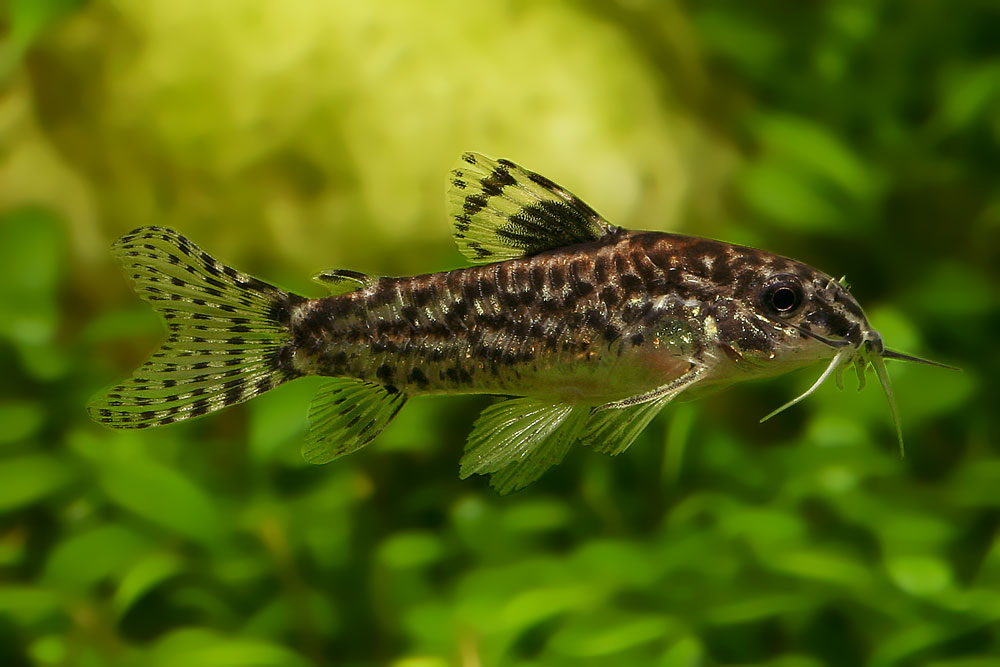
Aspidoras pauciradiatus
Weitzman & Nijssen, 1970
Max length35mm SL1.4in SLTank60 × 30cm24 × 12inTemp20–27°C68–81°FpH6.0–7.0This species is sometimes referred to as 'false corydoras' or 'sixray corydoras'. A. pauciradiatus can be distinguished from congeners by possession of 6 soft dorsal-fin rays, as opposed to 7 in other Aspidoras species, plus its distinctive colour pattern. Aspidoras species are distinguished from the very...