Basin
Amazon basin
182 profiles across 112 rivers name the Amazon basin's waters as a locality.
- Species
- 182
- Rivers
- 112
- Photographed
- 179 of 182
- Difficulty rated
- 181 of 182
Rivers in this basinspecies recorded from each
- Negro86 species
- Marañón33 species
- Xingu32 species
- Napo30 species
- Tapajós30 species
- Casiquiare22 species
- Branco20 species
- Trombetas19 species
- Japurá18 species
- Mamore18 species
- Pastaza16 species
- Putumayo16 species
- Içá13 species
- Itaya13 species
- Huallaga11 species
- Tigre10 species
- Madre De Dios9 species
- Manuripi9 species
- Tefé9 species
- Uaupés9 species
- Aripuanã7 species
- Iriri7 species
- Urubu7 species
- Arapiuns6 species
- Manacapuru6 species
- Corrientes5 species
- Jamanxim5 species
- Juruena5 species
- Tahuamanu5 species
- Aguarico4 species
- Marauiá4 species
- Negro (Uruguay)4 species
- Orthon4 species
- Takutu4 species
- Beni3 species
- Caeté3 species
- Curuá3 species
- Curuá Una3 species
- Içana3 species
- Jamari3 species
- Manú3 species
- Orteguaza3 species
- Preto da Eva3 species
- Uatumã3 species
- Unini3 species
- Bobonaza2 species
- Canumã2 species
- Cuieiras2 species
- Cupari2 species
- Curuçá2 species
- Demini2 species
- Heath2 species
- Huitoyacu2 species
- Iaco2 species
- Jauaperi2 species
- Maracanã2 species
- Morona2 species
- Nhamundá2 species
- Paru (Brazil)2 species
- San Martin2 species
- Tambopata2 species
- Teles Pires2 species
- Tiquié2 species
- Yacuma2 species
- Yasuni2 species
- Abunã1 species
- Acre1 species
- Amanã (Brazil)1 species
- Anauá1 species
- Andirá1 species
- Branquinho1 species
- Candeias1 species
- Carabinani1 species
- Cenepa1 species
- Comambo1 species
- Crepori1 species
- Cunambo1 species
- Curicuriari1 species
- Curucuriari1 species
- Darahá1 species
- dos Marmelos1 species
- Embira1 species
- Grajaú1 species
- Guapay1 species
- Inambari1 species
- Ireng1 species
- Isiboro1 species
- Jari1 species
- Juma1 species
- Jundiá1 species
- Juriti1 species
- Maicuru1 species
- Mamuru1 species
- Maniqui1 species
- Maú1 species
- Pachitea1 species
- Padauari1 species
- Palcazu1 species
- Papuri1 species
- Paragúa1 species
- Pintuyacu1 species
- Puduari1 species
- Santiago1 species
- Tamaya1 species
- Tambo1 species
- Tapiche1 species
- Tarauacá1 species
- Tiputini1 species
- Tucuruí1 species
- Verde (Brazil)1 species
- Yacu1 species
- Yapacaní1 species
Runs through
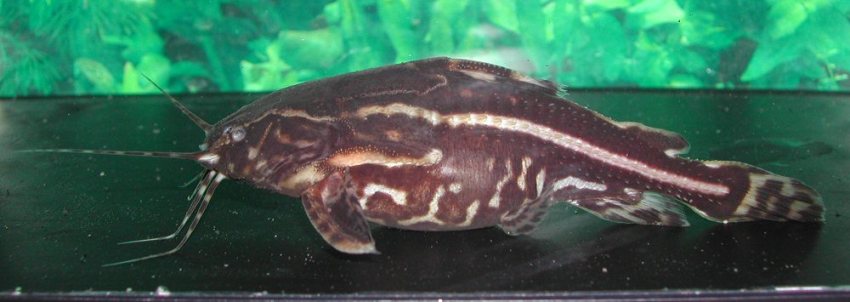
Acanthodoras cataphractusChocolate Talking Catfish
Doradidae · Linnaeus, 1758
This species, which may also be referred to by the alternative vernacular names 'spiny catfish', 'painted talking catfish' or 'chocolate raphael', isn't particularly common in the trade and most often exported only as bycatch among shipments of Platydoras armatulus. It appears very similar to the congener A. spinosissimus with the most useful external distinguishing character being the presence of pale blotches on the dorsal surface, between the dorsal and caud...
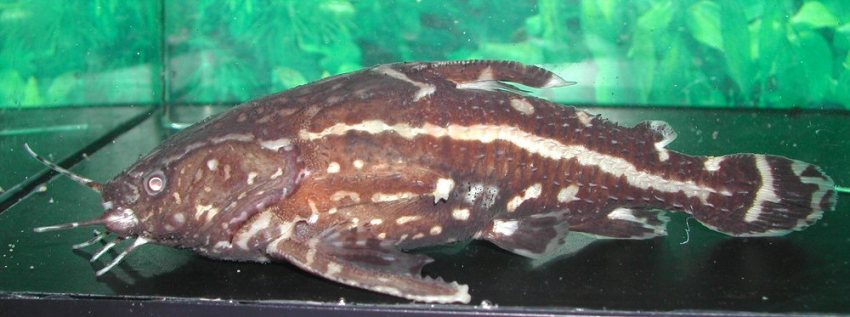
Acanthodoras spinosissimusChocolate Talking Catfish
Doradidae · Eigenmann & Eigenmann, 1888
This species, which may also be referred to by the alternative vernacular names 'spiny catfish', 'painted talking catfish' or 'chocolate raphael', isn't particularly common in the trade and most often exported only as bycatch among shipments of Platydoras armatulus. It appears very similar to A. cataphractus with the most useful external distinguishing character being the presence of pale blotches on the dorsal surface, between the dorsal and caudal fins, in....
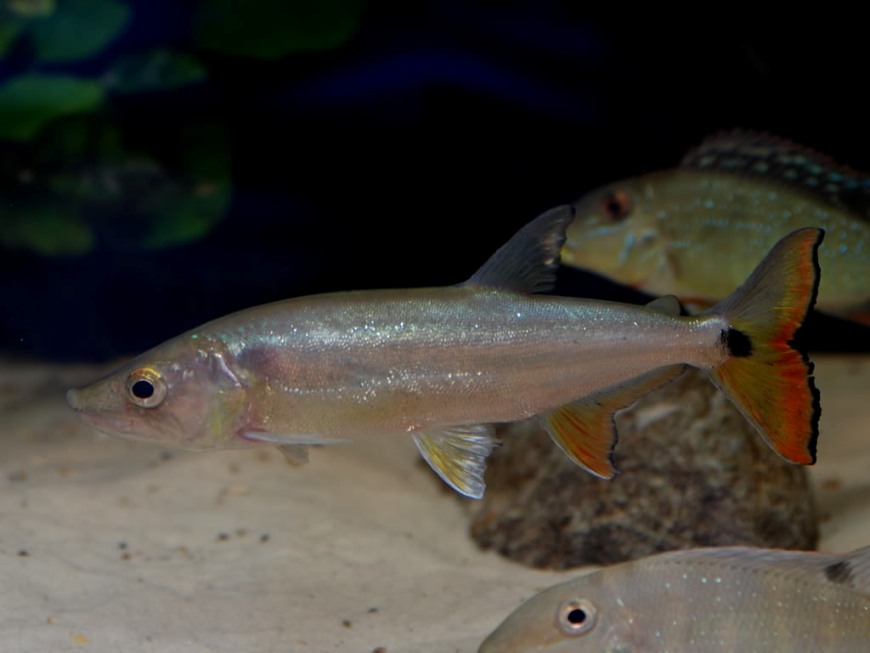
Acestrorhynchus altusRed Barracuda Tetra
Acestrorhynchidae · Menezes, 1969
This species is not normally aggressive towards conspecifics with juveniles in particular exhibiting a marked schooling instinct. Older individuals tend to be more solitary but still group together from time-to-time, and it's best maintained in numbers of four or more. One important point to note is that acestrorhynchids are can...
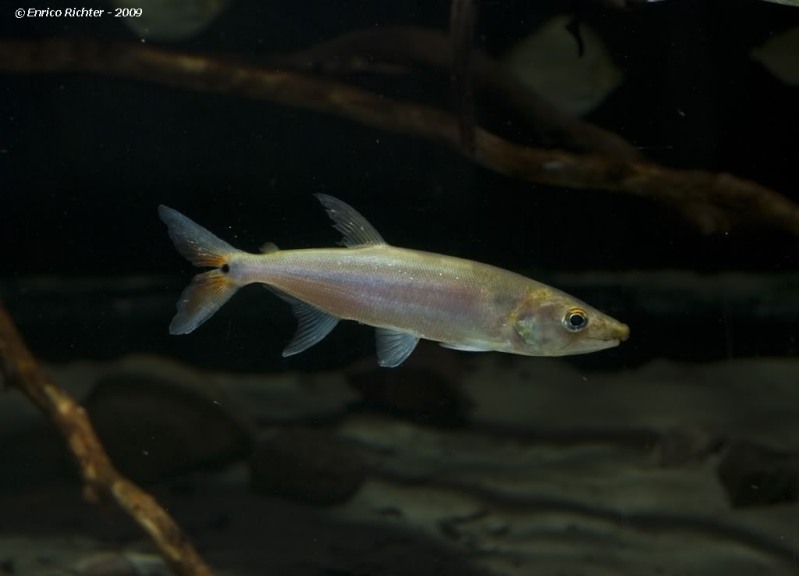
Acestrorhynchus falcatusRed-Tailed Freshwater Barracuda
Acestrorhynchidae · Bloch, 1794
The vernacular name of this fish is derived from its appearance and behaviour, rather than a genetic association with the marine barracuda, and it's also sometimes referred to as 'pike characin' or 'spotted cachorro' with local vernacular names including 'Grand dent-chien' (French Guiana), ' Cachorrinho' or 'Ueua' (Brazil). Although most species of Acestrorhynchus appear superficially similar to one another most exhibit distinguishable external chara...
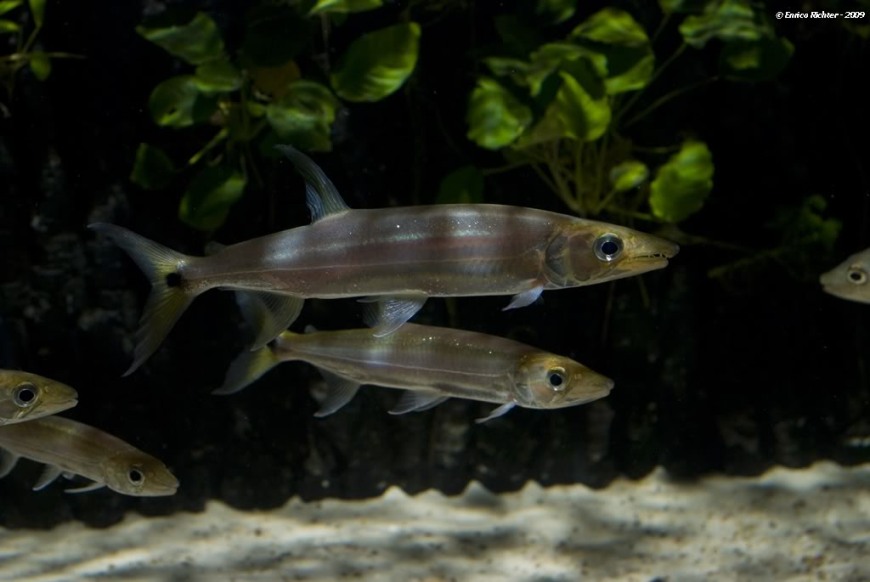
Acestrorhynchus falcirostrisBig-Eyed Cachorro
Acestrorhynchidae · Cuvier, 1819
This species is a member of the putative A. nasutus group of closely-related species within the genus alongside A. nasutus, A. maculipinna and A. isalineae. These are characterised by possession of two dark, longitudinal stripes, one running from the tip of the snout to the base and the other from the posterior edge of the lower maxilla to the underside of the caudal peduncle.
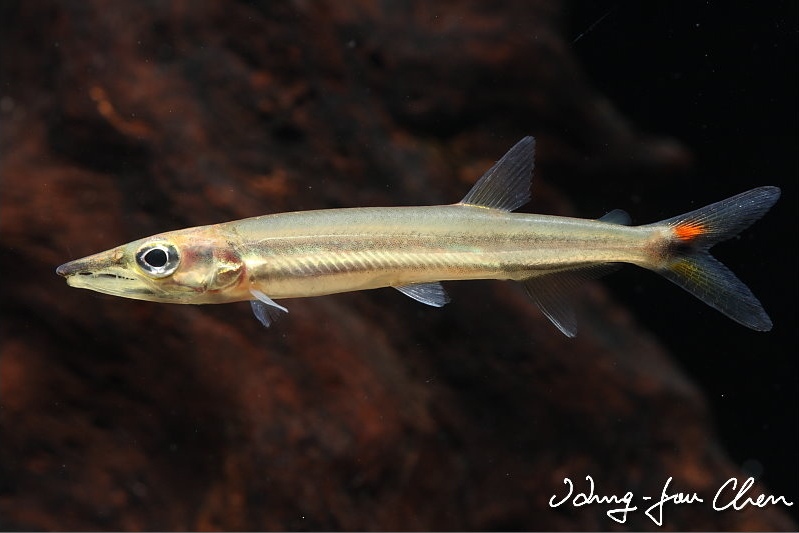
Acestrorhynchus isalineaeStriped Barracuda Tetra
Acestrorhynchidae · Menezes & Géry, 1983
This species is a member of the putative A. nasutus group of closely-related species within the genus alongside A. nasutus, A. maculipinna and A. isalineae. These are all characterised by possession of two dark, longitudinal stripes, one running from the tip of the snout to the base and the other from the posterior edge of the lower maxilla to the underside of the caudal peduncle.
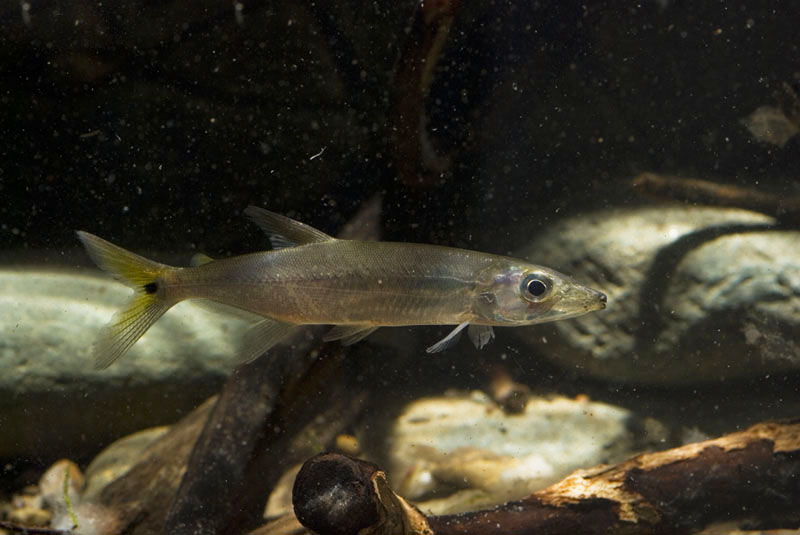
Acestrorhynchus microlepisPike Tetra
Acestrorhynchidae · Jardine, 1841
An obligate piscivore capable of consuming quite large prey in relation to its body size although it tends to focus on smaller prey such as tetras and related species. Newly-imported specimens may refuse to accept anything but live fishes although most can be weaned onto dead alternatives once they recognise them as edible, and some even learn to accept dried foods.
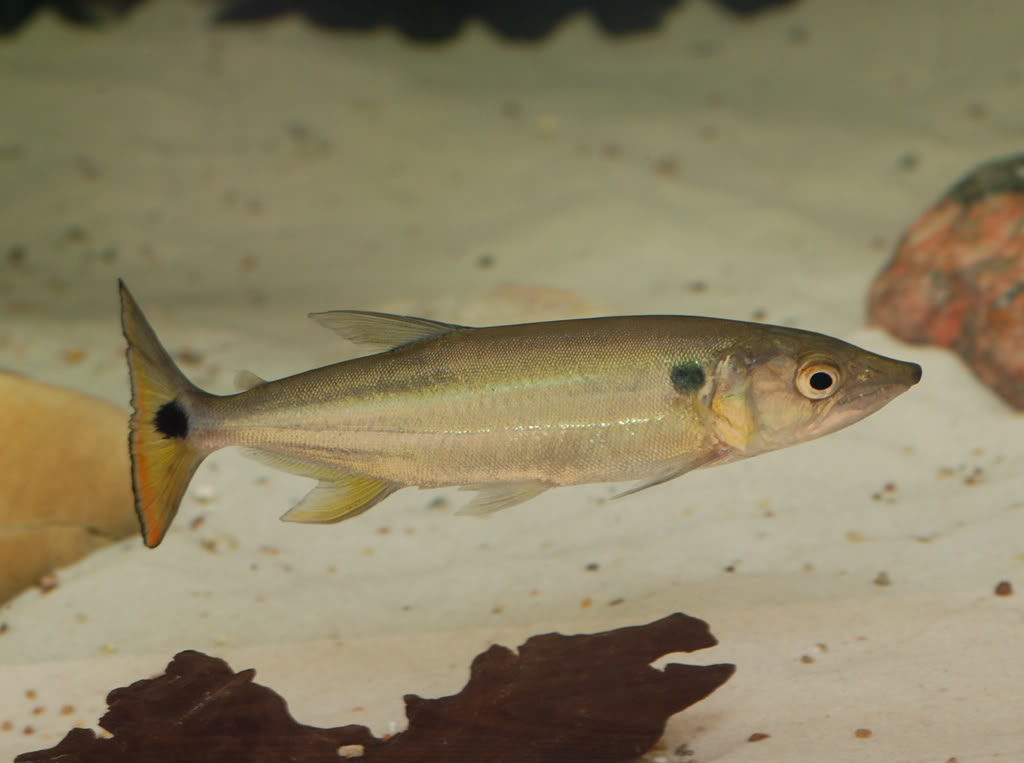
Acestrorhynchus pantaneiroPantanal Barracuda Tetra
Acestrorhynchidae · Menezes, 1992
An obligate piscivore capable of consuming surprisingly surprisingly large prey. Newly-imported specimens may refuse to accept anything but live fishes although most can be weaned onto dead alternatives once they recognise them as edible, and some even learn to accept dried foods- Like the vast majority of predatory fishes this specie...
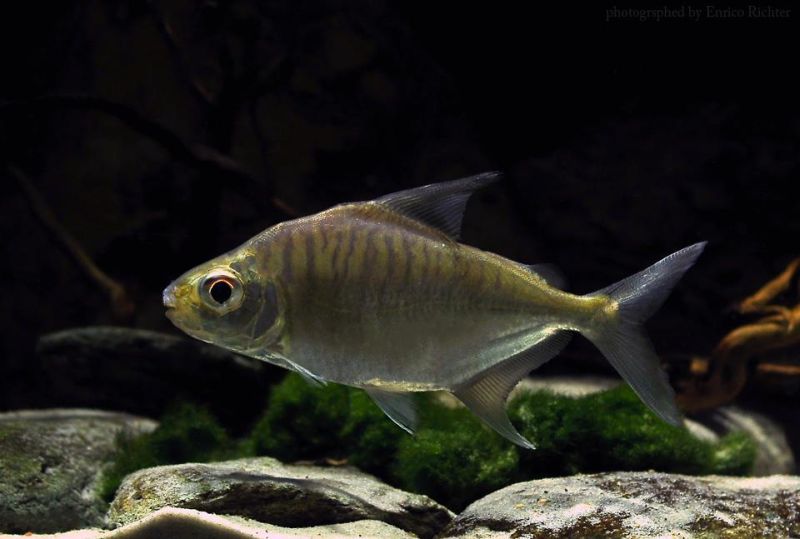
Acnodon normaniSheep Pacu
Serrasalmidae · Gosline, 1951
Known only from the lower Amazon river basin, and possibly restricted to the Xingu and Tocantins watersheds. Type locality is ' Rio Santa Teresa, a western tributary of upper Rio Tocantins, Goiaz State, Brazil', referring to what is now known as Goiás state, central Brazil.
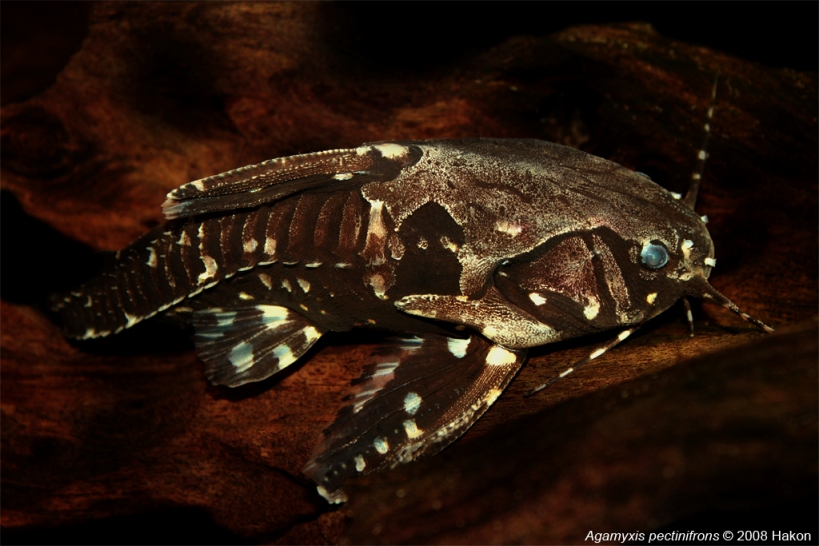
Agamyxis pectinifronsSpotted Talking Catfish
Doradidae · Cope, 1870
This species, which may also be referred to by the alternative vernacular names 'spotted raphael', 'white-spotted' or 'white-barred' catfish, is very common in the trade and despite its adult size is recommended to beginners and experienced aquarists alike since it is hardy, attractive and relatively-long-lived. The light body markings are highly variable in terms of exact placement and may be either white or pale to darkish yellow in colour. It is very similar i...
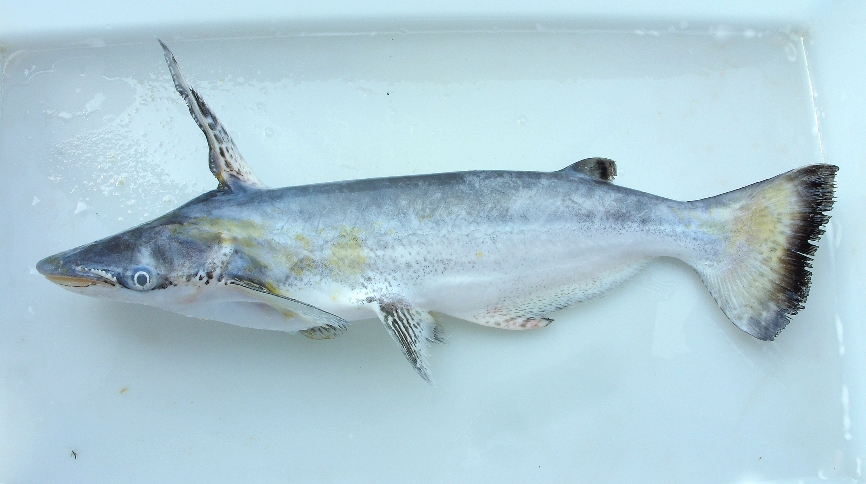
Ageneiosus inermisManduba
Auchenipteridae · Linnaeus, 1766
The genus Ageneiosus was at one point classified in the family Ageneiosidae alongside the genus Tetranematichthys, but this was not accepted by all authors. The grouping remains poorly-studied with the last major revision having been conducted by Watson (1990) in his unpublished dissertation, in which A. inermis was included under the currently synonymous name A. brevifilis. It can be separated from the majority of the genus (except A. marmoratus) by possession of a truncate caudal fin, and from...
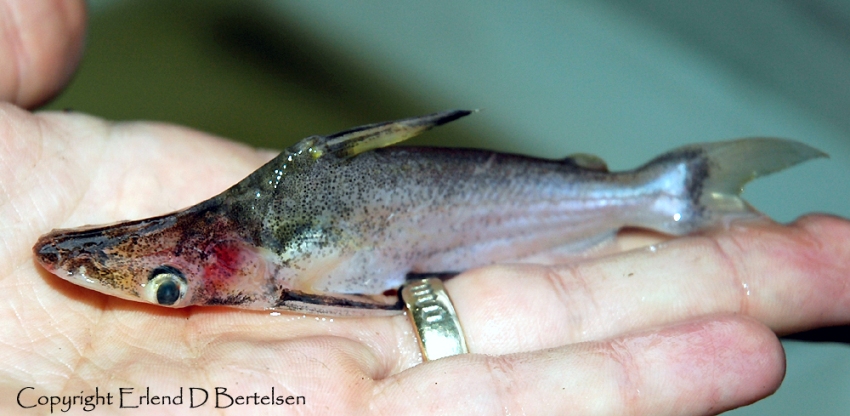
Ageneiosus ucayalensisDuck Catfish
Auchenipteridae · Castelnau, 1855
Apparently this species is polymorphic with body patterning varying significantly depending on locality. Individuals collected from black water habitats tend to be noticeably darker in overall colouration, for example, with this being particularly evident among populations from the Guiana Shield. The genus Ageneiosus was at one point classified in...
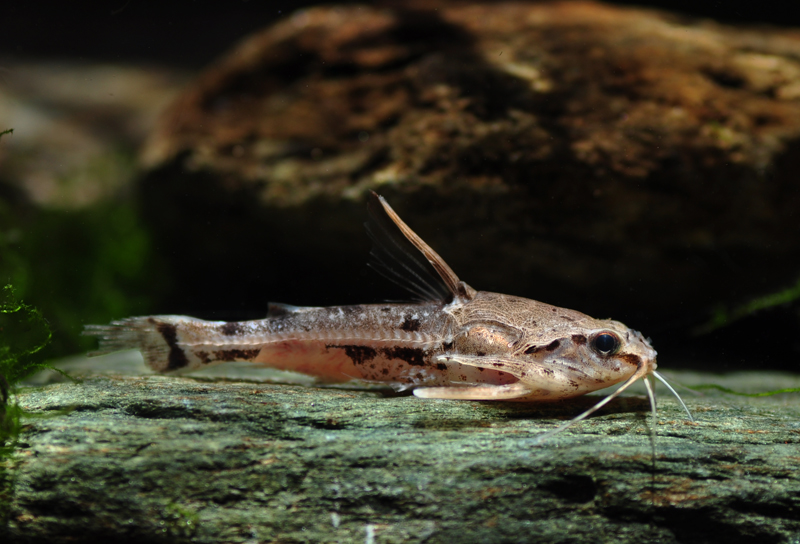
Amblydoras nauticusMarbled Talking Catfish
Doradidae · Cope, 1874
This species was previously thought to be, and is often still sold as, A. hancockii, a name currently considered synonymous with Platydoras hancockii (Valenciennes 1840). It's also known by the vernacular names of blue-eyed catfish or Hancock's doradid, and in many ways is an ideal beginners' catfish, being hardy and tolerant of a wide range of water conditions...
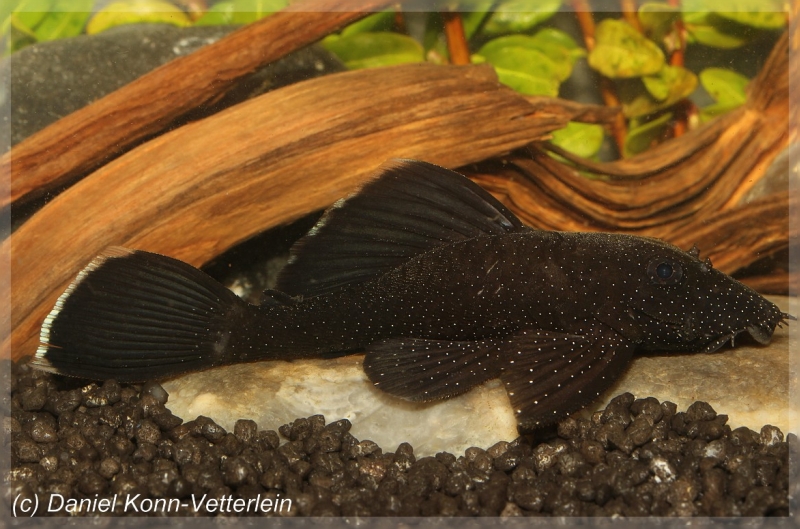
Ancistrus dolichopterusL183
Loricariidae · Kner, 1854
This species is not always identified correctly with its name used for the unidentified common bristlenose and other similar species, while the fish itself has been referred to as A. hoplogenys and assigned the L-number L183. Images and information describing it it in much of the available literature confirm this confusion.
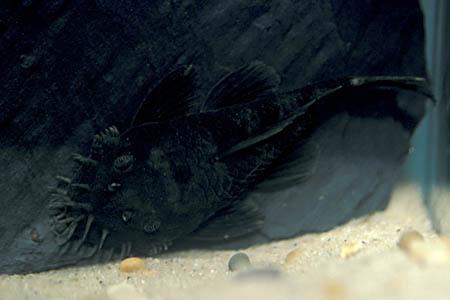
Ancistrus ranunculusL034
Loricariidae · Muller, Rapp Py-Daniel & Zuanon, 1994
A somehwhat odd-looking species with a distinctive wide head and overall flattened profile. Unfortunately this fish is not the easiest fish to keep alive in the aquarium since it requires rather specialised conditions and is often in poor condition post-import. As a juvenile, it often sports a pattern of light spots on the body, leading to confusion with the similarly shaped L255 species.In A. ranunculus, these spots fade as the fish mature,...
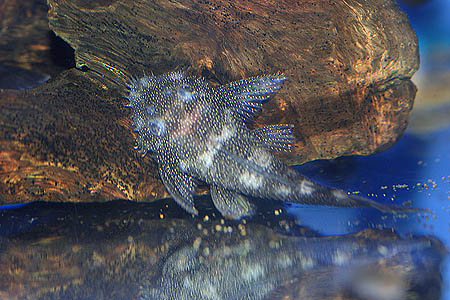
Ancistrus sp.L255
Loricariidae · authority not recorded
A somewhat odd-looking species with a distinctive wide head and overall flattened profile. Unfortunately this fish is not the easiest fish to keep alive in the aquarium since it requires rather specialised conditions and is often in poor condition post-import.
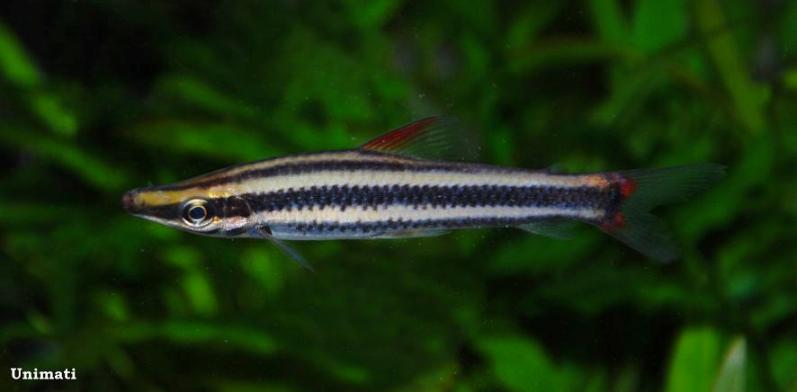
Anostomus anostomusStriped Headstander
Anostomidae · Linnaeus, 1758
A biotope-style set-up could consist of a sandy substrate, piles of smooth rocks and driftwood roots and branches, some of which should penetrate the water surface. Aquatic vegetation can be included if you wish but is likely to be eaten.
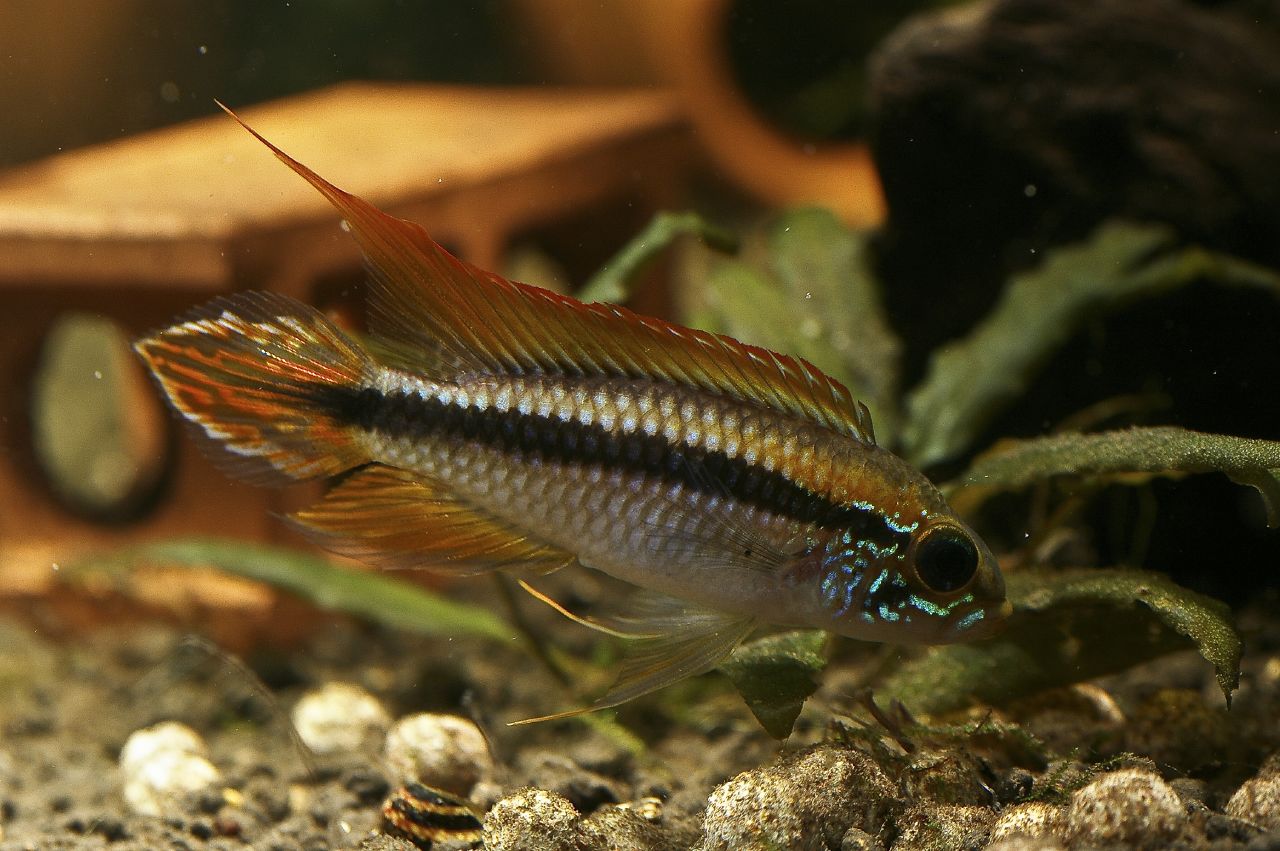
Apistogramma agassiziiAgassizi's Dwarf Cichlid
Cichlidae · Steindachner, 1875
Numerous ornamental forms of this species have been selectively-bred for the aquarium trade, some of which include. It has also been assigned the 'A' number A234 under the DATZ system with possibly conspecific, related forms similarly numbered A235, A236, A237, A238, A239, A240, A241 and A242 depending on locality. The genus Apistogramma is among the most speciose of South American cichlid genera with around 70 species valid at present but many more awaiting description. In addition ...
Apistogramma alacrinaRedspot Dwarf Cichlid
Cichlidae · Kullander, 2004
This species differs from all other described members of the genus by the presence of dark blotches at the dorsal and ventral base of the pectoral fins. Three very similar-looking fishes have been assigned the codes A106, A107 and A108 under the DATZ system and are also known in the aquarium hobby as A. sp. 'rotpunkt' (this form has been in the hobby for decades with its precise origin unclear), A. sp. 'rotpunkt Orteguazas' (the paratype form of A. alacrina) and A. sp. 'rotpunkt Guayas', respectively. It remains to be seen whether they're conspecific with A. alacrina or not since they exhibit some differences in colour pattern and morphology.
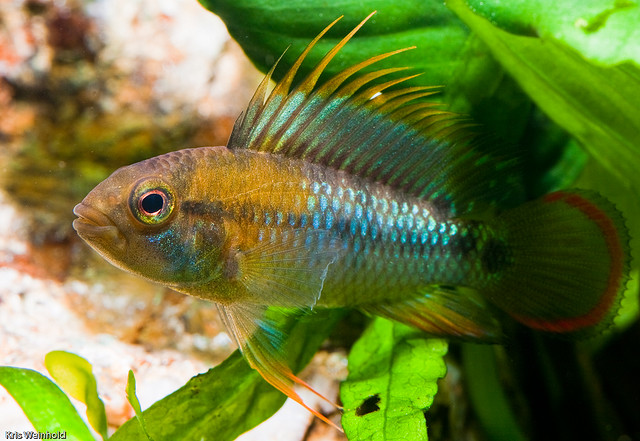
Apistogramma baenschiA188
Cichlidae · Römer, Hahn, Römer, Soares & Wöhler, 2004
This species is assigned the code A188 under the DATZ system and is also known by the trade names A. sp. 'Inca/Inka', A. sp. 'Inka 50', A. sp. 'highfin nijsseni', A. sp. 'Nijsseni 2', A. sp. 'red crescent' or A. baenschi 'Inca'. It's among those members of the genus produced on a commercial basis and is regularly available in the aquarium trade.
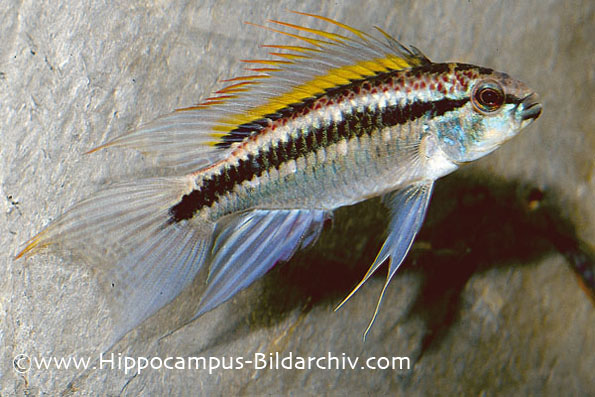
Apistogramma bitaeniataTwo-Striped Dwarf Cichlid
Cichlidae · Pellegrin, 1936
Localities known in the hobby include 'Pastaza', 'Putumayo', 'Requena', 'Río Nanay', 'Rio Napo', 'Maniti', 'Momón', 'Río Tigre', 'Río Ampiyacu', 'Shishita', 'Shushupi', 'Yavari', 'Tefé', 'Manaquiri', 'Lago do Januari', 'Mamori' (often misspelled 'Mamuri'), 'Careiro', 'Manacapuru', 'Juruá', 'Curuaí', and 'Purutu' though we've been unable to find anywhere matching the latter name within the species' known distribution, and in fact several of these names are applied incorrectly on a regular basis.
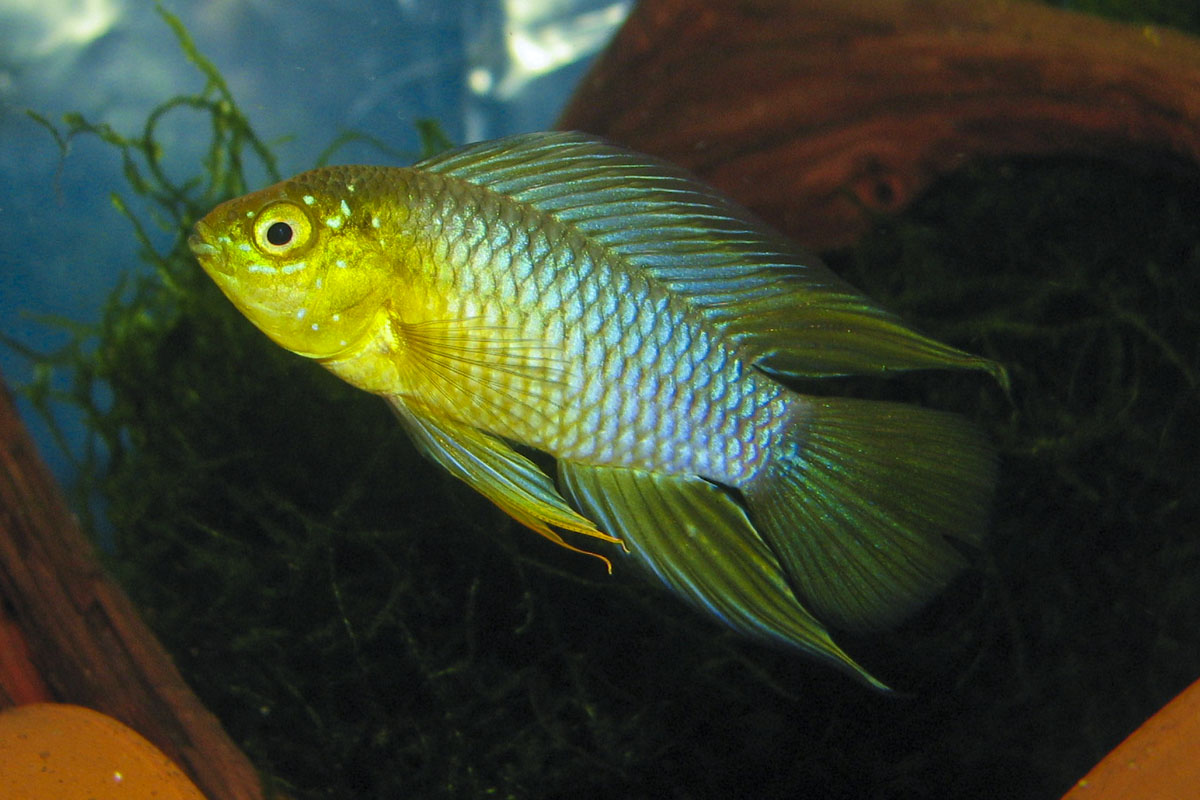
Apistogramma borelliiBorelli's Dwarf Cichlid
Cichlidae · Regan, 1906
Numerous ornamental forms of this species have been selectively-bred for the aquarium trade. It has also been assigned the 'A' number A234 under the DATZ system with possibly conspecific, related forms similarly numbered A103, A104, and A105 depending on locality.
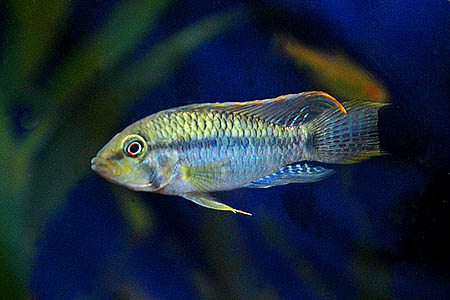
Apistogramma brevis
Cichlidae · Kullander, 1980
Apistogrammas are identified by the use of "A numbers"in a similar fashion to the "L number" system used to identify loricariids. Apistogramma brevis is identified as A168. Additionally, apistos are also grouped into type families and this species is the species type of the brevis group. Unlike some apistogramma species, a. brevis occurs only in a relatively small range and has not been found outside this. personata complex gibbiceps group...
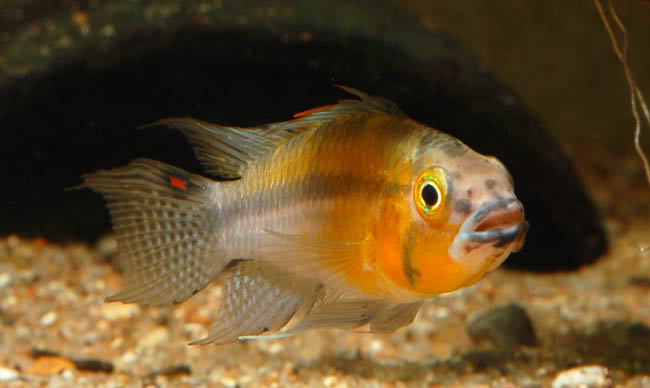
Apistogramma cacatuoidesCockatoo Cichlid
Cichlidae · Hoedeman, 1951
Numerous ornamental forms of this species have been selectively line-bred for the aquarium trade, vernacular names for which include "sunset", "sunburst", "double red", "triple red", "gold", "white gold", "orange flash" and "albino". It has also been assigned the 'A' number A200 under the DATZ system with possibly conspecific, related forms similarly numbered A201, A202 and A203 depending on locality. Th...
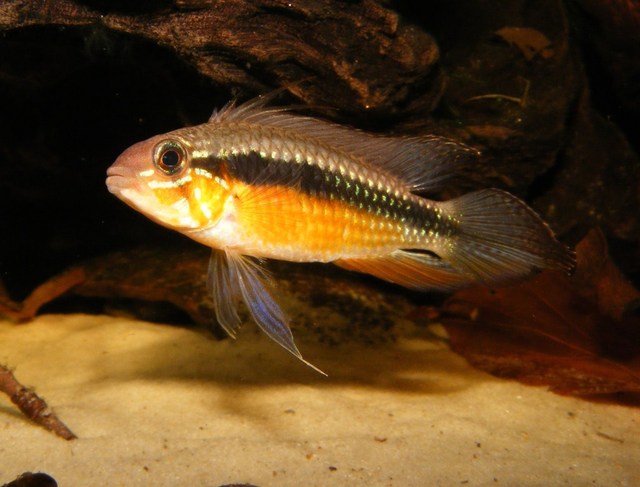
Apistogramma elizabethaeA208
Cichlidae · Kullander, 1980
The form from the rio Içana tends to have more blue markings on the head than that from the Uaupés, while a reddish population apparently collected close to the settlement of Tucana (sometimes mis-spelled 'Tucano') on the Uaupés is sometimes traded as A. elizabethae 'super red'. Apistogramma is among the most speciose of South American cichlid genera with around 70 species valid at present but many more awaiting description.
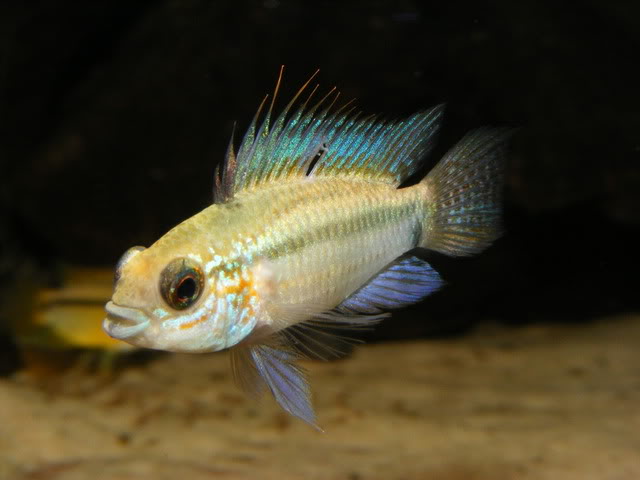
Apistogramma eremnopygeA218
Cichlidae · Ready & Kullander, 2004
Known only from Loreto region in northeastern (Amazonian) Peru. Type locality is 'Río Pintuyacu, 48 kilometers on road from Iquitos to Nauta, Río Itaya drainage, Province Loreto, Peru' and it's also been recorded from tributaries of the Nanay system in the same area. An additional population is known from the Río Tapiche, a tributary of the Río Ucayali located well over 150 km further south.
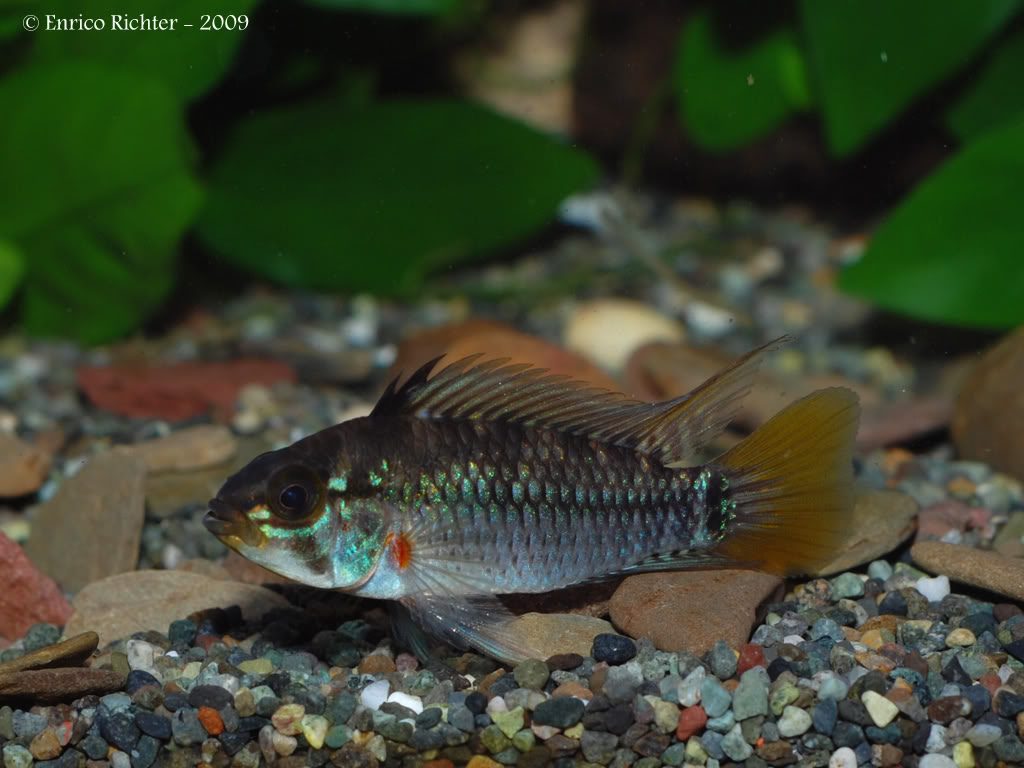
Apistogramma eunotus
Cichlidae · Kullander, 1981
The genus Apistogramma is among the most speciose of South American cichlid genera with around 70 species valid at present but many more awaiting description. In addition many species exist in two or more geographical colour forms which may or may not turn out to be distinct in the future. Hobbyists tend to label these with collection data if available in order to avoid mixing them and the potential of hybridisation.
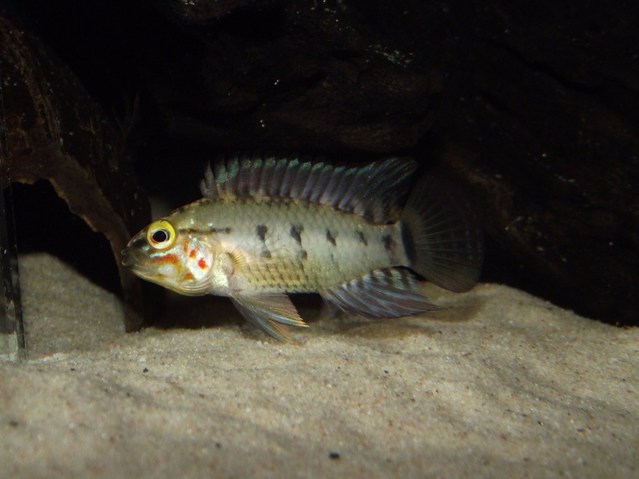
Apistogramma paulmuelleriA52
Cichlidae · Römer, Beninde, Duponchelle, García Dávila, Vela Díaz & Renno, 2013
This species is assigned the code A52 under the DATZ 'A' number system and is also known by the trade names A. sp. 'Apache', A. sp. 'Peru (II)', A. sp. 'Peru-regani', A. sp. cf. regani (Belém) and A. sp. 'carapintada'. Apistogramma is among the most speciose of South American cichlid genera with around 70 species valid at present but many more awaiting description. In addition many species exist in two or more geographical colour forms which may or ma...
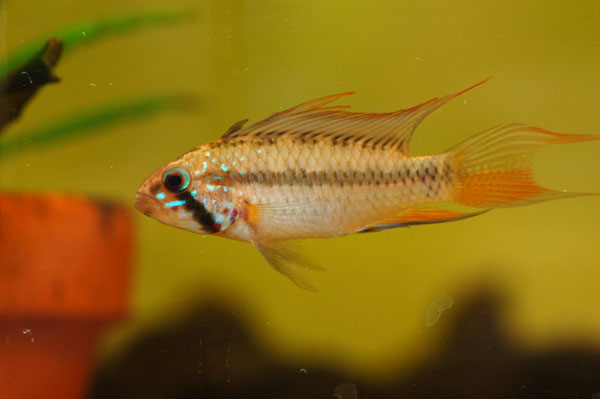
Apistogramma sp. 'breitbinden'A164
Cichlidae · authority not recorded
The German term 'breitbinden' translates literally as "broad-banded" and refers to the uniformly broad suborbital stripe seen in males of this 'species' which remains undescribed despite being known in the aquarium hobby for several decades. It's often imported as bycatch among shipments of wild-collected A. iniridae. Some of the populations have also been assigned th...
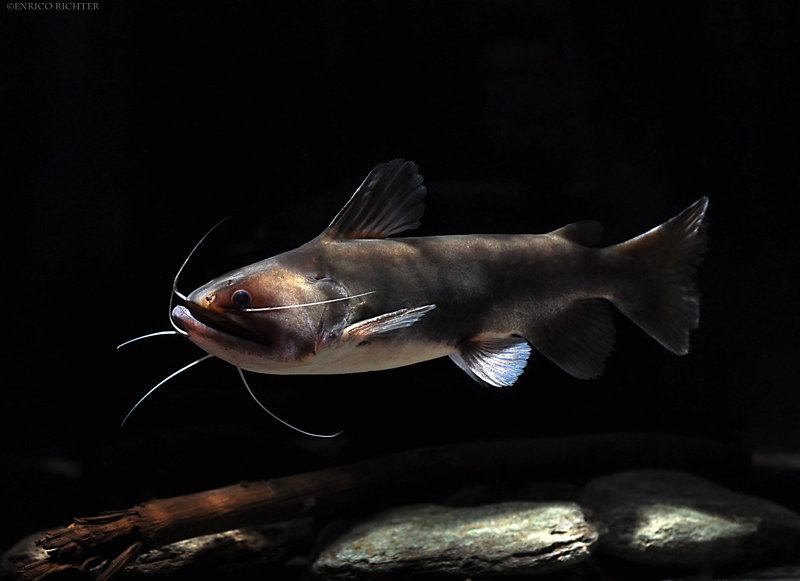
Asterophysus batrachusGulper Catfish
Auchenipteridae · Kner, 1858
An obligate predator by nature, but captive specimens readily accept strips of white fish, whole shrimp, earthworms, and similar once they are recognised as food. Adult individuals are unlikely to require feeding on a daily basis with 1-2 meals per week sufficient.
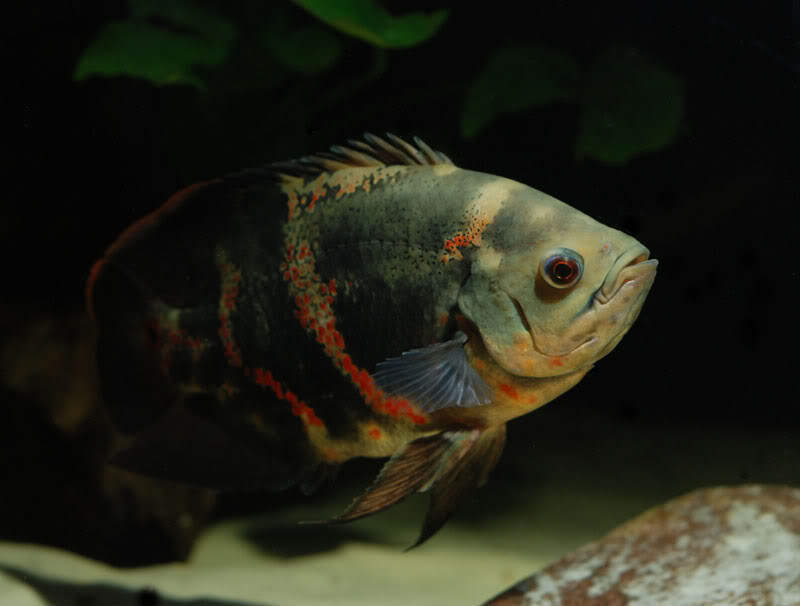
Astronotus ocellatusOscar
Cichlidae · Agassiz, 1831
This species is also referred to as 'velvet cichlid', 'red oscar', 'tiger oscar', or 'marble cichlid'. It is a popular aquarium fish although its adult size and typical life-span of 10-20 years must be taken into account before purchase. Numerous ornamental strains are now available, and while care is more-or-less identical for all of them a degree of additional care must be taken with the 'long-finned' variety which is a little less competitive than other forms.
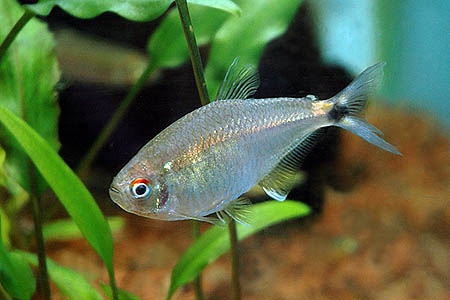
Astyanax bimaculatusTwo Spot Astyanax
Characidae · Linnaeus, 1758
A. bimaculatus is not a popular aquarium fish but is available on occasion exception, most often as a contaminant among shipments of other species. It's identity is also in question to an extent with the name currently applied to what is considered to represent a species complex comprising at least four taxa.
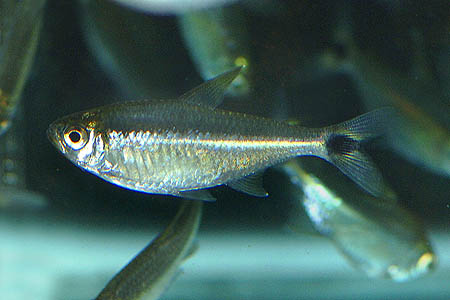
Astyanax kennedyiKennedy's Tetra
Characidae · Géry, 1964
Endemic to pthe upper Amazon basin in Peru, around the city of Iquitos. Most Astyanax spp. are not popular in the aquarium hobby, though the genus is among the most speciose within the family Characidae. A. kennedyi is no exception; you'll rarely see it offered for sale but may find the occasional specimen mixed among other species in shipments of wild fishes from Peru.
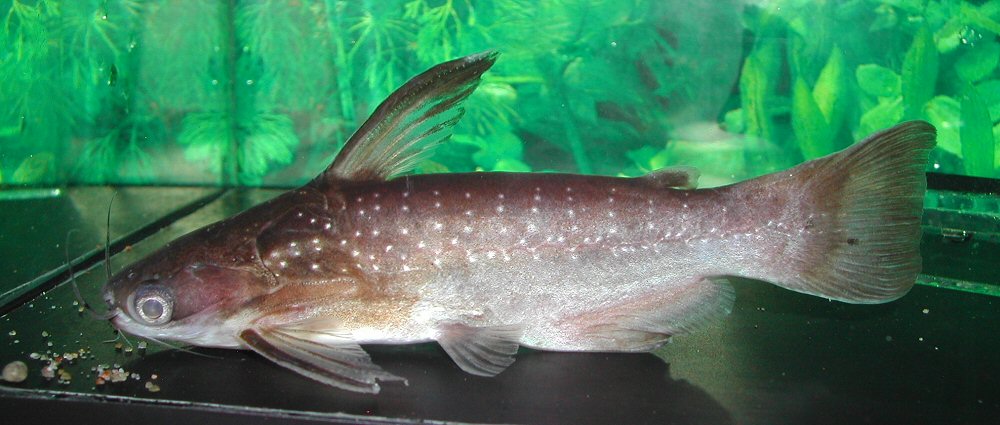
Auchenipterichthys coracoideusMidnight Catfish
Auchenipteridae · Eigenmann & Allen, 1942
This species is also known by the alternative vernacular name of 'Zamora woodcat', and is often misidentified as A. thoracatus. The latter is a valid species and very similar to A. coracoideus in that the coracoid bone is exposed ventrally and covered only by a thin layer of integument in both species. The two differ principally in the number of anal fin rays...
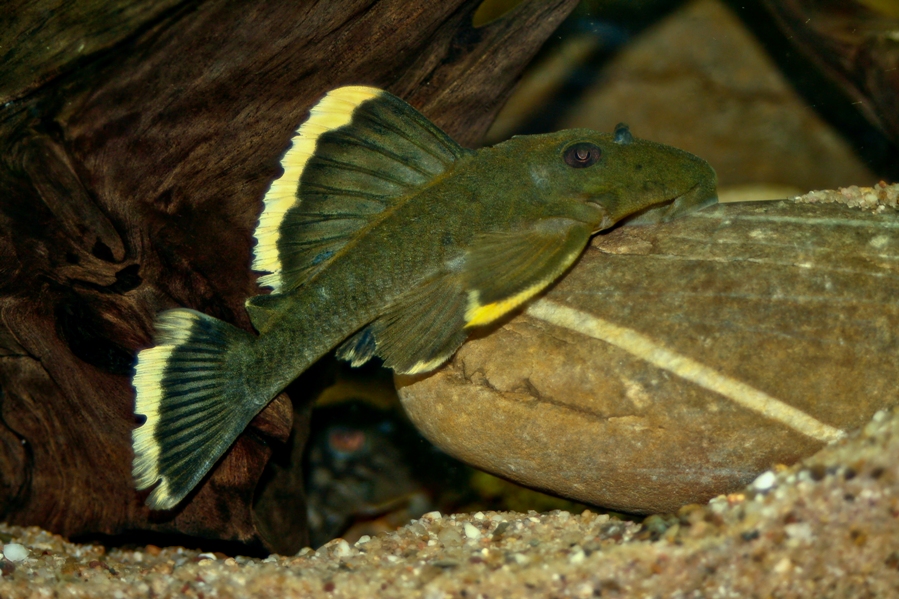
Baryancistrus chrysolomusMango Pleco
Loricariidae · Rapp Py-Daniel, Zuanon & Ribeiro de Oliveira, 2011
Prior to description this species was traded under the DATZ code L047 or the alternative vernacular name 'magnum pleco'. It can be distinguished from congeners by a combination of the following characters: presence of a broad, light-coloured (usually yellowish) distal band on the dorsal and caudal fins throughout life, slightly reduced in adults. The only other member of the genus to possess such bands is B. xanthellus but in that species they are reduced to small markings at the fin tips in adults, and the body is covered in pale, normally yellowish, spots.
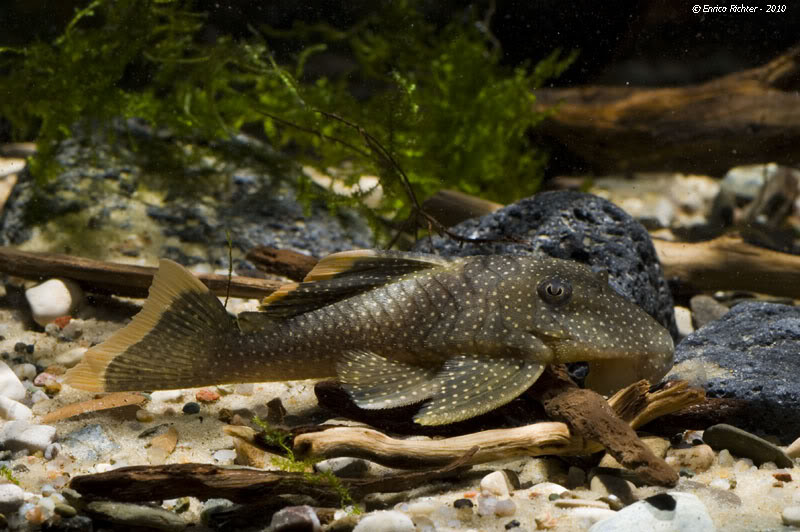
Baryancistrus sp. cf. xanthellusGold Nugget Pleco
Loricariidae · authority not recorded
It remains unconfirmed as to whether this fish represents a colour form of B. xanthellus or not since its DATZ code number of L081 is not referred to in the description paper whereas all other codes for 'gold nugget' plecos, i.e., L018, L085, L177 plus the 'Das Aquarium' code LDA060 are mentioned. In addition, one of the specimens in our images was apparently collected at São Félix do Xingu which is significantl...
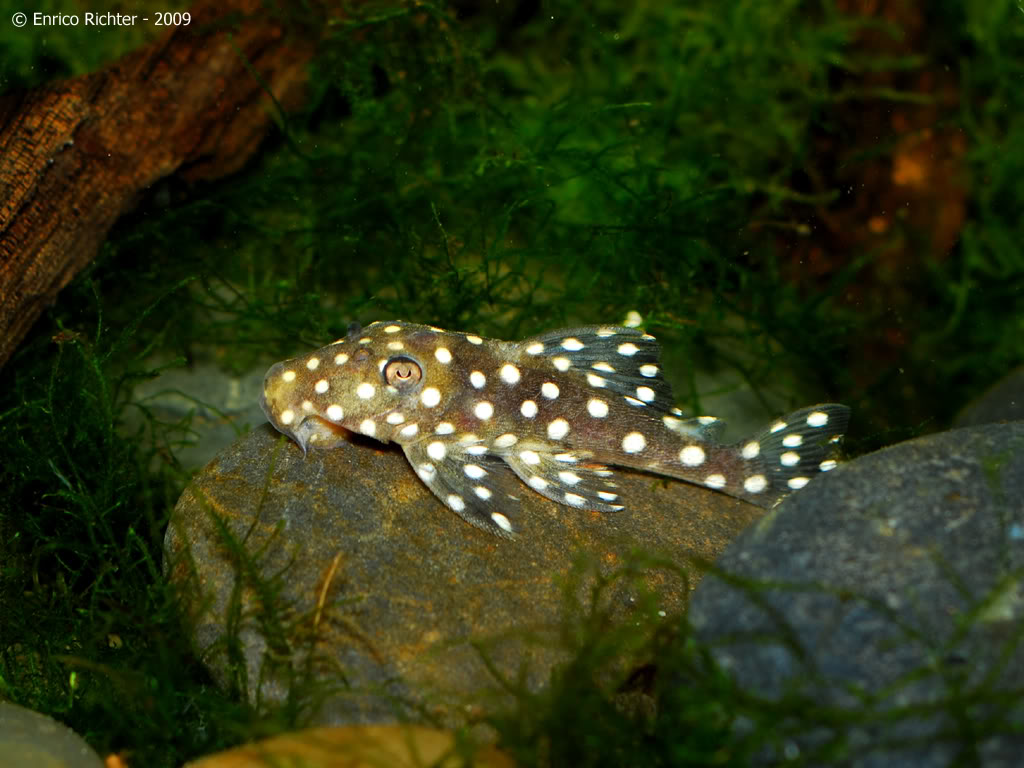
Baryancistrus sp. L142Big White Spot Pleco
Loricariidae · authority not recorded
The genus Baryancistrus can be distinguished from all other loricariids by possession of an enlarged membrane located posteriorly to the last branched dorsal-fin ray. This membrane may or may not reach the supporting structure of the adipose fin and in this way members can be told apart from the genera Oligancistrus, Parancistrus, and Spectracanthicus, in which the dorsal and adipose fins are completely connected, and Hemiancistrus...
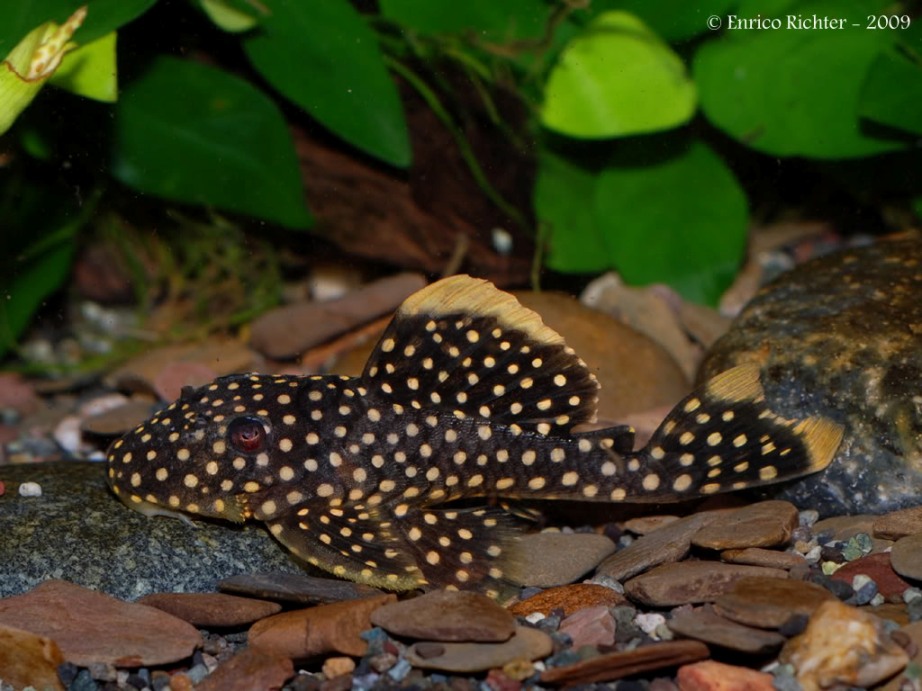
Baryancistrus xanthellusGold Nugget Pleco
Loricariidae · Rapp Py-Daniel, Zuanon & Ribeiro de Oliveira, 2011
Prior to description in 2011 this species was traded under the DATZ code numbers L018, L085, L077 and 'Das Aquarium' code LDA060, while a very similar-looking fish from the lower rio Xingu which has been assigned the code L081 may also represent a form of B. xanthellus but is not mentioned in the description paper. B. xanthellus can be distinguished from congeners by a combination of the following...
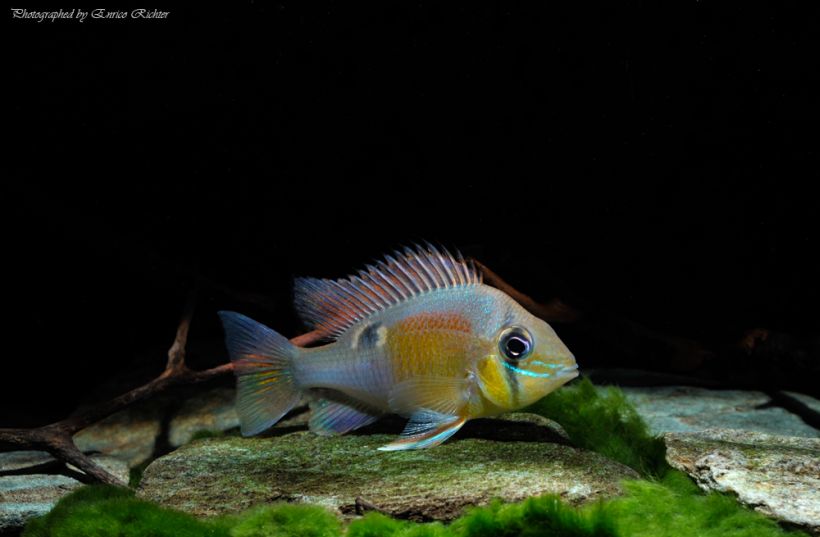
Biotodoma cupidoCupid Cichlid
Cichlidae · Heckel, 1840
Recorded throughout much of the Amazon basin, with its range extending eastwards from the Ucayali system in Peru as far as the Tocantins drainage which flows into the Atlantic alongside the Amazon at its delta. The southern extremity of its range appears to be the Río Mamoré in Bolivia, a tributary of the rio Guaporé, and the northern limit the Essequibo basin, Guyana.
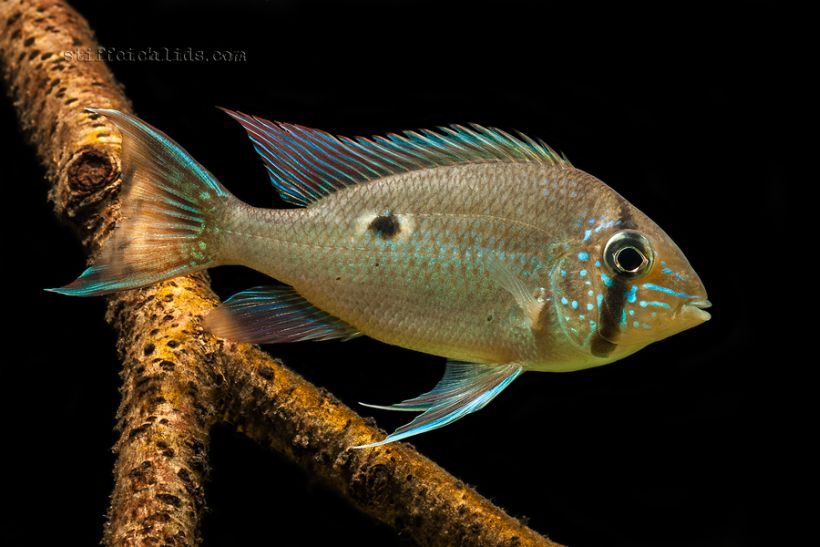
Biotodoma wavriniOrinoco Eartheater
Cichlidae · Gosse, 1963
Populations known in the aquarium trade include 'Cuao', 'Orinoco', 'San Antonio', and 'Sipapo Ventuari'. B. wavrini and its congener B. cupido can be separated by body shape and position of the dark blotch on the posterior portion of the flank. In B. cupido the body is relatively compact and the blotch located above the upper lateral line, whereas in B. wavrini the body is noticeably elongate and the blotch on or below the upper lateral line.
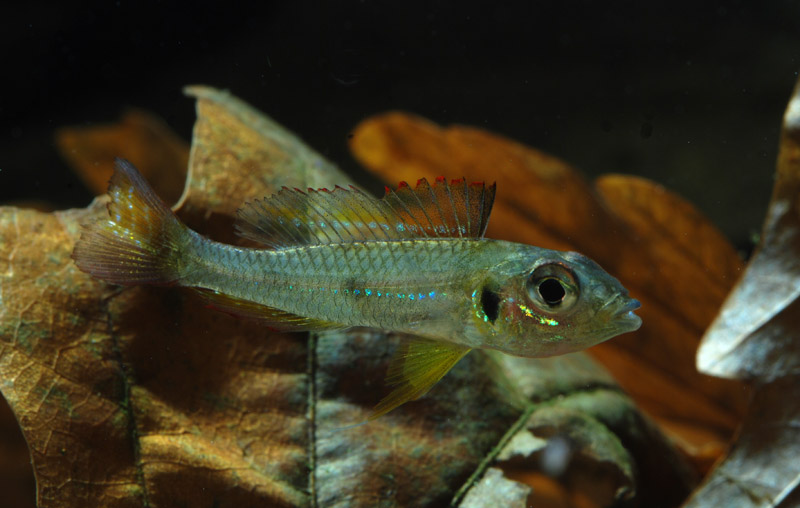
Biotoecus opercularis
Cichlidae · Steindachner, 1875
At time of writing there exists no scientific evidence that the different populations of this species seen in the aquarium trade (see 'Distribution') represent anything other than a single, widely-distributed species although some exibit minor morphological differences including relative body depth, longer fin rays in the unpaired fins and yellow or orange colouration in the paired fins. There is apparently a form from the upper rio Negro which may turn out to be distinct but it's...
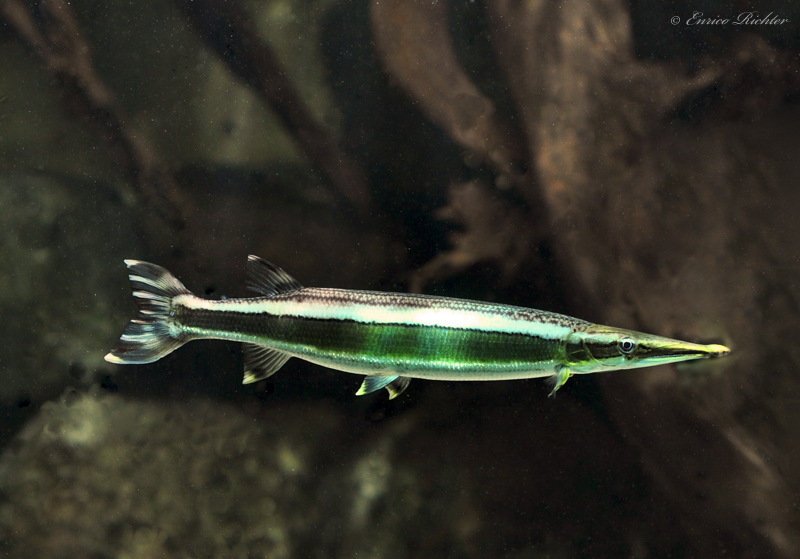
Boulengerella lateristrigaStriped Pike 'Characin'
Ctenoluciidae · Boulenger, 1895
Boulengerella differs from Ctenolucia, the only other genus currently contained in the family Ctenolucidae, by a series of derived features including possession of 87-124 (vs. 45-50) lateral line scales, presence of a strongly (vs. weakly) developed fleshy appendage at the tip of the snout and absence (vs. presence) of fleshy flaps on the lower jaw. Within the order Characiformes the family Ctenoluciidae is also distinguished by a set o...
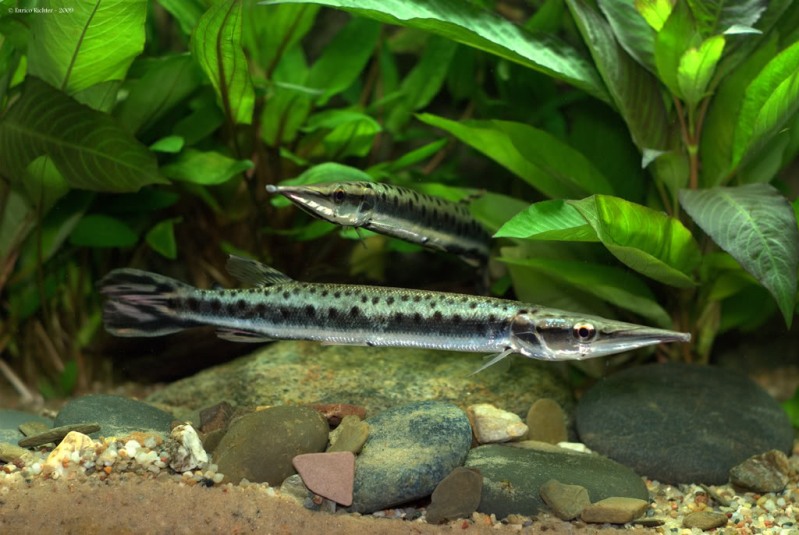
Boulengerella maculata
Ctenoluciidae · Valenciennes, 1850
Both species also possesses a broader dark midlateral stripe on the body which tends to be more well-defined in B. lateristriga than in B. maculata. Colour pattern in B. maculata varies considerably with some specimens noticeably paler than others, for example, and the the broad midlateral stripe usually less intense in such individuals. This does not app...
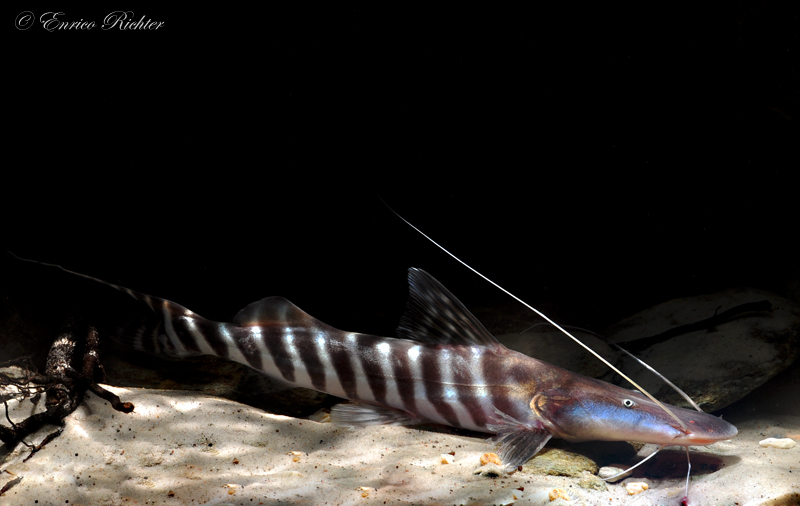
Brachyplatystoma tigrinumZebra Shovelnose
Pimelodidae · Britski, 1981
This species is sometimes confused with B. juruense, especially when juvenile, but can be told apart quite easily by it's more well-defined colour pattern, relatively slender body shape and longer barbels. It was described in the genus Meredontotus, but is currently included in Brachyplatystoma based on a pair of synapomorphies shared by memb...
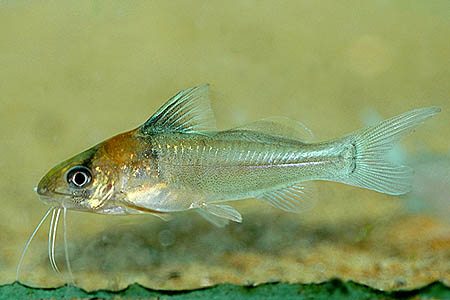
Brachyrhamdia rambarraniFalse Adolfoi
Heptapteridae · Axelrod & Burgess, 1987
Several Brachyrhamdia species have developed colour patterns that mimic syntopically-occurring Corydoras spp. throughout the life-cycle, and the remainder may mimic Otocinclus or smaller Corydoras spp. when juvenile. Among other catfishes they're closely-related to members of the genus Pimelodella, but differ in...
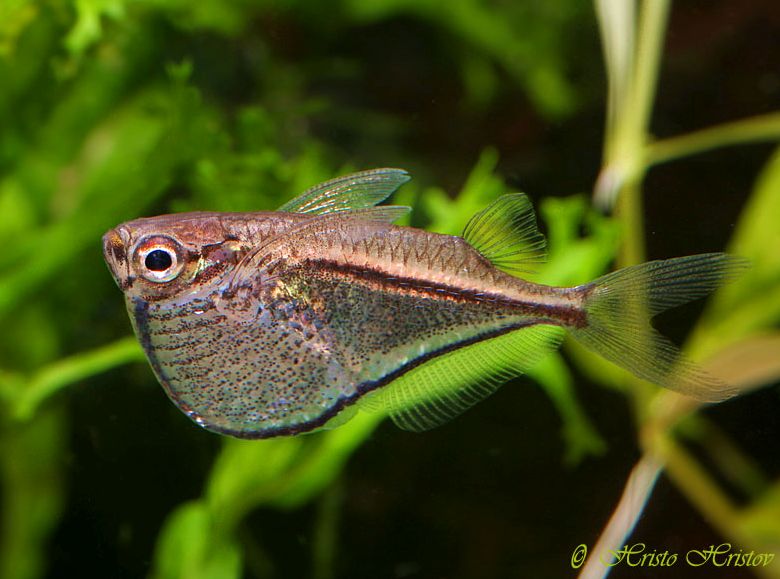
Carnegiella marthaeBlackwing Hatchetfish
Gasteropelecidae · Myers, 1927
Gasteropelecids are commonly-referred to as 'freshwater hatchetfishes' due to their heavily-keeled body shape which has evolved in such a way due to possessing an enlarged, heavily-muscled pectoral girdle, and which resembles the shape of a hatchet head. They are sometimes said to be capable of propelled flight above the water surface by beating their pectoral fins but in fact this is not the case and was disproven by Wiest (1995) who used...
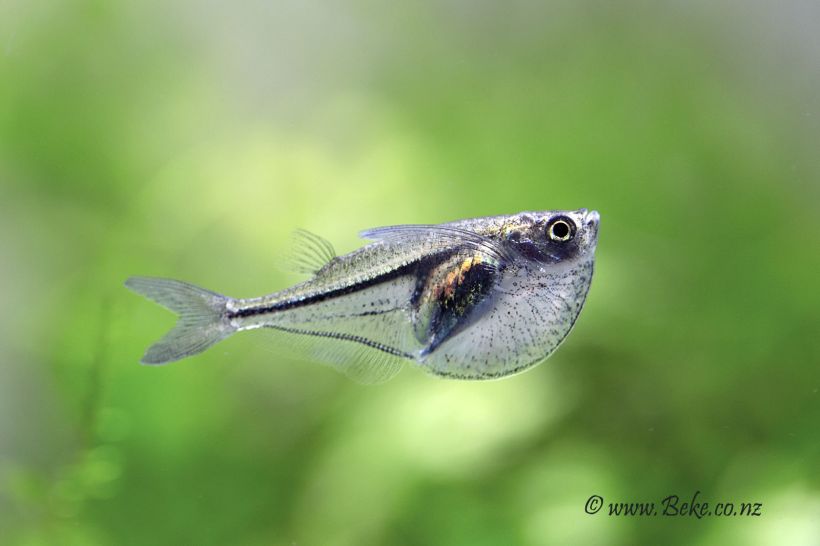
Carnegiella myersiPygmy Hatchetfish
Gasteropelecidae · Fernandez-Yepes, 1950
The smallest and most delicate of the nominal hatchetfishes. The rounded keel is shallower than related species, giving this fish a distinctive elongate profile. The family Gasteropelecidae is separated from other Characiformes by the following combination of characters: front...
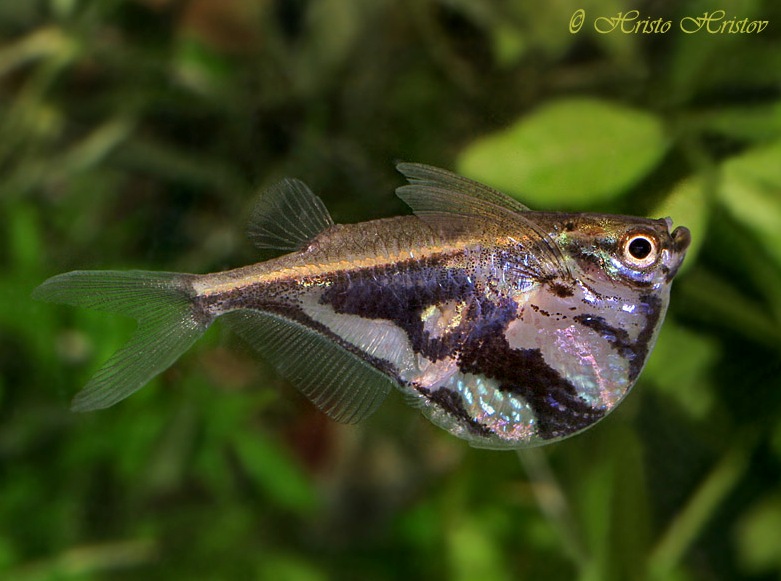
Carnegiella strigataMarbled Hatchetfish
Gasteropelecidae · Günther, 1864
C. strigata is an enduringly popular species in the aquarium hobby but is not bred on a commercial basis with all fish offered for sale collected in the wild. It can be told apart from other members of the genus by its larger adult size and dark, marbled colour pattern appearing as a series of dark and light stripes running diagonally across the body below the lateral line. This colour pattern is variable and popul...
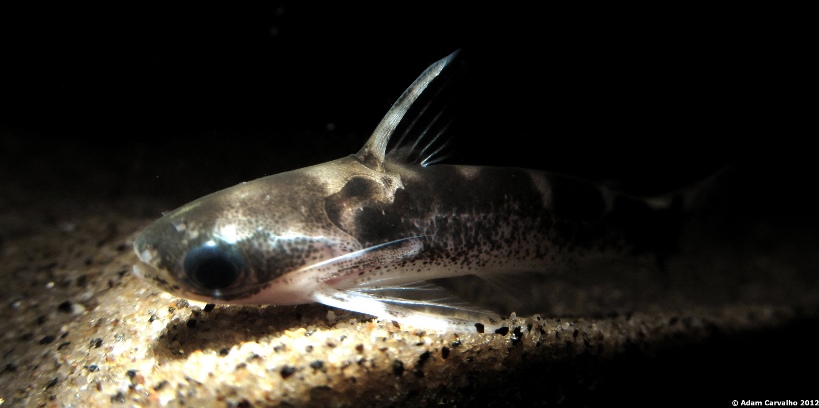
Centromochlus macracanthus
Auchenipteridae · Soares-Porto, 2000
All members of the family Auchenipteridae are thought to practise internal insemination and females can carry mature, unfertilised eggs and sperm packets inside the body for unspecified periods of time. When conditions are satisfactory fertilisation is triggered and the eggs deposited, and there is n...
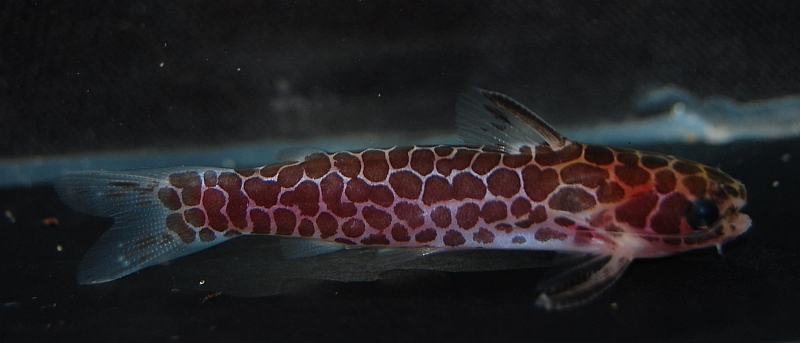
Centromochlus reticulatusReticulated Driftwood Catfish
Auchenipteridae · Mees, 1974
The genus Centromochlus is diagnosable by members having the proximal anal-fin radials enlarged and fused to each other at the base, forming a single ossified structure. It's sometimes included in the putative subfa...
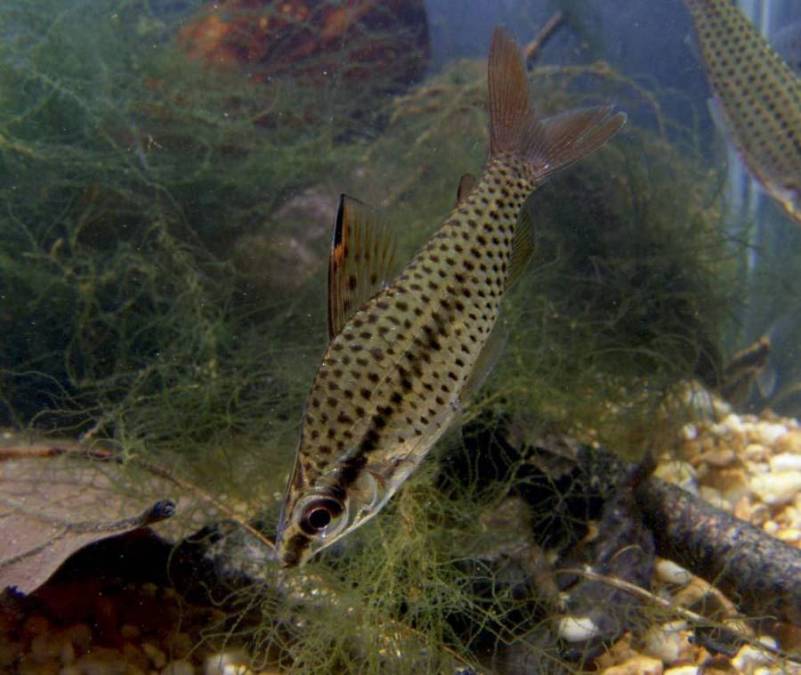
Chilodus punctatusSpotted Headstander
Chilodontidae · Müller & Troschel, 1844
Omnivorous and will accept most foods offered, with the stomach contents of wild specimens varying on a seasonal basis but mostly comprising insects and insect larvae (orders Trichoptera, Hemiptera, Homoptera) plus some terrestrial fruits and even scales of other fishes (Sánchez et al., 2003). In the aquarium offer live Daphnia, Artemia, Moina, bloodowrm, etc., vegetable matter in the form of blanched spinach, lettuce, cucumber, fruit, algae wafers, etc., and good quality, sinking dried foods.
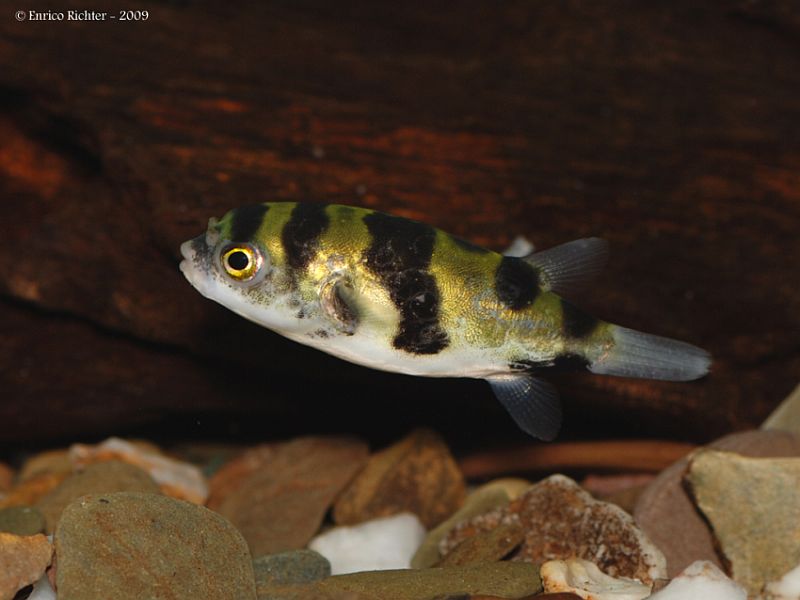
Colomesus asellusAmazon Puffer
Tetraodontidae · Müller & Troschel, 1849
This species is also referred to as 'South American puffer', 'SAP', 'Amazonian puffer', 'Peruvian puffer', or 'Brazilian puffer' in the ornamental trade. Within the genus Colomesus, C. asellus can be immediately identified by possessing a unique transverse row of dermal flaps across the chin which is absent in its congeners C. psittacus and C. tocantinensis.
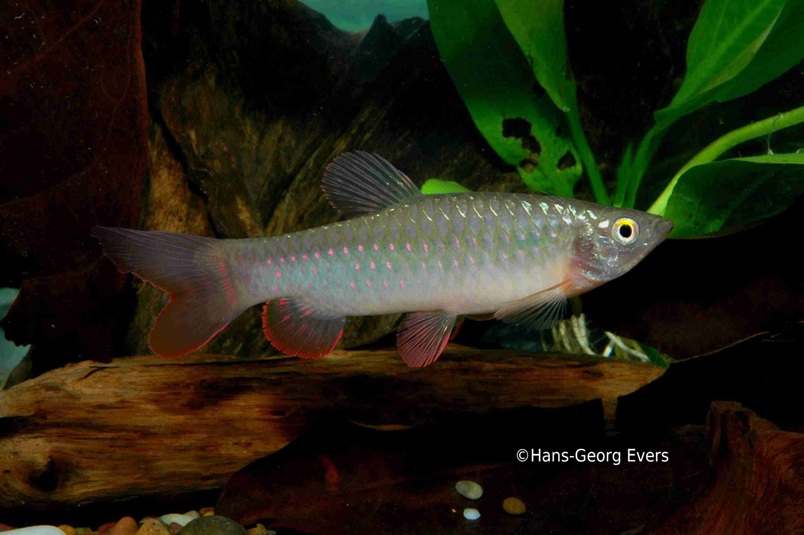
Copeina guttataRed-spotted Tetra
Lebiasinidae · Steindachner, 1876
Known from the middle and upper Amazon river basins in Brazil, Peru, Ecuador and Colombia. Type locality is 'Amazon River at Obidos, Cudajas, and Tabatinga; Rio Negro, Brazil.' It apparently practises an interesting reproductive strategy in which the eggs are deposited in a shallow depression excavated from the substrate and guarded by the male.
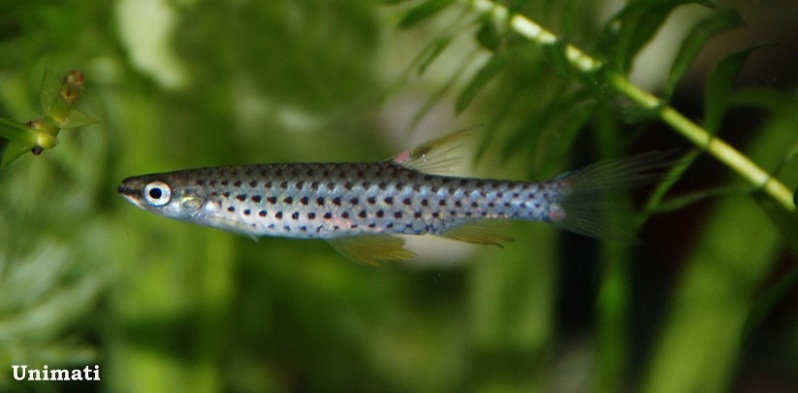
Copella callolepis
Lebiasinidae · Regan, 1912
This species is quite common in the aquarium trade although normally misidentified as the congeners C. nattereri or the very similar C. meinkeni. It was considered synonymous with C. nattereri for a number of years and was also referred to as C. cf. meinkeni by Zarske and Géry (2006) befo...
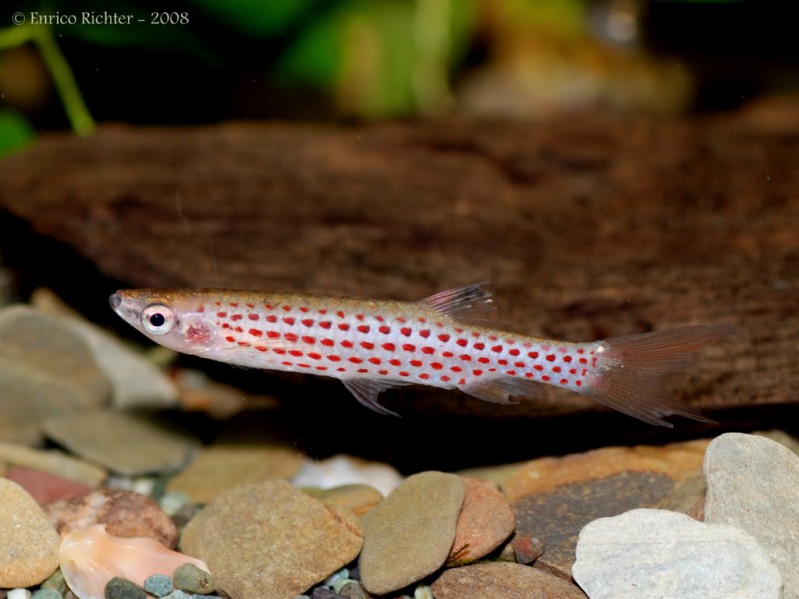
Copella meinkeniSpotted Splashing Tetra
Lebiasinidae · Zarske & Géry, 2006
This species has been widely referred to as the congener C. nattereri in aquarium literature both prior to and post-publication of its official description in 2006. The two can be told apart quite easily by the fact that C. nattereri possesses a dark lateral stripe while C. meinkeni does not. C. meinkeni can be distinguished from all congeners by the followi...
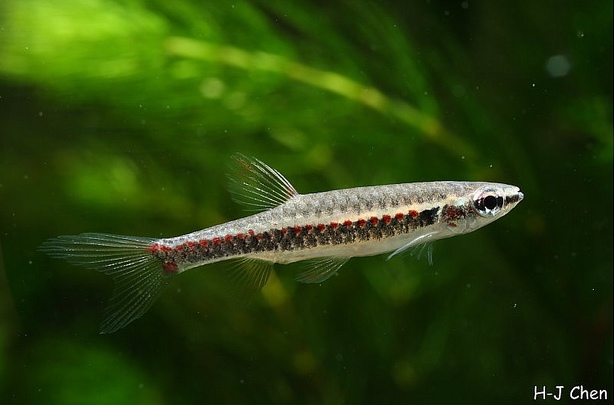
Copella nattereri
Lebiasinidae · Steindachner, 1876
This species is sometimes traded as C. sp. 'red line', 'spotted tetra' or as its congener C. nigrofasciata. In the past it's name was also widely applied to the fish now identified as C. callolepis and C. meinkeni, and this misidentification continues to an extent although the two are easily-distinguished by the fact that C. nattereri is the only one of the three possessing a dark lateral stripe on each side of the body.
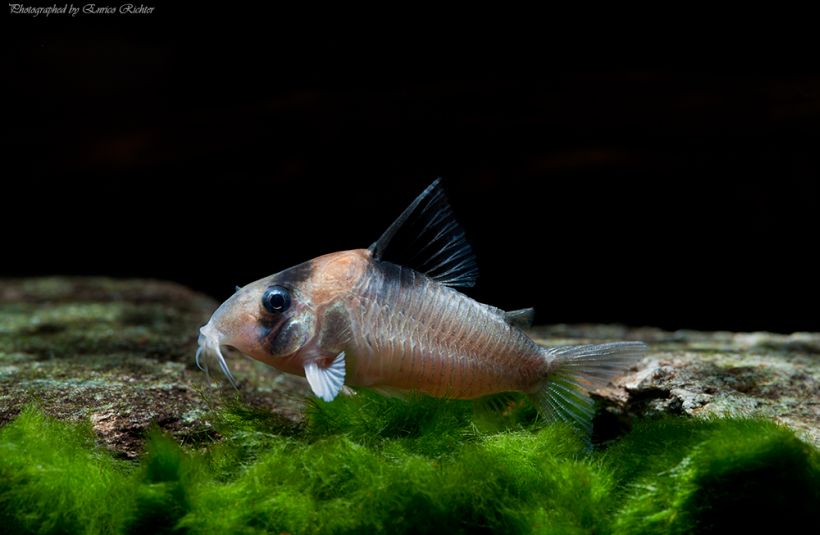
Corydoras burgessiBurgess' Cory
Callichthyidae · Axelrod, 1987
The most obvious distinguishing characters are that the black marking in the upper part of the body is restricted to the area beneath the dorsal-fin and extends into the majority of the fin , while the paler patch anterior to it, on top of the head, is yellowish rather than orangish. Additional diagnostic characters have proven unavailable thus far since it was described in a hobbyist magazi...
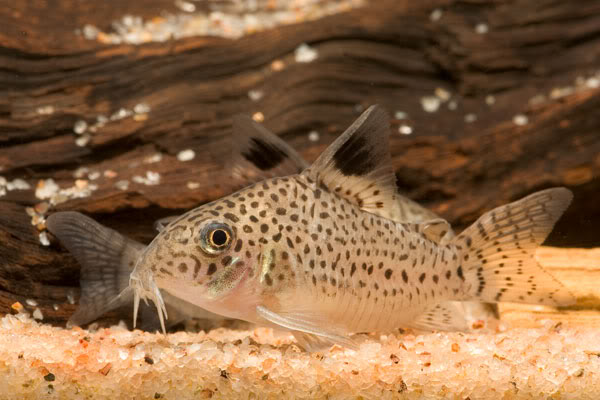
Corydoras copei
Callichthyidae · Nijssen & Isbrücker, 1986
This species is not well known and rarely traded for the aquarium hobby. Unfortunately diagnostic characters cannot be provided since we’ve been unable to obtain the type description, and little has been written about this species since it was published. It looks very similar to several congeners, particularly C. acrensis and C. cruziensis.
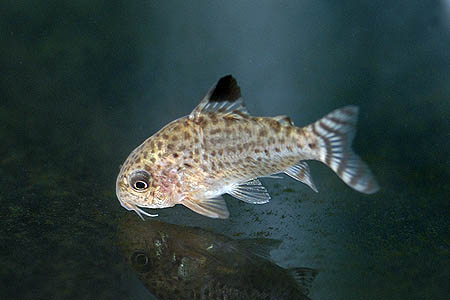
Corydoras cruziensisSanta Cruz Cory
Callichthyidae · Knaack, 2002
This species is not well-documented but is said to differ from the comparable C. punctatus by possessing larger dark markings on the body which may form an irregular midlateral stripe in some specimens. Unfortunately diagnostic characters cannot be provided since we’ve been unable to obtain the type description, and little has been written about the species since it was published.
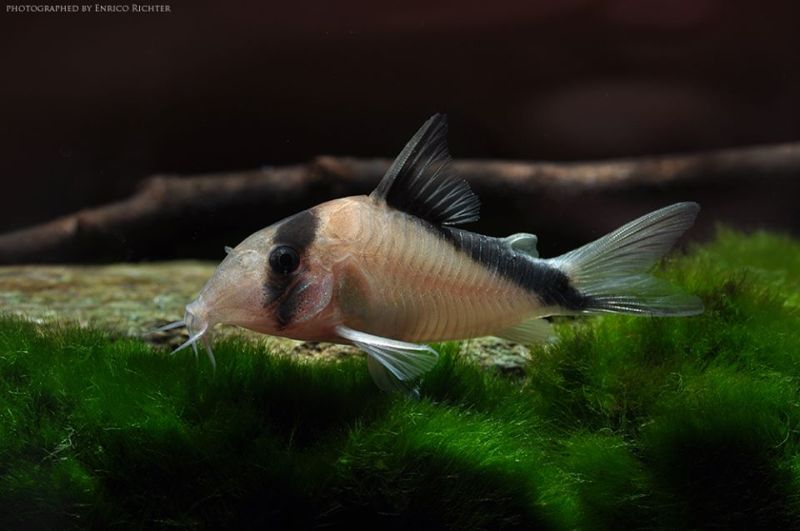
Corydoras davidsandsiSand's Cory
Callichthyidae · Black, 1987
The type series was said to have been collected from a "whitewater area", but images of the rio Unini depict a blackwater system typical of the rio Negro basin, and this is supported by empirical evidence. There are sections of rapidly-flowing water so perhaps this is what the author was referring to. Habitats should therefore comprise tributaries and areas of flooded forest where the water is...
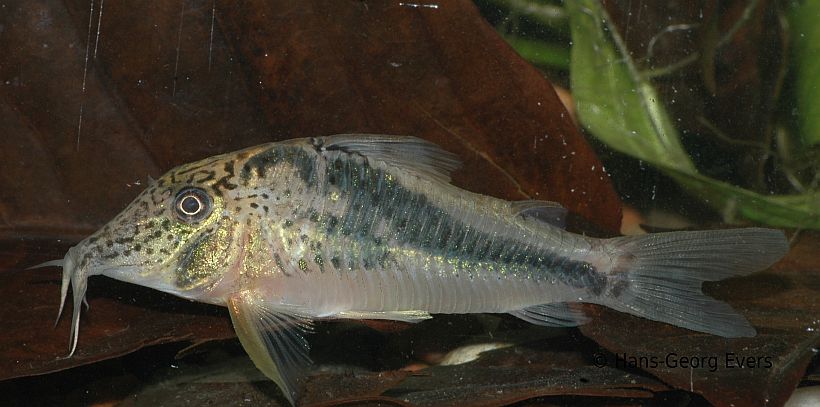
Corydoras fowleriFowler's Cory
Callichthyidae · Böhlke, 1950
In addition, the colour pattern in aquarium fish traded or identified as C. fowleri is highly variable, but it is unclear whether such differences represent diversity within or between populations. Nevertheless, colour pattern is typically used to distinguish them, with fish from Peru possessing a greater extent of dark pigmentation on the body generally referred to...
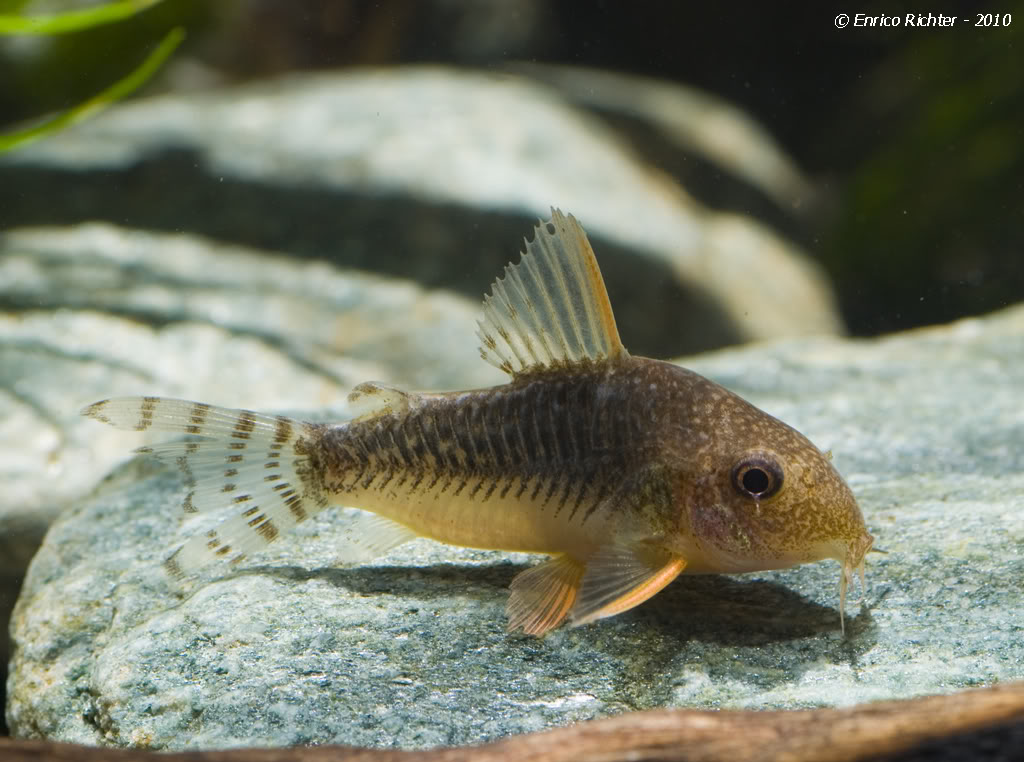
Corydoras gosseiPalespotted Cory
Callichthyidae · Nijssen, 1972
The congener C. seussi, which is also native to the rio Mamoré, has a similar colour pattern but its snout is noticeably prolonged compared with that of C. gossei, plus there are some subtle differences in pigmentation. There is a third variant which has been referred to as 'CW069' in the aquarium hobby and appears to be somewhat intermediate, with a short, rounded snout as in C. gossei but a colour pattern more reminiscent of C. seussi.
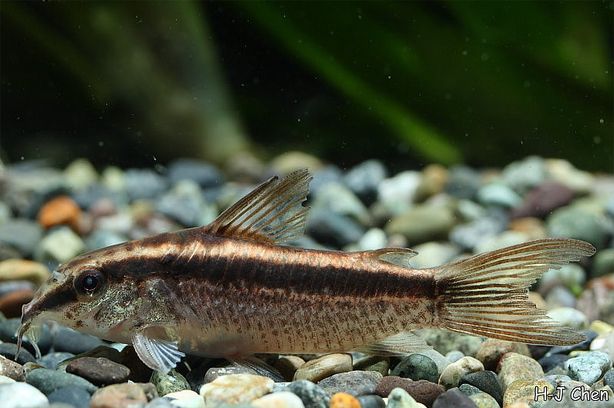
Corydoras gracilis
Callichthyidae · Nijssen & Isbrücker, 1976
It can be distinguished from the majority of other Corydoras species by its distinctive colour pattern, comprising a uniform, lightish base pigmentation with a dark arched stripe extending over the upper portion of each flank, from the tip of the snout to the caudal-fin base. This is shared with a few congeners, however, including C. arcuatus, C. narcissus, and C. urucu.
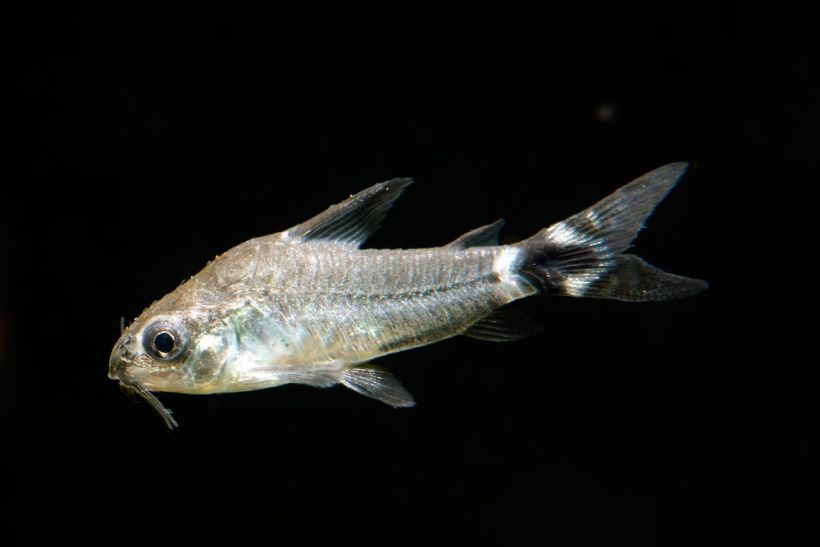
Corydoras hastatusTail-spot Pygmy Cory
Callichthyidae · Eigenmann & Eigenmann, 1888
It exhibits slightly different behaviour to the majority of congeners in that it tends to swim in midwater and spends a large proportion of its time away from the substrate. Its morphology exhibits corresponding adaptations towards a pelagic existence with a relatively large eye, a more terminal mouth position, more strongly-forked caudal-fin, and more symmetrical body shape than most other Corydoras species.
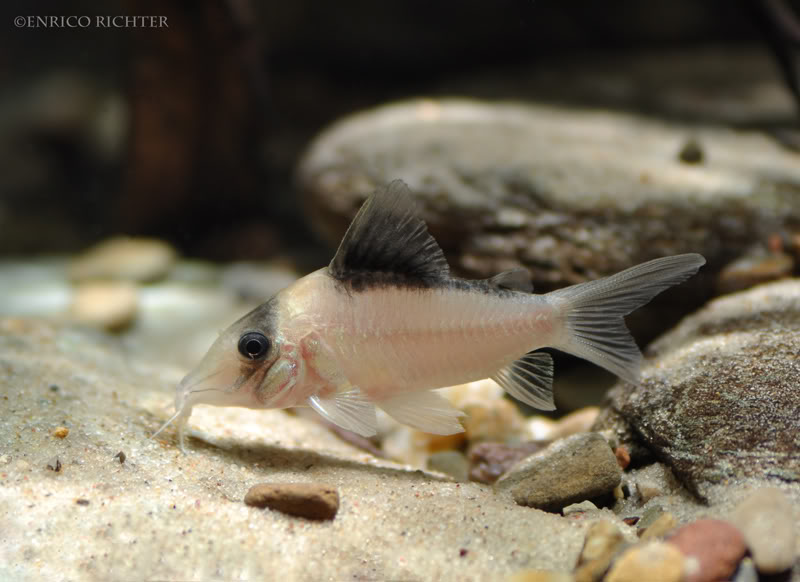
Corydoras imitatorImitator Cory
Callichthyidae · Nijssen & Isbrücker, 1983
Endemic to the upper rio Negro basin in Amazonas state, northern Brazil, and Amazonas state, southern Venezuela. One specific locality is Igarapé Muiá (00°09'03"N 66°48'10"W). Type locality is 'Upper Rio Negro, eastern Amazonas, Brazil', which is thought to refer to forest brooks crossing the "new army road", north of São Gabriel da Cachoeira municipality.
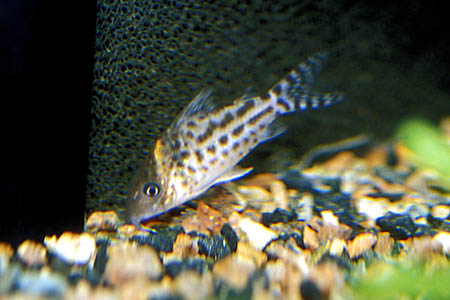
Corydoras incolicanaC001
Callichthyidae · Burgess, 1993
C. incolicana was the first recipient of a 'C' number (see below) in 1993 and was described the same year. Unfortunately its description was published in an aquarium hobbyist magazine, and we have been unable to obtain a copy to date meaning its diagnosis is unavailable. It is therefore difficult to identify accurately, not least because its type locality is in a relatively remote area, and there exist a number of superficially similar Corydoras species or populations in the aquarium trade.
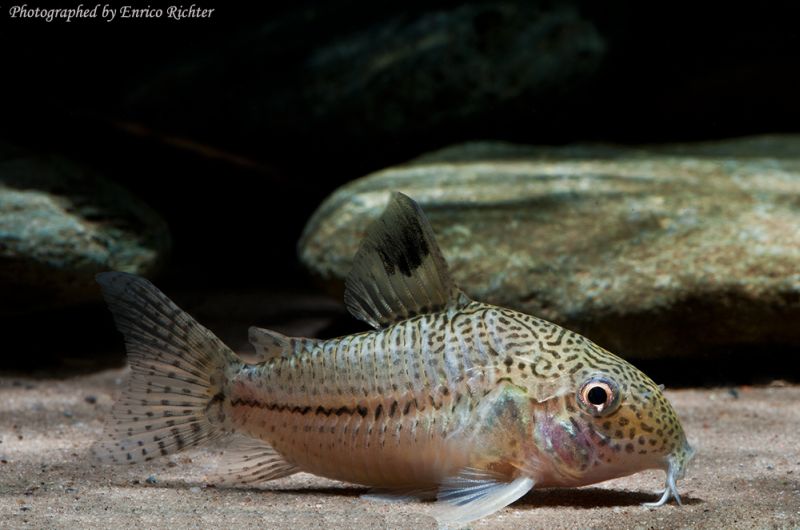
Corydoras juliiJulii Cory
Callichthyidae · Steindachner, 1906
Native to coastal river systems south of the Amazon delta in the states of Piauí, Maranhão, Pará, and Amapá, northeastern Brazil. It has been recorded from the rios Guamá (including tributaries such as the rio Ararandeua), Maracanã (rio Peixe-Boi), Morcego, Parnaíba, Piriá, Caeté, Turiaçu (rio Jamari), and Mearim (rio Pindaré). Reports from French Guiana and western Brazil appear to represent cases of misidentification.
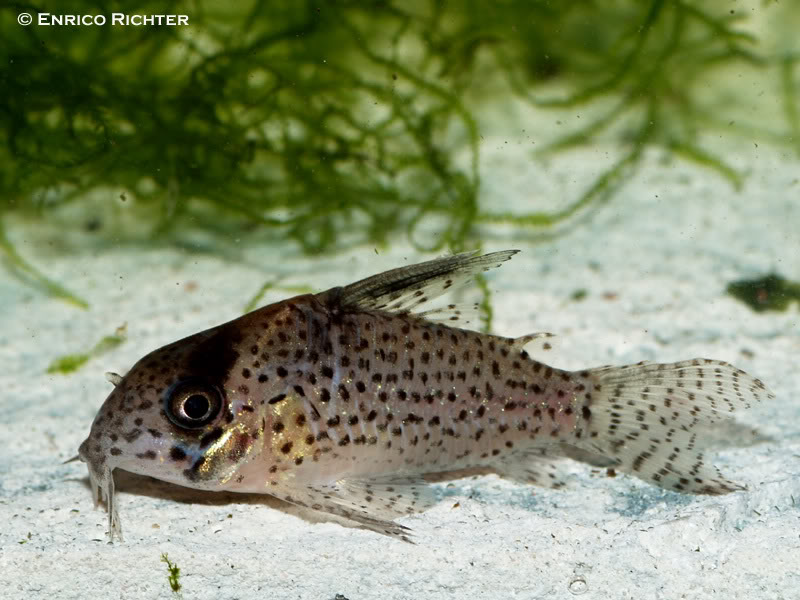
Corydoras kaneiC026
Callichthyidae · Grant, 1998
Prior to description C. kanei was assigned the 'C' numbers C026 and C046. Among congeners it is most easily-confused with, and sometimes traded as, C. atropersonatus, but can be identified by presence (vs. absence in C. atropersonatus) of dark markings in the anal and caudal fins, presence of numerous, smaller (vs. fewer, larger) dark spots on the body, and an overall darker (vs. paler) base colouration.
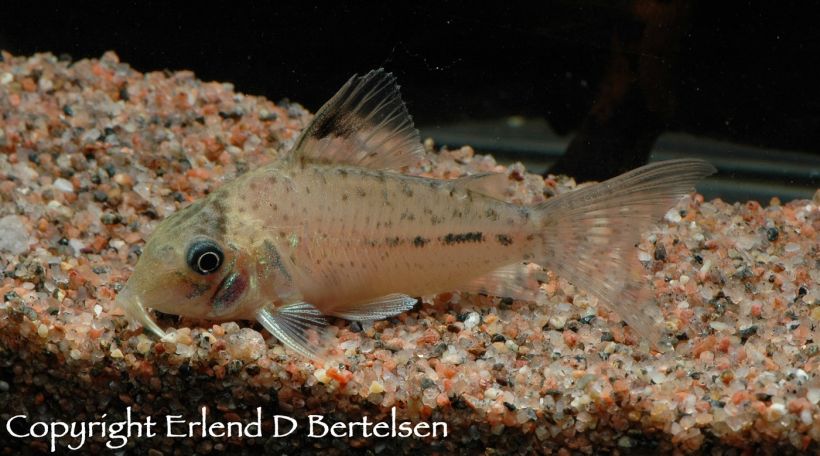
Corydoras lambertiC009
Callichthyidae · Nijssen & Isbrücker, 1986
Unfortunately diagnostic characters cannot be provided since we have been unable to obtain the type description to date, and little else has been written about this species. There is also confusion regarding whether C. lamberti, the unidentified 'C009', and similar-looking fish collected close to Iquitos are conspecific or not. We include all together here until these issues are resolved.
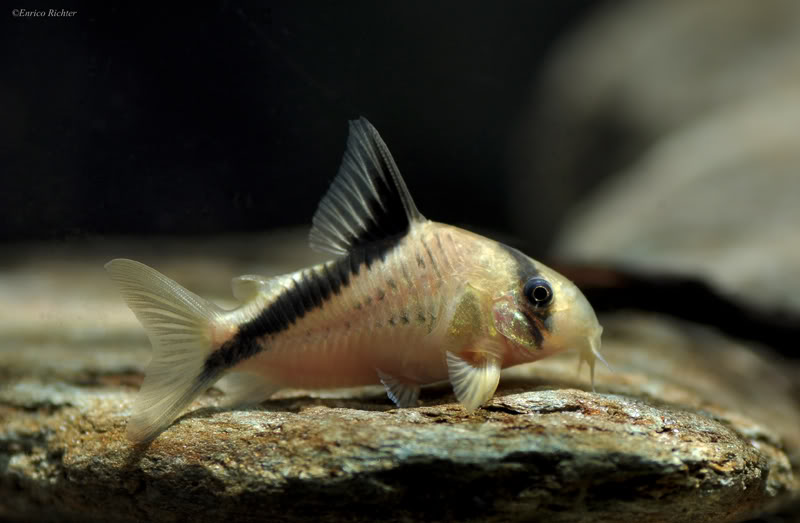
Corydoras meliniFalse Bandit Cory
Callichthyidae · Lönnberg & Rendahl, 1930
In the aquarium hobby, the population from the rio Tiquié has been referred to as 'C084', while a similar, but larger, form from the Río Huallaga in Peru is known as 'C085'. Both forms have been marketed as C. sp. 'mega metae'. The existence of multiple, similarly-coloured species which coexist and sometimes form mixed schools is relatively common in the genus.
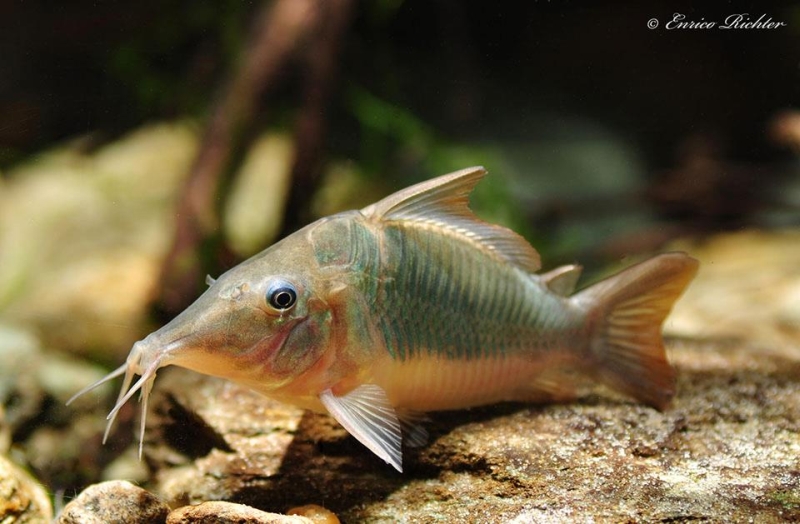
Corydoras multiradiatusHognose 'Brochis'
Callichthyidae · Orcés V., 1960
The genus is included in the family Callichthyidae, of which members are often referred to collectively as 'armoured' or 'mailed' catfishes group due to the presence of bony plates in place of scales on the body. Their taxonomy can be confusing, and numerous undescribed species are also thought to exist.
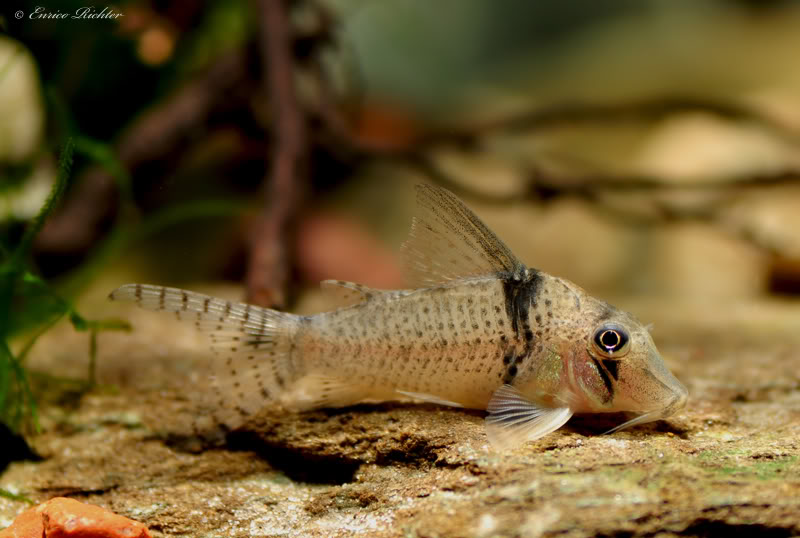
Corydoras pastazensisPastaza Cory
Callichthyidae · Weitzman, 1963
The form from the Río Tigre, previously referred to as the subspecies C. p. orcesi (Weitzman & Nijssen, 1970) was raised to full species status as C. orcesi by Isbrücker (2001), but this decision does not appear to have been followed by all authorities some of which consider C. p. orcesi a synonym of C. pastazensis. The two species are relatively easy to tell apart by colour pattern; in C. pastazensis the dark vertical...
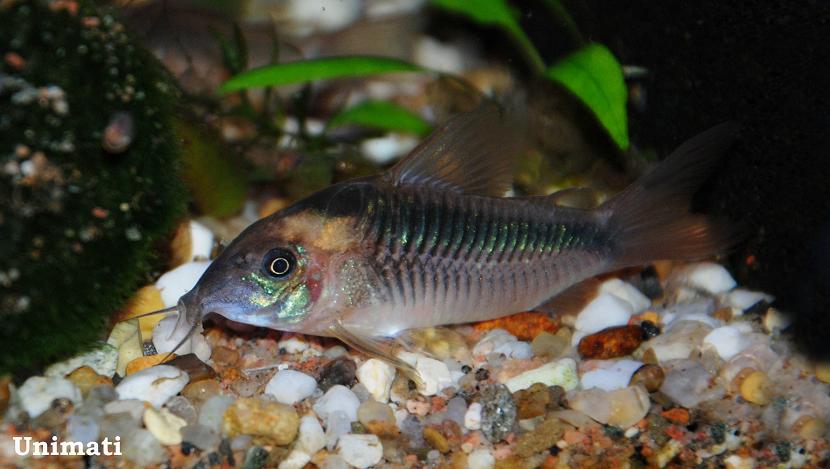
Corydoras zygatusBlack Band Cory
Callichthyidae · Eigenmann & Allen, 1942
Known from the Ucayali (río Samiria), Huallaga, Santiago, and Pastaza (ríos Bobonaza and Pindo) river systems in eastern Ecuador and northern Peru. These are all tributary drainages within the middle Río Marañón watershed, a major affluent of the upper Amazon river basin. Type locality is 'Río Hallagua system, Yurimaguas...
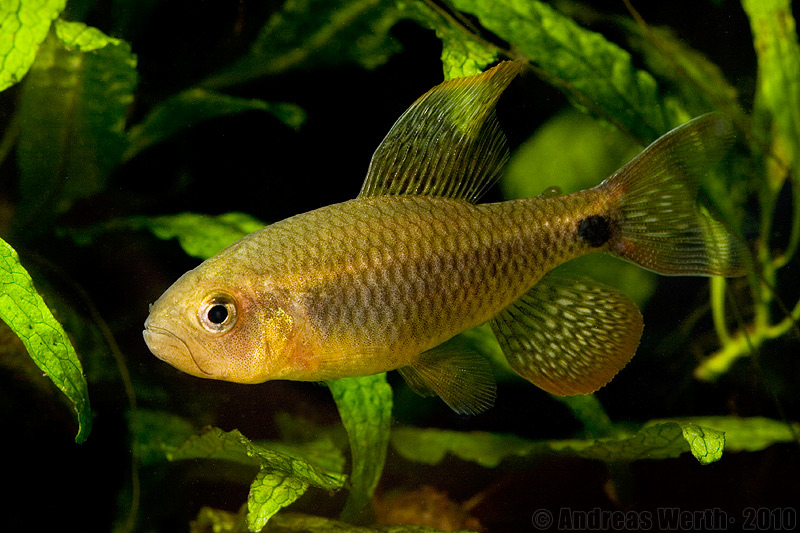
Crenuchus spilurusSailfin Characin
Crenuchidae · Günther, 1863
This species is currently the only described member of its genus although colour pattern and morphology vary considerably across its range. You may see reference to this species being the only fish species to possess infra-red vision, but other species also possess this ability and we suspect that infra-red plays an important role in the reproductive cycle of many fishes.
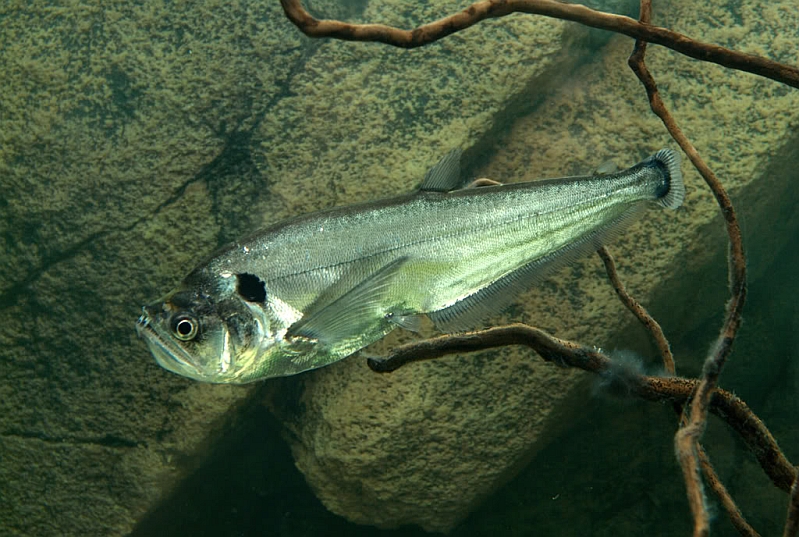
Cynodon gibbus
Cynodontidae · Agassiz, 1829
This species is rare in the aquarium trade but is arguably more suitable for the home aquarium than some of its better-known relatives given its adult size and relatively docile behaviour. Other vernacular names include 'Dientón' (Peru), 'Perrito' (Ecuador), 'Payara-chata' or 'Payarin' (Venezuela) and 'Icanga', 'Minguilista' or 'Peice-cachorro' (Brazil), some of which are also applied to related species.
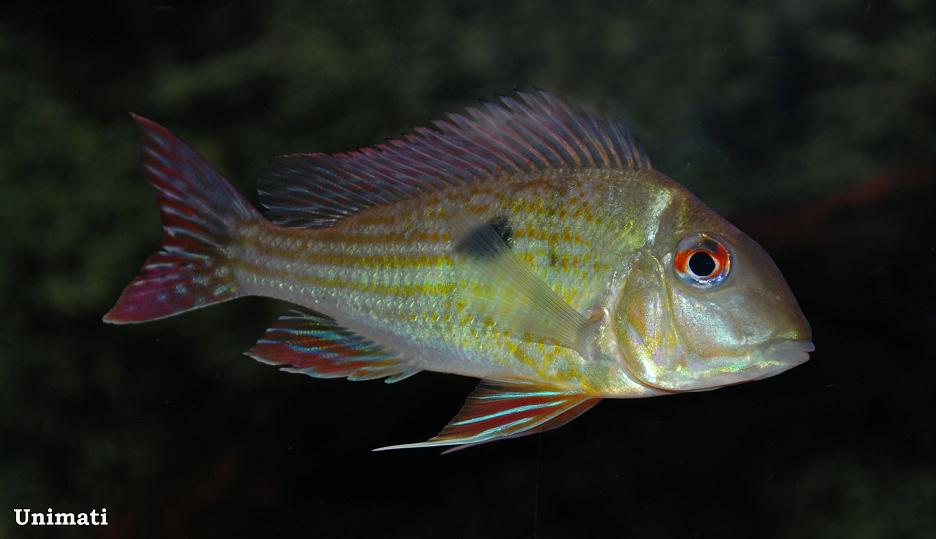
Geophagus abalios
Cichlidae · López-Fernández & Taphorn, 2004
It also occurs in the río Caura on the Guyana Shield plus the Ventauri and Mavaca drainages in the middle and upper Orinoco where it’s also known from some white water, referring to turbidity rather than turbulence, habitats. To the north its distribution appears limited by the Las Majaguas dam on the Río Cojedes, a tributary of the Apure where a probable introduced population inhabits the res...
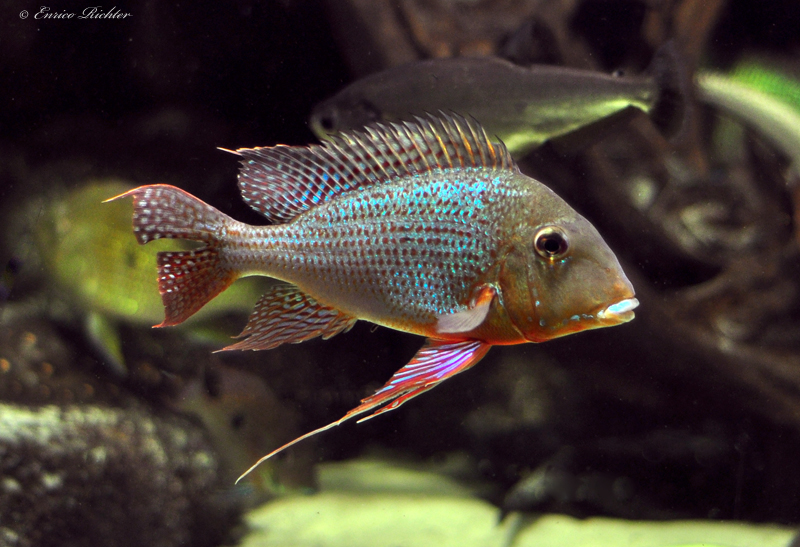
Geophagus altifrons
Cichlidae · Heckel, 1840
Despite its designation as type species this is among the most frequently-misidentified members of the genus. This is in part because its natural distribution was earlier considered even more extensive than the still-substantial range recognised today, with populations from the Río Orinoco, Guianas and rio Tocantins now recognised as species in their own right.
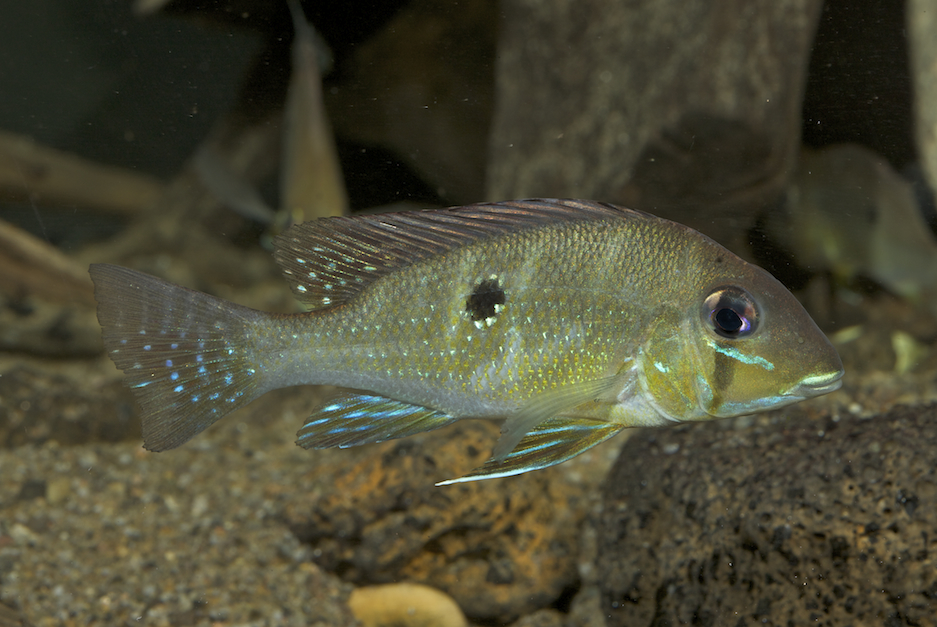
Geophagus argyrostictus
Cichlidae · Kullander, 1991
This species is relatively rare in the hobby but sometimes available from specialist retailers or private breeders. Though described in 1991 it was first collected much earlier and misidentified by Gosse (1976) as G. surinamensis. It's one of just five Geophagus species not to be included in the nominal G. surinamensis 'group' of closely-related species within the genus along with G. gottwaldi, G. grammepareius, G. harreri an...
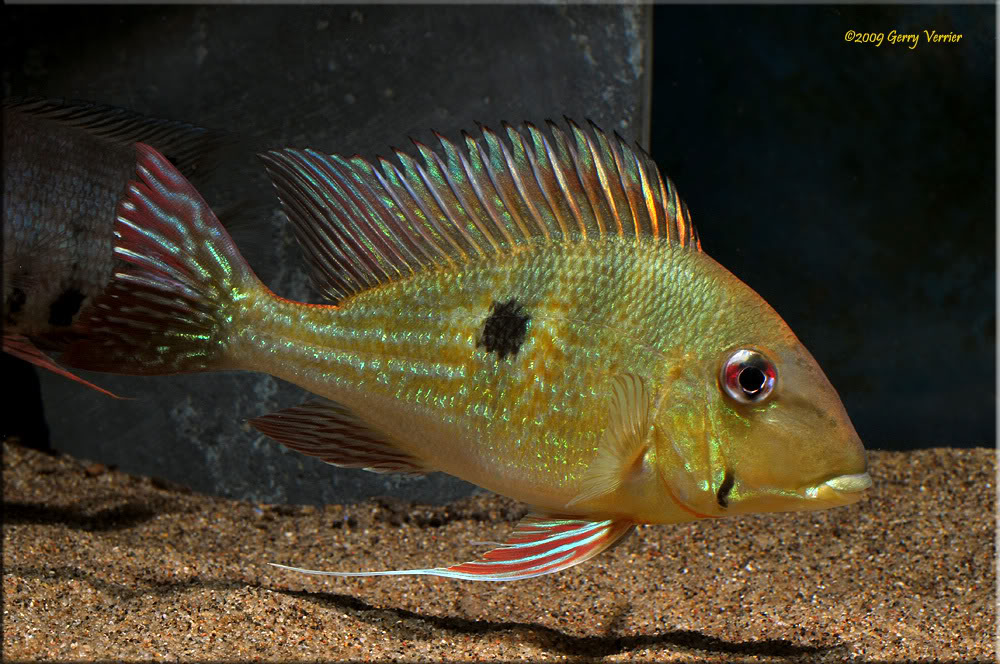
Geophagus dicrozoster
Cichlidae · López-Fernández & Taphorn, 2004
It's a member of the nominal G. surinamensis 'group' of closely-related species within the genus and can be identified by a combination of characters including: presence of dark preopercular markings; seven parallel vertical bars on each flank (normally visible only when the fish are stressed, spawning or preserved); vertical bars four and five meet in such a way that they form a 'Y' shape; dark lateral spot positioned within the third vertical bar; caudal fin reddish with variable pattern of iridescent blue spots and stripes.
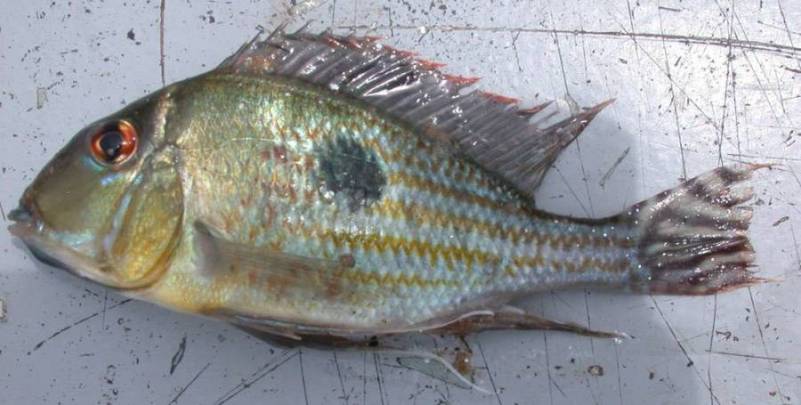
Geophagus megasema
Cichlidae · Heckel, 1840
This species is very rare in the aquarium hobby and may never have been available on a commercial basis although it has been collected, bred and distributed by some private collectors. It's a member of the putative G. surinamensis 'group' of closely-related species within the genus and ca...
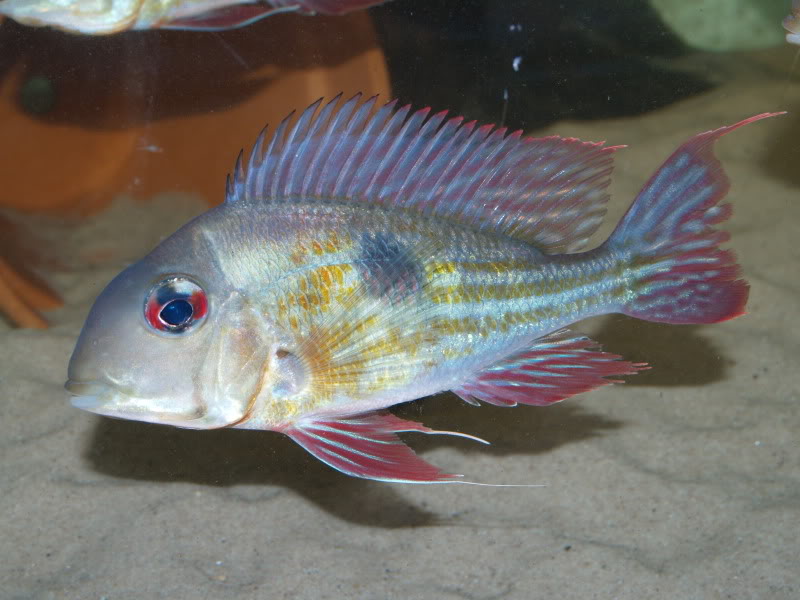
Geophagus proximus
Cichlidae · Castelnau, 1855
This species is rare in the hobby though it's name is often attached to shipments of other Geophagus species. It's a member of the nominal G. surinamensis 'group' of closely-related species within the genus and can be identified by a combination of characters including: possession of dark preopercular marking; no vertical bars on the flanks; relatively large, roughly oblong-shaped dark midlateral marking; caudal fin brownish with 3-5 light stripes on upper lobe and less well-defined stripes or mottled pattern of light spots with narrow dark interspaces on lower lobe.
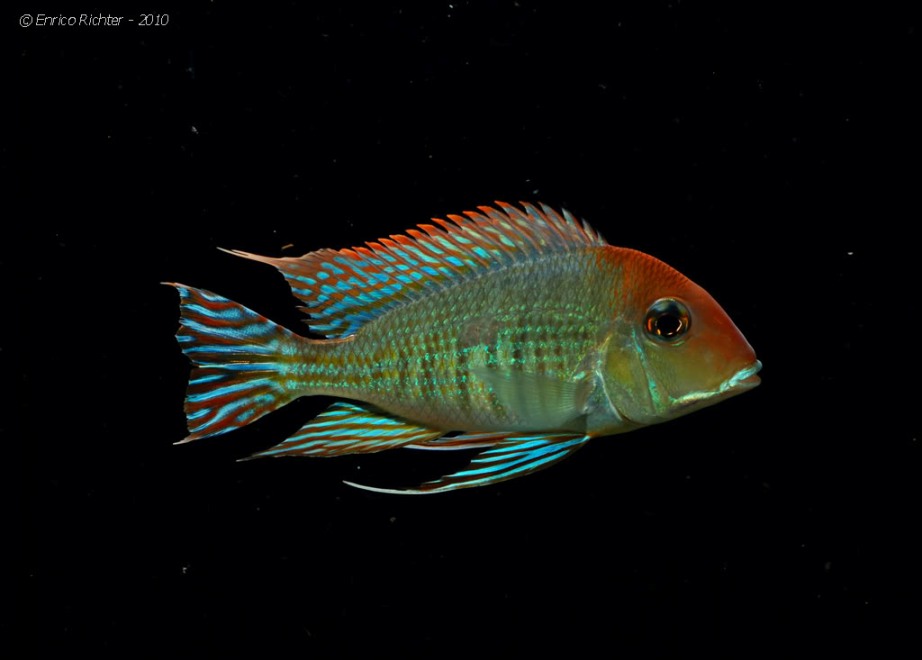
Geophagus sp. 'orange head'
Cichlidae · authority not recorded
There are at least two variants available one of which is often traded as G.sp. 'Araguaia orange head'. This is misleading since both are endemic to the Tapajós drainage (see 'Distribution'), and appears to date back to an error in collection locality when the fish were first exported. The two differ in the extent of orange colouration on the head which extends onto the opercle in G. sp. 'orange head (rio Arapiuns form) but is mostly restricted to the area above the ey...
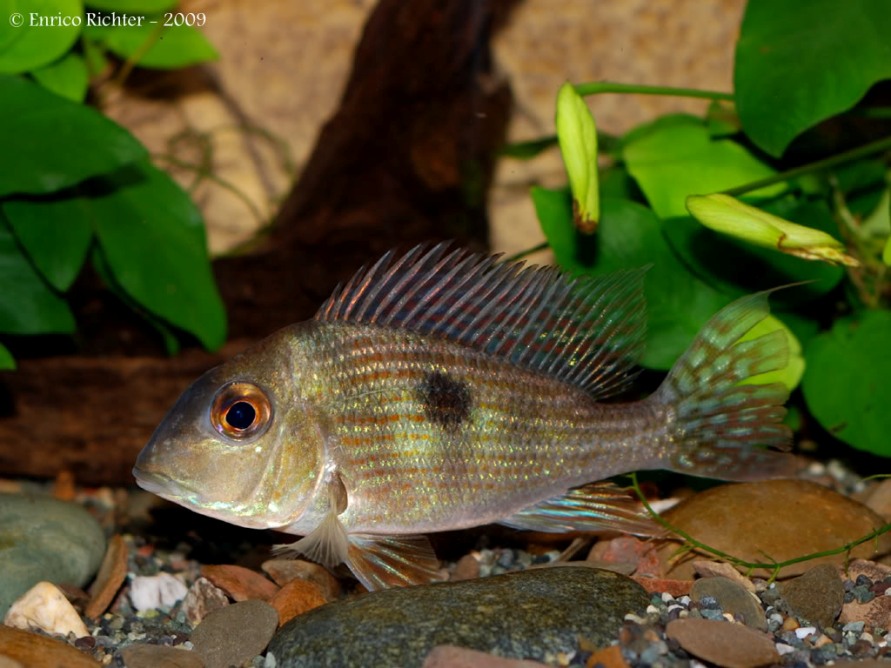
Geophagus sp. 'Pindaré'
Cichlidae · authority not recorded
Known only from the rio Pindaré in Maranhão state, north-eastern Brazil which drains into the Baía de São Marcos (St. Mark's Bay) along with the rios Mearim, of which it is sometimes considered a tributary, and Grajaú. Some sections of the Pindaré have been heavily degraded via removal of riparian vegetation for agriculture and habitats destroyed due to resultant siltation. The river is poorly-studied and the conservation status of its fishes mostly unconfirmed so su...
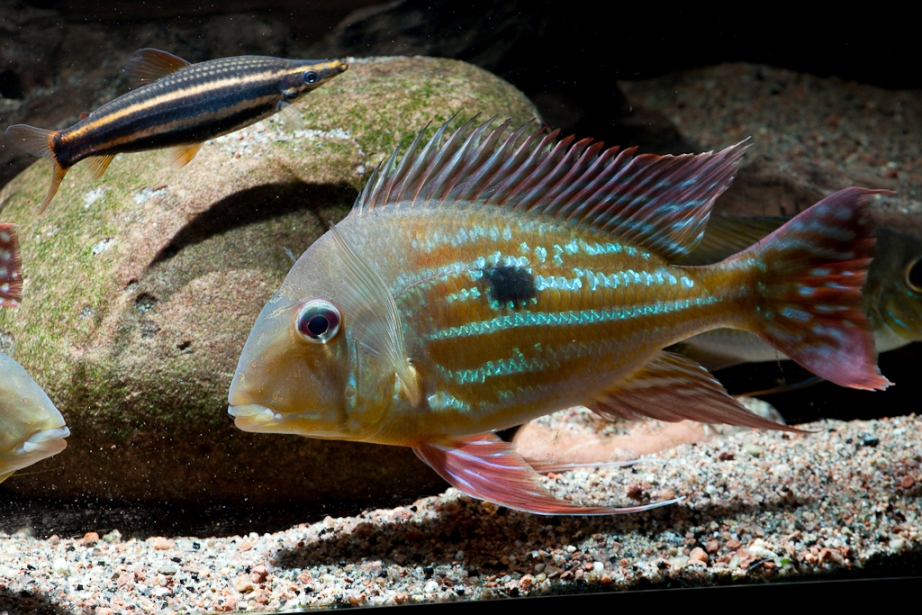
Geophagus winemilleri
Cichlidae · López-Fernández & Taphorn, 2004
This species is rare in the hobby although other species are sometimes sold under the name. It's a member of the nominal G. surinamensis 'group' of closely-related species within the genus and can be identified by a combination of characters including: possession of dark preopercular marking; four parallel, ventrally-inclined bars on each flank (normally visible only when the fish are stressed, spawning or preserved); dark lateral spot positioned within the second vertical bar; caudal fin red with variable pattern of large, iridescent blue to white spo...
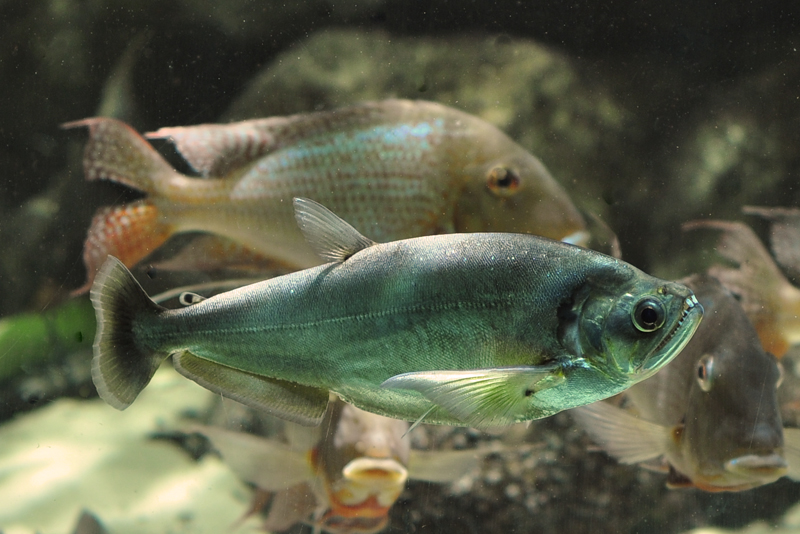
Hydrolycus scomberoidesVampire Tetra
Cynodontidae · Cuvier, 1819
This species may be referred to using a variety of names including 'scomb', 'sabre tooth tetra', 'sabre tusk barracuda', 'dog tooth characin, 'vampire fish', 'Cachorra' or Pirandirá (the latter two names being used in Brazil where they're also applied to congeners). It's regularly confused with the payara, H. armatus, though that species grows considerably larger, is pop...
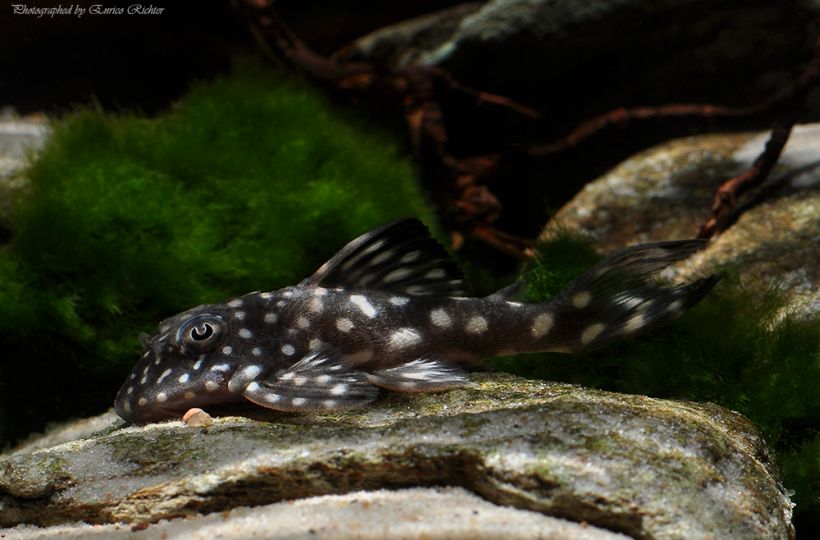
Hypancistrus inspectorL102
Loricariidae · Armbruster, 2002
H. inspector can be told apart from other described species in the genus by the following combination of characters: colour pattern comprising brown to black base with large whitish to yellow spots; adpressed dorsal-fin not reaching the adipose-fin spine; spots on head much smaller than on rest of body; spots in the upper caudal-fin lobe combining to form bands in adults; 24 plates in the mid-ventral series.
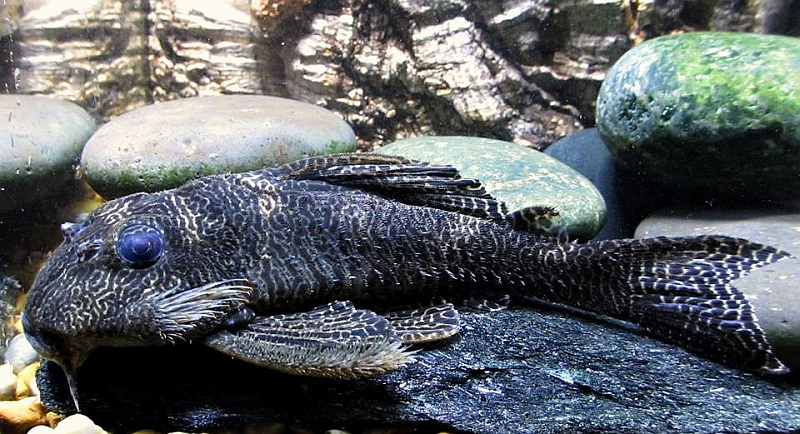
Hypancistrus sp.L066
Loricariidae · authority not recorded
Collected from the rio Xingu downstream and in the vicinity of Belo Monte, Pará state, northern Brazil. The majority of its natural habitat is likely to be severely degraded in the near future due to ongoing construction of the Belo Monte dam.
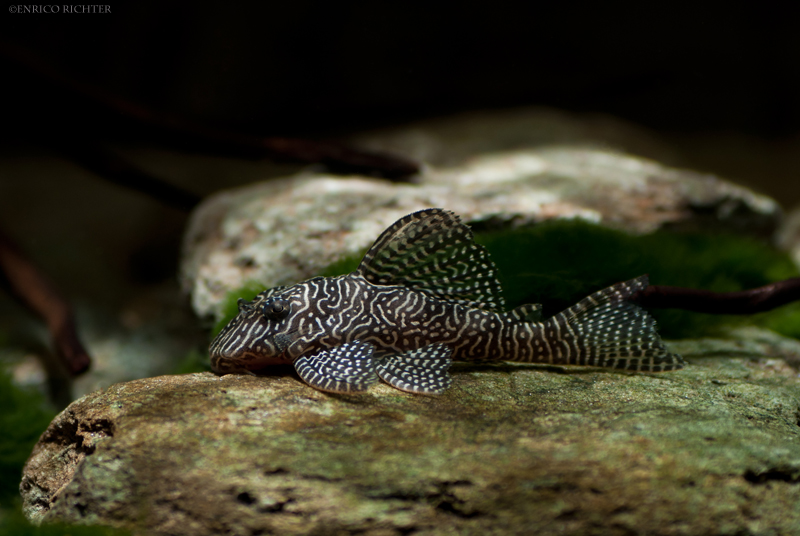
Hypancistrus sp.L260
Loricariidae · authority not recorded
A similar-looking, larger form from the rio Jarí, which enters the Amazon from the opposite bank a few hundred kilometres downstream from the Tapajós has been assigned the code L411. The two can be told apart relatively easily since in L260 the white vermiculations on the body are significantly finer than in L411, in which the black and white components of the colour pattern are of more-or-less equivalent width.
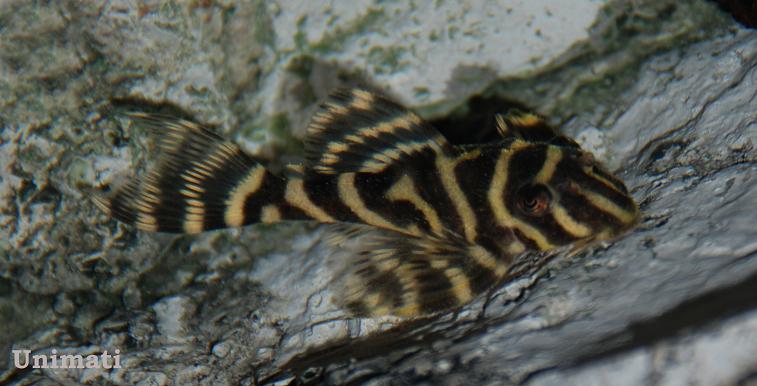
Hypancistrus sp.L333
Loricariidae · authority not recorded
This unidentified species possesses a highly variable colour pattern with the pale, randomly-arranged spots and blotches on the body ranging in colour from whitish to yellowish to rusty orange depending on the specimen. It's regularly confused with similar-looking relativ...
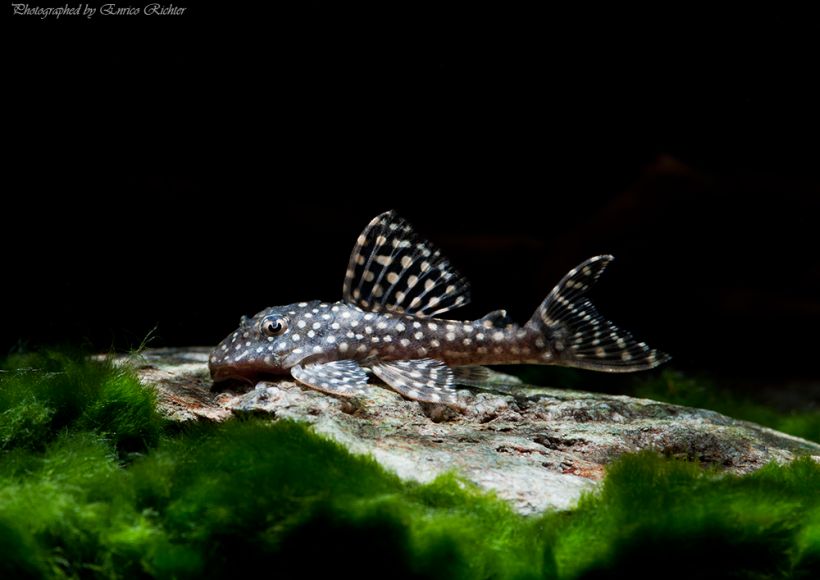
Hypancistrus sp.L136
Loricariidae · authority not recorded
L136 and its variants are collected in the rio Negro basin, Amazonas state, Brazil, and in particular the rio Demini, a northern tributary flowing into the central Negro in the municipality of Barcelos. Collection details for LDA05 and LDA06 are currently unclear but presumably in the vicinity. This unidentified 'species' is highly variable in terms of colour pattern, and it has been assigned a ser...
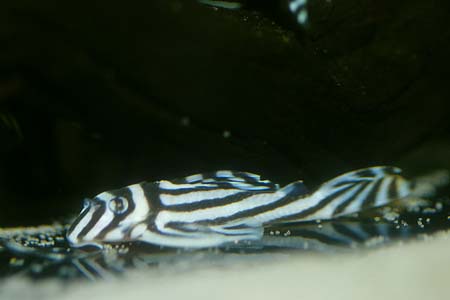
Hypancistrus zebraZebra Plec
Loricariidae · Isbrücker and Nijssen, 1991
One of the most enigmatic species in the hobby, this incredible little catfish must rank amongst the most stunning freshwater species known. In the late 1990s and the early part of this century you could buy one of these for as little as twenty pounds. However in 2004, the Brazilian government banned the exportation of the species amid apparent concerns over the exploitation of wild stocks. As yet, the conservation status of the fish has not been confirmed by any scientific proof with the only e...
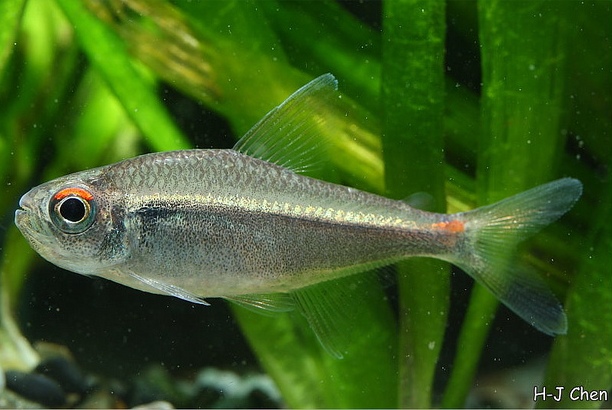
Hyphessobrycon agulha
Characidae · Fowler, 1913
This species is relatively rare in the aquarium hobby but is occasionally traded as 'red-tailed flag tetra'. It lends its name to the H. aghula group of closely-related species within the genus as proposed by Géry (1977, see below) of which members share the following characters which set them apart from other characids: lower half of the body dark, especially above the anal-fin; usually possessing a laterally-elongate humeral spot, more-or-less united wit...
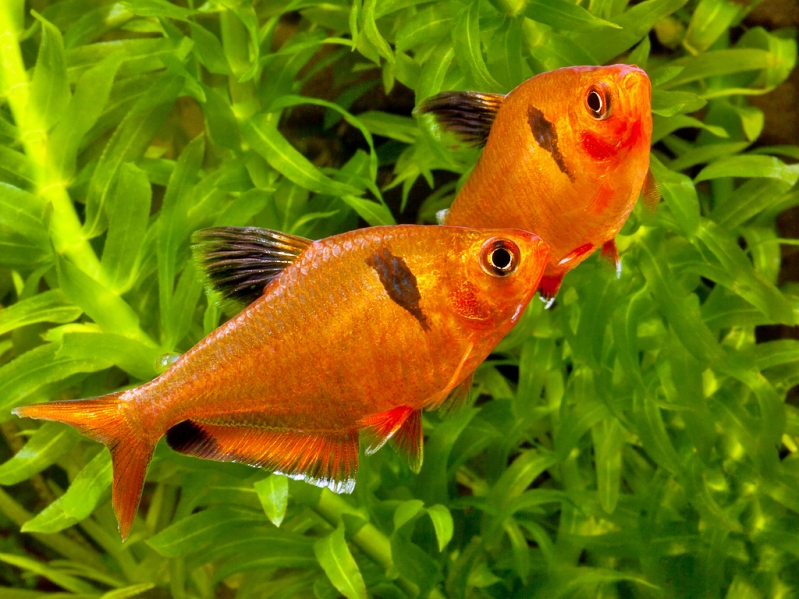
Hyphessobrycon equesSerpae Tetra
Characidae · Steindachner, 1882
This species is very common in the aquarium trade and is also referred to as 'jewel', 'red minor', 'blood', or 'callistus' tetra. A number of selectively-bred ornamental strains have been developed, including 'metallic', 'long-finned', 'balloon' and 'fairy-fin'. Characiformes is among the most diverse orders of freshwa...
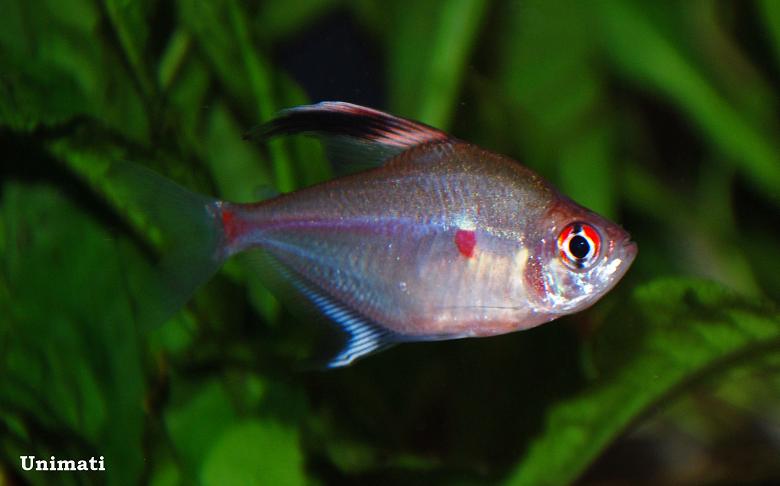
Hyphessobrycon erythrostigmaBleeding Heart Tetra
Characidae · Fowler, 1943
In the igarapés Baré and Ubim, western Brazil H. erythrostigma was collected from stretches measuring 5-7 metres in width with thick riparian and overhanging vegetation. The substrate was mostly composed of sand and the fish displayed a preference for boundary zones between shallow and deeper water. Conductivity was measured at 14.2-62.1 mS/cm³, dissolved oxy...
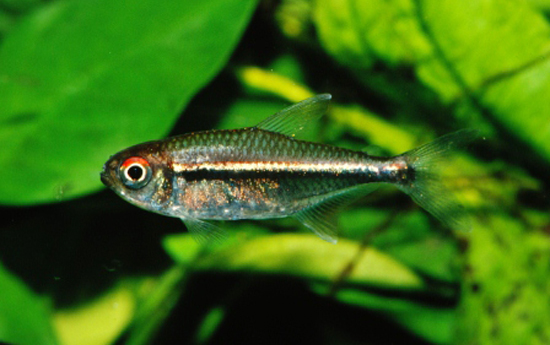
Hyphessobrycon heterorhabdusFlag Tetra
Characidae · Ulrey, 1894
Its name appears to have been misapplied to similar-looking fishes occurring throughout much of the middle and lower Amazon in Brazil and Colombia, plus the rio Orinoco drainage in Colombia and Venezuela, and coastal systems of the Guianas. Some of these have been described as distinct species (e.g. Hyphessobrycon amapaensis Zarske & Géry 1998; H. eschwartzae García-Alzate, Román-Valencia & Ortega 2013; H. montagi Lima, Couthino & Woziacki 2014), whereas the identity of others remains un...
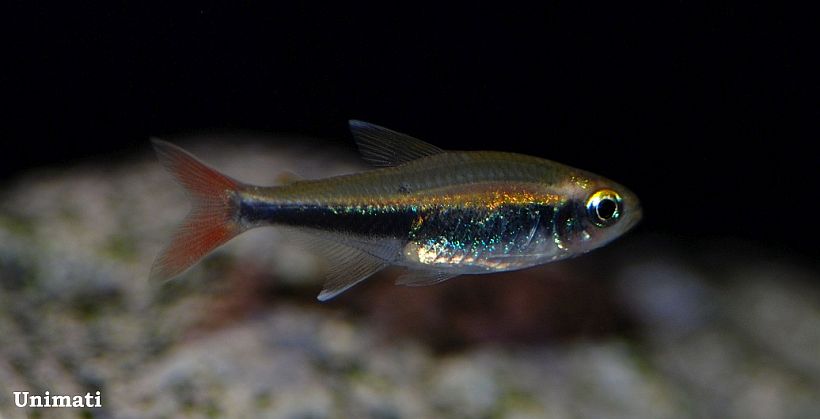
Hyphessobrycon loretoensisLoreto Tetra
Characidae · Ladiges, 1938
The most recent diagnosis appears to be that of Géry (1977), in which it was separated from other members of the group by the following combination of characters: dorsal-fin insertion at or slightly anterior to mid-body; caudal-fin brick red to orange-red; body depth fits less than 3.6 times in SL; head length fits 3.5-4.0 times in SL; caudal peduncle length u...
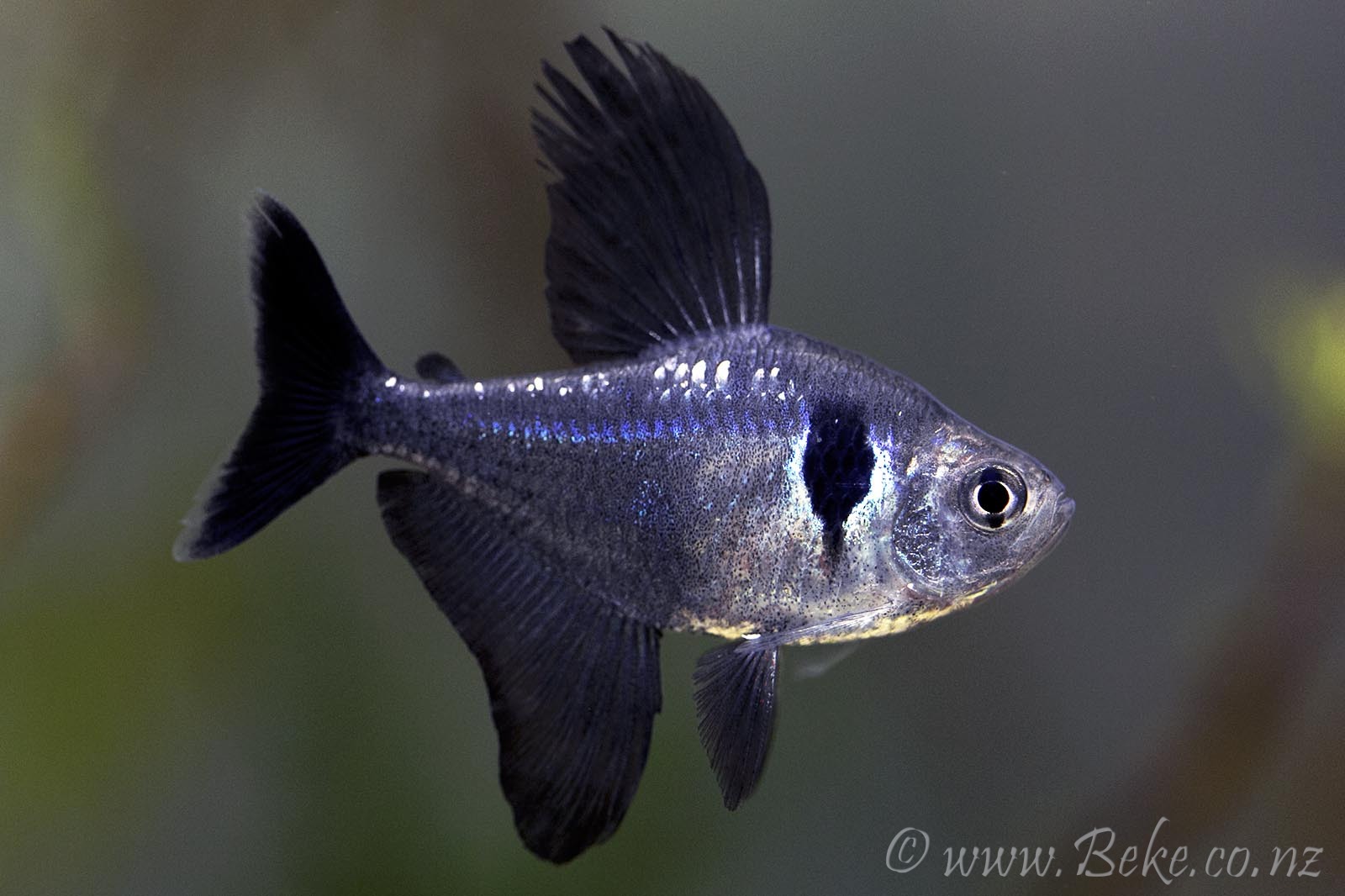
Hyphessobrycon megalopterusBlack Phantom Tetra
Characidae · Eigenmann, 1915
The majority of records pertain to the rio Guaporé (Río Iténez in Bolivia), the main affluent of the rio Mamoré, which drains the vast tropical wetland known as the Pantanal, and the upper rio Paraguai, which also has its headwaters in the Pantanal but flows in the opposite direction. The Guaporé and Paraguai are connected due to rising water levels during the annual wet season.
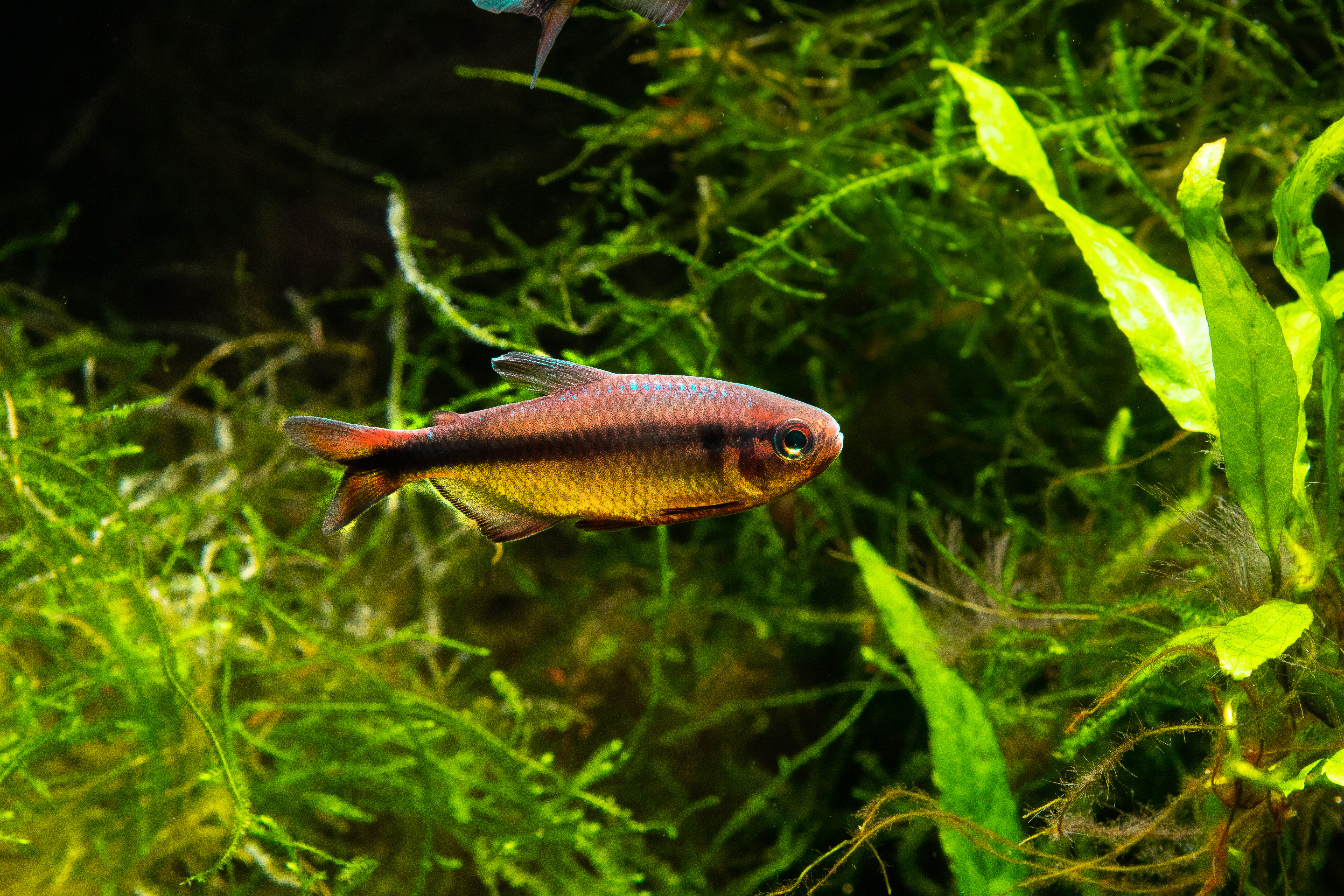
Hyphessobrycon melanostichosBlack Stripe Tetra
Characidae · Carvalho & Bertaco, 2006
Hyphessobrycon melanostichos shares a number of similarities with Hyphessobrycon sp. Blue Ribbon. The former can be differentiated from the latter by a lighter set, more streamlined body , smaller humeral spot and also red colouring, which is not present on the Blue Ribbon tetra. Care and maintenance of the two species is however, virtually the same.
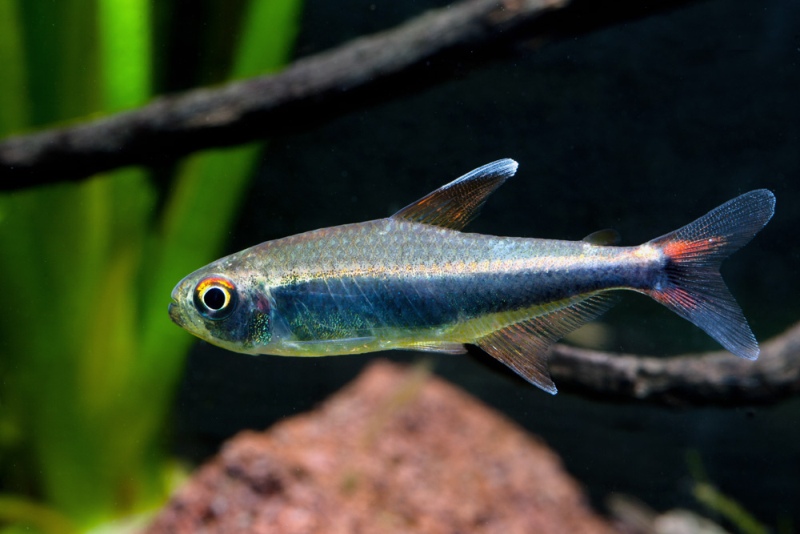
Hyphessobrycon peruvianusPeruvian Tetra
Characidae · Ladiges, 1938
This species is available on a relatively regular basis, although it's sometimes confused with the similar-looking congeners H. loretoensis and H. metae. It can be identified via the following combination of characters as per Géry (1977): elongate in shape with body depth fitting 3.8-3.9 times in its standard length; caudal peduncle narrow, its depth fitting 1.8 times in its length; head short, interorbital broad, snout short and rounded; dorsal-fin insertion an...
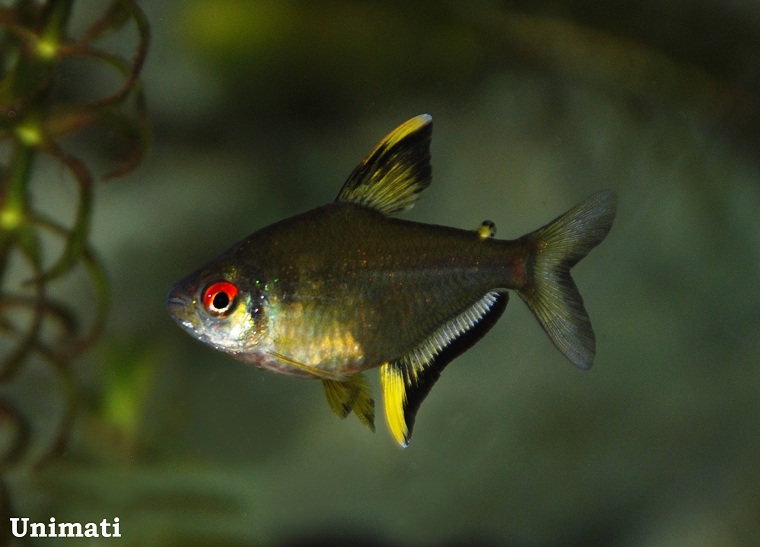
Hyphessobrycon pulchripinnisLemon Tetra
Characidae · Ahl, 1937
This species is a popular aquarium fish and is bred on a commercial basis in several countries, with a selectively-bred albino form also available. Wild specimens are rarely collected due to the low price of the farmed fish, but the origin of the commercial strain is questionable. The species was considered endemic to the rio Tapajós basin, but in the early 1990s fish appearing identical to the aquarium form were photographed in the...
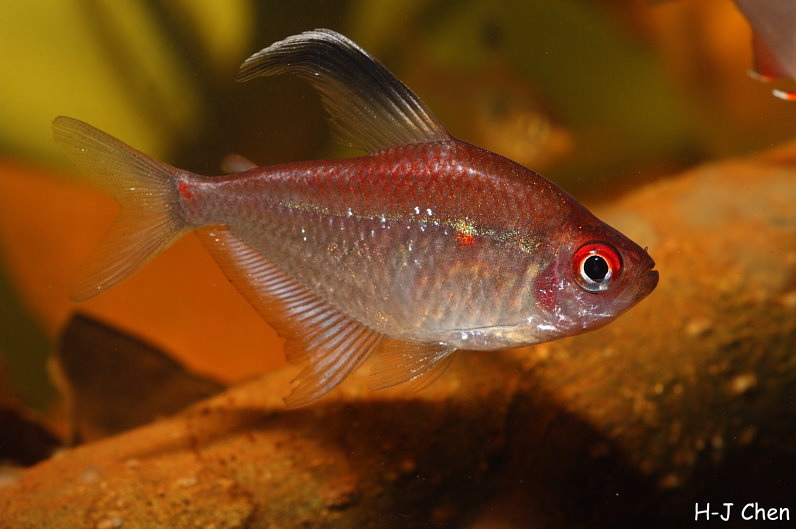
Hyphessobrycon pyrrhonotusFlame-back Bleeding Heart Tetra
Characidae · Burgess, 1993
This is the smallest of three similar-looking species most commonly-referred to as the 'bleeding heart' subgroup, the other two being H. erythrostigma and H. socolofi. All possess a reddish humeral spot which is not present in any other characid with other shared characters including possession of 6 -14 maxillary teeth, 7-9 scales above the lateral line, 5-7 scales below the lateral line and 26-33 anal fin rays.
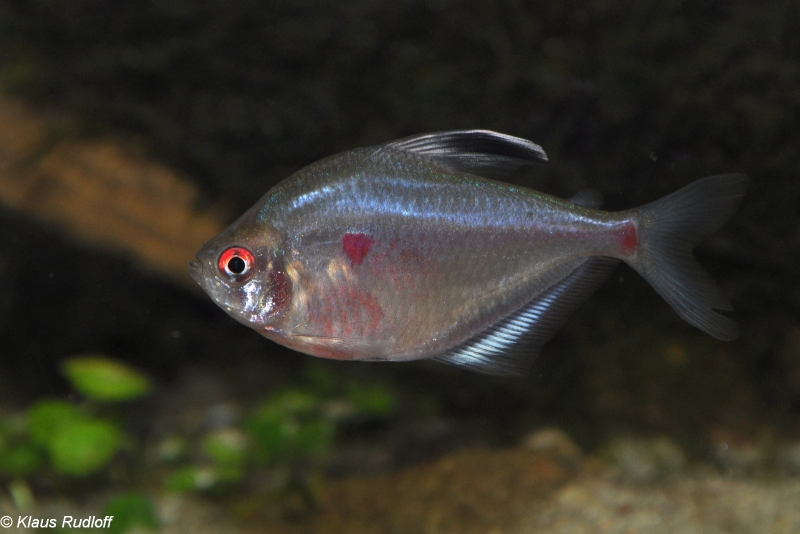
Hyphessobrycon socolofiLesser Bleeding Heart Tetra
Characidae · Weitzman, 1977
This species is an opportunistic omnivore by nature. The stomach contents of wild specimens from the rio Padauari were composed of fruit remains and aquatic insects with the former constituting 99% and latter 1% of all items consumed. Stomachs of individuals from igarapé Água Boa cont...
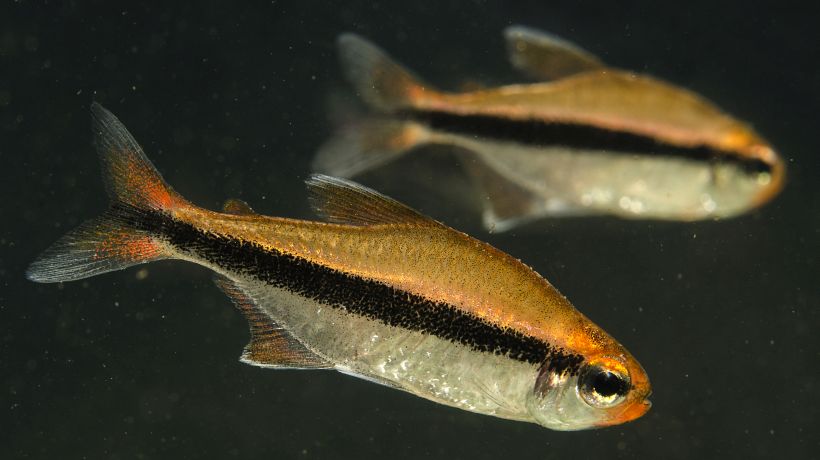
Hyphessobrycon vilmae
Characidae · Géry, 1966
Choice of décor is not especially critical although it tends to show better colouration when maintained in a well-furnished set-up with live plants and a dark substrate. A natural-looking arrangement might consist of a soft, sandy substrate with wood roots and bran...
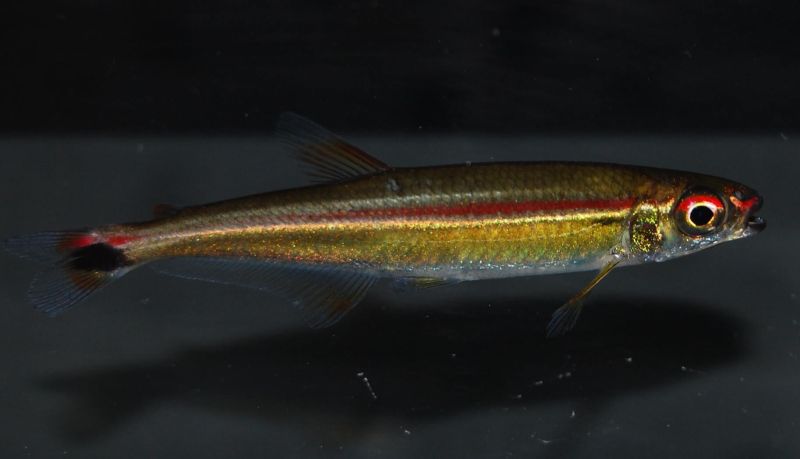
Iguanodectes adujai
Iguanodectidae · Géry, 1970
This species is known from the rio Negro within the Brazilan Amazon basin and upper Río Orinoco system in Venezuela. Type locality is 'Rio Adujá, Rio Itú, tributary of middle Rio Negro, Amazonia, Brazil'.
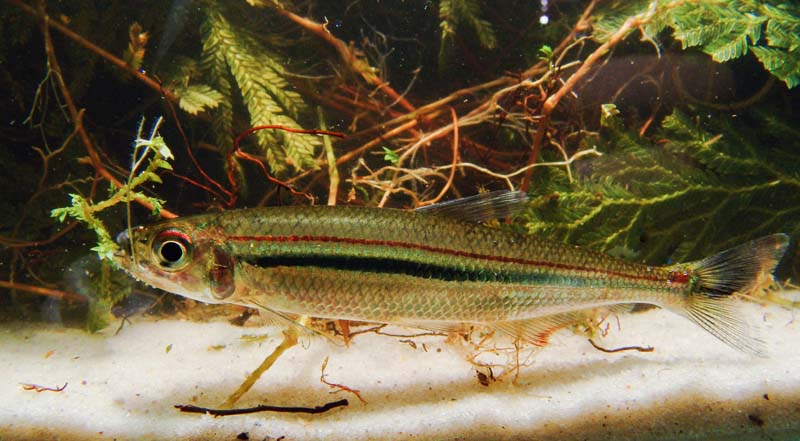
Iguanodectes geisleri
Iguanodectidae · Géry, 1970
I. geisleri is typically exported for the aquarium trade alongside the similar-looking congener I. adujai (Géry, 1970) but can be identified by presence (vs. absence in I. adujai) of a black lateral stripe on the body beneath the red stripe, and possession of 20-25 (vs. 28-34) anal-fin rays.
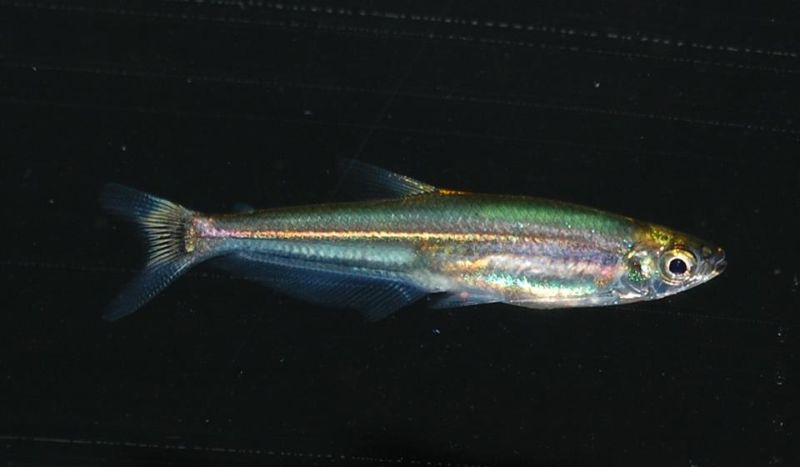
Iguanodectes spilurusGreen Line Lizard Tetra
Iguanodectidae · Günther, 1864
Widely-distributed throughout the Amazon, Orinoco, Essequibo, and Tocantins river systems in Brazil, Peru, Bolivia, Ecuador, Colombia, Venezuela, and Guyana. Type locality is 'Rio Cupai [= Rio Cupari], Rio Tapajós basin, Amazon River drainage, Pará State, Brazil'.
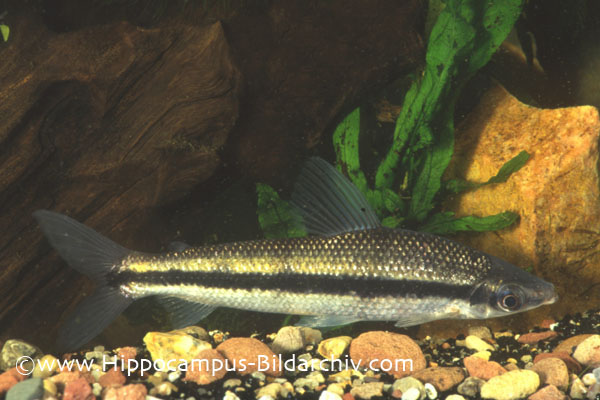
Laemolyta taeniataStriped Headstander
Anostomidae · Kner, 1858
L. taeniata is the largest-growing and second most widely-distributed member of the genus although it's a rarely-seen in the aquarium trade. It can be distinguished from all congeners since it uniquely possesses 5 lateral scale rows between the lateral line and dorsal-fin origin (vs. 4 or 6–8 in the remaining species).
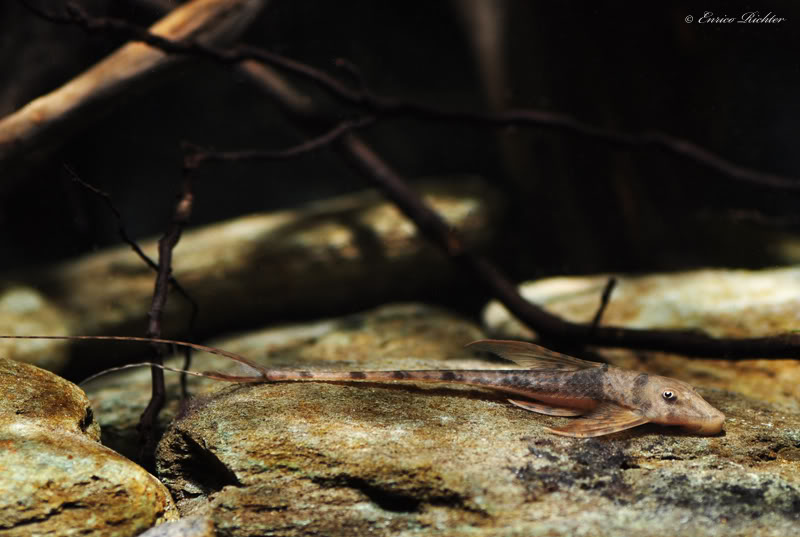
Lamontichthys filamentosusSturgeon Catfish
Loricariidae · La Monte, 1935
This species is relatively common in the aquarium hobby but is not easy to maintain and recommended only for experienced aquarists. It can be told apart from all congeners by specimens larger than 60 mm SL possessing an extended pectoral-fin spine forming an extremely long filament that may be more than four times the length of the first branched pectoral-fin ray (vs. not possessing such a filament in other species of Lamontichthys).
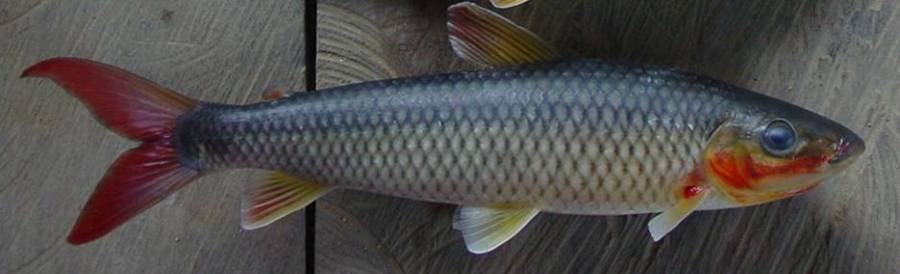
Leporinus brunneus
Anostomidae · Myers, 1950
Décor is relatively unimportant and maintenance simple provided sufficient space is available. A natural-style arr...
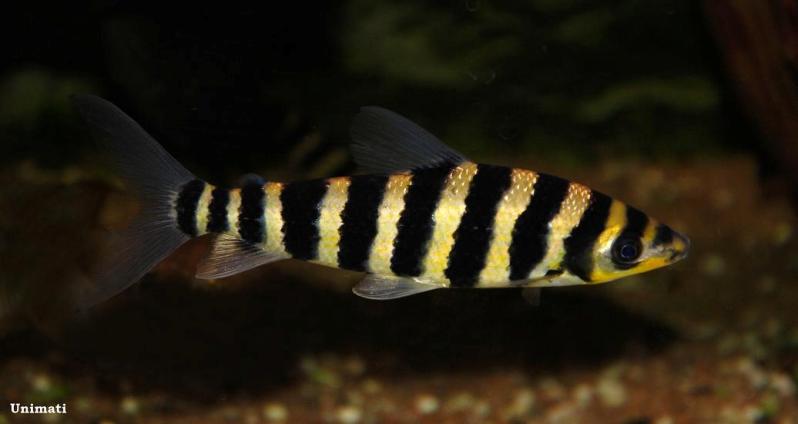
Leporinus fasciatusBanded Leporinus
Anostomidae · Bloch, 1794
This species is also referred to as 'black-anded leporinus', 'striped leporinus' and 'eight-banded leporinus'. Young specimens are often traded for aquaria without warning as to their potential size and requirements, and as a result it's fairly ubiquitous in public aquarium displays.
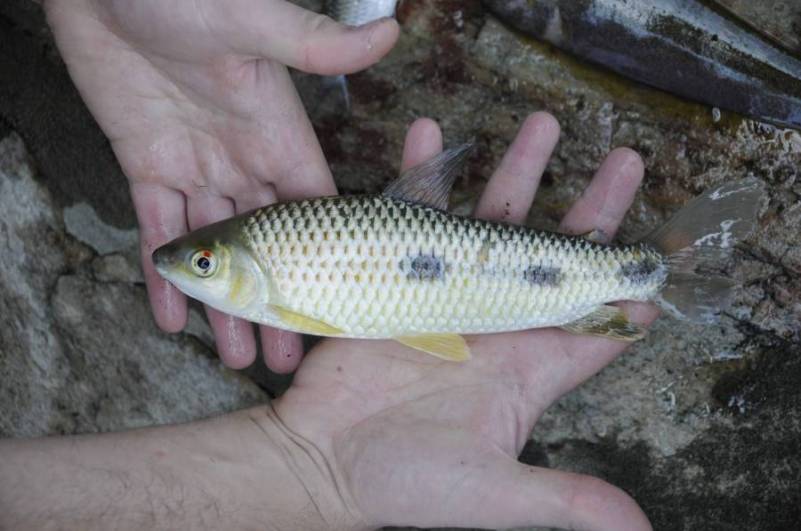
Leporinus fridericiThreespot Leporinus
Anostomidae · Bloch, 1794
This species was described from Suriname but no specific locality was given. It's currently accepted to occur throughout much of the Amazon river system in Brazil, Peru and Bolivia with additional records from coastal drainages of Guyana, Suriname and French Guiana plus the island of Trinidad (Trinidad and Tobago).
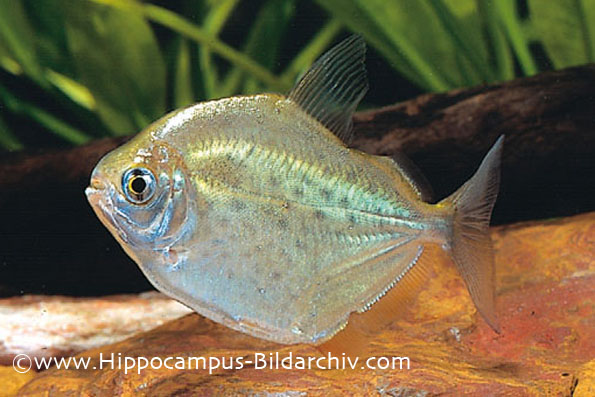
Metynnis lippincottianus
Serrasalmidae · Cope, 1870
Metynnis lippincottianus is occasionally seen for sale, sometimes under the name of "Silver Dollar". It is easily distinguishable from m. argenteus and m. hypsauchen (which are more commonly sold as Silver Dollars) by its spotted pattern, hence the common name. M. lippincottianus shares a common name with m. maculatus but the two can be distinguished as the spots on m. maculatus are more pronounced. Silver dollars are common and popular fish in the hobby. They are related to piranh...
Metynnis maculatusSpotted Metynnis
Serrasalmidae · Kner, 1858
Metynnis maculatus
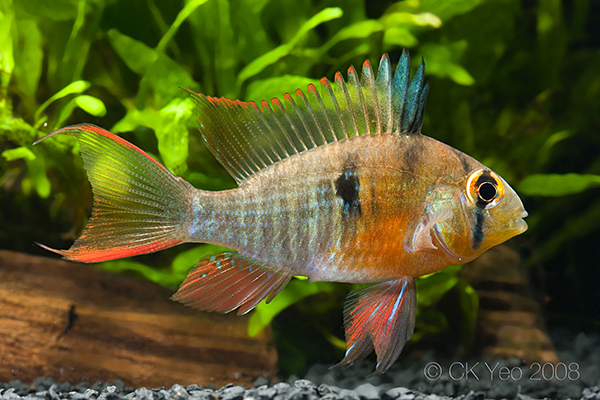
Mikrogeophagus altispinosusBolivian Ram
Cichlidae · Haseman, 1911
This species appears endemic to the upper rio Madeira basin in Bolivia and Brazil. Records exist from the Río Mamoré and Río Guaporé drainages in Bolivia (where the Guaporé is known as the Iténez) and Brazil plus the upper Río Orthon (ríos Tahuamanu and Manuripi). Type locality is 'sand-bank in the Rio Marm...
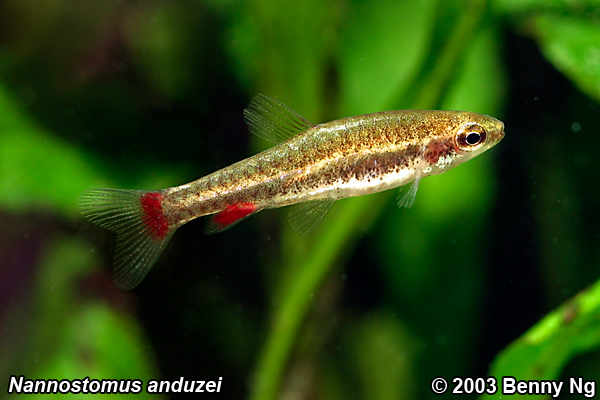
Nannostomus anduzei
Lebiasinidae · Fernandez & Weitzman, 1987
This is the smallest member of the genus and rarely traded in numbers, though it's a relatively common contaminant among shipments of wild fishes from Manaus. Unlike other Nannostomus spp. it does not exhibit a specific colour pattern of spots or bars at night-time, rather displaying an overall paleness. The family Lebiasinidae is included in the order Characiformes and sometimes split into the nominal subfamilies Lebiasininae a...
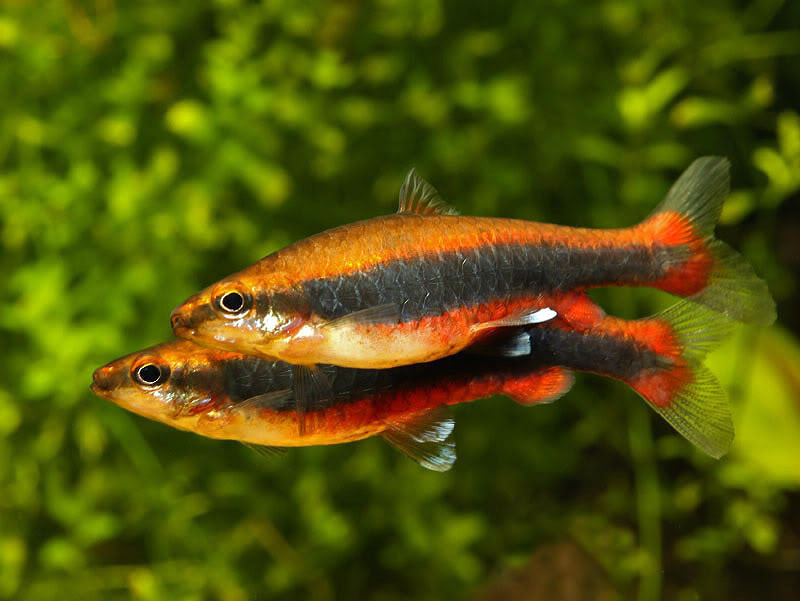
Nannostomus beckfordiGolden Pencilfish
Lebiasinidae · Günther, 1872
This is the type species of the genus, fairly ubiquitous in the aquarium trade, and represents an excellent choice for the newcomer to fishkeeping since it's less demanding than most congeners. It's sometimes referred to as 'Beckford's pencil fish' or 'brown pencilfish'. Don't worry if your fish look different when you switch on the aquarium lights after dark or in the morning as like most Nannostomus species it assumes a cryptic, vertically-barred colour pattern at ni...
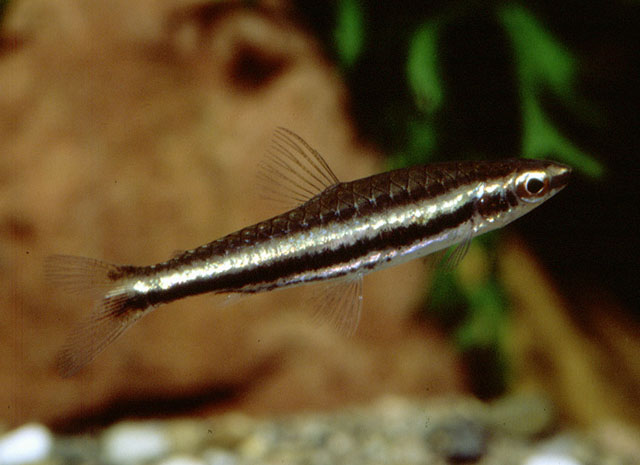
Nannostomus digrammusTwostripe Pencilfish
Lebiasinidae · Fowler, 1913
Native to the central Amazon basin with records existing from the Madeira, Branco, Trombetas, and Tapajós river drainages, plus the Rupununi basin in Guyana. Although an affluent of the rio Essequibo and thus not officially part of the Amazon basin, the latter is connected to the rio Takutu, a tributary of the upper rio Branco, during the annual wet season. Type locality is given by Fowler as 'Rio Madeira about 200 miles east of W. Long. 62°20', Brazil'.
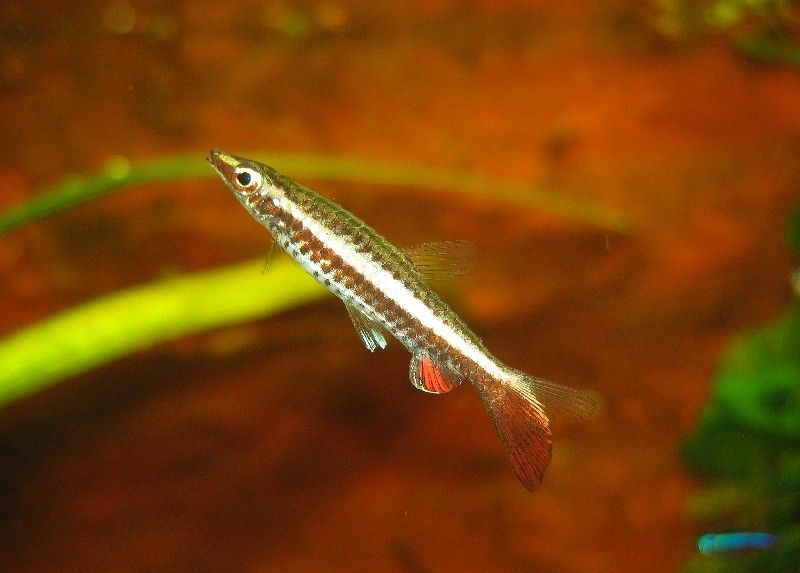
Nannostomus equesHockeystick Pencilfish
Lebiasinidae · Steindachner, 1876
This species has been referred to the genera Poecilobrycon and Nannobrycon in the past and in the aquarium hobby is also known as 'rocket', 'brown', 'brown-tailed', 'diptail', or 'tubemouth' pencilfish.It's a popular aquarium fish and has an interesting oblique swimming-style, a behavioural trait shared only with N. unifasciatus among congeners. In the original description the colour pattern is given by Steindachner as a brown lateral stripe exte...
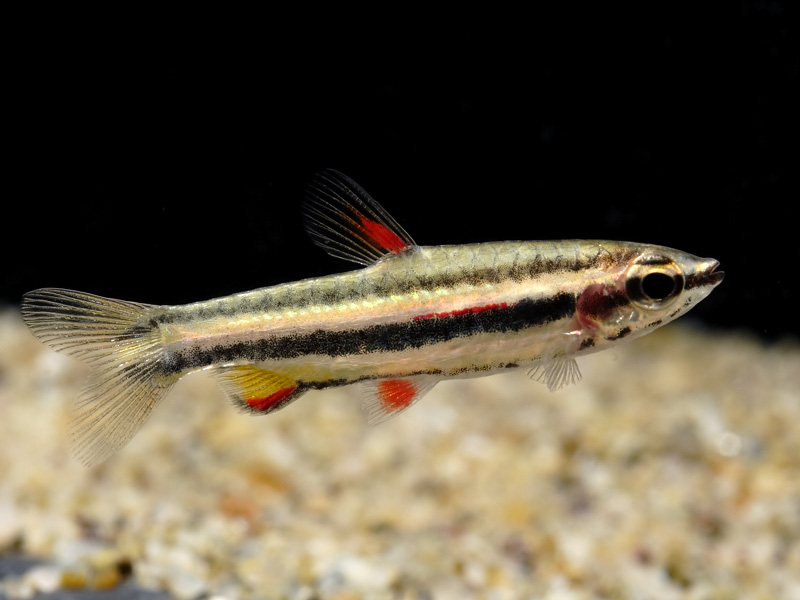
Nannostomus marginatusDwarf Pencilfish
Lebiasinidae · Eigenmann, 1909
There also exist a number of minor differences in colour pattern between populations. For example some Peruvian forms have yellow pigmentation on the body and fins, and those from Guyana and Suriname possess a short red stripe on vertical scale rows 6-9, above the central dark stripe on the body. Rio Negro forms have a similar red stripe but overlapping the central dark stripe and extending along most of the flank, while a form from Colombia has an elongate red stripe which is broken in two beneath the dorsal-fi...
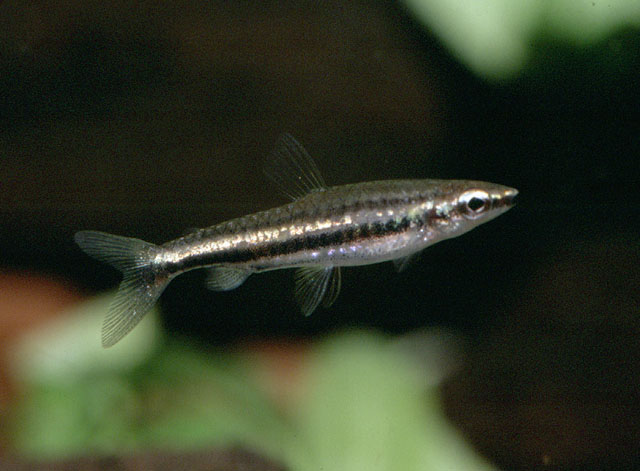
Nannostomus marilynaeGreenstripe Pencilfish
Lebiasinidae · Weitzman & Cobb, 1975
This species is also known as 'Marilyn's pencilfish'. It's rarely traded in numbers and more often seen as bycatch among shipments of other species, particularly Paracheirodon axelrodi. It can be identified by the following combination of characters: three dark lateral stripes (sometimes referred to as primary, secondary, and tertiary); nocturnal oblique bars relatively narrow, with the anterior bar reaching, but not extending past, the anterior base of the dorsal-fi...
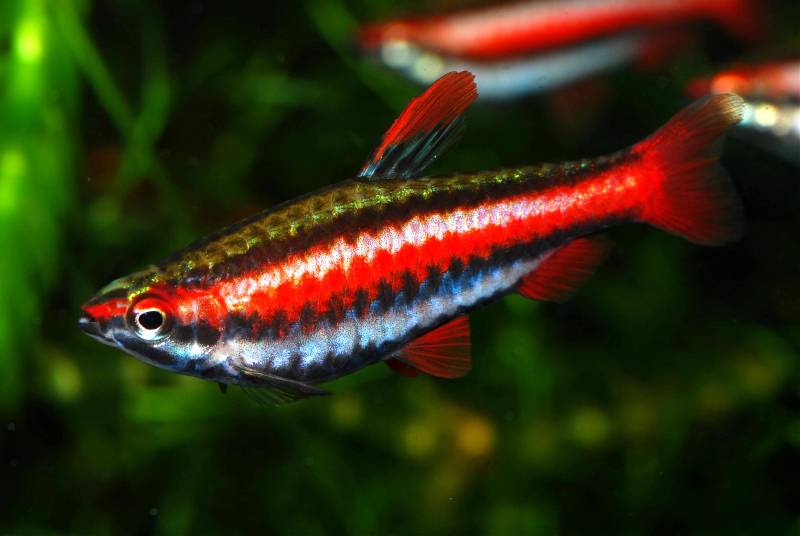
Nannostomus mortenthaleriCoral Red Pencilfish
Lebiasinidae · Paepke & Arendt, 2001
This species is traded under various other names including 'red arc pencilfish', 'Peruvian red pencilfish', 'ruby red pencilfish', 'red pencilfish', and Nannostomus cf. marginatus 'red'. It was initially described as a subspecies of N. marginatus but can be identified by the following combination of characters: pronounced sexual dimorphism with adult males exhibiting bright red pigmentation between the central...
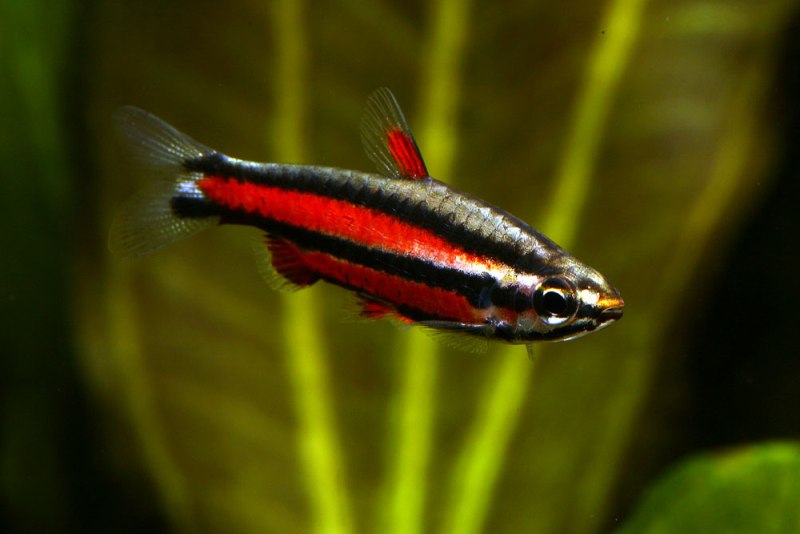
Nannostomus rubrocaudatusPurple Pencilfish
Lebiasinidae · Zarske, 2009
In live fish colour pattern is perhaps the most useful way to identify N. rubrocaudatus plus the closely-related N. marginatus and N. mortenthaleri. N. marginatus is immediately distinguished from the other two by the fact it lacks red pigmentation on the body in males, but N. mortenthaleri and N. rubrocaudatus are more easily-confused. Males of N. rubrocaudatus can be told apart fro...
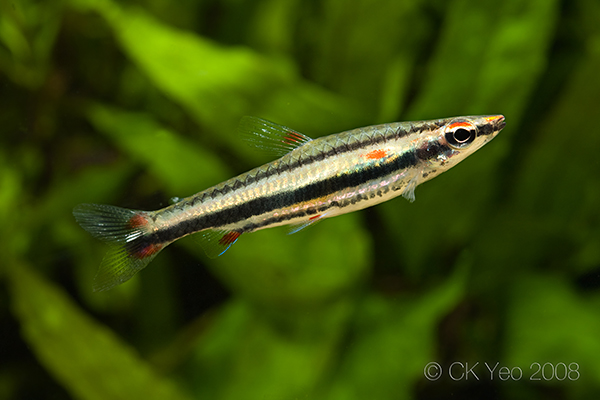
Nannostomus trifasciatusThree-lined Pencilfish
Lebiasinidae · Steindachner, 1876
Wild populations vary in colour pattern depending on origin, and some populations have previously been described as distinct species. A form from Peru has a particularly silvery body colour, for example, while another, marketed as 'super red' possesses an unusually long red stripe on the body, extending much of the length of the dark central stripe. A population from around Boa Vista in the rio Branco system, Pará state, Brazil has an ocellus o...
Otocinclus cocamaZebra Oto
Loricariidae · Reis, 2004
This stunning miniature Loricariid has only been available in the hobby since 2001, and was described to science in 2004. As with other otos, it can be a little delicate when first imported and should be quarantined carefully until it's settled.
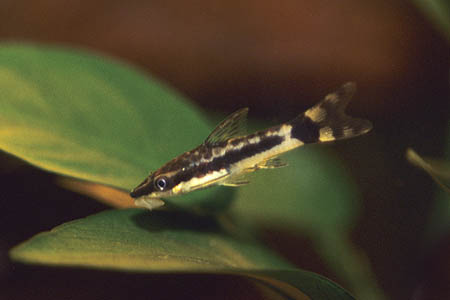
Otocinclus macrospilusOto
Loricariidae · Eigenmann & Allen, 1942
This is one of the commoner "otos" seen in the hobby, and is an ideal species for the planted aquarium. Unfortunately it can be quite delicate when first imported, and losses are not uncommon. This is usually down to lack of food, as it's a small fish and needs to feed almost constantly, so it's easily starved during transportation. As almost all otos are wild caught, they can be quite sensitive to water quality, too. Many hobbyists report fewer problems if the fish are added...
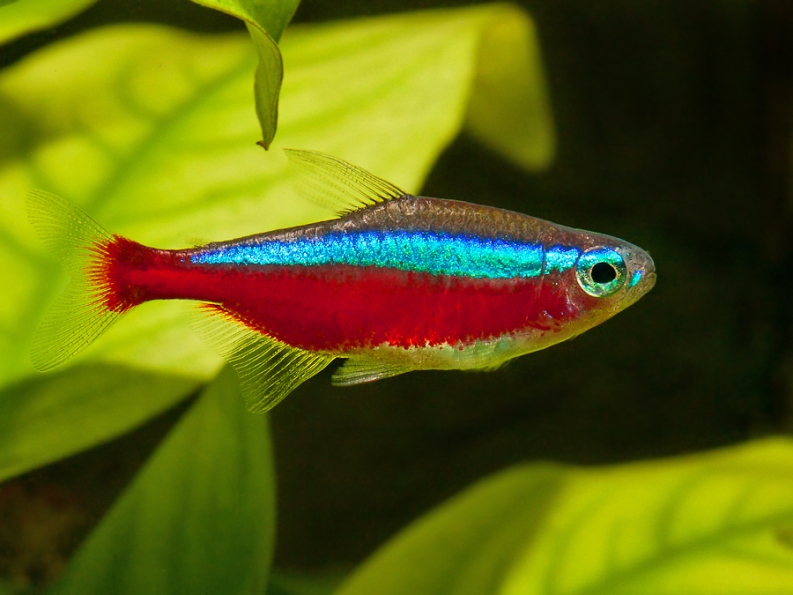
Paracheirodon axelrodiCardinal Tetra
Characidae · Schultz, 1956
It was initially going to be described as Hyphessobrycon cardinalis by Myers and Weitzman (1956) but just before this was due to be published Schultz presented an alternative description in the hobbyist magazine 'Tropical Fish Hobbyist' and named the fish after the publication's founder, Dr. Herbert R. Axelrod. A significant proportion of the fish available in the aquarium trade are still wild caught or derive from community-led breeding projects such as Project Piaba in the middle Negro region, where this sp...
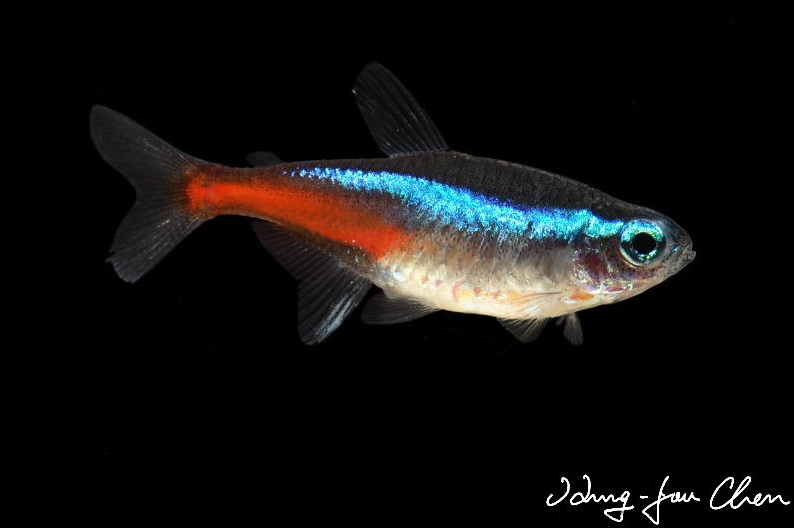
Paracheirodon innesiNeon Tetra
Characidae · Myers, 1936
One of the most popular and instantly recognisable fishes in the aquarium hobby, this species has been selectively-bred to produce a number of additional strains including albino, 'golden' (leucistic), short-bodied, long-finned and 'diamond' (in which the dorsal surface is covered in reflective scales). Unfortunately years of commercial breeding have somewhat affected the genetic vigour of the ornamental strain meaning morphological defects an...
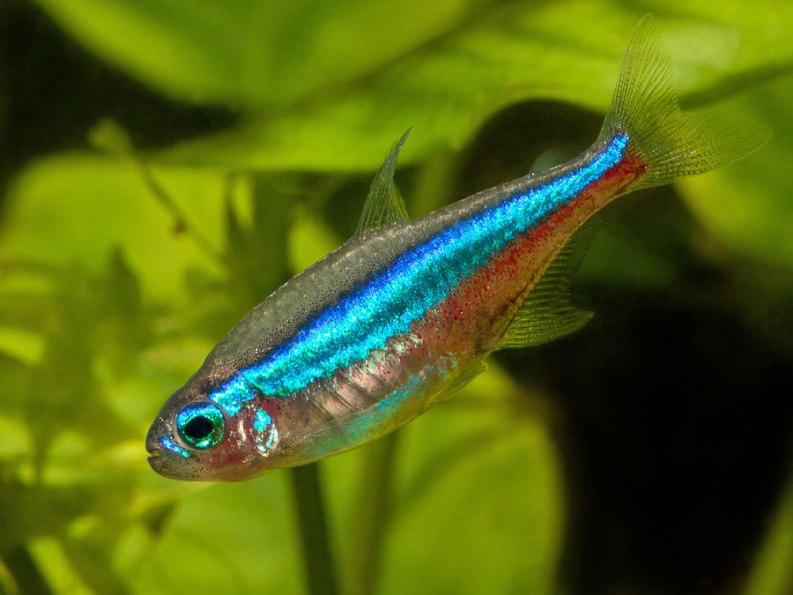
Paracheirodon simulansGreen Neon Tetra
Characidae · Géry, 1963
For aquarists perhaps more useful are the subtle differences in colour pattern with P. simulans differing from both P. innesi and P. axelrodi in possessing a greener (vs. bluer) lateral stripe which covers more (vs. less) of the eye/head and extends to the caudal-fin base (vs. terminating anterior to caudal-fin base), a lesser (vs. greater) amount of relatively duller (vs. brighter) red pigmentation on the flanks. The taxonomic history of all three species is complicated with earlier authors such as Géry (1960, 1977) ten...
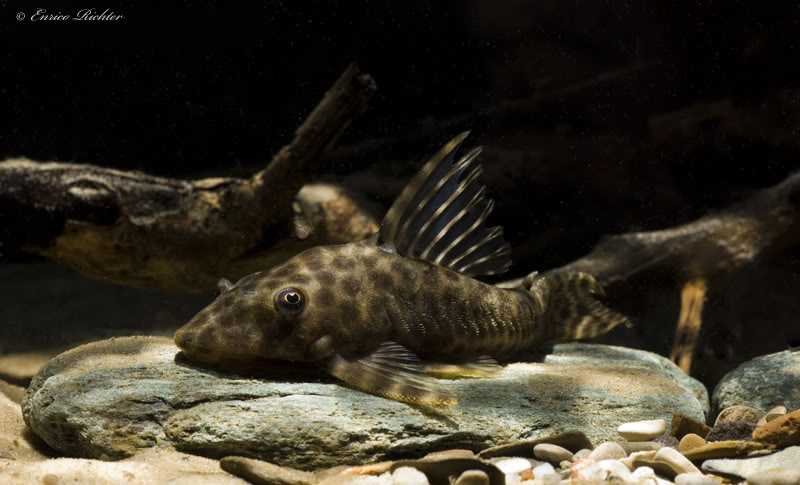
Peckoltia bachiL146
Loricariidae · Boulenger, 1898
This species has had several L-numbers assigned to it, with L146 collected from an unspecified locality in Colombia and L232 from the Río Putomayo/Içá. It's exported for the aquarium trade under a number of different generic names including Hemiancistrus, Sophiancistrus and Peckoltichthys. Following Armbruster (2008) it can be to...
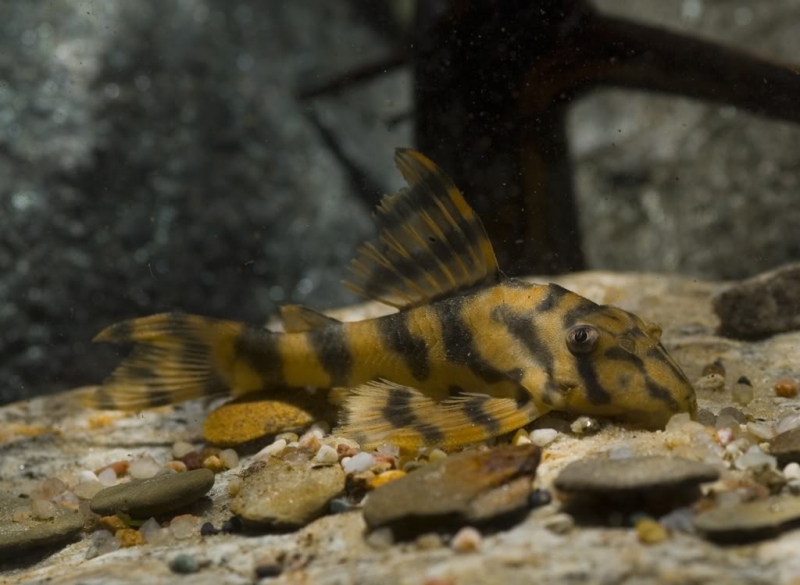
Peckoltia sp.L288
Loricariidae · authority not recorded
Currently known only from the rios Curuá Una and Uruará in Pará state, Brazil. The Curuá Una is a tributary flowing into the main lower Amazon channel downstream of Santarém and there is a large hydroelectric power plant constructed on it which supplies power to the city. The Uruará joins the Curuá Una around 30 km upstream of its mouth and confluence with the Amazon.
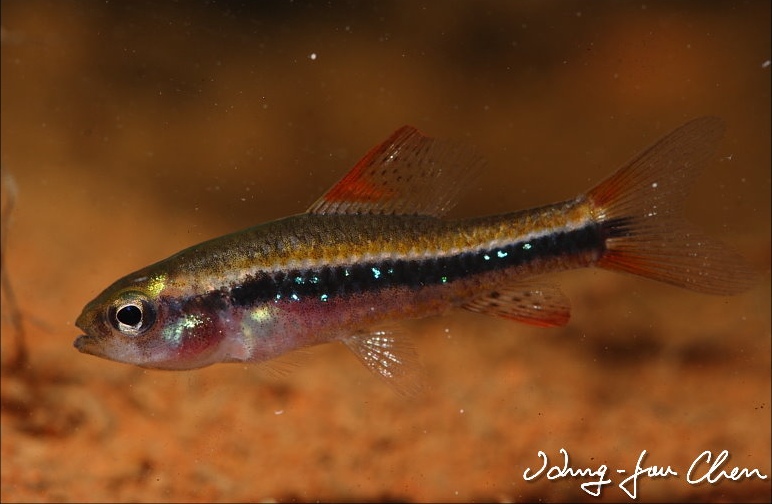
Poecilocharax weitzmaniBlack Darter Tetra
Crenuchidae · Géry, 1965
Quite widely distributed having been recorded from Brazil, Colombia, Peru and Venezuela. It's been collected from the upper parts of several major river drainages including the Río Negro, Río Orinoco (including the Río Inírida and Casiquiare canal) and Río Solimões. The type series was collected from 'Igarapé Préto', Brazil, said to be 60 kilometres to the south of the Colombian border city Leticia. Populations from Colombia and Brazil tend to be more intensely-coloured, and the Peruvian populations may apparently represent an undescribed species.
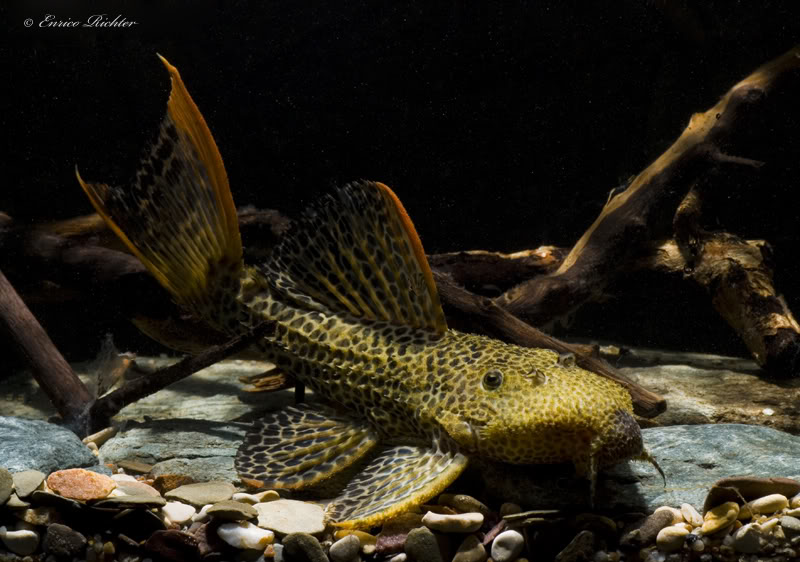
Pseudacanthicus cf. leopardusL114
Loricariidae · authority not recorded
Mostly collected in the in the rio Negro basin, Amazonas state, Brazil, and in particular the rio Demini, a northern tributary flowing into the central Negro in the municipality of Barcelos. P. leopardus was described from the Rupununi River in Guyana and the identity of this fish thus remains unconfirmed. This 'species' is also traded simply as 'leo...
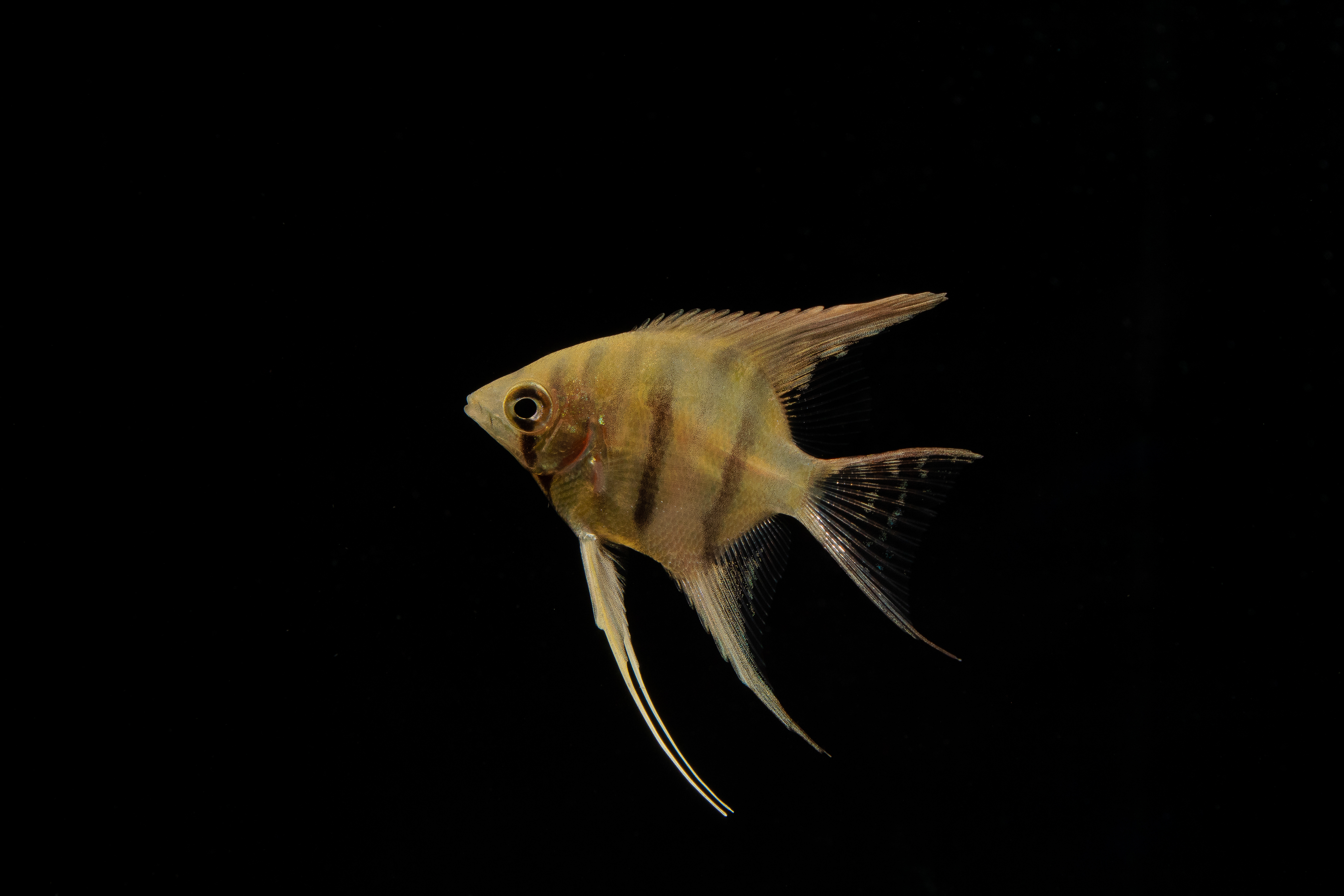
Pterophyllum leopoldiRoman Nose Angelfish
Cichlidae · Gosse, 1963
Pterophyllum leopoldi can be differentiated from other members of the genus by the presence of up to 11 vertical stripes on the body, though often only the 3 largest, boldest stripes can be seen. This species also shows a dark patch over the operculum. In adult specimens, a red/maroon hue over the back and fins is characteristic of the species, leading some to believe the most colourful natural form Angelfish. The name-sake roman nose possessed by the fish is also very distinctive and used as a meristic feature.
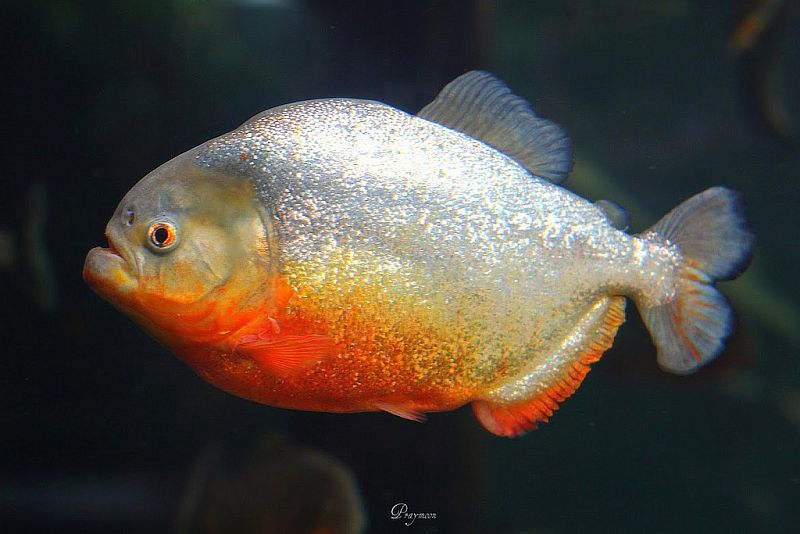
Pygocentrus nattereriRed Bellied Piranha
Serrasalmidae · Kner, 1858
Famed as a rapacious predator capable of rapidly stripping flesh from bone and a danger to any animal entering its native waters, P. nattereri is among the most notorious freshwater fishes in the world. As a result, displays featuring this “bloodthirsty” creature are found in most public aquaria, grisly Hollywood movies have been released, and the species has become popular in the aquarium trade. Little of this infamy is based on factual evidence, however.
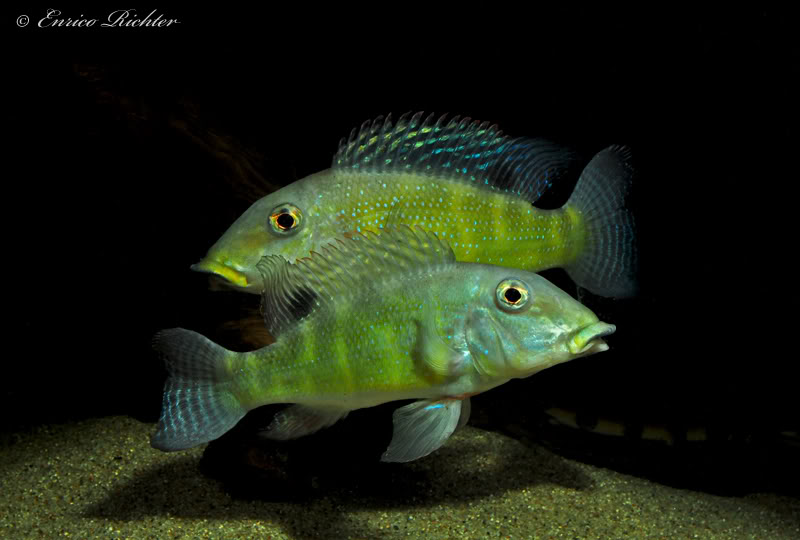
Retroculus xinguensis
Cichlidae · Gosse, 1971
The precise extent of this species' range is unclear. The majority of records pertain to the lower rio Xingu basin in the state of Pará, northern Brazil, including middle and lower reaches of its major tributary the rio Iriri, although the type locality is in Mato Grosso state several hundred kilometres upstream. There also exist a handful of records from the rio Jamanxim (a major affluent of the rio Tapajós which drain...
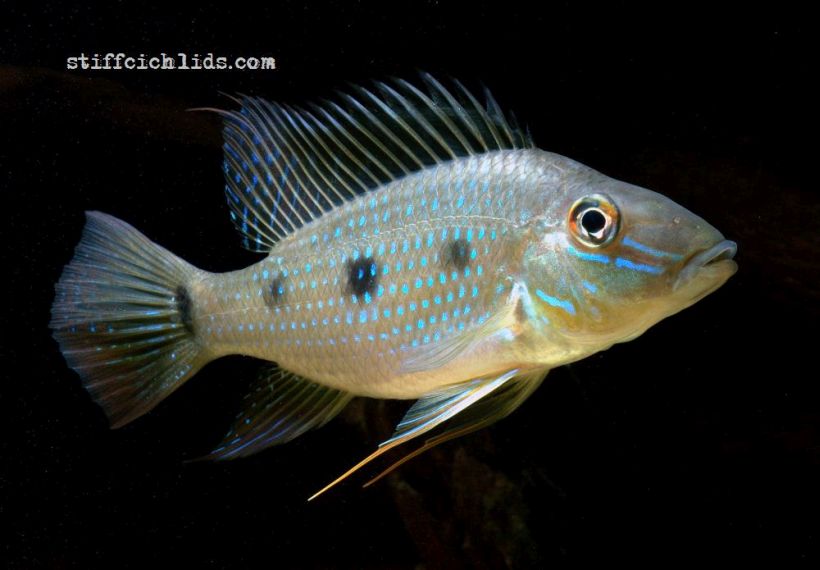
Satanoperca acuticepsSharphead Eartheater
Cichlidae · Heckel, 1840
This species is relatively rare in the ornamental trade, where it is sometimes confused with its similarly-patterned congeners S. daemon and S. lilith. These three species all possess 1-3 dark blotches on the side of the body and a relatively large ocellus on the upper caudal-fin base, characters that immediately separate them from the remainder of the genus which lack blotches on the body and have a relatively small ocellus on the upper caudal-fin base.
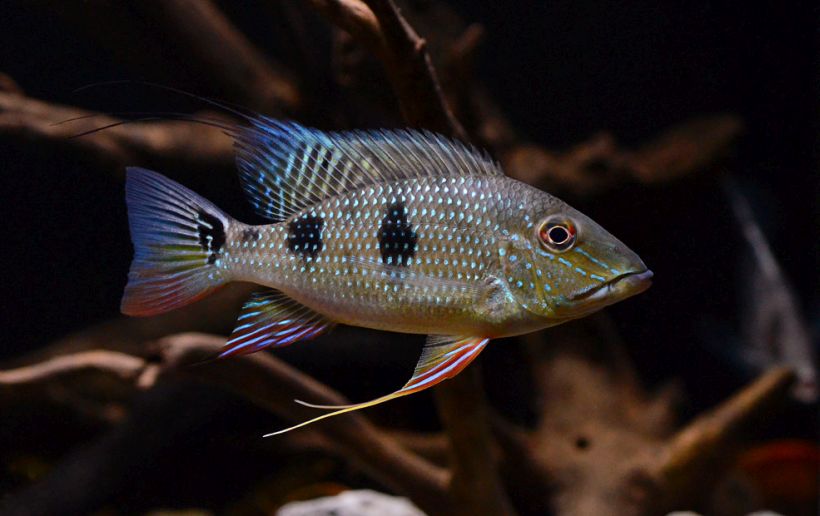
Satanoperca daemonThreespot Eartheater
Cichlidae · Heckel, 1840
S. daemon is relatively common in the aquarium trade but is by no means easy to maintain, with particular attention to space, diet, water quality, and chemistry required in order for it to thrive. It can be distinguished from other members of the genus by possessing two dark blotches on the flank and a prominent ocellus at the caudal-fin base. Among the named species it is most similar to...
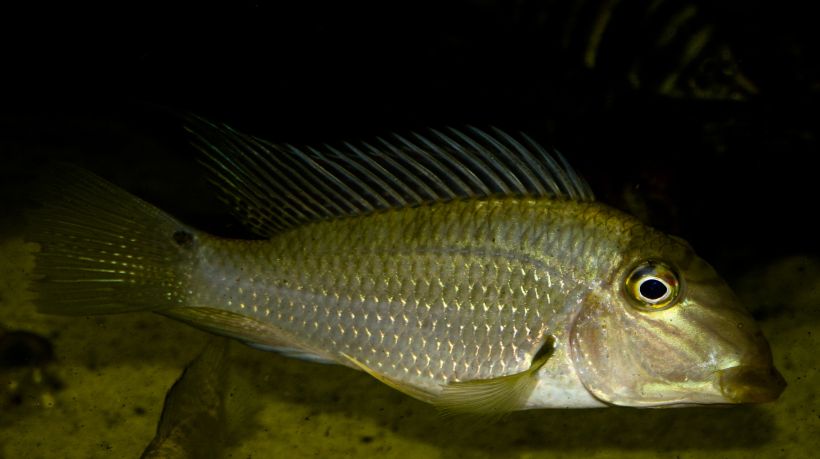
Satanoperca jurupariDemon Eartheater
Cichlidae · Heckel, 1840
S. jurupari is also known as 'demon fish', 'jurupari earth eater', 'green horse face', or simply 'jurupari' in the aquarium hobby. It can be distinguished from other members of the genus by the following combination of characters: presence of a relatively small dark ocellus on the upper caudal-fin base; absence of well-defined dark blot...
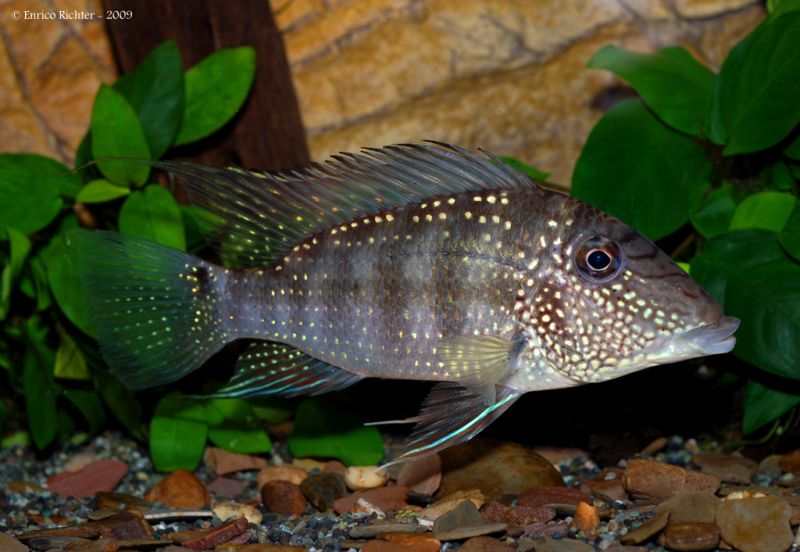
Satanoperca leucostictaWhitespot Eartheater
Cichlidae · Müller & Troschel, 1849
S. leucosticta is frequently available in the ornamental trade and farmed for the purpose in several countries. It is often confused with its congener S. jurupari in aquarium literature and on websites, but is easily recognised by presence (vs. absence) of prominent white spots or vermiform markings on the sides of the head. Although the presence of white spots on the head does not distinguish it from all known Satanoperca populations (see below), it can...
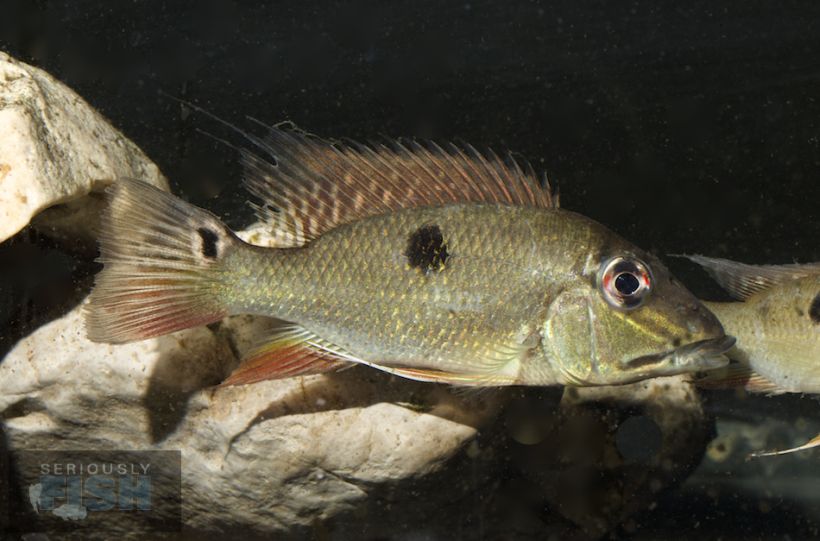
Satanoperca lilith
Cichlidae · Kullander & Ferreira, 1988
Despite its extensive natural distribution S. lilith is uncommon in the ornamental trade, where it is sometimes referred to as 'one-spotted demon fish' or 'one spot eartheater'. It can be distinguished from other members of the genus by possessing a single dark blotch on the flank and a prominent ocellus at the caudal-fin base. Among the named species it is most similar to S. daemon, but that species possesses two blotches on the flank.
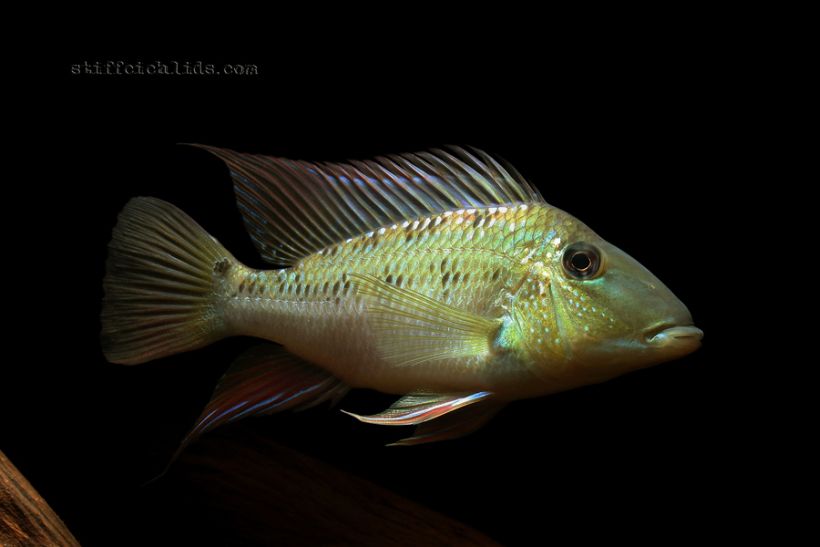
Satanoperca pappaterraPantanal Eartheater
Cichlidae · Heckel, 1840
S. pappaterra is relatively rare in the ornamental trade and much sought after by enthusiasts. It is easily distinguished from all known congeners by presence of a series of prominent black blotches beneath the dorsal-fin, plus a well-defined dark band extending along the side of the body. In recent genetic analyses its genetic distinctness was strongly supported, with S. jurupari and S. leucosticta its closest relatives.
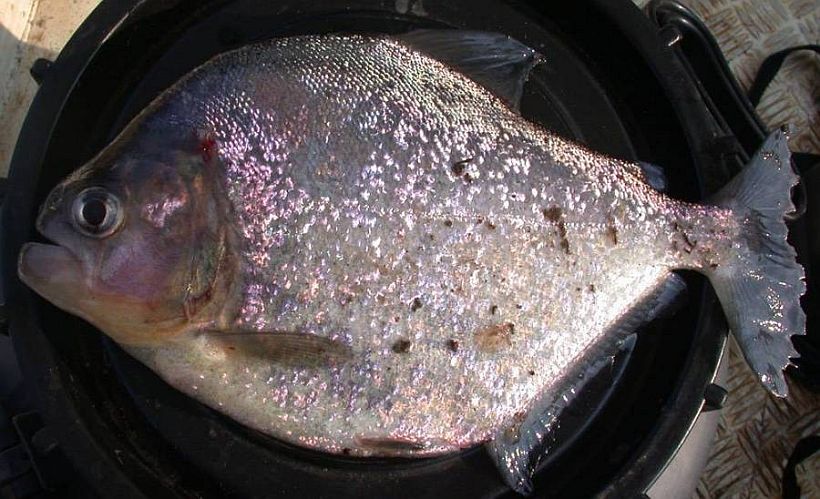
Serrasalmus gouldingiGoulding's Piranha
Serrasalmidae · Fink & Machado-Allison, 1992
This species occasionally appears in the ornamental trade where it is sometimes referred to as 'blue tiger piranha' Following Fink and Macaht can be distinguished from other members of the genus by the following combination of characters: body shape deep and rhomboid; head robust, snout blunt; eye large; mouth moderate, jaw projecting; 1-3 ontogeneticlly var...
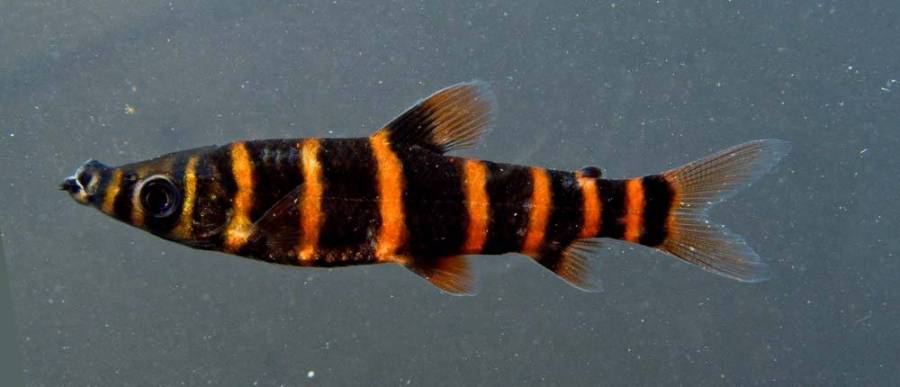
Synaptolaemus latofasciatus
Anostomidae · Steindachner, 1910
This species was described from a single specimen and included in the genus Leporinus until 2011 at which point the holotype was examined and recognised as corresponding to the fish described as Synaptolaemus cingulatus (Myers & Fernández-Yépez, 1950).
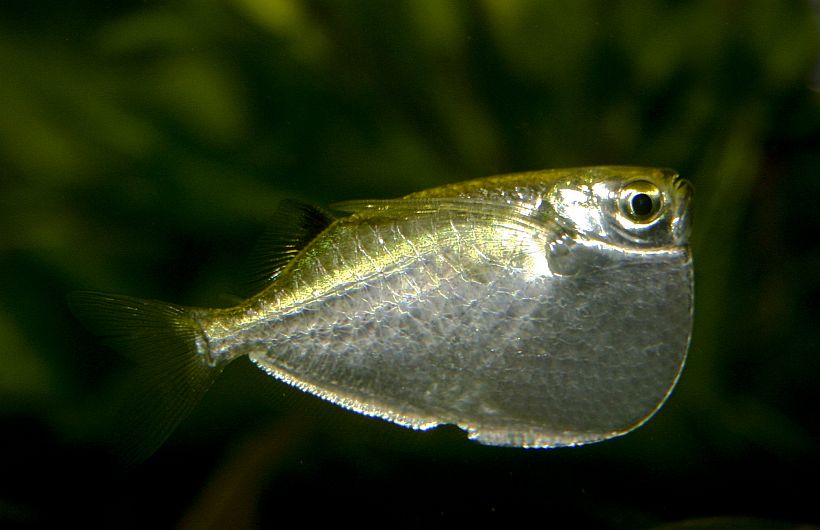
Thoracocharax stellatusSpotfin Hatchetfish
Gasteropelecidae · Kner, 1858
T. stellatus is superficially similar to its only congener T. securis, but can immediately be identified by the presence (vs. absence) of a prominent dark spot in the dorsal-fin. It is sometimes traded as 'platinum hatchetfish'. The genus Thoracocharax was originally erected by Fowler in 1906 as a subgenus of Gasteropelecus, but was elevated to generic status by Weitzman (1960).
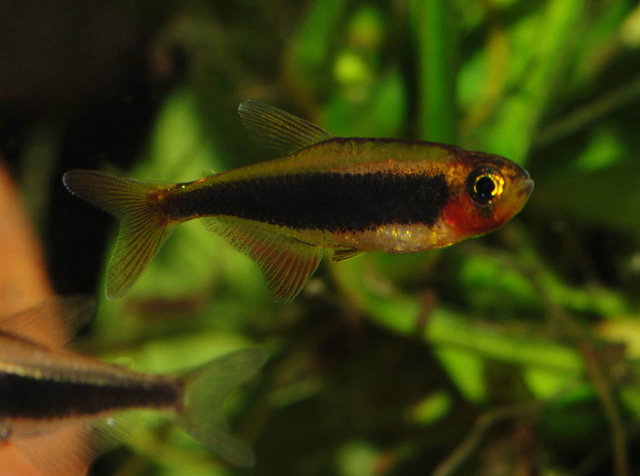
Tucanoichthys tucano
Characidae · Géry & Römer, 1997
Known only from the rio Uaupés system in Brazil with type locality 'brook emptying into Igarape Yavuari River, tributary of River Uaupés, upper Negro River basin, 0°14'31"N, 68°03'48"W, Amazonas, Brazil'. The full extent of its range is unclear but additional populations may exist.
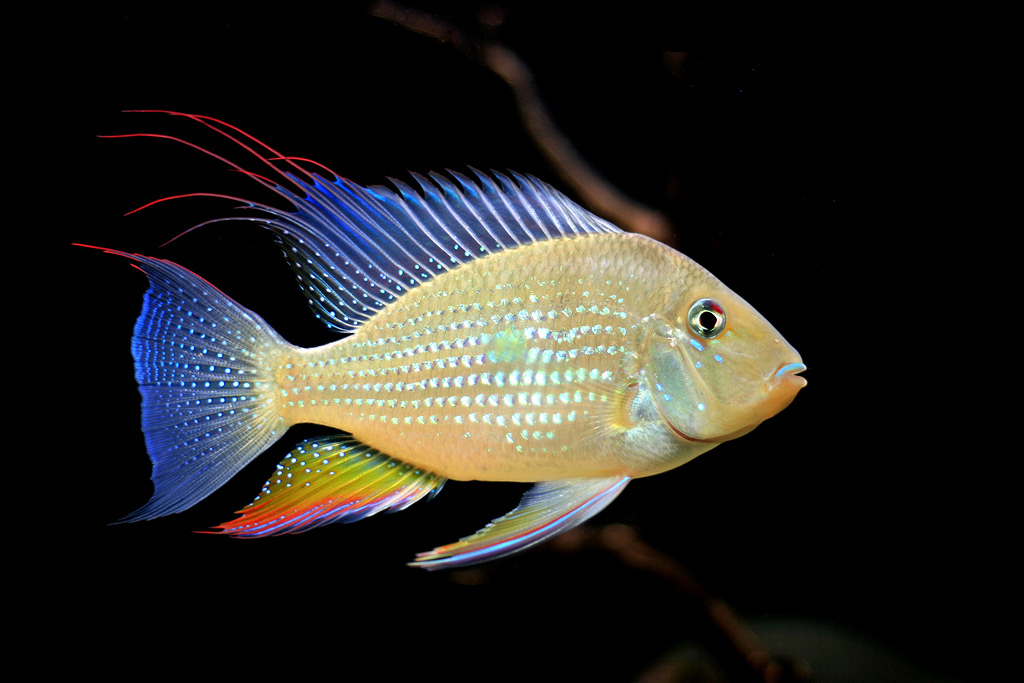
Acarichthys heckeliiThreadfin Acara
Cichlidae · Müller & Troschel, 1849
The genus Acarichthys remains monotypic and was resdescribed by Kullander (1986) who characterised it by the following: lack of epibranchial lobe; comparatively few (12-14)rays; pelvic fins with relatively broad tips (branches of the first ray are equal in length or the inner is slightly longer); possession of a single supraneural plus 14-15 vertebrae (these characters taken as a combination); no caudal extensions to swim bladder; no caudal ribs. Its current taxonomic position is based largel...
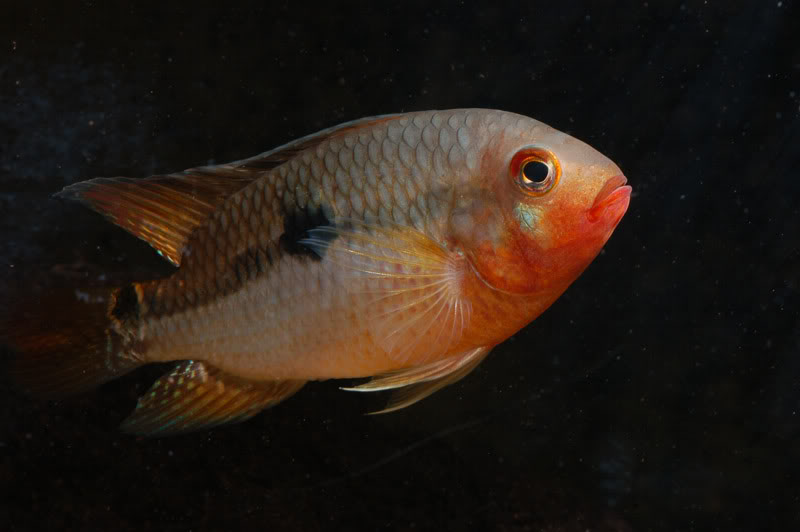
Aequidens tetramerusSaddle Cichlid
Cichlidae · Heckel, 1840
This is the type species of the genus Aequidens and has the widest distribution of any member species. It exists in various colour forms depending on locality with variants from Ecuador and Peru being particularly sought after since they develop striking red (Ecuador) or orange (Peru) colouration on the lower part of the jaw, head and anterior portion of the belly whereas those from Brazil tend to have an overall grey/blue/green colouration, for example. Despite its type status it's long...
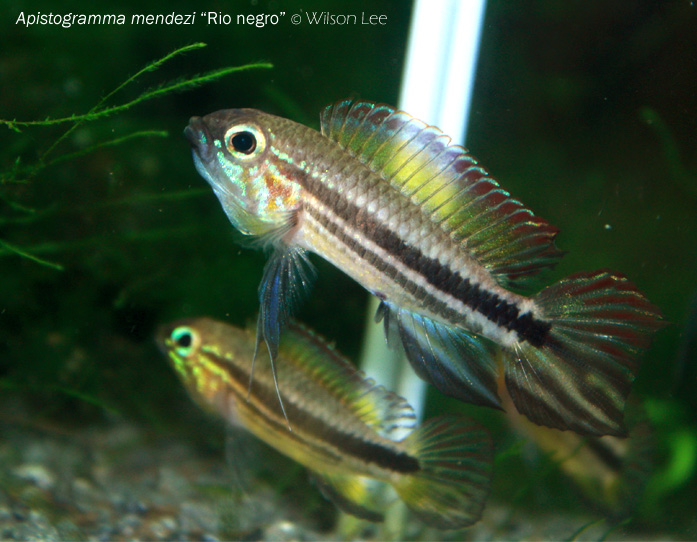
Apistogramma mendeziA220
Cichlidae · Römer, 1994
This species is assigned the codes A220, A221 and A222 under the DATZ 'A' number system with these referring to similar-looking, possibly conspecific, populations. These differ in some aspects of colour pattern, particularly the orientation of the caudal-fin markings which may be horizontal, vertical, or somewhere inbetween. One population displays an orange colouration on the belly and is som...
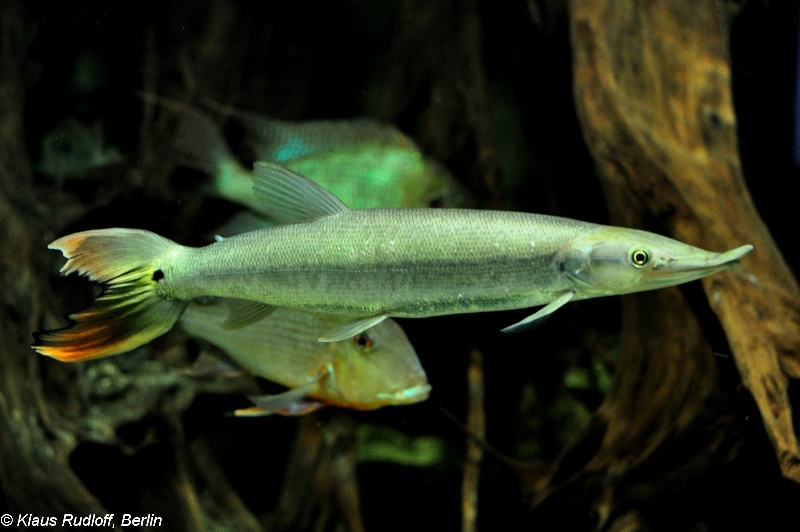
Boulengerella cuvieri
Ctenoluciidae · Spix & Agassiz, 1829
It's known by various vernacular names including 'Pirá-pacu', 'Pira-pucu' or 'Diente de cao' (central Amazon), 'Bicuda' or 'Uena' (rio Tocantins), 'Bicuda' (rio Tapajós), 'Aguejeta' or 'Picua' (Venezuela), and 'Moruwi' or 'Pirapoko' (Guyana). The entire dorsal-fin base is located anteriorly to a vertical through the anal-fin origin and this character distinguishes it from all other ctenolucids except B. lucius and B. xyrekes.
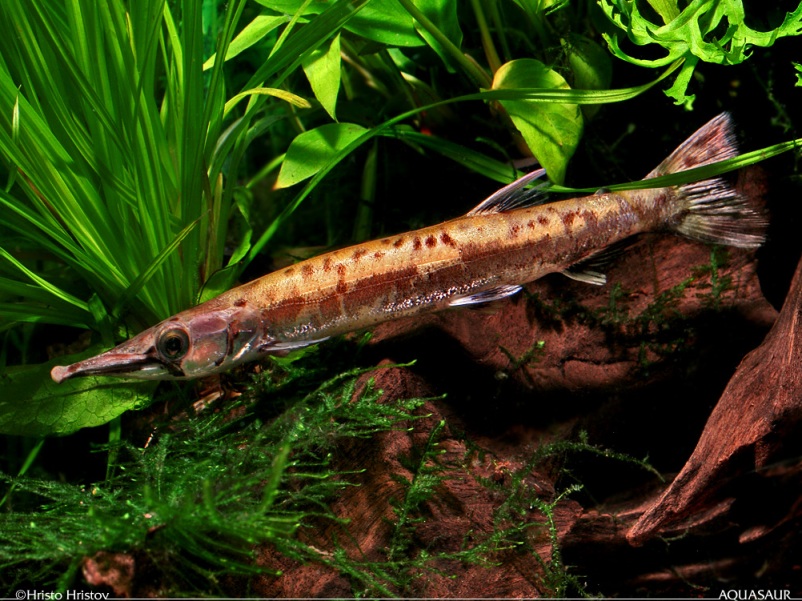
Boulengerella lucius
Ctenoluciidae · Cuvier, 1816
This species is largely unsuitable for the home aquarium given its eventual size and natural behaviour, and we know of only a handful of private aquarists with the facilities required to house it long-term. Nonetheless juveniles and subadults are sometimes available in the trade although often misidentified as the congener B. maculata.
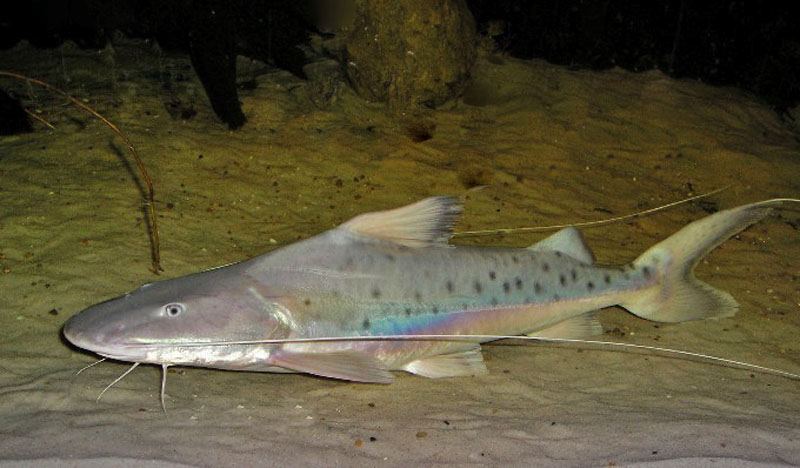
Brachyplatystoma capapretum
Pimelodidae · Lundberg & Akama, 2005
This species can be told apart from the very similar-looking congener B. filamentosum by its smaller adult size (B. filamentosum can grow to almost 3 m in length), shorter maxillary barbels (never extending beyond base of adipose fin (vs. extending beyond base of adipose fin), moderately-forked with lobes of equal size (vs. deeply-forked caudal fin with upper lobe usually longer than the lower) and body col...
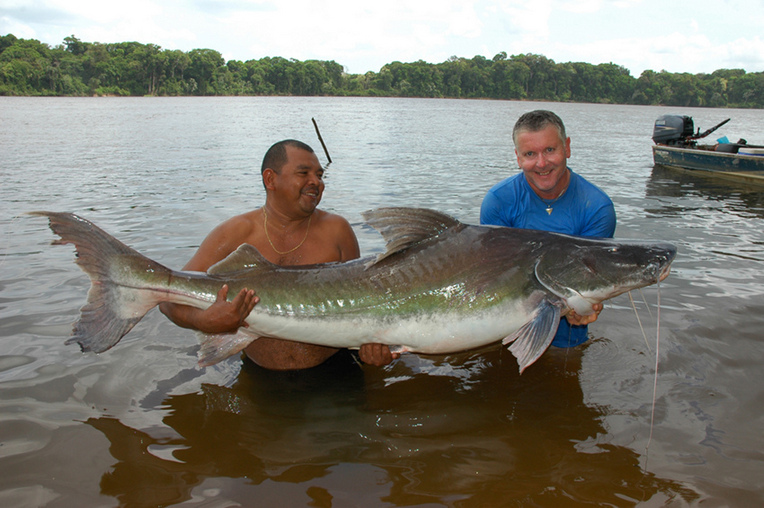
Brachyplatystoma filamentosumPiraíba
Pimelodidae · Lichtenstein, 1819
In the Amazon region it is only specimens larger than around 160 cm and werighing in excess of 50 kg that are referred to as 'Piraíba' with the name 'filhote' normally applied to smaller individuals. Other vernacular names include 'Salton catfish', 'Kumakuma'; and 'tiger antenna catfish'; with members of the genus often referred to collectively as 'goliath catfishes'.
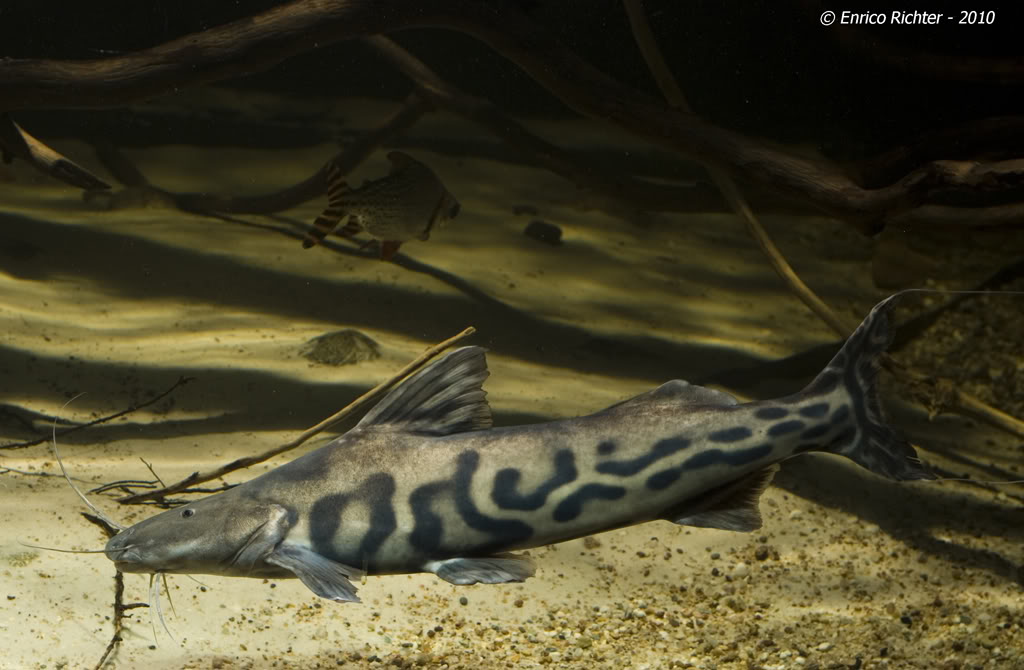
Brachyplatystoma juruenseGold Zebra Catfish
Pimelodidae · Boulenger, 1898
Brachyplatystoma spp. are distinguished from all other catfishes by two synapomorphies. The first comprises several morphological characters relating to the skull, specifically that the mandibular suspensorium (that which connects the lower jaw bone to the skull) is greatly expanded mediodorsally to form a large plate approaching the parasphenoid bone, with the hyomandibula and metapterygoid similarly enlarged.
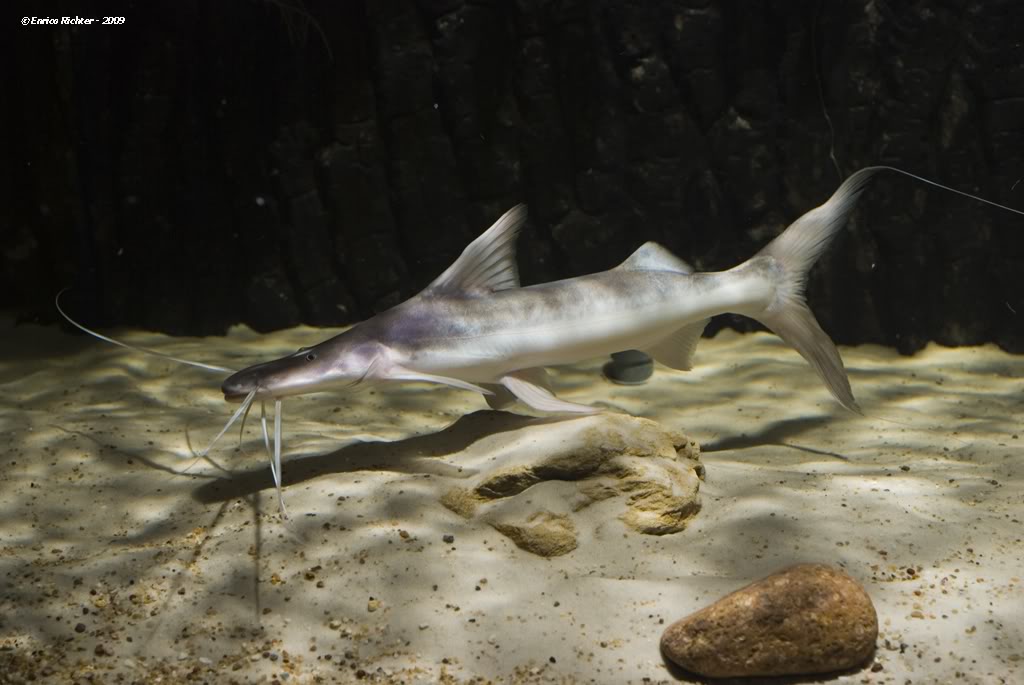
Brachyplatystoma platynemumSlobbering Catfish
Pimelodidae · Boulenger, 1898
Found in a number of habitat-types, though rarely in smaller tributaries, generally preferring deeper, flowing channels through which it travels for considerable distances at certain times of year. Like other large, migratory pimelodids these movements are typically associated with nutrient-rich, white water drainages rather than nutrient-poor black waters.
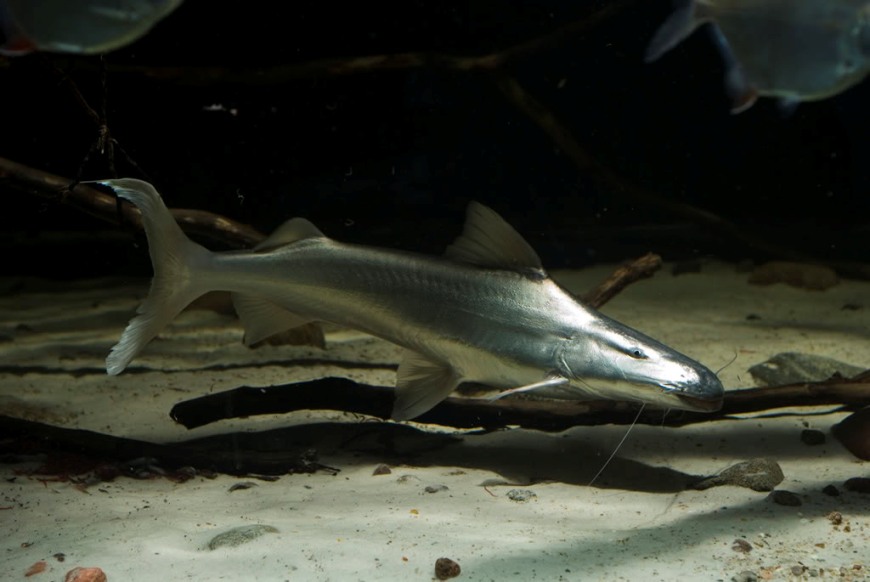
Brachyplatystoma rousseauxiiDourada
Pimelodidae · Castelnau, 1855
Study of B. rousseauxii has revealed that sexually mature adults are found only in the western Amazon, with no mature individual ever recorded east of Manaus despite the intensive commercial fishery operating there. The total distance covered by some populations during migration from the delta was as much as 5500 km, making it the longest known in any freshwater fish species.
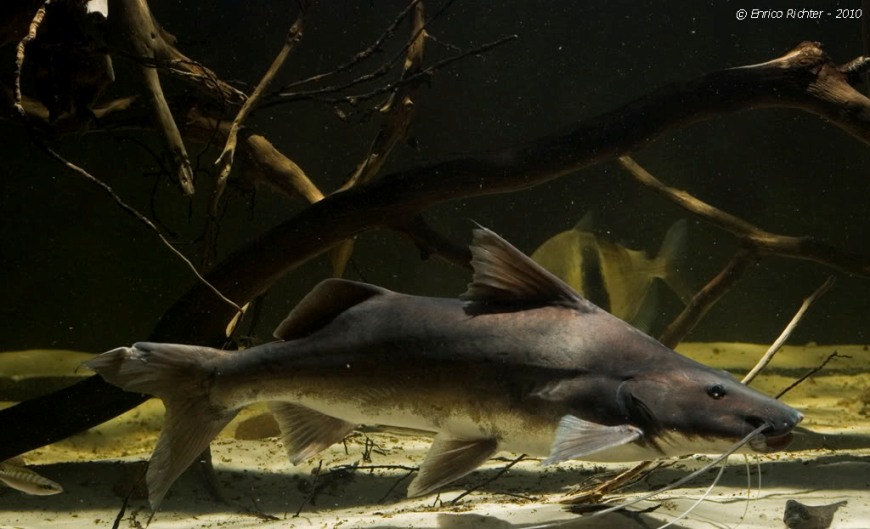
Brachyplatystoma vaillantii
Pimelodidae · Valenciennes, 1840
This rich feeding ground is exploited until the sea water returns, at which point the catfishes begin to migrate upstream in massive numbers, moving up the Amazon and its tributaries. Sexually mature individuals are not normally recorded during these events so they're thought related to feeding and dispersal rather than spawning. The fish are subject to intensive capture by commercial and artisanal fishing operations during this upstream movement.
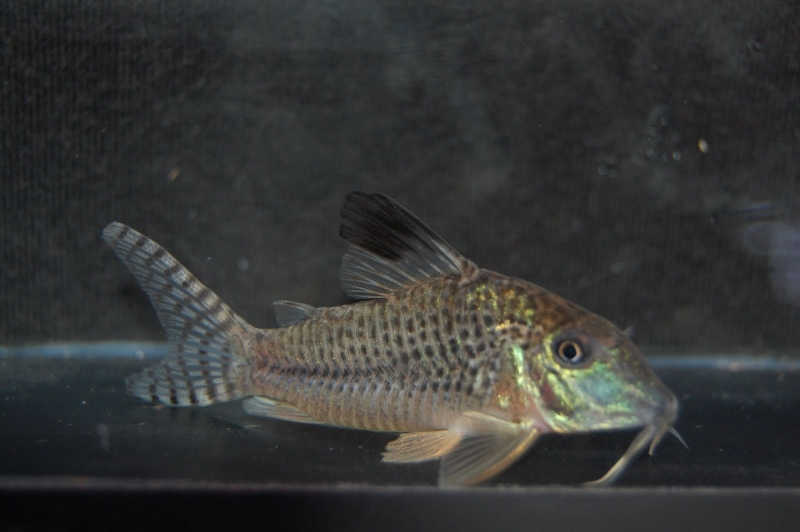
Corydoras acutusBlacktop Cory
Callichthyidae · Cope, 1872
This species can be confused with three similar-looking fishes of uncertain taxonomic status which have been assigned the C numbers C024, C077, and C109 in the aquarium hobby. C024 and C109 are unlikely to be conspecific in that they occur in Pará state, Brazil, several thousand kilometers outside the range of C. acutus, in the rio Guamá (Tocantins drainage), and lower rio Xingu, respectively.
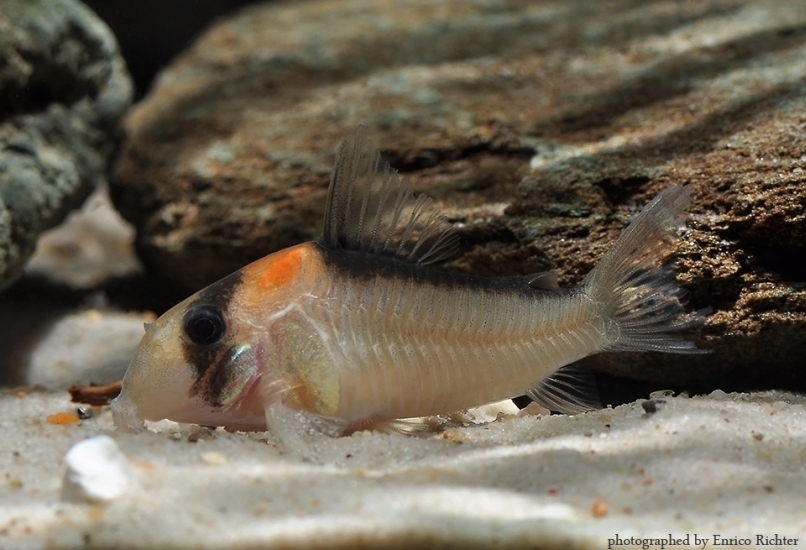
Corydoras adolfoiAdolfo's Cory
Callichthyidae · Burgess, 1982
Type locality is given as 'Small tributary of the upper Rio Negro on the equator near São Gabriel da Cachoeira, Brazil', and this species is apparently highly endemic there. Some sources state that it also occurs in the rio Uaupés (known as 'Vaupés' in Colombia), a major tributary of the Negro, but we've been unable to obtain confirmation thus far.
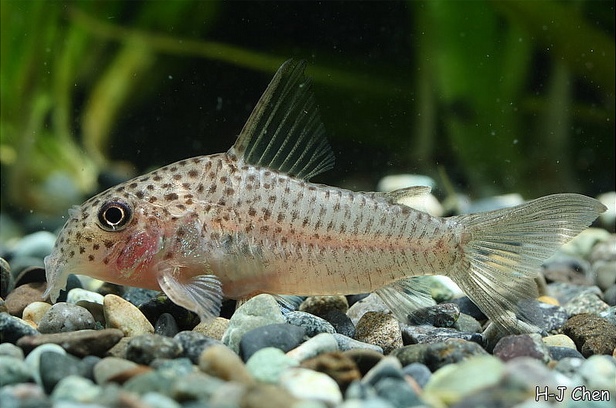
Corydoras albolineatusC056
Callichthyidae · Knaack, 2004
In the upper Iténez it most commonly inhabits riparian zones with sandy substrates or edges of sand banks, although it's also been collected in smaller streams and residual flood waters. It typically forms large aggregations of up to several thousand individuals and at the confluence of the ríos Paraguá and Iténez occurs sympatrically with the congener C. paragua.
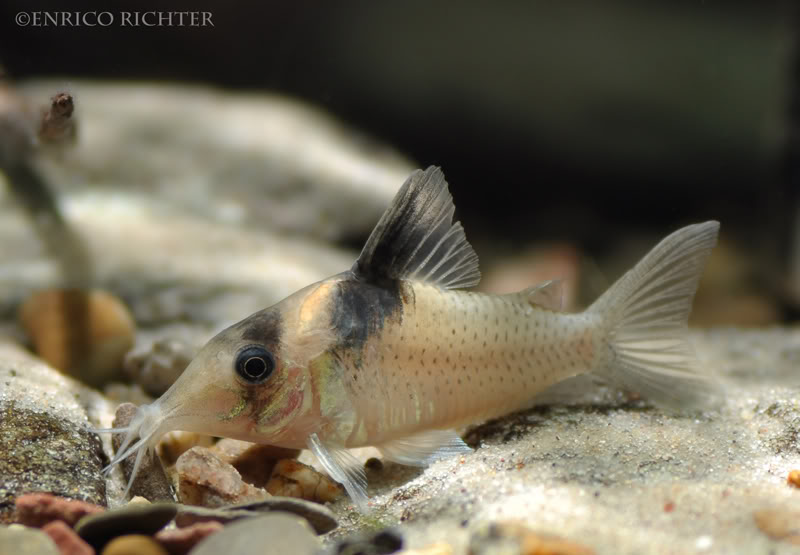
Corydoras amandajanea
Callichthyidae · Sands, 1995
C. amandajanea is rare in the aquarium trade and appears to be variable in colour pattern to an extent, with some individuals posssessing relatively larger dark spots on the body, for example. Unfortunately diagnostic characters cannot be provided since we've been unable to obtain the type description, and little has been written about this species since it was published.
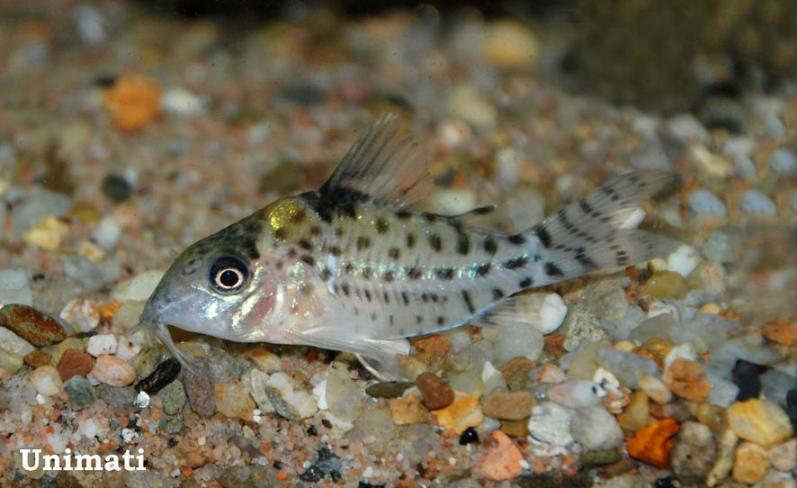
Corydoras ambiacus
Callichthyidae · Cope, 1872
Described from the Río Ampiyacu, a small tributary draining into the main Amazon channel in Loreto Department, northeastern Peru, with additional records from the Yavarí (Javari), Napo, Nanay, and lower Ucayali drainage basins. All of these are Amazon tributaries, and C. ambiacus appears to occur in most or all affluents of the main Amazon channel between th...
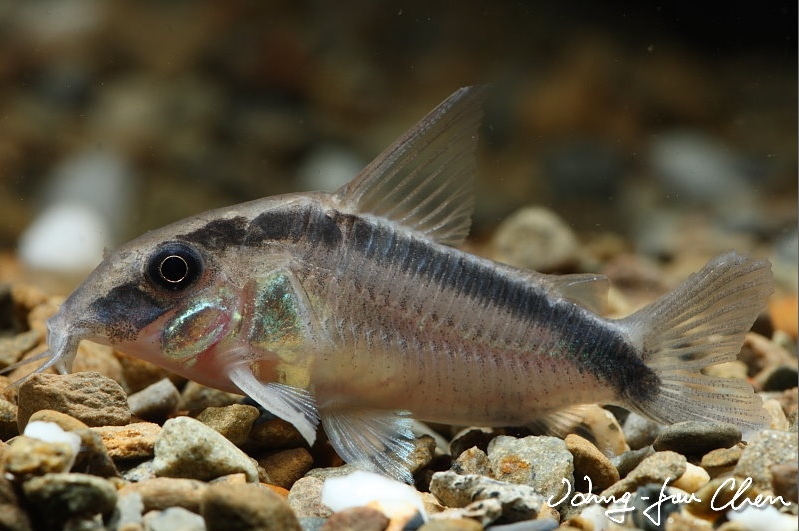
Corydoras arcuatusSkunk Cory; C020
Callichthyidae · Elwin, 1938
This species is among the more popular Corydoras in the aquarium hobby and is widely available. It may also be referred to as 'arched cory'. There exist a number of similar-looking congeners, particularly C. urucu (Britto et al., 2009), described from the rio Urucu in Coari municipality, Amazonas state, Brazil, and C. narcissus from the rio Purus. The latter appears to have also been traded as C. sp. 'super arcuatus longnose' while a larg...
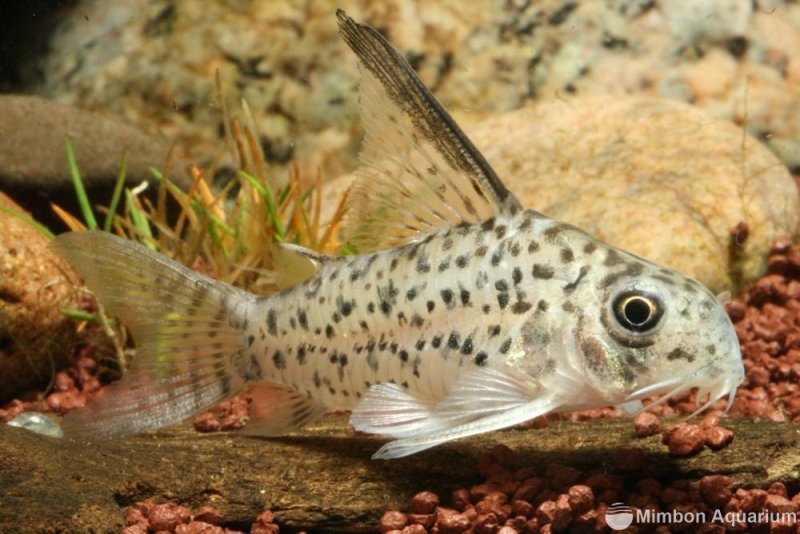
Corydoras armatus
Callichthyidae · Günther, 1868
Fish collected in the upper rio Maderia basin in Brazil and Bolivia have been traded under the invented names C. sp. 'dorsalis' and C. sp. 'ogawae' in the past, although are officially-considered conspecific with C. armatus. This appears to warrant investigation since the Río Huallaga in Peru, type locality of C. armatus, and collection localities in the upper Madeira are separated by a straight-line distance of almost 2500 km.
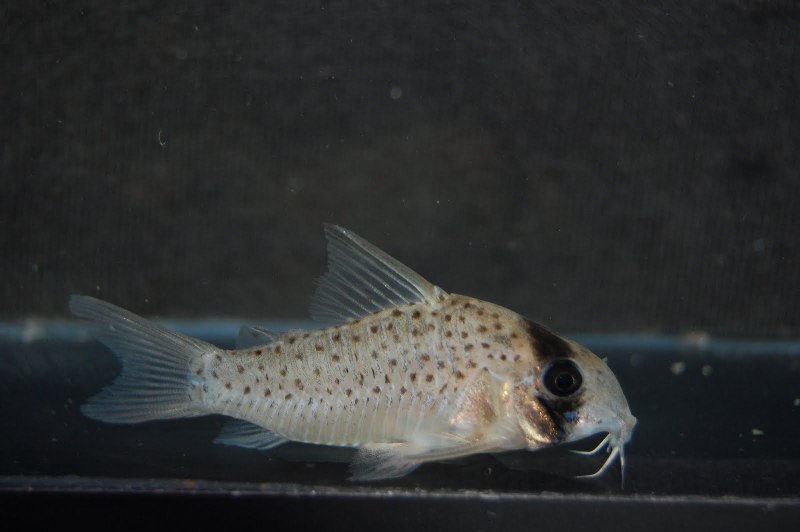
Corydoras atropersonatusFairy Cory
Callichthyidae · Weitzman & Nijssen, 1970
This species is sometimes confused any of several similar-looking fishes such as C. sychri or C. sp. C097. While the former is a more elongate fish with a longer snout and quite easy to identify, C097 resembles C. atropersonatus more closely, despite being traded as C. sychri 'longnose'. Its snout is longer than that of C. atropersonatus but shorter than that of C. sychri, and the dark spots on the body tend to be more well-defined and spaced out than in the other two.
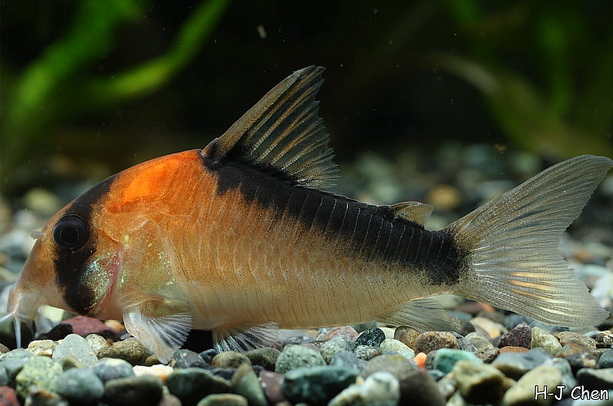
Corydoras duplicareus
Callichthyidae · Sands, 1995
This species is among a number of congeners native to the rio Negro region to possess a colour pattern with an oblique dark bar running along the dorsal surface of the body. This unofficial group also includes C. burgessi, C. davidsandsi, C. duplicareus, C. imitator, C. melini, and C. serratus, and among these C. duplicareus is most easily-confused with C. adolfoi.
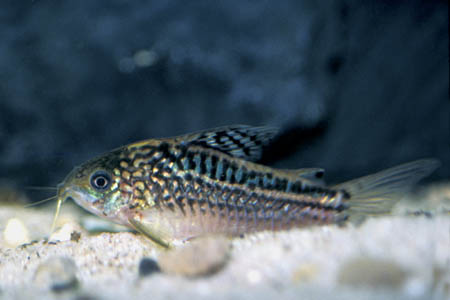
Corydoras elegansElegant Cory
Callichthyidae · Steindachner, 1876
This species is popular in the aquarium hobby and unlike the majority of congeners tends to spend a fair amount of time away from the substrate, often forming groups in midwater. It has been placed in the unofficial 'C. elegans group', which contains a number of species exhibiting similarities in morphology and colour pattern, some of which remain unidentified in scientific terms.
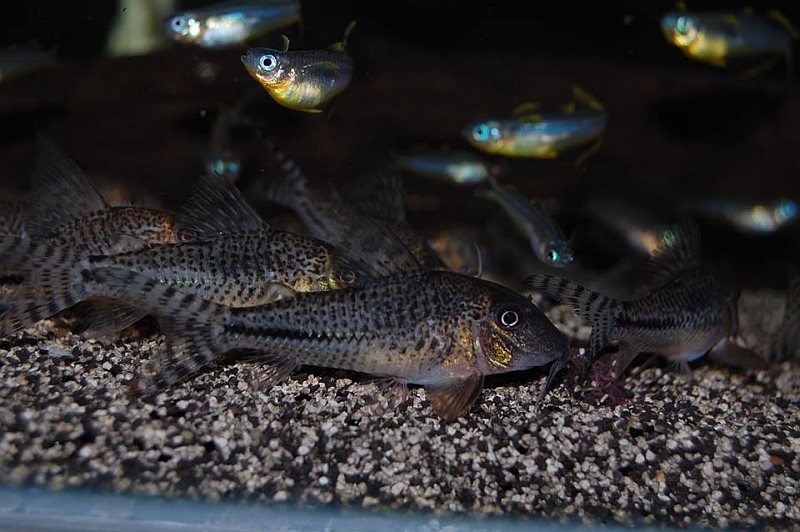
Corydoras sp.C115
Callichthyidae · authority not recorded
This unidentified species was originally traded under the C-numbers C115 and C116 but these two are now thought to represent the same species, while fish collected from Manú National Park and sold as C. sp. 'Manu 1 long nose', C. sp. 'Manu 4', C. sp. 'Manu 7', and C. sp. 'Manu 8' may represent this species as well. It's highly variable in terms of colour patter...
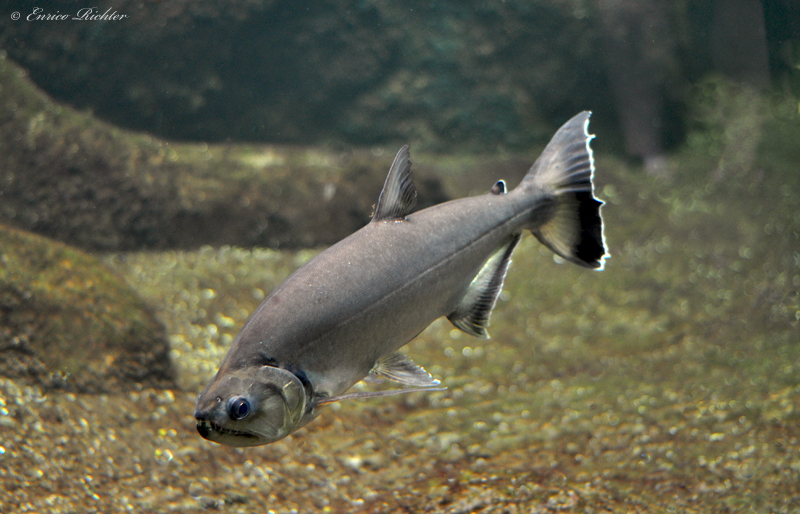
Hydrolycus armatusPayara
Cynodontidae · Jardine, 1841
H. armatus should probably not be considered a home aquarium subject at all given its eventual size and migratory natural behaviour. Unfortunately, juveniles are seen for sale quite regularly, most often without adequate information regarding their long-term care, and it's common to see them being maintained in medium-sized aquaria with no possibility of achieving their potential.
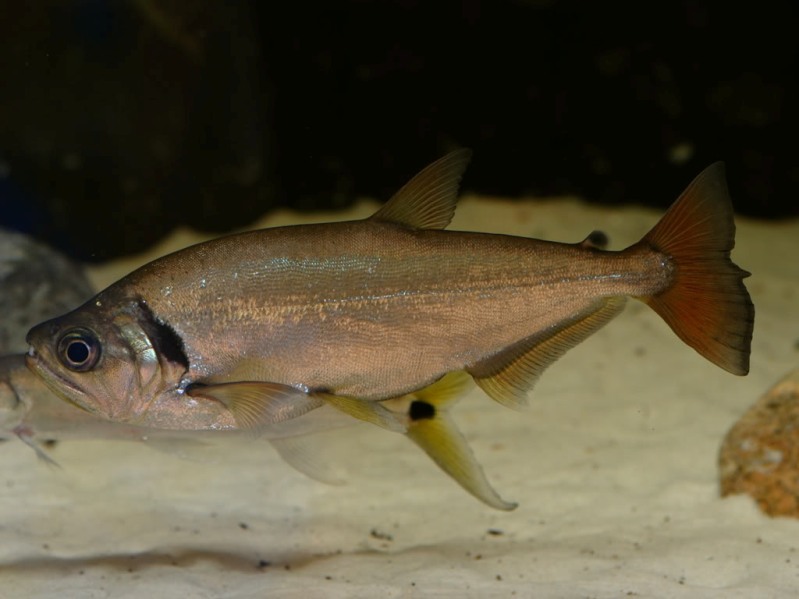
Hydrolycus tatauaia
Cynodontidae · Toledo-Piza, Menezes & Santos, 1999
Vernacular names in Brazil include 'Cachorra' or 'Pirandirá', although these are also applied to congeners. It can be told apart from all congeners by the following combination of characters: head and body silvery with dark dorsal surface; an elongate dark blotch posterior to the opercle; dorsal, caudal and anal-fin rays reddish to orange proximally with some individual variation in intensity and tonality; adipose fin dark, with diffuse black pigmentation.
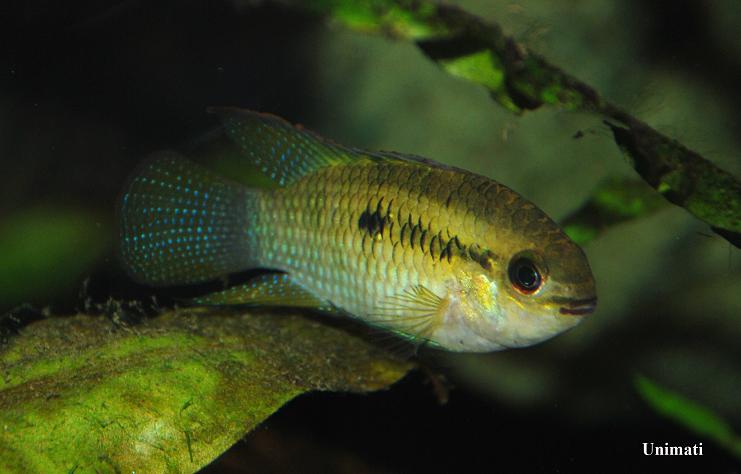
Laetacara curvicepsDwarf Flag Cichlid
Cichlidae · Ahl, 1924
Native to the lower Amazon river basin in Brazil with some populations exhibiting differences in colour pattern to one another, particularly in respect of the degree of red and blue pigmentation on the body and fins. Type locality is given simply as 'Amazon River, Brazil'. Field observations suggest it to display a pref...
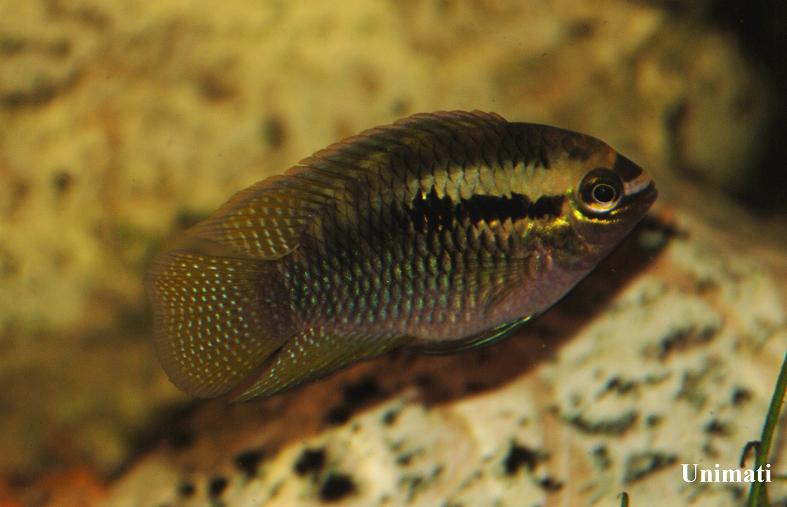
Laetacara dorsigeraRedbreast Acara
Cichlidae · Heckel, 1840
Wild fish are probably foragers feeding on algae, organic detritus, small insects, worms, crustaceans, and other zooplankton. In the aquarium it's easily-fed but the best condition and colours offer regular meals of small live and frozen foods such as bloodworm, Daphnia, and Artemia, alongside good quality dried flakes and granules, at least some of which should include additional plant or algal content.
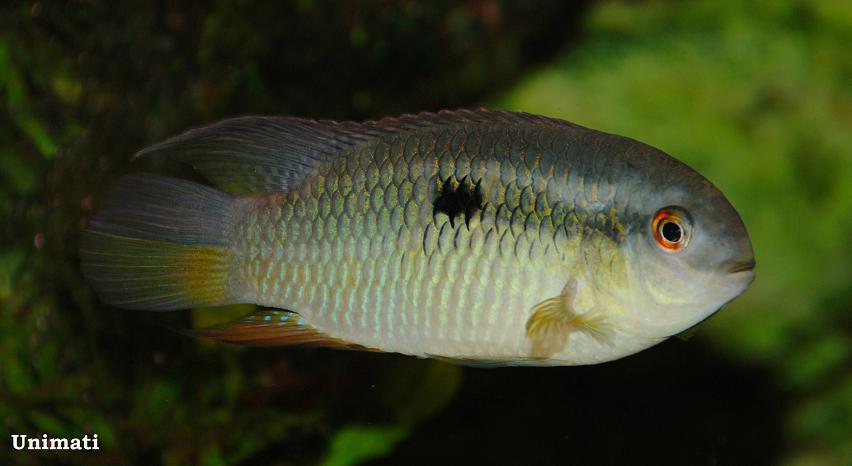
Laetacara fulvipinnis
Cichlidae · Staeck & Schindler, 2007
Has been collected from habitats containing clear, soft, acidic, tea-coloured blackwater, most typically among leaf litter or submerged vegetation in very shallow (10-50 cm depth) water along the margins of streams and other minor tributaries. At a village called El Niñal close to the mouth of the rio Pasimoni in the Casiquiare drainage pH was...
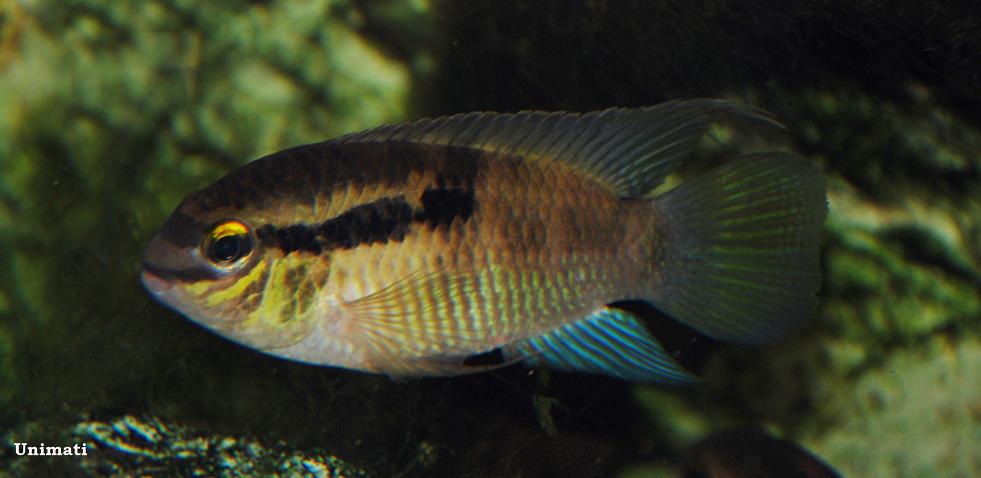
Laetacara thayeri
Cichlidae · Steindachner, 1875
This species is relatively rare in the aquarium trade. It can be differentiated from all congeners by a combination of possessing ctenoid (vs. cycloid) scales on the sides of the head plus lacking a dark spot at the caudal-fin base.
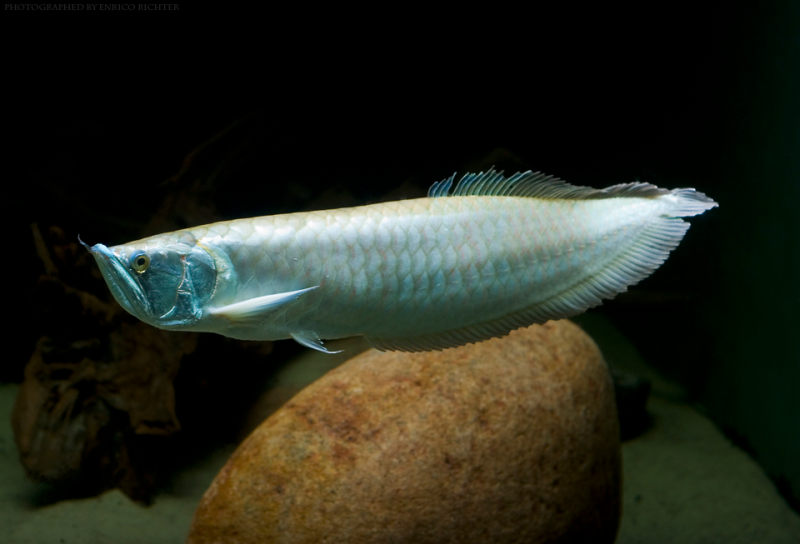
Osteoglossum bicirrhosumSilver Arowana
Osteoglossidae · Cuvier, 1829
Given its eventual size and natural behaviour this species is largely unsuitable for the home aquarium, and we know of only a handful of private aquarists with the facilities required to house it long-term. Unfortunately juveniles are readily available in the trade, although the scarcity of privately-maintained adults would suggest that most fail to reach their potential.
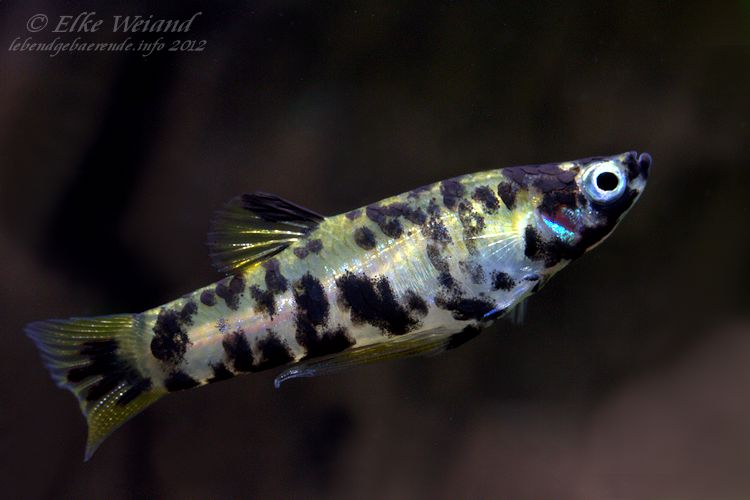
Phalloceros caudimaculatusDusky Millions Fish
Poeciliidae · Hensel, 1868
Occurs naturally in Brazil, Paraguay, Uruguay and Argentina with feral populations in Australia, New Zealand, Ethiopia and Malawi which were purportedly introduced for purposes of mosquito control but are now considered invasive. Following Lucinda (2008) its natural range comprises the Lagoa dos Patos system, lower rio Uruguai, rio Tramandaí, and rio Mampituba in Rio Grande do Sul st...
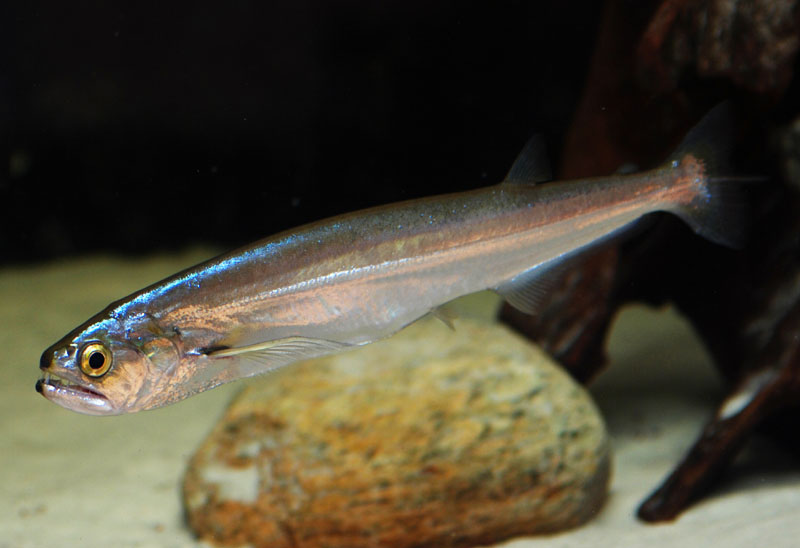
Rhaphiodon vulpinusBiara
Cynodontidae · Spix & Agassiz, 1829
R. vulpinus is the most widely-distributed member of the family Cynodontidae. Type locality is given simply as 'Brazilian rivers', but this species is currently understood to be distributed in the Amazon basin from the Río Ucayali system in Peru, eastward as far as the rio Xingu in Brazil, plus the rio Tocantins and Rio Capim basins. It's also known from the Río Orinoco ba...
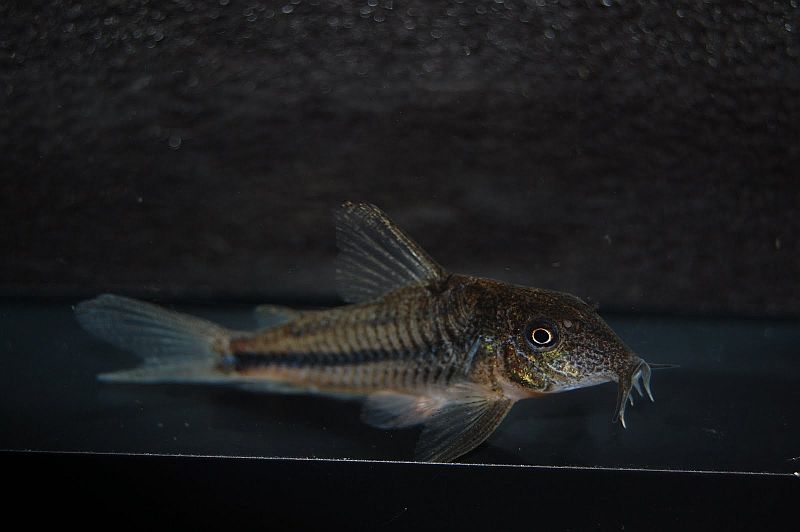
Scleromystax prionotos
Callichthyidae · Nijssen & Isbrücker, 1980
Scleromystax spp. are foraging omnivores, and most will accept sinking dried foods as well as small live and frozen varieties such as chironomid larvae (bloodworm), Tubifex, etc. Feeding a varied diet will ensure the fish are in optimum condition. Under no circumstances should they be expected to survive on 'left-overs' from other inhabitants of the aquarium or relied on to 'clean' the aquarium.
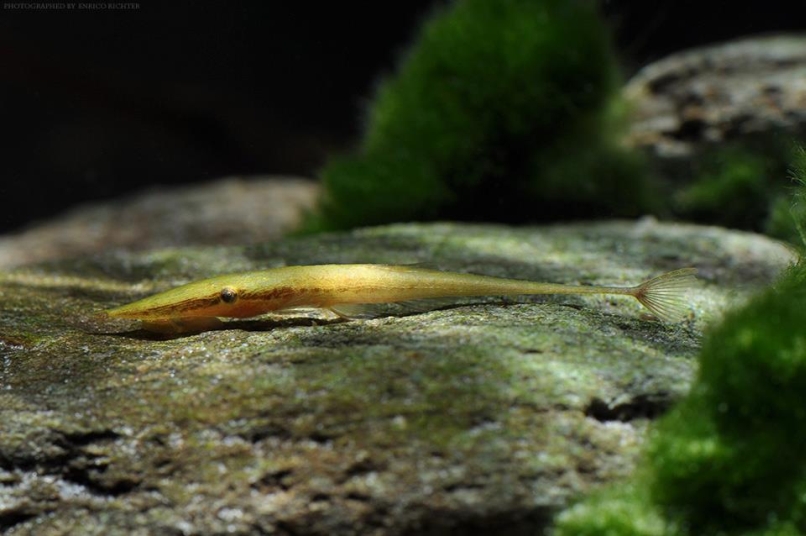
Acestridium dichromumGreen Whiptail
Loricariidae · Retzer, Nico & Provenzano, 1999
Acestridium dichromum
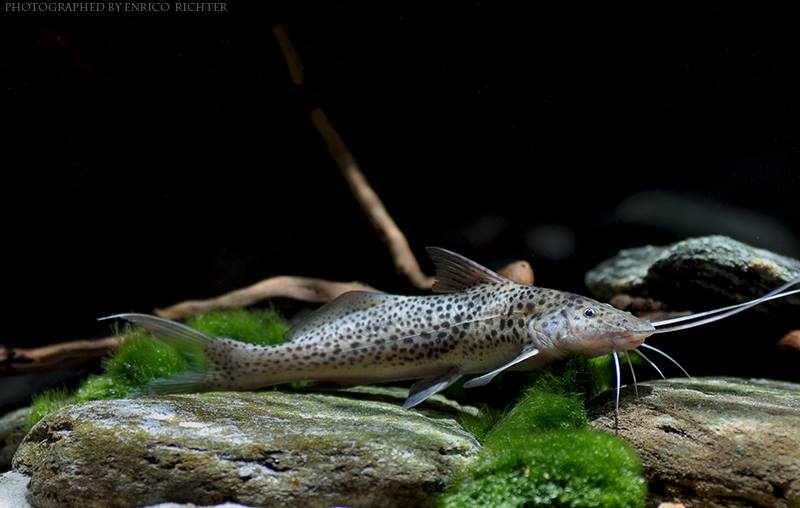
Aguarunichthys torosusBolt Catfish
Pimelodidae · Stewart, 1986
An obligate predator feeding on other fishes in nature, but quality dried foods are normally accepted in captivity. It should also be offered meaty fare such as strips of white fish, live earthworms, shrimp, etc., for optimum health.
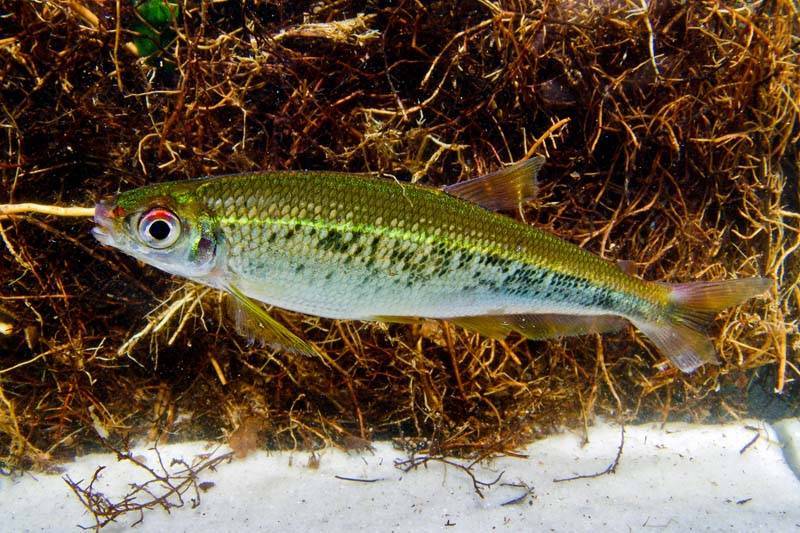
Iguanodectes variatus
Iguanodectidae · Géry, 1993
This species has been recorded from the Guaporé, Madeira, Branco, Trombetas, and Urubu river systems within the Amazon river basin, Brazil. Type locality is 'Igarapé Jatuarana, 5 kilometers above Samuel, Rio Guaporé, Rondonia, Brazil'.
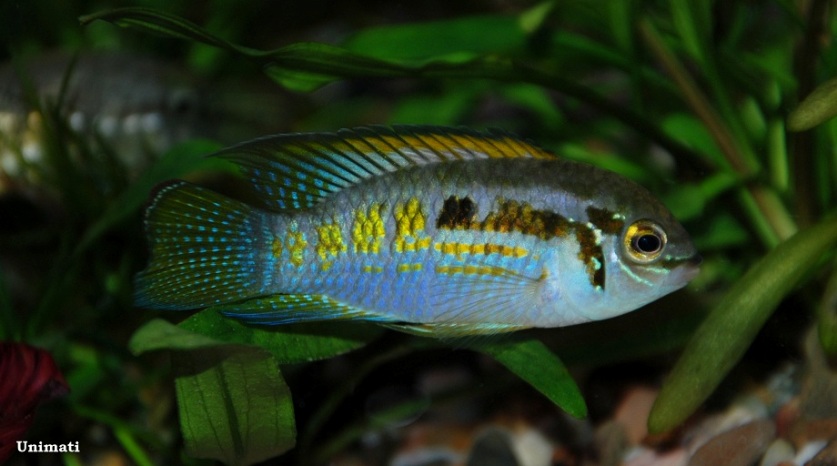
Laetacara araguaiae
Cichlidae · Ottoni & Costa, 2009
This species was known as L. sp. 'Buckelkopf' in the aquarium hobby prior to publication of its official description. It's distinguished from all congeners by possessing 7-8 dorsal-fin rays (vs. 9–10 in L. dorsigera, L. fulvipinnis and L. thayeri, 8–9 in L. curviceps and L. flamannellus, and 9–11 in L. flavilabris).
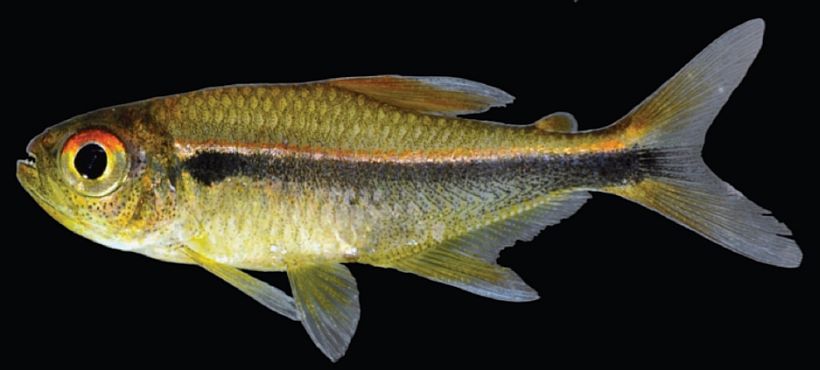
Hyphessobrycon eschwartzae
Characidae · Román-Valencia & Ortega, 2013
H. eschwartzae is told apart from other laterally-striped Hyphessobrycon species from the Madre de Dios watershed by the following characters: 4 simple anal-fin rays (vs. 3 in other species listed); 13-15 dentary teeth (vs. 5-11); 6 teeth in the internal premaxillary ro...