Distribution
Species with no location
No country and no region recorded, so the distribution pages do not reach them. Most name the place in their own prose.
- Unplaced
- 608 of 1,809
- Photographed
- 69 of 608
- Difficulty rated
- 599 of 608
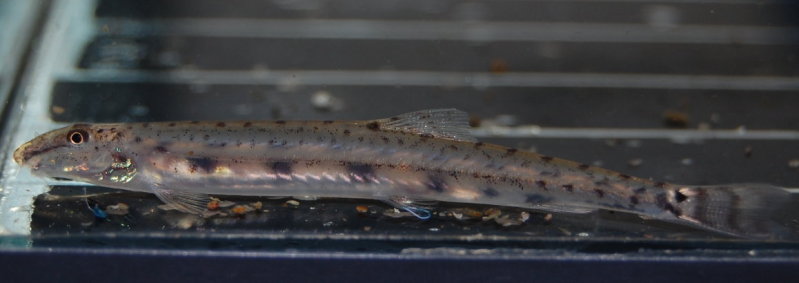
Acanthopsoides sp. 'A01'
Cobitidae · authority not recorded
Acanthopsoides spp. are most closely related to the horse-faced loaches of the genus Acantopsis with which they often co-occur in nature, and thus commonly referred to as 'dwarf horse-face loaches'.
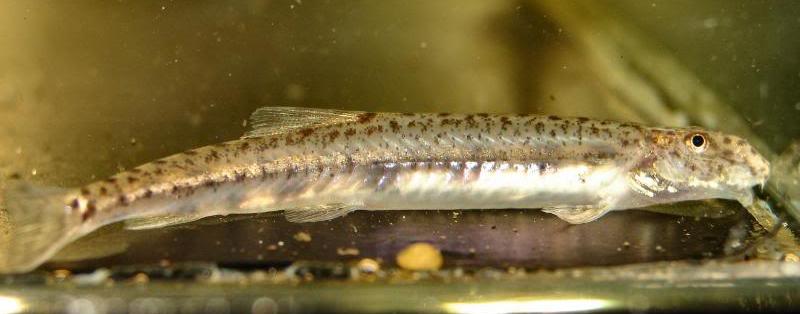
Acanthopsoides sp. 'A02'
Cobitidae · authority not recorded
Acanthopsoides spp. are most closely related to the horse-faced loaches of the genus Acantopsis with which they often co-occur in nature, and thus commonly referred to as 'dwarf horse-face loaches'. The genus currently comprises five species of which four were described by Siebert (1991);...
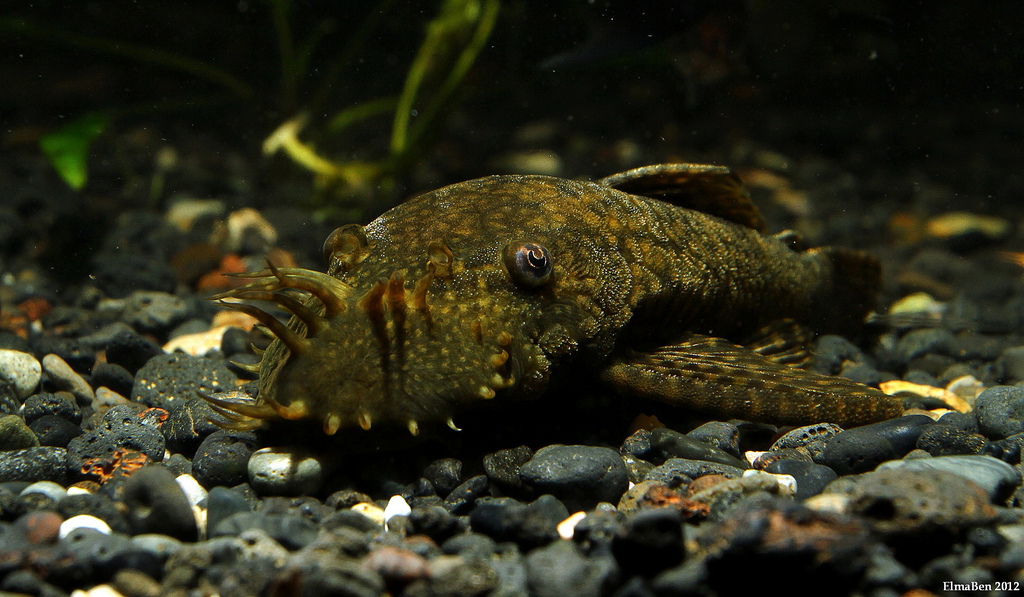
Ancistrus sp. '3'Common Bristlenose Catfish
Loricariidae · authority not recorded
This is the ubiquitous 'bristlenose' catfish in the aquarium hobby and is bred commerically on a large scale although it's precise origin is unknown with some of the opinion that it may be a hybrid. Several line-bred ornamental varieties exist, including piebald, albino and long-finned forms of both the standard and albino fish, of which long-finned fish are sometimes sold as 'butterfly' or 'veiltail' catfish.
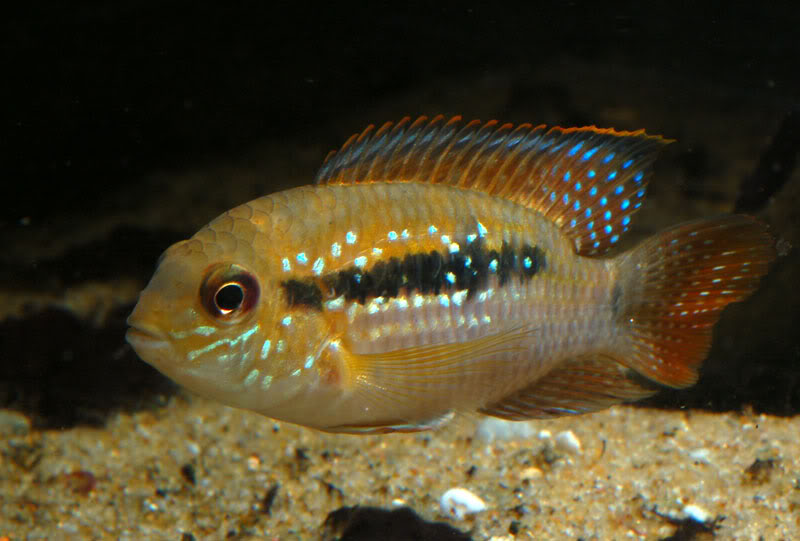
Andinoacara sp. 'Orinoco'
Cichlidae · authority not recorded
This apparently undescribed species was traded as 'Aequidens' sp. 'Orinoco' but following Musilová et al. (2009) appears to be a member of the genus Andinoacara.
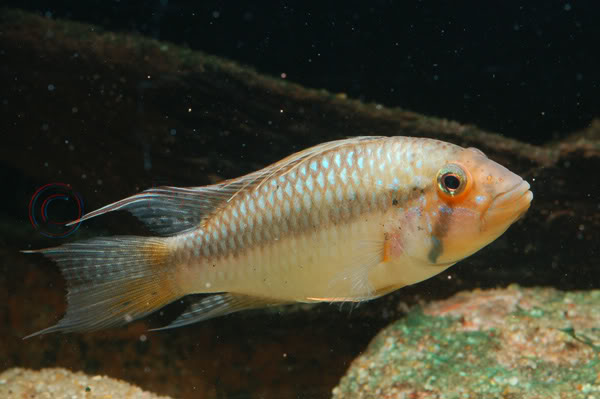
Apistogramma barlowiA174
Cichlidae · Römer & Hahn, 2008
This species has been assigned the code A174 under the DATZ system, and is also known by the trade names A. sp. 'Maulbrüter/mouthbrooder', A. sp. 'Glaser' (these referring to the 'red' colour form) and A. sp. 'Hauswell' (referring to the 'white' colour form). It can be told apart from other members of the genus most eas...
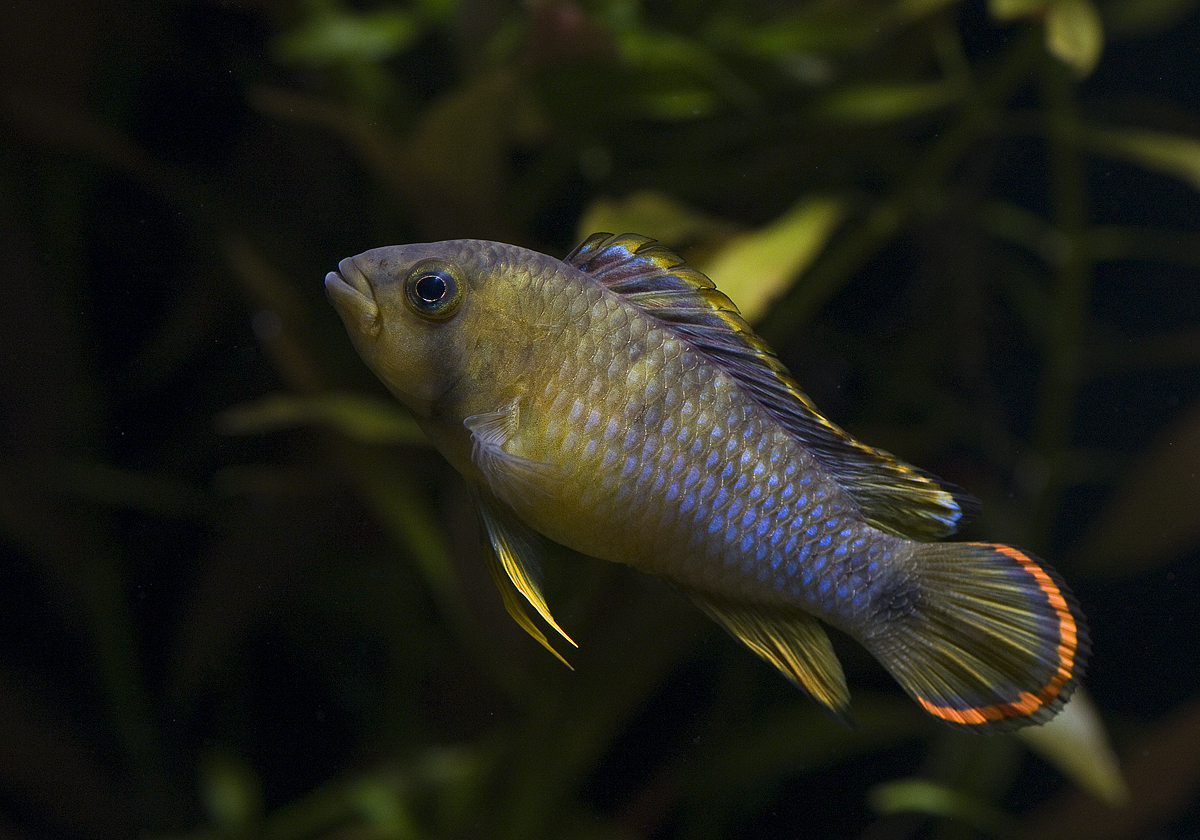
Apistogramma nijsseni
Cichlidae · Kullander, 1979
The genus Apistogramma is among the most speciose of South American cichlid genera with around 70 species valid at present but many more awaiting description. In addition many species exist in two or more geographical colour forms which may or may not turn out to be distinct in the future. Hobbyists tend to label these with collection data if available in order to avoid mixing them and the potential of hybridisation. Member species have also been organised into a series of species lineages, complexes and groups by authors in order to better separate them. Such lists have been augmented by fish that have appeared in the aquarium trade and are in a state of near-constant flux
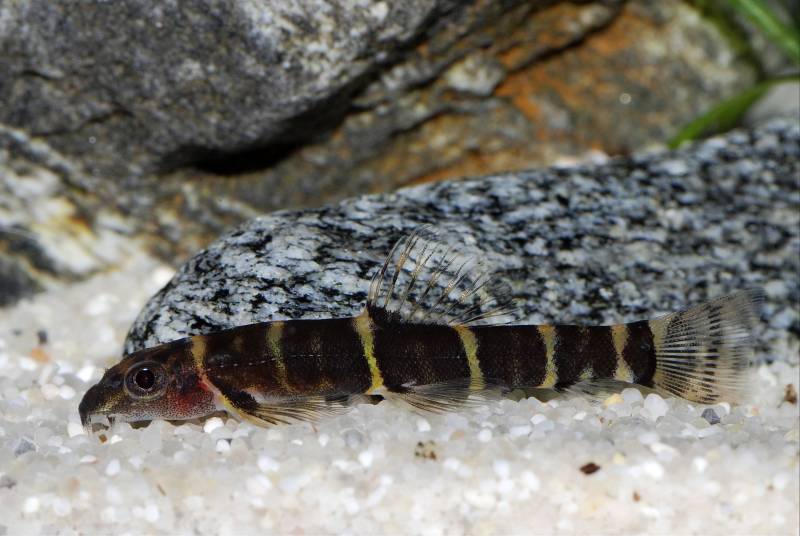
Barbucca diabolica
Barbuccidae · Roberts, 1989
Barbucca spp. are uncommon in the aquarium trade but available periodically. There exist several undescribed species and it's possible that more than one has been exported, although to date only B. diabolica is officially recognised. Most of the fish we've seen possess red eyes (when viewed at certain angles), unique tuberculation and six dark body stripes as mentioned in Roberts' description although there are exceptio...
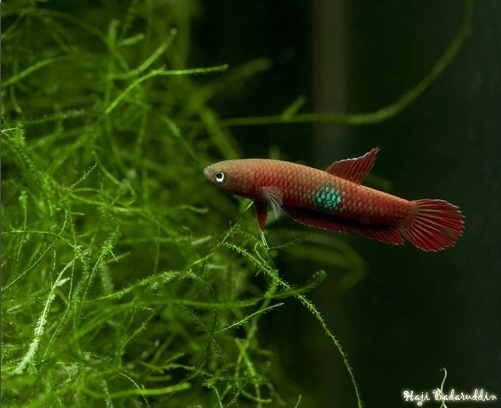
Betta brownorum
Osphronemidae · Witte & Schmidt, 1992
B. brownorum is included in the Betta coccina group/complex of closely-related species within the genus. This assemblage mostly comprises small, red-coloured fishes with the exceptions of B. persephone and B. miniopinna which are darkish. Identifying some of the red ones correctly is not always easy as the patterning in them can be both similar and confusingly variable. In B. brownorum and B. livida, for example, both male and female individuals may or may not possess a green lateral blotch.
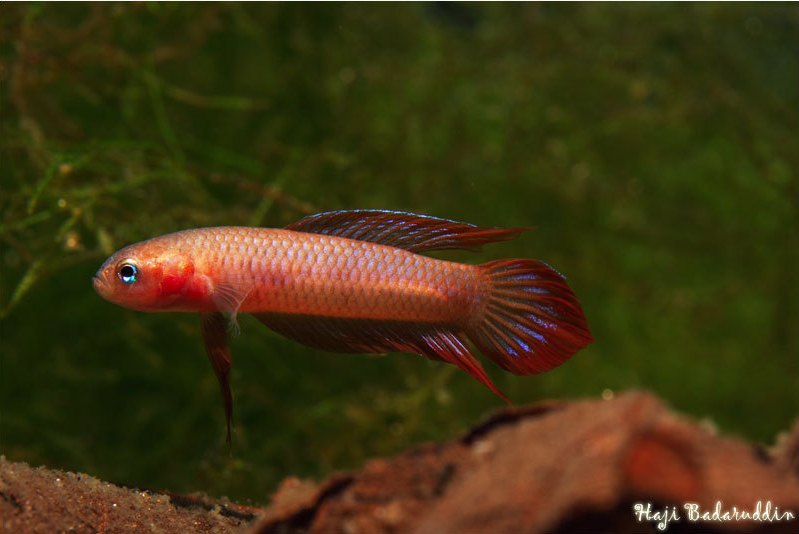
Betta burdigala
Osphronemidae · Kottelat & Ng, 1994
B. burdigala is exceptionally rare in the hobby with many fishes traded or pictured as such being B. uberis or other congener. It's included in the Betta coccina group/complex of closely-related species within the genus. This assemblage mostly comprises small, red-coloured fishes with the exceptions of B. persephone and B. miniopinna which are darkish. Identifying some of the red ones correctly is not always easy as the patterning in them can be both similar and confusingly variable.
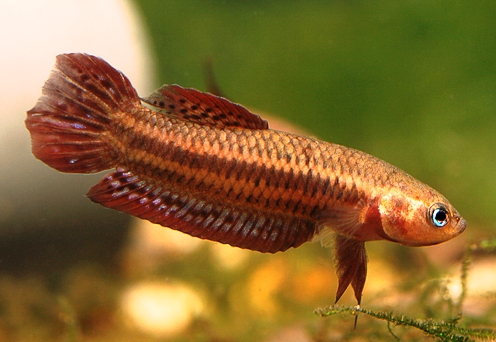
Betta livida
Osphronemidae · Ng & Kottelat, 1992
This species is included in the B. coccina group/complex of closely-related species within the genus. This assemblage mostly comprises small, red-coloured fishes, with the exceptions of B. persephone and B. miniopinna which are darkish, and identifying some of them can be problematic as the patterning in them can be both similar and confusingly variable. Members possess the foll...
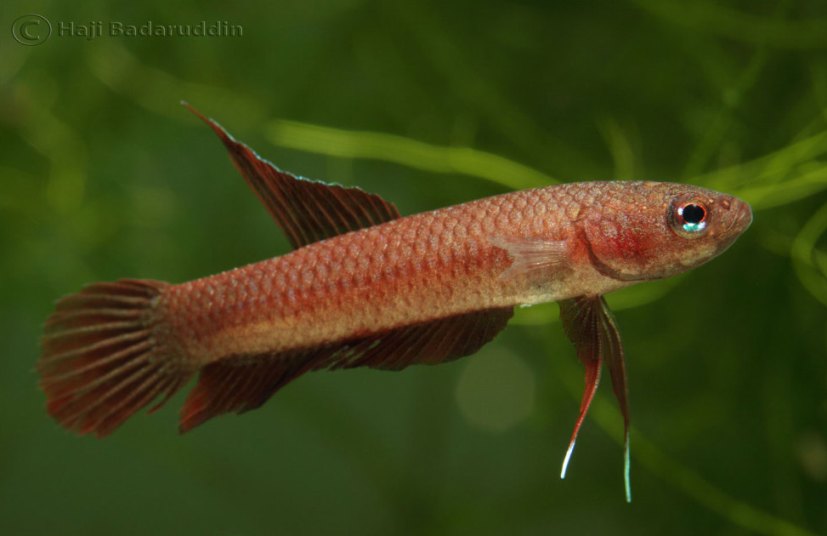
Betta rutilans
Osphronemidae · Witte & Kottelat, 1991
This species is included in the B. coccina group/complex of closely-related Betta species within the genus. This assemblage mostly comprises small, red-coloured fishes, with the exceptions of B. persephone and B. miniopinna which are darkish, and identifying some of them can be problematic as external patterning can be both similar and confusingly variable.
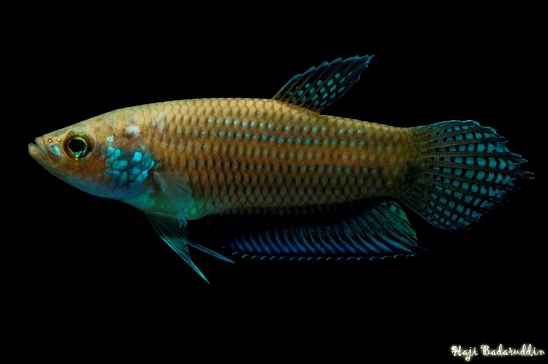
Betta stigmosa
Osphronemidae · Tan & Ng, 2005
Known only forest hill streams with flowing, clear water. These are typically shaded from the sun by dense riparian vegetation. The substrate is composed of rocks or gravel, fallen leaves, branches and submerged tree roots, and presumably the fish show a preference for quieter marginal zones as with related congeners. The type locality was described as a 'swampy stream' and sympatric species incl...
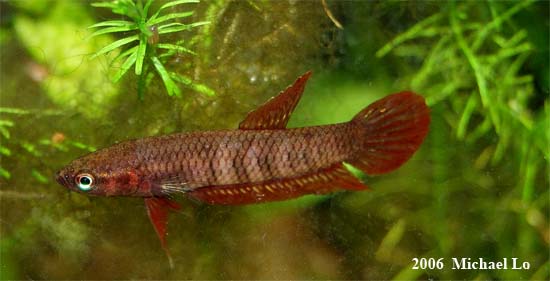
Betta tussyae
Osphronemidae · Schaller, 1985
This poorly-known betta is included in the B. coccina group of closely-related species within the genus. This assemblage mostly comprises small, red-coloured fishes, with the exceptions of B. persephone and B. miniopinna which are darkish, and identifying some of them can be problematic as external patt...
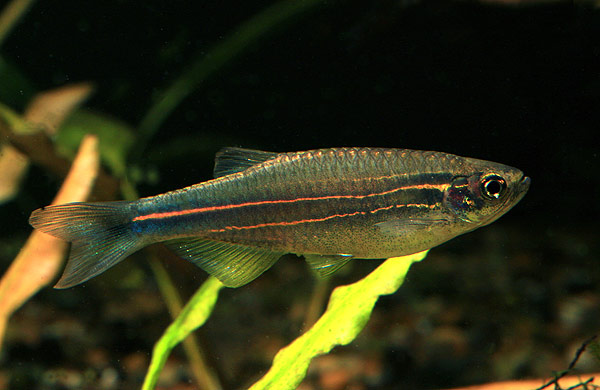
Brachydanio kerriBlue 'Danio'
Cyprinidae · Smith, 1931
Can be hard to find in aquarium shops, and there has been some confusion surrounding its identity in the past. Base body colour is either powdery-blue or yellow-green (see 'Distribution') and this continues into the caudal-fin, while pinkish-yellow lateral stripes extend from opercle to caudal peduncle.
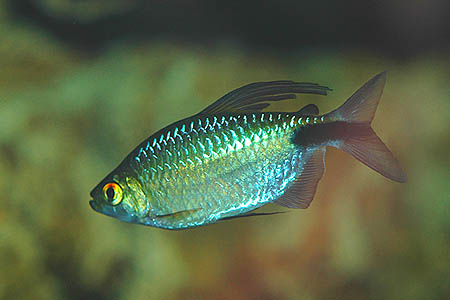
Brycinus longipinnisLong-finned Tetra
Alestidae · Günther, 1864
Not imported all that often, this species seems to ship quite poorly. Once acclimatised, it usually proves quite hardy. A big shoal of adults can look stunning in the right setting.
Brycon cephalusRed-tailed Brycon
Characidae · authority not recorded
The Brycon genus is large, at present containing over 50 species. A number of these are very similar, a couple of which (B. rubricauda and B. orbignyanus) resemble B. cephalus quite closely. However this one is the most common in nature and is likely to be the species seen on sale most often. Commonly known as the matrinxã in Brazil, it has an interesting life cycle, migrating twice per year over large distances according to the season. The first movement occurs at the start of...
Bryconaethiops boulengeriBoulenger's Featherfin Tetra
Alestiidae · authority not recorded
This rarely imported species makes an attractive addition to a community of larger peaceful fish. It is farmed commercially for food in its native countries....
Buccochromis lepturusSlender Tail Hap
Cichlidae · authority not recorded
Also known as the green lepturus, this is a stunning species when mature. Unfortunately, it is rarely seen for sale. Its pelagic nature means it is difficult to catch for export. As a result it can be quite expensive when it is available....
Buccochromis nototaeniaStripeback Hap
Cichlidae · authority not recorded
Rarely seen in the trade, as it is quite difficult to collect in nature. It retreats at great speed into deeper water at the first sign of threat. As with other members of its genus, it is a hunter, feeding mainly on smaller cichlids.
Bunocephalus coracoideusBanjo Catfish
Aspredinidae · authority not recorded
Bunocephalus is the largest genus within the Aspredinidae family and there are several undescribed species. B. coracoideus is the most common member seen in dealers' tanks. Its native name "Guitarrita" translates as "little guitar" and refers to the shape of the fish when viewed from above. Despite the regularity with which it is seen for sale, it isn't really a good catfish for the general community tank because it's a largely inactive, secretive species, ...
Caecomastacembelus albomaculatus
Mastacembelidae · authority not recorded
This is a great oddball species for the Tanganyikan community tank, although it is not as attractive as the closely related Aethiomastacembelus ellipsifer. It is rarely seen in the hobby. The species in the family Mastacembelidae are known as "spiny" eels because the dorsal rays are stiffened. Care must therefore be exercised when handling them to avoid injuries. Spiny eels also have no swim bladder, an adaptation to their benthic lifestyle....
Caecomastacembelus plagiostomus
Mastacembelidae · authority not recorded
Very rarely seen in the hobby, this species makes an interesting oddball addition to the Tanganyikan community tank. The species in the family Mastacembelidae are known as "spiny" eels because the dorsal rays are stiffened. Care must therefore be exercised when handling them to avoid injuries. Spiny eels also have no swim bladder, an adaptation to their benthic lifestyle.....
Callochromis macropsBig-eyed Mouthbrooder
Cichlidae · authority not recorded
Members of the genus Callochromis feed in a similar way to the South American "eartheaters" such as Geophagus species. They extract invertebrates and other items hidden in the substrate by taking in mouthfulls of sand and sifting it through the gills. The common term "sand sifters" is applied to these and other Tanganyikan species that inhabit a similar ecological niche, such as Enantiopus and Xenotilapia spp. Several geographical colour forms of this species exist. These ...
Campylomormyrus tamanduaWorm-Jawed Mormyrid
Mormyridae · authority not recorded
C. tamandua is quite a rare fish in the hobby, but is imported occasionally. It's not a good beginner's fish as it requires pristine soft, acidic water conditions, will generally not feed on standard foods and attains a very respectable adult size. It's also sensitive to many aquarium medications. It can sometimes be found as a contaminant among imports of the much more common Elephant Fish, Gnathonemus petersii. Unlike this species, C. tamandua has both upper and lower jaws exten...
Catoprion mentoWimpel Piranha
Serrasalmidae · authority not recorded
This species is not actually a piranha in ichthyologic terms, being monotypic and therefore unique. It was so named due to its general resemblance to true piranha, and the fact that it is quite closely related to Pygocentrus species. Mento means "chin", referring to the protruding jaw of the fish. This jaw structure, along with the adapted teeth, is used in its natural feeding behaviour. It has been observed to swim at great speed into a selected target, biting hard as it collides w...
Centromochlus perugiaeOil Catfish
Auchenipteridae · authority not recorded
A very cute little catfish, that unfortunately is rarely kept in ideal conditions. When it is maintained properly, it's a joy to watch as it feeds from close to the water surface, swimming frantically in the flow. It was reclassified, and placed in the genus Centromochlus in 1998.
Cetopsis coecutiensBlue Whale Catfish
Cetopsidae · authority not recorded
An infrequently seen but very interesting oddball species for those who are looking for something a little different. To others, it might appear to be a rather nasty species. In the wild, it swims in voracious feeding groups. Apparently, it can home in on weakened or distressed fish as it has a very well developed sense of smell. Other specialisations include the tiny eyes and particularly slimy skin. The former are reduced in size and covered by a thin layer of skin so they are less likely to b...
Chalceus erythrurusTucanfish
Characidae · authority not recorded
This species can be distinguished from its congener C. macrolepidotus mainly by the red or yellow (as opposed to pink) caudal fin. In addition, it has yellow pectoral and pelvic fins and may also have some yellow colouration on the body. It is seen for sale as often as its relative, although it's quite abundant in nature....
Chalceus macrolepidotusPink-tailed Chalceus
Characidae · authority not recorded
This species can look quite stunning when cared for properly. It can sometimes be a little delicate when initially imported, as it has very large scales which tend to fall off during transport. Once acclimatised, it usually proves fairly hardy. There are reports of aquarium specimens surviving for over fifteen years in well-maintained conditions....
Champsochromis caeruleusMalawi Trout
Cichlidae · authority not recorded
Also known as the trout cichlid, this species makes a great centrepiece to a well-chosen community of big Rift Lake cichlids. An adult male in top condition makes for a truly jaw dropping sight. It is only occasionally offered for sale, as it is difficult to collect, living a predominantly solitary lifestyle. As a result, it is much sought after by enthusiasts. It is sometimes confused with the other species in the genus, C. spilorhynchus, but can be distinguished by its more elongate shape. ...
Champsochromis spilorhynchus
Cichlidae · authority not recorded
This species is only occasionally offered for sale, as it is difficult to collect, living a predominantly solitary lifestyle. As a result, it is much sought after by enthusiasts. It may be confused with the other species in the genus, C. caerulus, but can be distinguished by its deeper body shape and very distinctive black markings on its snout. Champsochromis have widely spaced teeth compared to some other pelagic predatory cichlids found in Lake Malawi, such as Buccochromis species....
Charax condeiSmall-scale Glass Tetra
Characidae · authority not recorded
This rarely seen Characin occasionally shows up in the trade, usually as a contaminant among shipments of more popular species. It's sometimes referred to as Asiphonichthys condei in older literature.
Chiloglanis polypogonAfrican Suckermouth Catfish
Mochokidae · authority not recorded
This fish belongs to a very distinctive genus of mochokid. There are almost 50 species of Chiloglanis described to science, but most are never imported and even the commoner species, such as this one, are seen only rarely. They are very difficult to identify down to species level, as many are very similar in looks. Some are strongly sexually dimorphic with the males having thickened or enlarged anal and caudal fins. Chiloglanis are also sometimes confused with the other 2 genera of African sucke...
Cichlasoma festaeRed Terror
Cichlidae · authority not recorded
The Red Terror can be troublesome to breed due to pairing problems - if a pair of fish are incompatible and are housed together for any length of time, it is likely that the weaker fish will be killed. The best way of getting a true pair is to grow 6 juveniles up until a noticeably strong pair has formed. Also, its size means finding an aquarium and suitable breeding surfaces can be difficult. As previously mentioned, rocks (siliconed if necessary) and bits of slate used to create man-made caves...
Cichlasoma salviniSalvini
Cichlidae · authority not recorded
Salvin's Cichlid has a well deserved reputation for aggression, especially when breeding. They are regularly available in the trade and make an extremely colourful addition to any north/central American aggression tank. Take care when choosing tank mates, however. If only this species is kept in the tank, it will be quite shy until mature or until the natural domination order has been established. If a single fish of this species is kept alone, it will be extremely shy, usually choosing ...
Cichlasoma trimaculatumThree Spot Cichlid
Cichlidae · authority not recorded
Cichlasoma Trimaculatus is a large colourful cichlid, if a little aggressive. It is believed to be one of the fish that was used to create the hybrid Flowerhorn cichlid. We prefer it in its natural state. As with most large cichlids they can be fairly messy eaters so ensure decent filtration is provided. It is recommended to use a spraybar to disperse the water returning to the tank as trimacs will not appreciate strong flow....
Cichlasoma urophthalmusMayan Cichlid
Cichlidae · authority not recorded
A hardy and robust fish that can tolerate and breed in full marine conditions. The Mayan cichlid is also referred to as the Mexican Mojarra and is occasionally offered for sale in the UK, or can be obtained through specialist cichlid dealers. This species is regarded as a potential pest fish in the USA due to its tolerance of a wide range of conditions and the threat it could pose to native fauna....
Clarias batrachusWalking Catfish
Clariidae · authority not recorded
An incredibly hardy species, the walking catfish is tolerant of a very wide range of water chemistry and temperature. It can also survive in oxygen-depleted conditions due to its ability to breathe atmospheric air. In fact, it is thought that the fish can literally drown if deprived access to the water surface for long enough. The common name is derived from its natural ability to move across land using its stiff pectoral spines, provided it stays damp. It has special mucous-producing pores ...
Clarotes laticepsWidehead Catfish
Bagridae · authority not recorded
This is not a particularly common species in the trade, probably as it's not especially attractive to look at and grows very large. It's unsuitable for all but the biggest aquaria.
Colossoma macropomumBlack Pacu
Serrasalmidae · authority not recorded
Known as the tambaqui in its native countries, this is the second largest species of scaled fish found in the Amazon basin. This alone should tell you much of what you need to know about its suitability as an aquarium inhabitant. In reality, it's debatable as to whether the species should be considered an aquarium subject at all. While pacu rarely reach their maximum size in captivity, they're still easily capable of growing to a couple of feet in length. The myth that fish will only g...
Copadichromis azureus
Cichlidae · authority not recorded
Together with the recently erected genus Mchenga, Copadichromis species form an exclusive group of Malawian cichlids commonly referred to as "Utaka" (prounounced "ooh-taw-kuh"). They're specialised to a pelagic lifestyle, and can be found living in huge numbers throughout much of Lake Malawi. Some tend to remain in the proximity of underwater reefs or rocky shorelines, while others occur mainly in more featureless, sandy habitats. Here they face the oncoming current, us...
Copadichromis borleyi
Cichlidae · authority not recorded
Together with the recently erected genus Mchenga, Copadichromis species form an exclusive group of Malawian cichlids commonly referred to as "Utaka" (prounounced "ooh-taw-kuh"). They're specialised to a pelagic lifestyle, and can be found living in huge numbers throughout much of Lake Malawi. Some tend to remain in the proximity of underwater reefs or rocky shorelines, while others occur mainly in more featureless, sandy habitats. Here they face the oncoming current, usi...
Copadichromis chrysonotus
Cichlidae · authority not recorded
Together with the recently erected genus Mchenga, Copadichromis species form an exclusive group of Malawian cichlids commonly referred to as "Utaka" (prounounced "ooh-taw-kuh"). They're specialised to a pelagic lifestyle, and can be found living in huge numbers throughout much of Lake Malawi. Some tend to remain in the proximity of underwater reefs or rocky shorelines, while others occur mainly in more featureless, sandy habitats. Here they face the oncoming current, usi...
Copadichromis ilesi
Cichlidae · authority not recorded
Together with the recently erected genus Mchenga, Copadichromis species form an exclusive group of Malawian cichlids commonly referred to as "Utaka" (prounounced "ooh-taw-kuh"). They're specialised to a pelagic lifestyle, and can be found living in huge numbers throughout much of Lake Malawi. Some tend to remain in the proximity of underwater reefs or rocky shorelines, while others occur mainly in more featureless, sandy habitats. Here they face the oncoming current, usi...
Copadichromis virginalis
Cichlidae · authority not recorded
Together with the recently erected genus Mchenga, Copadichromis species form an exclusive group of Malawian cichlids commonly referred to as "Utaka" (prounounced "ooh-taw-kuh"). They're specialised to a pelagic lifestyle, and can be found living in huge numbers throughout much of Lake Malawi. Some tend to remain in the proximity of underwater reefs or rocky shorelines, while others occur mainly in more featureless, sandy habitats. Here they face the oncoming current, usi...
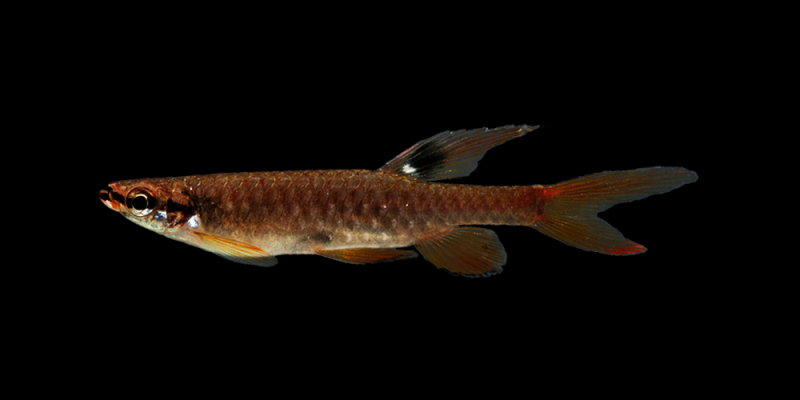
Copella arnoldiSplash Tetra
Lebiasinidae · Regan, 1912
This species is also known as the 'spraying', 'splashing' or 'jumping' tetra and these names are also sometimes applied to its congeners although none of them exhibit a comparable spawning strategy, simply depositing their eggs among vegetation at or around the water surface.
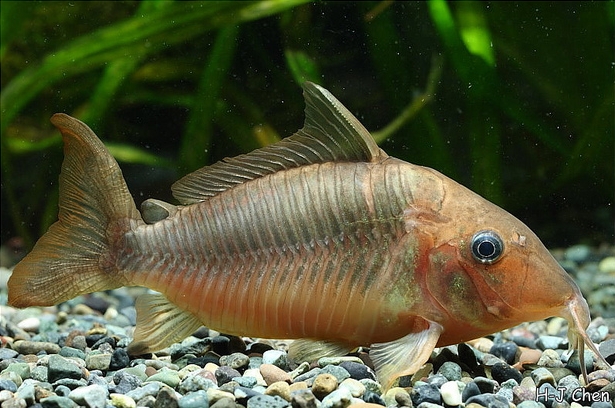
Corydoras britskiiGiant Brochis
Callichthyidae · Nijssen & Isbrücker, 1983
Brochis was first synonymised with Corydoras by Britto (2003), since the latter genus cannot be considered monophyletic if the former is accepted as valid. This decision has been supported in subsequent phylogenetic studies by Shimabukuro-Dias et al. (2004) and Alexandrou et al. (2011), although the name Brochis is still common in aquarium literature. It is likely that the genus will be revalidated and expanded in the future following a required taxonomic review of the subfamily Corydoradinae as suggested by Alexandrou and Taylor (2011).
Corydoras geryi
Callichthyidae · authority not recorded
There are currently over 180 described species of Corydoras (commonly shortened to "cory"), making it one of the most speciose of all South American fish genera. There are also loads of undescribed species, many of which have been assigned a "C number" for identification purposes. This is a very simple system of numbering and is similar to the L number scheme used to identify undescribed Loricariids. Both systems were implemented by the German aquarium magazine DATZ (Die Aqua...
Corydoras loretoensis
Callichthyidae · authority not recorded
There are currently over 180 described species of Corydoras (commonly shortened to "cory"), making it one of the most speciose of all South American fish genera. There are also loads of undescribed species, many of which have been assigned a "C number" for identification purposes. This is a very simple system of numbering and is similar to the L number scheme used to identify undescribed Loricariids. Both systems were implemented by the German aquarium magazine DATZ (Die Aqua...
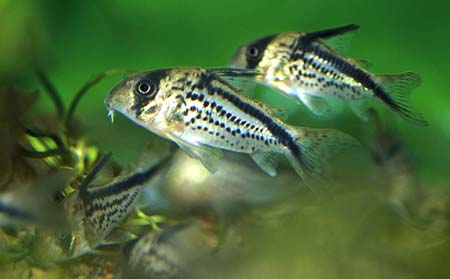
Corydoras loxozonus
Callichthyidae · authority not recorded
There are currently over 180 described species of Corydoras (commonly shortened to "cory"), making it one of the most speciose of all South American fish genera. There are also loads of undescribed species, many of which have been assigned a "C number" for identification purposes. This is a very simple system of numbering and is similar to the L number scheme used to identify undescribed Loricariids. Both systems were implemented by the German aquarium magazine DATZ (Die Aqua...
Corydoras melanistiusSpotted Cory
Callichthyidae · authority not recorded
There are currently over 180 described species of Corydoras (commonly shortened to "cory"), making it one of the most speciose of all South American fish genera. There are also loads of undescribed species, many of which have been assigned a "C number" for identification purposes. This is a very simple system of numbering and is similar to the L number scheme used to identify undescribed Loricariids. Both systems were implemented by the German aquarium magazine DATZ (Die Aqua...
Corydoras melanotaeniaGreen-gold Cory
Callichthyidae · authority not recorded
There are currently over 180 described species of Corydoras (commonly shortened to "cory"), making it one of the most speciose of all South American fish genera. There are also loads of undescribed species, many of which have been assigned a "C number" for identification purposes. This is a very simple system of numbering and is similar to the L number scheme used to identify undescribed Loricariids. Both systems were implemented by the German aquarium magazine DATZ (Die Aqua...
Corydoras napoensisNapo Cory
Callichthyidae · authority not recorded
There are currently over 180 described species of Corydoras (commonly shortened to "cory"), making it one of the most speciose of all South American fish genera. There are also loads of undescribed species, many of which have been assigned a "C number" for identification purposes. This is a very simple system of numbering and is similar to the L number scheme used to identify undescribed Loricariids. Both systems were implemented by the German aquarium magazine DATZ (Die Aqua...
Corydoras narcissusLong-nosed Skunk Cory
Callichthyidae · authority not recorded
There are currently over 180 described species of Corydoras (commonly shortened to "cory"), making it one of the most speciose of all South American fish genera. There are also loads of undescribed species, many of which have been assigned a "C number" for identification purposes. This is a very simple system of numbering and is similar to the L number scheme used to identify undescribed Loricariids. Both systems were implemented by the German aquarium magazine DATZ (Die Aqua...
Corydoras nattereriNatterer's Cory
Callichthyidae · authority not recorded
There are currently over 180 described species of Corydoras (commonly shortened to "cory"), making it one of the most speciose of all South American fish genera. There are also loads of undescribed species, many of which have been assigned a "C number" for identification purposes. This is a very simple system of numbering and is similar to the L number scheme used to identify undescribed Loricariids. Both systems were implemented by the German aquarium magazine DATZ (Die Aqua...
Corydoras nijsseniNijssen's Cory
Callichthyidae · authority not recorded
There are currently over 180 described species of Corydoras (commonly shortened to "cory"), making it one of the most speciose of all South American fish genera. There are also loads of undescribed species, many of which have been assigned a "C number" for identification purposes. This is a very simple system of numbering and is similar to the L number scheme used to identify undescribed Loricariids. Both systems were implemented by the German aquarium magazine DATZ (Die Aqua...
Corydoras oiapoquensisFlag-tailed Panda Cory
Callichthyidae · authority not recorded
This species occurs alongside a near-identical congener, C. condiscipulus in nature. In fact condiscipulus literally means 'schoolmate', as the species are often found shoaling together. The only external difference between the 2 seems to be the longer snout and wider distribution within the Rio Oyapock of condiscipulus....
Corydoras ornatus
Callichthyidae · authority not recorded
An attractive larger cory.
Corydoras ourastigmaLong-nosed Smudge Spot Cory
Callichthyidae · authority not recorded
There are 4 other species of cory that may be confused with C. ourastigma at first glance. These are C. guapore, C. caudimaculatus, C. similis and C. spectabilis. They can be distinguished quite easily upon close examination, however. C. guapore, whilst exhibiting similar patterning, has a completely different body shape to ourastigma, having a much more rounded overall appearance. It also tends to spend a lot of time away from the aquarium floor, unlike ourastigma. C. caudimaculatus also has a ...
Corydoras paleatusPepper Cory
Callichthyidae · authority not recorded
Corydoras are members of the armoured catfish family. The genus name means "helmet skin" and the fish live up to this name as they are rather tough little fish. They also have spines in the leading rays of the pectoral fins to deter larger predators from eating them. Corydoras are sometimes observed taking a gulp of air at the water surface: this is because they can absorb oxygen through their gut. It is not known why cories do this even on oxygen rich waters. Along with the bronze ...
Corydoras pandaPanda Cory
Callichthyidae · authority not recorded
There are currently over 180 described species of Corydoras (commonly shortened to "cory"), making it one of the most speciose of all South American fish genera. There are also loads of undescribed species, many of which have been assigned a "C number" for identification purposes. This is a very simple system of numbering and is similar to the L number scheme used to identify undescribed Loricariids. Both systems were implemented by the German aquarium magazine DATZ (Die Aqua...
Corydoras pantanalensis
Callichthyidae · authority not recorded
This species may also be referred to by its C-number, C005.
Corydoras pinheiroi
Callichthyidae · authority not recorded
This species has a similar patterning to C. sterbai, but lacks the orange pectoral spines of that species. It's rare in the hobby....
Corydoras polystictus
Callichthyidae · authority not recorded
There are currently over 180 described species of Corydoras (commonly shortened to "cory"), making it one of the most speciose of all South American fish genera. There are also loads of undescribed species, many of which have been assigned a "C number" for identification purposes. This is a very simple system of numbering and is similar to the L number scheme used to identify undescribed Loricariids. Both systems were implemented by the German aquarium magazine DATZ (Die Aqua...
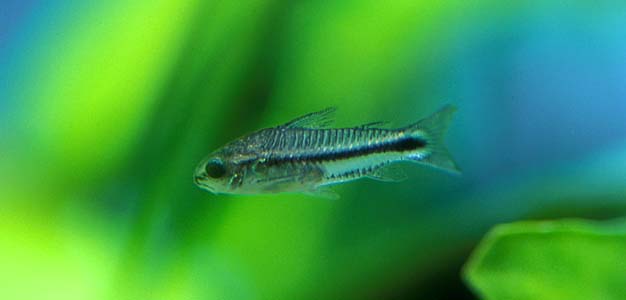
Corydoras pygmaeusPygmy Cory
Callichthyidae · authority not recorded
There are currently over 180 described species of Corydoras (commonly shortened to "cory"), making it one of the most speciose of all South American fish genera. There are also loads of undescribed species, many of which have been assigned a "C number" for identification purposes. This is a very simple system of numbering and is similar to the L number scheme used to identify undescribed Loricariids. Both systems were implemented by the German aquarium magazine DATZ (Die Aqua...
Corydoras reticulatusReticulated Cory
Callichthyidae · authority not recorded
Also known as the network cory, this is one of the commoner species seen in dealers tanks, and is a good cory for the beginner.
Corydoras robineaeFlagtail Cory
Callichthyidae · authority not recorded
A strikingly-patterned cory that has only bred in aquaria quite recently. It's also known as the bannertail cory.
Corydoras robustusRobust Cory
Callichthyidae · authority not recorded
There are currently over 180 described species of Corydoras (commonly shortened to "cory"), making it one of the most speciose of all South American fish genera. There are also loads of undescribed species, many of which have been assigned a "C number" for identification purposes. This is a very simple system of numbering and is similar to the L number scheme used to identify undescribed Loricariids. Both systems were implemented by the German aquarium magazine DATZ (Die Aqua...
Corydoras schwartziSchwartz's Cory
Callichthyidae · authority not recorded
There are currently over 180 described species of Corydoras (commonly shortened to "cory"), making it one of the most speciose of all South American fish genera. There are also loads of undescribed species, many of which have been assigned a "C number" for identification purposes. This is a very simple system of numbering and is similar to the L number scheme used to identify undescribed Loricariids. Both systems were implemented by the German aquarium magazine DATZ (Die Aqua...
Corydoras semiaquilisPeru Black Cory
Callichthyidae · authority not recorded
There are currently over 180 described species of Corydoras (commonly shortened to "cory"), making it one of the most speciose of all South American fish genera. There are also loads of undescribed species, many of which have been assigned a "C number" for identification purposes. This is a very simple system of numbering and is similar to the L number scheme used to identify undescribed Loricariids. Both systems were implemented by the German aquarium magazine DATZ (Die Aqua...
Corydoras septentrionalisNorthern Longnose Cory
Callichthyidae · authority not recorded
There are 2 other species that superficially resemble C. septentrionalis. These are C. simulatus and C. amapaensis. Simulatus differs from septentrionalis by the absence of the third set of small, upper (rictal) barbels, situated behind the other two pairs in both septentrionalis and amapaensis. Amapaensis differs in that it has a clear caudal fin. This fin is noticeably barred in septentrionalis....
Corydoras seussi
Callichthyidae · authority not recorded
Very similar in appearance to C. gossei, seussi can be distinguished by its less rounded snout. It may also be referred to by its C-number, C027.
Corydoras similisSmudge Spot Cory
Callichthyidae · authority not recorded
There are currently over 180 described species of Corydoras (commonly shortened to "cory"), making it one of the most speciose of all South American fish genera. There are also loads of undescribed species, many of which have been assigned a "C number" for identification purposes. This is a very simple system of numbering and is similar to the L number scheme used to identify undescribed Loricariids. Both systems were implemented by the German aquarium magazine DATZ (Die Aqua...
Corydoras sodalisFalse Network Cory
Callichthyidae · authority not recorded
There are currently over 180 described species of Corydoras (commonly shortened to "cory"), making it one of the most speciose of all South American fish genera. There are also loads of undescribed species, many of which have been assigned a "C number" for identification purposes. This is a very simple system of numbering and is similar to the L number scheme used to identify undescribed Loricariids. Both systems were implemented by the German aquarium magazine DATZ (Die Aqua...
Corydoras spectabilisMillenium Cory
Callichthyidae · authority not recorded
This species was named the millenium cory because it was the first catfish species to be described in the year 2000. It was in fact described in late 1999, but the date of the journal containing the information was 01/2000. There are 4 other species of cory that may be confused with C. spectabilis at first glance. These are C. guapore, C. ourastigma, C. similis and C. caudimaculatus. They can be distinguished quite easily upon close examination, however. C. guapore, whilst exhibiting similar pat...
Corydoras sterbaiSterba's Cory
Callichthyidae · authority not recorded
There are currently over 180 described species of Corydoras (commonly shortened to "cory"), making it one of the most speciose of all South American fish genera. There are also loads of undescribed species, many of which have been assigned a "C number" for identification purposes. This is a very simple system of numbering and is similar to the L number scheme used to identify undescribed Loricariids. Both systems were implemented by the German aquarium magazine DATZ (Die Aqua...
Corydoras trilineatusThree-lined Cory
Callichthyidae · authority not recorded
There are currently over 180 described species of Corydoras (commonly shortened to "cory"), making it one of the most speciose of all South American fish genera. There are also loads of undescribed species, many of which have been assigned a "C number" for identification purposes. This is a very simple system of numbering and is similar to the L number scheme used to identify undescribed Loricariids. Both systems were implemented by the German aquarium magazine DATZ (Die Aqua...
Corynopoma riiseiSwordtail Characin
Characidae · authority not recorded
This unusual tetra is not often seen on sale in the trade, but is never particularly expensive when available. It is currently the only member in the genus although the family Glandulocaudinae actually contains about 20 member genera. None are especially popular aquarium fish, although a couple of Mimagoniates species are occasionally seen in the hobby. Almost all members of the Glandulocaudinae are characterised by the presence of secretory caudal glands in male fish, the particular structur...
Crenicara latruncularium
Cichlidae · authority not recorded
Rarely seen in the hobby in the UK, but makes an interesting addition to a South American setup.
Crenicichla albopunctataWhite-spotted Pike Cichlid
Cichlidae · authority not recorded
Crenicichla albopunctata
Crenicichla compressicepsCompressiceps Dwarf Pike Cichlid
Cichlidae · authority not recorded
Crenicichla compressiceps are an excellent little fish. They are small, but they swim a great deal (and can be incredibly quick) so require larger aquaria than other, similar sized fish. In the wild, Compressiceps are insect feeders. They will wait quietly then quickly sweep down and prey on any nearby insects. They have good vision in the night and will often feed in the dark. Be careful when choosing tankmates, though as previously mentioned it may be mandatory to include some fish to e...
Crenicichla johannaRed-finned Pike Cichlid
Cichlidae · authority not recorded
As stated, this fish is found across most of the Amazon basin. As a result, a number of different colour forms have developed. This pike is fairly common in the hobby due to its broad geographic range.
Crenicichla lugubrisAtabo Red Pike Cichlid
Cichlidae · authority not recorded
An attractive and colourful fish when small, this species quickly grows into a large aggressive adult, requiring a large tank.
Crenicichla proteusProteus Pike Cichlid
Cichlidae · authority not recorded
Crenicichla proteus is occasionally offered for sale. It is one of the smaller pike cichlids, although more than makes up for that in terms of aggression!
Crenicichla strigataStriped Pike Cichlid
Cichlidae · authority not recorded
One of the more commonly available pike cichlids in the UK, c. strigata is often bought by fishkeepers unaware of the adult size of these fish. Are reported to be susceptible to hole in the head disease, more commonly seen in discus and oscars....
Crenicichla tigrinaTiger Pike Cichlid
Cichlidae · authority not recorded
A strikingly marked species that is rarely seen in the hobby in the UK.
Ctenopoma murieiOcellated Bushfish
Anabantidae · authority not recorded
One of the smallest species in the genus, it is rarely seen in the trade. A pity, as its diminutive size makes for an ideal aquarium subject. Like others in the suborder Anabantoidei, the species possesses an accessory breathing organ known as the labyrinth organ. So-called due to its maze-like structure, this organ allows the fish to breathe atmospheric air to a certain extent. It is formed by a modification of the first gill arch, and consists of many highly vascularised, folded flaps of sk...
Cyathopharynx furciferFeatherfin Cichlid
Cichlidae · authority not recorded
There are only two described species of Cyathopharynx, each with several colour forms. These should not be kept together in aquaria, as they can hybridise. They are among the most beautiful of all freshwater fish and are highly sought after in the hobby, although they are fairly delicate. The highest water quality is required for males to fully develop their stunning adult colouration, which happens when they are around 4" in length. This may take a good few months if you are buying young f...
Cynotilapia afraDogtooth Cichlid
Cichlidae · authority not recorded
C. afra is easily confused with some species of Pseudotropheus, but can be distinguished by its smaller adult size and unicuspid (as opposed to bicuspid) teeth. Also in this species the black bars on the flanks continue into the dorsal fin, unlike in Pseudotropheus zebra, for example. It exists in many different colour forms in nature. These forms should not be mixed in aquaria as they may spawn with each other, producing unwanted hybrid fry. Despite this ability to interbreed, it's probabl...
Cyprichromis leptosomaSardine Cichlid
Cichlidae · authority not recorded
One of the favourite Tanganyikan cichlids among hobbyists, this species occurs in several geographical morphs. Each of these further exists in both blue and yellow-tailed forms. They congregate in large shoals of several thousand in nature, preying on zooplankton. In the hobby you may also see C. leptosoma sp. "Jumbo" for sale. These fish grow to the size quoted above, whilst the "true" leptosoma only reaches around 4" in length. Although it's likely we are deal...
Cyprichromis microlepidotusSmallscale Cyprichromis
Cichlidae · authority not recorded
Quite a rarity in the hobby, but when available it is much sought after by enthusiasts. It can be found living in huge mixed species groups with other Cyprichromis species and the similar Paracyprichromis. There are a few geographical variants known, each of which has both a yellow and blue tailed form. Individual populations can also contain males with different colour and patterning, a phenomenon known as polychromatism. The different forms should never be mixed in the aquarium, as they will i...
Cyrtocara mooriiMalawi Blue Dolphin
Cichlidae · authority not recorded
A gentle giant ideal for the larger community of Malawi cichlids, this species was formerly named Haplochromis moorii. It is occasionally referred to by the common name, "Humphead Mouthbrooder". In nature, it exhibits an interesting feeding behaviour in which it will be attracted to clouds of sand thrown up by the activity of substrate-sifting species such as Fossorochromis rostratus or Taeniolethrinops praeorbitalis. Shoals of C. moorii will follow these species and feast on any mo...
Dekeyseria brachyuraButterfly Plec
Loricariidae · authority not recorded
Formerly known as Peckoltia pulcher, this species is also known as the pretty peckoltia, flounder plec (in reference to its flattened shape) or chameleon plec. This latter name is quite appropriate, as the fish will change colour depending on the colour of the substrate and other surfaces. It also has a distinctive night time colouration. It closely resembles the Rio Orinoco species L052 and these may turn out to be the same species, as the waters that they inhabit become connected during th...
Dermogenys pusillaWrestling Halfbeak
Hemiramphidae · authority not recorded
Halfbeaks derive their common name from the elongated lower jaw shared by all species. The 'wrestling' moniker given to this particular species is due to the tendency of males to fight with each other, often locking jaws in the process. It is used as a fighting fish in some of its native countries, with wagers being placed on the outcome of fights between males. The two fish are placed in a small container for fighting purposes, as they will spar incessantly in such confined conditions...
Dianema longibarbisPorthole Catfish
Callichthyidae · authority not recorded
So named because of the row of spots running along the lateral line, the porthole cat is a good community species. Newly imported fish tend to be a little delicate and are susceptible to disease. This is at least in part because all specimens sold for the trade are wild caught. Once acclimatised, it usually proves very hardy and can be exceptionally long-lived for a fish of this size, having the potential to survive for over 10 years....
Dianema urostriatumFlagtail Catfish
Callichthyidae · authority not recorded
A good choice for the larger community tank. Newly imported fish tend to be a little delicate and can be susceptible to disease. This is at least in part because all specimens sold for the trade are wild caught. Once acclimatised it usually proves very hardy and adaptable....
Dicrossus maculatusSpadetailed Checkerboard Cichlid
Cichlidae · authority not recorded
Dicrossus Maculatus are not commonly available in the trade. Sometimes they are mistaken for the more common and popular Dicrossus Filamentosa. The Spadetailed Checkerboards are an absolutely fascinating species to keep. They are a challenge to breed, requiring such acidic and soft water, but when it does happen it is a very rewarding experience. Reports maintain that the pH and temperature of the water when conceived, eggs laid, eggs hatched and in the first month of the fry's life c...
Dimidiochromis compressicepsMalawi Eye-Biter
Cichlidae · authority not recorded
D. compressiceps is an ambush predator in nature, its laterally compressed shape and head-down hunting position allowing it to remain hidden among Vallisneria beds and making it tricky to spot in open water. It has a dark stripe running from the snout along the back to the tail which serves to provide further camouflage. Despite its common name, it does not prey solely on the eyes of other species, preferring to hunt small fish (particularly juvenile Copadichromis sp.). It swallows these tai...
Distichodus affinisSilver Distichodus
Citharinidae · authority not recorded
This species has become more common in the trade in recent years, and makes an interesting addition to larger communities. It develops bright red fins as it matures. Some specimens develop a pink sheen on the underside. These variations may indicate different species, as there are several in the genus that superficially resemble D. affinis....
Distichodus sexfasciatusSix-banded Distichodus
Citharinidae · authority not recorded
This is the most common of the few Distichodus species regularly seen in the hobby, and sadly, it is often sold as being suitable for the general community tank. This is clearly not the case in terms of both its temperament and potential size. Do not buy one unless you have the facilities to house it for life. It is usually seen for sale at a couple of inches long, and at this size is a very attractive orange and black striped fish with bright red finnage. Unfortunately, much of this colour and ...
Ectodus descampsiiDescamp's Strange-Tooth Cichlid
Cichlidae · authority not recorded
A rare species in the hobby, there is also another, as yet undescribed fish sometimes imported as E. descampsii but this is thought to be a distinct species. This one is currently known as Ectodus sp. "north", as it's found further up the lake than E. decampsii. It can be distinguished by its smaller adult size and the fact that the black spot on the dorsal is found towards the front whereas in E. descampsii it's found in the middle of the fin. Confusingly, E. sp. "north...
Erethistes maesotensis
Erethistidae · authority not recorded
This species is now considered a member of the Hara genus by many experts, but as things stand it is still officially included in Erethistes. It is, in all likelihood, a Hara, as Erethistes is characterised by divergent denticles on the pectoral fins, whereas Hara possess outwardly pointing denticles. E. maesotensis has these outwardly pointing denticles. It's quite rare in the trade, but makes an interesting addition to an Asian stream community tank if you can get hold of some....
Eretmodus cyanostictusStriped Goby Cichlid
Cichlidae · authority not recorded
Also known as the Tanganyikan Clown, this is one of the so-called Tanganyikan goby cichlids. They occur only in the upper few feet of water around rocky shores, also known as the surge zone, where they scrape algae from the rocks with their specialised teeth. This habitat is typified by breaking waves and strong currents. They have a few adaptations allowing them to inhabit such an environment. The swim bladder is rendered useless to reduce their buoyancy. They also have a longand a laterally co...
Erpetoichthys calabaricusRopefish
Polypteridae · authority not recorded
This is the only species in the genus Erpetoichthys, and is an incredibly hardy, nocturnal species. Due to its poor vision, the Ropefish relies on its excellent sense of smell to locate food. It's closely related to the Polypterus genus and both these are some of the last surviving relatives of very ancient species. Fossils of earlier relatives have been found that date back to the Triassic Period, which occured during the early development of the dinosaurs, more than 200 million years ago....
Erythrinus erythrinusRed Wolf Fish
Erythrinidae · authority not recorded
A species for the specialist, E. erythrinus is also known as the rainbow wolf fish or red hi-fin wolf fish. It is quite variable in colour and pattern depending on collection locality. There is a variant from Peru that has a bright orange belly. Recent studies have highlighted genetic differences in these different populations, suggesting that E. erythrinus is actually a species complex, rather than a single species. There is currently one other recognised species in the genus, E. kessleri, but ...
Euchilichthys guentheri
Mochokidae · authority not recorded
This is one of only 4 described species of Euchilichthys (although more have been discovered) and is very rare in the hobby. It can be distinguished from similar Chiloglanis species by its elliptical (as opposed to circular) mouthparts and larger adult size. Unlike the South American Loricariids, it lacks armoured scuting on the body....
Exodon paradoxusBucktooth Tetra
Characidae · authority not recorded
The genus Exodon is currently monotypic, with this single species having uniquely designed teeth. These allow it to rip the scales from other species. It's an ideal choice for those wishing to keep a large shoal of a predatory species without possessing the massive amount of tank space needed for a shoal of piranha or similar. A tank full of these makes for a very colourful and active display....
Fossorochromis rostratus
Cichlidae · authority not recorded
F. rostratus was formerly classified as Haplochromis rostratus. When startled, it may bury itself in the substrate. It often displays its natural sand-sifting method of feeding in aquaria, and a substrate of sand is essential as gravel may injure the fish. In nature, it is only the largest dominant males that build nests, whilst the subdominant males and females shoal together. There also exists a feeding relationship between this species and Cyrtocara moorii in the wild, in which shoals of C. m...
Fundulopanchax marmoratusMarbled Lyretail
Nothobranchiidae · authority not recorded
Note the cooler temperatures required by this rare species. It is not an annual fish, occuring only in permanent bodies of water.
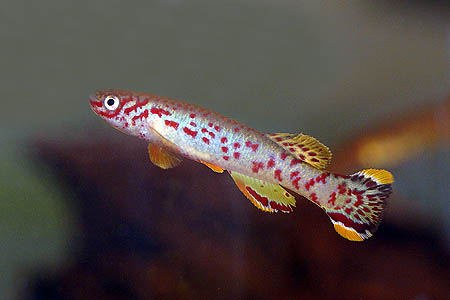
Fundulopanchax scheeli
Nothobranchiidae · authority not recorded
This is not an annual species, occuring only in permanent bodies of water.
Fundulopanchax sjoestedtiGolden Pheasant
Nothobranchiidae · authority not recorded
One of the most stunning killifish available, due to the sublime colouration of adult males combined with their impressive maximum size. It was formerly classified as Aphyosemion sjoestedti and much of the available literature still refers to it by this name. There are several colour forms available, including a smaller variety known as "Dwarf Red".
Fundulopanchax walkeri
Nothobranchiidae · authority not recorded
There exist many different populations of this species in nature, some of which are now threatened or extinct, due to rapid human development in Ghana and the Ivory Coast in recent years. It is not a common fish in the hobby. Interestingly, it appears that F. walkeri occurs as both an annual and non-annual fish. This adaptation allows it to inhabit many different habitats, as it is able to breed in both permananent and temporary bodies of water. Note that this fish prefers cooler temperatures t...
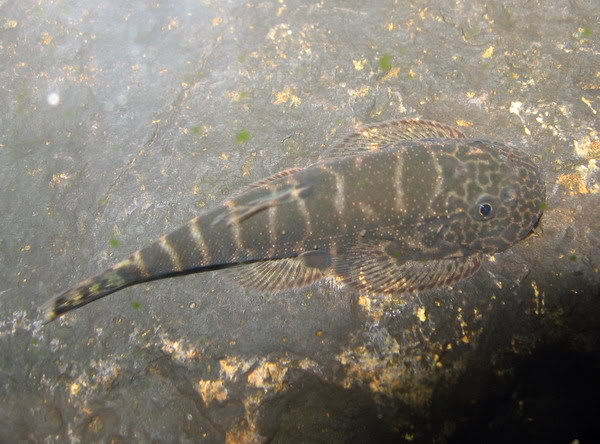
Gastromyzon sp. 'SK04'
Gastromyzontidae · authority not recorded
For long-term success it's best to provide a mature aquarium with a plentiful supply of algae-covered rocks and other surfaces. If unable to grow sufficient algae in the main tank or you have a community containing numerous herbivorous fishes which consume what's available quickly it may be necessary to maintain a separate tank in which to grow algae on rocks and switch them with those in the main tank on a cyclical basis.
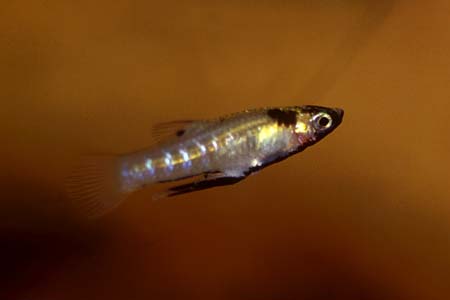
Girardinus metallicusMetallic Girardinus
Poeciliidae · authority not recorded
This species was introduced into the aquarium trade in the early 20th century but disappeared soon after. It subsequently reappeared in a Berlin zoo in 1965 and has been available from specialist breeders ever since. It occasionally appears for sale in aquatic shops....
Glossolepis incisusRed Rainbowfish
Melanotaeniidae · authority not recorded
Also known as the salmon-red or New Guinea rainbowfish, this is one of the most popular rainbows in the hobby. Unfortunately, the colouration of today's mass-bred specimens is not even close to the spectacular wild fish. If you can find wild specimens they are well worth it.
Glossolepis wanamensisLake Wanam Rainbowfish
Melanotaeniidae · authority not recorded
Lake Wanam has been the subject of a management project co-ordinated by famous aquarist Heiko Bleher, who became concerned by an apparent drop in numbers of both this species and the barred rainbowfish (Chilatherina fasciata), which is also found in the lake. The drop in numbers is thought to be a result of the introduction of non-native Tilapia, Gambusia and carp species into the lake, along with a significant increase in the number of humans living in the area. G. wanamensis is now considered ...
Gnathochromis permaxillaris
Cichlidae · authority not recorded
This species was originally classified in the genus Limnochromis. There are a couple of colour morphs available and these should not be mixed in aquaria, as they may hybridise. In nature, this fish feeds in a similar way to Geophagus species, in that it will sift sand through its gills to extract invertebrates hidden in the substrate. It is a deep water fish and has been recorded foraging at depths of up to 200 metres. These movements seem to be related to the presence of the plankton on which...
Gnathonemus petersiiElephantnose Fish
Mormyridae · authority not recorded
Also known as Peter's elephantnose, this fascinating species is currently the most common Mormyrid in the hobby. Sadly, its popularity means it is often kept in unsuitable conditions. To deny the fish a soft substrate really is cruel, as it uses its "trunk" to locate food hidden in the substrate. It also needs dim lighting, and will commonly become withdrawn and pine away if kept under bright lights. If you cannot provide suitable lighting, add food to the tank at lights out to al...
Gobioides broussonnetiiViolet Goby
Gobiidae · authority not recorded
This fish is also commonly sold as the dragon or Peruvian goby, or dragon fish, and its bizarre appearance has made it popular in the trade. This is unfortunate, as not only does it grow very large, but it has specialised feeding requirements and does not survive for very long in freshwater. When provided with the correct conditions, however, it makes a unique and fascinating captive subject. There is a smaller species in the genus, G. peruanus, that does survive in freshwater, being a riverine ...
Gymnarchus niloticusAba Aba
Gymnarchidae · authority not recorded
G. niloticus is the only species in its genus and is utterly unique. Unlike other knifefish it has an extended dorsal rather thangiving rise to the alternative common name of upside-down knifefish. Despite this common name, it is actually more closely related to the Mormyrid group of species. It is a truly beautiful sight in motion despite its lack of bright colours, as it can move in virtually any direction with ease using its undulatingto 'steer'. It also produces a weak electrical d...
Gymnocorymbus bondiSilver Tetra
Characidae · authority not recorded
Not often seen in the hobby, probably because it's a fairly bland species when mature. Juveniles are more attractive, possessing reddish unpaired fins, but these fade as the fish mature. It is, however, both peaceful and hardy and is a good choice for the beginner. It is sometimes seen labelled as G. socolofi. This name is now considered a junior synonym of G. bondi....
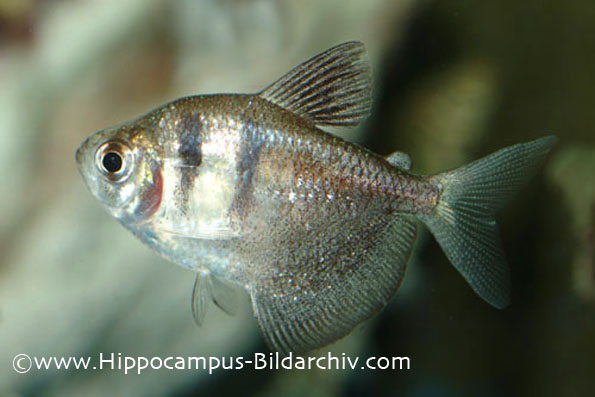
Gymnocorymbus ternetziBlack Widow Tetra
Characidae · authority not recorded
This species is ubiquitous in most dealers' tanks and is one of the best choices for the newcomer to fishkeeping. All the fish sold in the trade have been captive bred and as such are unfussy regarding water chemistry and diet. The intense black colouration of juveniles does fade as they grow, but adult fish provide a subtle contrast to most other commonly kept species. It goes by several common names, including 'butterfly tetra', 'black skirt tetra' and simply '...
Gymnotus carapoBanded Knifefish
Gymnotidae · authority not recorded
Not a good beginner's species, due to its very respectable adult size, but it makes a stunning oddball addition to communities of larger fish. It's sensitive to many aquarium medications, particularly those containing copper. The genus Gymnotus has undergone considerable taxonomic revision in recent years, with over 20 new species being described since 1994, including several that were originally considered to be G. carapo. The systematics of the genus are still not fully understood...
Haplochromis latifasciatus
Cichlidae · authority not recorded
This beautiful species is critically endangered in nature but is not that rare in the hobby being quite easily bred. Many sources refer to it by the invalid scientific name Astatotilapia latifasciata and may also be seen for sale as Haplochromis sp. "zebra obliquidens" or H. obliquidens. Sadly it's thought that the latter fish has never even been exported and is extinct in nature. Furthermore, H. obliquidens is a Victorian species and does not even inhabit the same lake as H. l...
Hara jerdoniAsian Stone Catfish
Sisoridae · authority not recorded
This delightful little species can be distinguished from others in the genus by its elongated pectoral spines. It, and others in the genus (and also the closely related genus Erithistes), also go by the common name of moth catfish due to their patterning and shape when viewed from above....
Hasemania nanaSilvertip Tetra
Characidae · authority not recorded
The genus Hasemania is one of the few in the family Characidae in which members do not possess an adipose fin. This species is ubiquitous in most dealers' tanks and is one of the best choices for the newcomer to fishkeeping. All the fish sold in the trade have been captive bred and as such are unfussy with regard to both water chemistry and diet. It is sometimes seen for sale with the common name 'copper tetra'....
Hassar orestisBlack-top Mouse Catfish
Doradidae · authority not recorded
This species can be quite delicate when first imported, but once settled is usually quite hardy. When buying the fish, check that it has a rounded belly and that its eyes aren't sunken. These are classic signs of emaciation in newly imported specimens, and fish in this condition do not often survive for long. If you can find healthy specimens for sale, it is a charming addition to the larger community tank. It is superficially similar to the closely related Nemadoras leporhinus. The two ...
Hemiancistrus guahiborumL106
Loricariidae · authority not recorded
This species was only described to science in 2005, the species name being taken from the name of a local tribe. It's also known as the spotted orange seam plec, due to its patterning. It's found living alongside other Loricariid species in nature, including Peckoltia and other Hemiancistrus species. There's ongoing discussion as to whether this species and the currently undescribed L122 are one and the same, as these two were apparently both included in the scientific description...
Hemiancistrus sp.Blue Phantom Plec
Loricariidae · authority not recorded
This stunning species must surely rank among the most attractive Loricariids available in the hobby. There are several colour forms available, depending on collection locality. These vary in base colour and in the number, size and positioning of the spots on the body. The true identity of this fish is shrouded in confusion. It may or may not be Hemiancistrus subviridis, also known as the green phantom plec (L200), which it resembles very closely in morphology. The two are also found in diffe...
Hemichromis bimaculatusJewel Cichlid
Cichlidae · authority not recorded
Not recommended for the beginner or for the general community tank, despite often being sold as such. The Jewel Cichlid is regularly seen in the trade. Recently, Hemichromis lifalili has become the more popular fish. These species can be easily distinguished as H. lifalili have only 2 black spots on the flanks whereas H. bimaculatus has 3, having an extra spot on the caudal peduncle....
Hemichromis lifaliliBlood-Red Jewel Cichlid
Cichlidae · authority not recorded
Often confused with Hemichromis bimaculatus. These species can be easily distinguished as H. lifalili have only two black spots on the flanks whereas H. bimaculatus has three, having an extra spot on the caudal peduncle. It can also be told apart from the similar red form of H. guttatus by comparing the midlateral markings of the two. In lifalli the marking is round and is situated above the lateral line. In guttatus the marking is oval in shape and some of it extends below the lateral line. ...
Hemigrammus barrigonaeBarrigona Tetra
Characidae · authority not recorded
Not a common species in the hobby, although it does occasionally show up as a contaminant among imports of more popular species. Like all Hemigrammus, the taxonomic status of this species is currently Incertae Sedis, meaning uncertain. The genus is currently used as something of a catch-all for over 70 species of small characin. Most experts agree that a full revision is required, with the likely outcome that many species will be placed into new or different genera....
Hemigrammus belottiiDash-dot Tetra
Characidae · authority not recorded
Not a common fish in the trade, most of the specimens imported come in as contaminants among batches of more popular species. Like all Hemigrammus, the taxonomic status of this species is currently Incertae Sedis, meaning uncertain. The genus is currently used as something of a catch-all for over 70 species of small characin. Most experts agree that a full revision is required, with the likely outcome that many species will be placed into new or different genera....
Hemigrammus boesemaniBoesman's Tetra
Characidae · authority not recorded
This species is very rare in the hobby, and should be snapped up if seen on sale. In the past it was considered a subspecies of H. micropterus. Supposedly, it's not a particularly common species in any of its natural waters. Like all Hemigrammus, the taxonomic status of this species is currently Incertae Sedis, meaning uncertain. The genus is currently used as something of a catch-all for over 70 species of small characin. Most experts agree that a full revision is required, with the lik...
Hemigrammus cupreusShiny Copper Tetra
Characidae · authority not recorded
Not a common species in the hobby, although it does occasionally show up as a contaminant among imports of more popular species. Like all Hemigrammus, the taxonomic status of this species is currently Incertae Sedis, meaning uncertain. The genus is currently used as something of a catch-all for over 70 species of small characin. Most experts agree that a full revision is required, with the likely outcome that many species will be placed into new or different genera....
Hemigrammus erythrozonusGlowlight Tetra
Characidae · authority not recorded
This species is ubiquitous in most dealers' tanks and is one of the best choices for the newcomer to fishkeeping, being both hardy and inexpensive. There is a selectively-bred albino form that has been produced for the trade and has become popular in recent years. Care for this is identical to the standard form. Like all Hemigrammus, the taxonomic status of this species is currently Incertae Sedis, meaning uncertain. The genus is currently used as something of a catch-all for over 70 spe...
Hemigrammus hyanuaryJanuary Tetra
Characidae · authority not recorded
Also known as the costello or green neon tetra, this species is seen much less often in the hobby than it used to be. It's occasionally confused with the common head and tail light tetra, H. ocellifer, as it resembles an elongated version of that species. Like all Hemigrammus, its taxonomic status is currently Incertae Sedis, meaning uncertain. The genus is currently used as something of a catch-all for over 70 species of small characin. Most experts agree that a full revision is require...
Hemigrammus levis
Characidae · authority not recorded
A rather rare fish in the UK hobby. It occasionally shows up as a contaminant among imports of more popular species. Like all Hemigrammus, the taxonomic status of this species is currently Incertae Sedis, meaning uncertain. The genus is currently used as something of a catch-all for over 70 species of small characin. Most experts agree that a full revision is required, with the likely outcome that many species will be placed into new or different genera....
Hemigrammus ocelliferHead-and-tail light Tetra
Characidae · authority not recorded
Also known as the beacon tetra, this species is ubiquitous in most dealers' tanks and is one of the best choices for the newcomer to fishkeeping. It's both hardy and inexpensive. It has been popular in the hobby for several decades. There is a selectively bred albino form that has become popular in recent years, for which care is identical to the standard fish. There is possibly also a subspecies, H. ocellifer falsus that lacks the red spot at the caudal peduncle (the gold-coloured tai...
Hemigrammus pulcherPretty Tetra
Characidae · authority not recorded
Also known as the garnet or black wedge tetra, H. pulcher is deservedly popular in the hobby. It's both hardy and inexpensive, and is a good choice for the beginner. There was previously a subspecies, H. pulcher haraldi. This has now been reclassified as a distinct species, H. haraldi. Like all Hemigrammus, the taxonomic status of this species is currently Incertae Sedis, meaning uncertain. The genus is currently used as something of a catch-all for over 70 species of small characin. Mo...
Hemigrammus rodwayiGolden Tetra
Characidae · authority not recorded
This species has something of a confused taxonomic past. The standard colour of the fish is a rather dull silvery grey, with a little colour in the fins. However in certain areas in nature, the species is sensitive to a particular type of trematode parasite. This causes a reaction in the skin of the fish, resulting in a spectacular metallic gold colouration formed by deposits of guanin. When initially discovered, these golden fish were mistakenly described as a new species, Hemigrammus armstron...
Hemigrammus stictusRed-base Tetra
Characidae · authority not recorded
Not often seen for sale, but occasionally shows up as a contaminant among imports of more popular species. It's a subtly attractive species when in good condition. Like all Hemigrammus, the taxonomic status of this species is currently Incertae Sedis, meaning uncertain. The genus is currently used as something of a catch-all for over 70 species of small characin. Most experts agree that a full revision is required, with the likely outcome that many species will be placed into new or diff...
Hemigrammus ulreyiBroken-line Tetra
Characidae · authority not recorded
Other species are frequently misidentified as H. ulreyi. The true fish is quite scarce in the hobby, but makes a very attractive addition to most tanks if you can find it. Like all Hemigrammus, the taxonomic status of this species is currently Incertae Sedis, meaning uncertain. The genus is currently used as something of a catch-all for over 70 species of small characin. Most experts agree that a full revision is required, with the likely outcome that many species will be placed into new or d...
Hemigrammus unilineatusFeatherfin Tetra
Characidae · authority not recorded
Despite its abundance in nature, this is not a commonly seen species in the hobby. When it is available, it's usually only as a contaminant among imports of other species. Like all Hemigrammus, the taxonomic status of this species is currently Incertae Sedis, meaning uncertain. The genus is currently used as something of a catch-all for over 70 species of small characin. Most experts agree that a full revision is required, with the likely outcome that many species will be placed into new...
Hemigrammus vorderwinkleri
Characidae · authority not recorded
The only time you'll probably come across this species is as a contaminant among imports of other species. This is a pity, as it's an attractive, peaceful little fish. Like all Hemigrammus, the taxonomic status of this species is currently Incertae Sedis, meaning uncertain. The genus is currently used as something of a catch-all for over 70 species of small characin. Most experts agree that a full revision is required, with the likely outcome that many species will be placed into ne...
Hemiodontichthys acipenserinusPinocchio Whiptail Catfish
Loricariidae · authority not recorded
Also known as the knob nosed whiptail, this species is difficult to confuse with any other Loricariid due to its distinctive 'diamond' shape when viewed from above, and peculiarly shaped rostrum (nose), which is enlarged at the tip. It also lacks discernible odontotes on the head and pectoral fins. So distinctive is it, in fact, that it is currently monotypic (the only species in its genus). The species name is derived from its superficial resemblance to the sturgeons of the genus Acip...
Hemiodus argenteus
Hemiodontidae · authority not recorded
Hemiodus species can be a very skittish when first introduced to the aquarium, but usually settle down over time, especially if a large number are being kept together. All of them look superficially similar, but can be distinguished by differences in patterning. None are particularly common in the hobby....
Hemiodus atranalis
Hemiodontidae · authority not recorded
Hemiodus species can be a very skittish when first introduced to the aquarium, but usually settle down over time, especially if a large number are being kept together. All of them look superficially similar, but can be distinguished by differences in patterning. None are particularly common in the hobby....
Hemiodus gracilisSlender Hemiodus
Hemiodontidae · authority not recorded
Hemiodus species can be very nervous when first introduced to the aquarium but usually settle down over time, especially if a large number are being kept together. All of them look superficially similar, but can be distinguished by differences in patterning. None are particularly common in the hobby, but H. gracilis is probably the most often seen. It is sometimes sold as the red or red-tailed hemiodus and was previously considered a member of the now defunct genus Hemiodopsis....
Hemiodus orthonops
Hemiodontidae · authority not recorded
Hemiodus species can be very nervous when first introduced to the aquarium, but usually settle down over time, especially if a large number are being kept together. All of them look superficially similar, but can be distinguished by differences in patterning. None are particularly common in the hobby....
Hemiodus ternetzi
Hemiodontidae · authority not recorded
Hemiodus species can be a very skittish when first introduced to the aquarium, but usually settle down over time, especially if a large number are being kept together. All of them look superficially similar, but can be distinguished by differences in patterning. None are particularly common in the hobby. H. ternetzi can be identified by the fact that the black lateral stripe extends to behind the eye, and thehas no pigmentation....
Hemiodus unimaculatus
Hemiodontidae · authority not recorded
Hemiodus species can be a very skittish when first introduced to the aquarium, but usually settle down over time, especially if a large number are being kept together. All of them look superficially similar, but can be distinguished by differences in patterning. None are particularly common in the hobby....
Hemisynodontis membranaceusMoustache Catfish
Mochokidae · authority not recorded
There is some confusion as to where this species should be placed taxonomically. It is currently the only species in the genus Hemisynodontis but it has been regularly moved between Synodontis, Hemisynodontis and Brachysynodontis. The main morphological differences that set it apart are the presence of additional gill rakers in this species and the fact it has relatively few mandibular teeth compared to Synodontis species. It also possesses the chracteristic "moustache", which is in fa...
Hepsetus odoeAfrican Pike Characin
Hepsetidae · authority not recorded
The only species in the genus, and a popular game fish in its native range, H. odoe superficially resembles our native European Pike. It is an ambush predator with a fearsome set of teeth, and should be handled very carefully, particularly when maintaining its tank. Although juvenile specimens have become relatively common in the trade in the last few years, this is strictly a species for the specialist who is able to provide it with a suitably large aquarium and the correct conditions. In sm...
Herichthys carpintisPearlscale Cichlid
Cichlidae · authority not recorded
The Pearlscale Cichlid is an extremely attractive fish, showing some gorgeous bluey green hues and reflective flecks on their flanks. They aren't difficult to look after or breed, but be careful when choosing tankmates. The only problem with spawning is that the male may become aggressive towards the female - it is certainly wise to have a tank divider, just in case. Look out for Pearlscale Cichlids labelled as Texas Cichlids, as it is a misleading common name that is often given to Heri...
Herichthys pearsei
Cichlidae · authority not recorded
Like many cichlids, members of the genus Herichthys share something of a confused taxonomic past. Erected in 1854 with H. cyanoguttatus the type species, its members were moved into Cichlasoma by Regan in 1905. However following a review of Cichlasoma by Kullander in 1983 it was once again deemed valid. In 1996 Kullander suggested Herichthys should only contain species "sharing a colour pattern of short vertical bars or black spots posteriorly from the middle of the side, and a unique breed...
Heros efasciatusSeverum
Cichlidae · authority not recorded
The severum is one of the most poular and readily available cichids in the hobby, however not everyone realises that these fish can attain a fairly large size and are therefore not suitable for every aquarium. The fish is normally sold in the standard green variety and also gold. Severums make good fish for a South American community setup, as long as there are no fish small enough for them to eat. They grow quite quickly, so should be housed in an adequately sized tank from the start....
Heros notatusSpotted Severum
Cichlidae · authority not recorded
A rarely seen, although attractive member of the severum family. This species is occasionally offered for sale through specialist cichild or South American dealers.
Heterobranchus longifilisVundu
Clariidae · authority not recorded
One of the largest freshwater fish species found in Africa, this is not a very good aquarium inhabitant. It is suitable only for the truly dedicated hobbyist able to house it properly or for public aquaria. It can be distinguished from similar members of the genus by its very long adipose fin....
Heteropneustes fossilisLiver Catfish
Clariidae · authority not recorded
Also known as the stinging or fossil catfish, H. fossilis is not recommended to the inexperienced due to its venomous nature. The venom is contained in sacs at the base of the pectoral spines. A sting from one of these is very painful indeed, in some very rare cases fatal. It goes without saying that extreme care must be exercised when performing tank maintenance, or if you need to move the fish for any reason. If stung, the wound should be immersed in water as hot as you can stand, as this will...
Horabagrus nigricollarisBlack Collared Catfish
Bagridae · authority not recorded
There are only 2 species currently in the genus Horabagrus, with this one being the rarer in the hobby. H. brachysoma is the other, and it resembles H. nigricollaris quite closely. It is a much larger fish and is unsuitable for most home aquaria. Confusion can arise as both are usually sold as juveniles, at around 2-3" in length. They can be told apart by examining the black shoulder markings found on either side of the fish. In H. brachysoma this is no more than a vaguely circular dark blo...
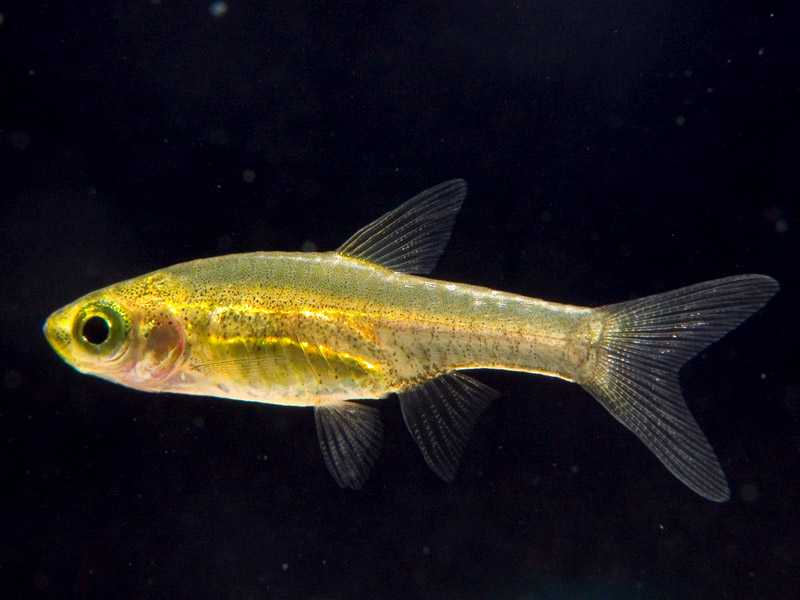
Horadandia atukorali
Cyprinidae · Deraniyagala, 1943
The genus is monotypic and distinguished from other cyprinid taxa by a combination of a moderately compressed, elongated body with two rows of teeth on the lower pharyngeal (throat) bone and lacking barbles, visible lateral line and a symphyseal knob on the lower jaw (Talwar & Jhingran, 1991). Its small adult size evolved via a process known as miniaturisation characterised by sexually mature adults with a significantly reduced size of less than 20 mm SL. Among bony fishes cyprinids are one of the few groups in which this phenomenon occurs repeatedly...
Hyalobagrus flavusShadow Catfish
Bagridae · authority not recorded
For many years this species has (and still is) imported as Pelteobagrus ornatus. It was assigned to the new genus Hyalobagrus, and discovered to be a distinct species, during a taxonomic revision of the Bagridae family in 1998. The other 2 species which were also thought to be P. ornatus are H. leiacanthus and H. ornatus. Apparently these two are imported rarely, if ever. Unlike the vast majority of catfish, H. flavus is a diurnal species, and spends much of its time swimming in shoals in m...
Hydrocynus vittatusAfrican Tiger Fish
Alestiidae · authority not recorded
A voracious piscivore that hunts in large shoals in the wild, this species is perfectly designed for its lifestyle. It is very streamlined and muscular and has one of the most amazing sets of teeth of any freshwater fish. These are dagger-shaped and interlock, meaning the fish can rip chunks out of its prey. The teeth are visible even when the animal's mouth is closed, which makes for a fearsome sight. It is a popular game fish in its native range, with the largest specimen caught weighi...
Hyphessobrycon bentosiOrnate Tetra
Characidae · Durbin, 1908
A beautiful species that is very similar to a host of others in the genus, some of which are undescribed. The most frequently encountered of these in the trade is the rosy tetra, H. rosaceus. H. bentosi may also be seen for sale as 'Bentos' tetra' or 'White-tipped tetra'. As with the closely related Hemigrammus, the taxonomic status of all species in the genus Hyphessobrycon is currently Incertae Sedis, meaning uncertain. The genus is currently used as something of a ...
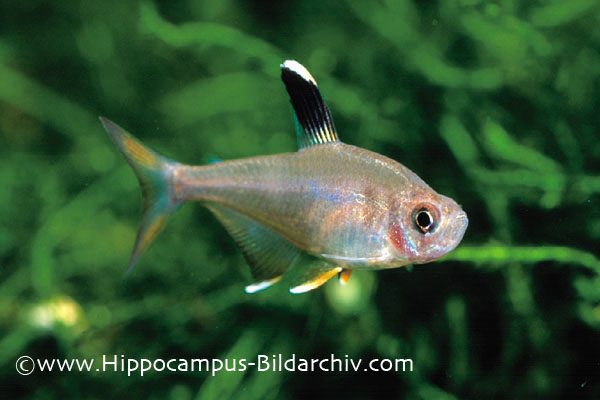
Hyphessobrycon rosaceusRosy Tetra
Characidae · Durbin, 1909
A beautiful species that is very similar to a host of others in the genus, some of which are undescribed. The most common of these in the hobby is H. bentosi. The two are so similar in appearance that H. rosaceus was once considered to be a subspecies of H. bentosi. The easiest way to distinguish them is by the presence of a dark marking just behind the operculum in H. bentosi, which is lacking in H. rosaceus. As with the closely related Hemigrammus, the taxonomic status of all species in the...
Hypostomus cf. cochliodonSpotted Cochliodon
Loricariidae · authority not recorded
This undescribed species is part of the Hypostomus cochliodon complex, all of which were previously included in the genus Cochliodon. This is now considered a synonym of Hypostomus. Members of this group can be distinguished from congeners by several differences in morphology, most notably the hump-backed profile of mature fish and spoon-shaped dentition. These features, along with the fishes tendency to eat wood, are shared with the Panaque genus of the Ancistrinae subfamily, but the two genera...
Hypostomus mutucaeLDA10
Loricariidae · authority not recorded
It's suprising that this relatively unknown species is not more popular in the hobby, given its small adult size and peaceable nature. It's often confused with LDA09, but can be distinguished by the pattern of small spots on its head, as in LDA09 the spots are larger and uniform in size over the whole body.
Hypostomus plecostomoidesLDA42
Loricariidae · authority not recorded
This species is part of the Hypostomus cochliodon complex, all of which were previously included in the genus Cochliodon, which is now considered a synonym of Hypostomus. Members of this group can be distinguished from congeners by several differences in morphology, most notably the hump-backed profile of mature fish and spoon-shaped dentition. These features, along with the fishes tendency to eat wood, are shared with the Panaque genus of the Ancistrinae subfamily, but the two genera are known ...
Hypostomus sp.L229
Loricariidae · authority not recorded
This undescribed species is part of the Hypostomus cochliodon complex, all of which were previously included in the genus Cochliodon, which is now considered a synonym of Hypostomus. Members of this group can be distinguished from congeners by several differences in morphology, most notably the hump-backed profile of mature fish and spoon-shaped dentition. These features, along with the fishes tendency to eat wood, are shared with the Panaque genus of the Ancistrinae subfamily, but the two gener...
Hypselecara coryphaenoidesRio Negro Chocolate Cichlid
Cichlidae · authority not recorded
This species is much rarer in the trade than the only other member of the genus, H. temporalis. If the collection locality of the fish is known, identification of the species is easy, as the distribution of the two appears not to overlap in nature. Failing this, distinguishing physical characteristics include body shape, as H. coryphaenoides is a more elongate fish than the quite squat-looking H. temporalis. There are also differences in colour and patterning, although these are less reliable me...
Hypselecara temporalisChocolate Cichlid
Cichlidae · authority not recorded
Test
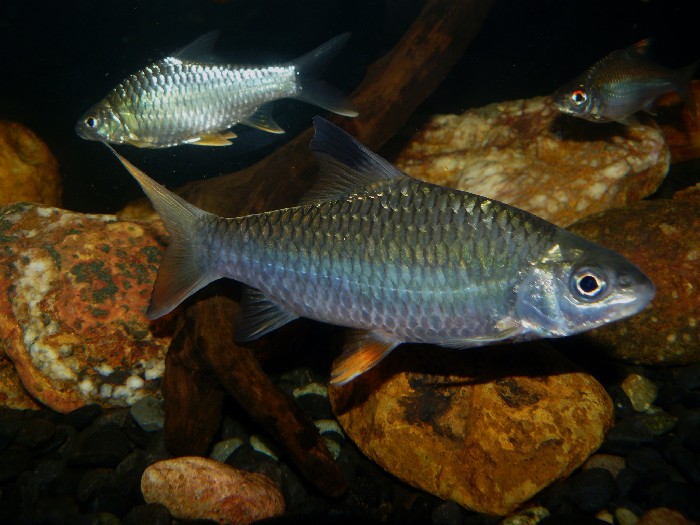
Hypselobarbus jerdoniJerdon's Carp
Cyprinidae · authority not recorded
There are currently eleven species in the genus most of which have previously been included in Puntius, Barbus and the now defunct genus Gonoproktopterus. Of these the only ones we've seen in the trade are H. jerdoni and H. curmuca although it's possible that others have been exported in small numbers or as contaminants among shipments of other species. Even these two are very rarely encountered and little has been written about the group as a whole....
Hypsophrys nicaraguensisNicaragua Cichlid
Cichlidae · authority not recorded
Also known as the Spilotum or Moga, this is a popular and beautiful cichlid that exists in several different colour forms, depending on collection locality. It has also been hybridised with the convict cichlid (Archocentrus nigrofasciatus), although this is not to be encouraged. A study in 2004 found an apparent close genetic association between this species and Neetroplus nematopus, another cichlid found in the same area in nature. The 2 show remarkable similarities strategy, patterning and uni...
Ilyodon furcidensGoldbreast Goodeid
Goodeidae · authority not recorded
The species name 'furcidens' is derived from the interesting fork-shaped teeth of this fish. This species may develop a cervical hump as it matures. As with other goodeids, there is less of a size difference between the sexes than in many other livebearers. This is thought to be related to the relatively primitive structure of the andropodium, as the fish tend to choose mates that are of similar size so that the sex organs are synchronised. Goodeids are unique among livebearers in t...
Inpaichthys kerriPurple Emperor Tetra
Characidae · authority not recorded
This pretty little species can be seen for sale with various common names, including the 'blue emperor', 'regal' or 'royal' tetra. It's sometimes confused with the emperor tetra, Nematobrycon palmeri but can be easily distinguished as it possesses an adipose fin, whilst Nematobrycon species do not. The genus Inpaichthys is currently monotypic (contains only one species), and like other related genera such as Hyphessobrycon its taxonomic status is Incertae s...
Iodotropheus sprengeraeRusty Cichlid
Cichlidae · authority not recorded
This lovely dwarf mbuna makes a great choice for newcomers to Mbuna due to its temperament, subdued but unique colouration and the fact it can be kept in smaller tanks. Iodotropheus is the only genus of Mbuna which has a very limited distribution within Lake Malawi, with its three (possibly two; the validity of I. declivitas is disputed by some experts) members being restricted to the south eastern arm of the lake. I. sprengerae is sometimes confused with certain populations of the similar looki...
Julidochromis dickfeldiBrown Julie
Cichlidae · authority not recorded
Julidochromis are commonly known as "Julies" in the hobby. As with other Julies, large water changes should be avoided as this can cause mated pairs to turn on one another. There is some speculation as to whether this species has been placed in the correct genus. It has a different shape to other Julidochromis, having a pointed snout. It also exhibits different patterning, with blue edging to the dorsal and anal fins, and the horizontal stripes are very dark in colour. Furthermore i...
Julidochromis reganiRegan's Julie
Cichlidae · authority not recorded
Julidochromis are commonly known as "Julies" in the hobby. Despite being the largest species of Julie this is actually the least aggressive member of the genus. As with other Julies, large water changes should be avoided as it can cause mated pairs to turn on one another. J.regani may also be seen for sale labelled as Striped Julie or Convict Julie. Several geographical morphs are available. Apparently, the yellower of these are found in shallower water with the darker forms inhabit...
Knodus borkiBlue Tetra
Characidae · authority not recorded
The colour of this species is often so intense that many who first see it for sale assume it to be artificially coloured. It is currently the only representative of the genus known.
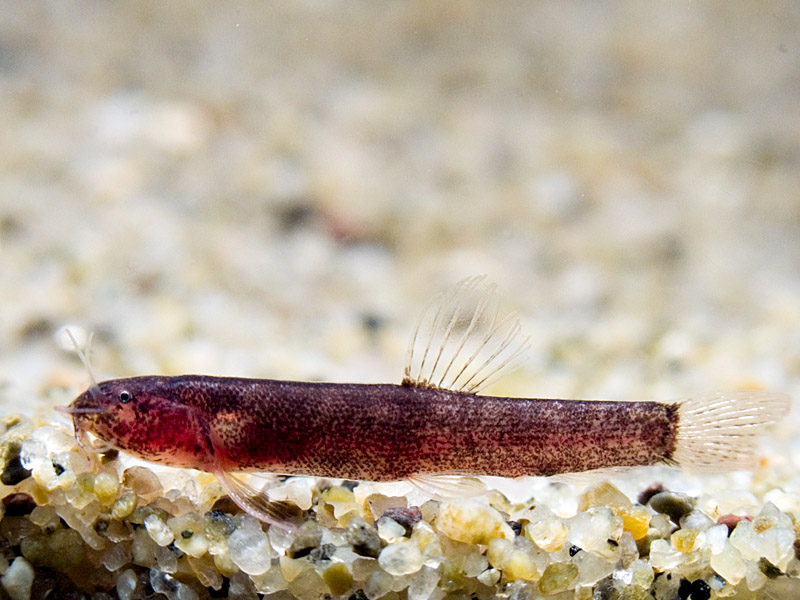
Kottelatlimia katik
Cobitidae · Kottelat & Lim, 1992
We're unaware of this species having yet appeared in the aquarium trade although a few private collectors have experience with it. Among congeners it uniquely possesses a simple suborbital spine and further differs from K. pristes by: smaller adult size (13.5 mm SL vs. 40); presence of a long nasal barbel (vs. absence); anatomy of the modified second pectoral ray in males (6-7 fine, narrow serrae vs. 8-11 pointed, anteriorly-orientated serrae). In K. hipporhynchos the serrae on the second pectoral ray in males form a broad, contiguous blade-like structure but other differences are the same as for K. pristes.
Labeotropheus fuelleborniFuelleborn's Cichlid
Cichlidae · authority not recorded
This species has the characteristic overhanging snout possessed by all three members of the genus. It has chisel-shaped teeth which are designed for grazing algae off rocks. These physical adaptations allow it to graze algae from rocks situated in very shallow water which other species cannot reach. The position of the mouth allows the fish to remain parallel to the rock surfaces, thus enabling it to cope with the turbulence in these areas. L. fuelleborni exists in many different colour forms in...
Labeotropheus trewavasaeTrewavas' Cichlid
Cichlidae · authority not recorded
This species has the characteristic overhanging snout possessed by all three members of the genus. It also has chisel-shaped teeth which are designed for scraping algae off rocks. These physical adaptations give it a competitive advantage, as they allow it to graze from rocks situated in very shallow water which other species cannot reach. The position of the mouth allows the fish to remain parallel to the rock surfaces, thus enabling it to cope with the turbulence in these areas. L. trewava...
Labidochromis caeruleusCaeruleus
Cichlidae · authority not recorded
This species is one of the most popular Rift Lake cichlids in the hobby, due to its striking colouration and somewhat peaceful (for a mbuna) nature. It exists in many different colour forms in nature, and the ubiquitous "electric yellow" morph, so popular in the hobby, is actually one of the rarer forms in nature, with the blue and white variety being more widespread. Wild fish are correspondingly rare in the hobby, with the vast majority of specimens offered for sale being tank-bred. ...
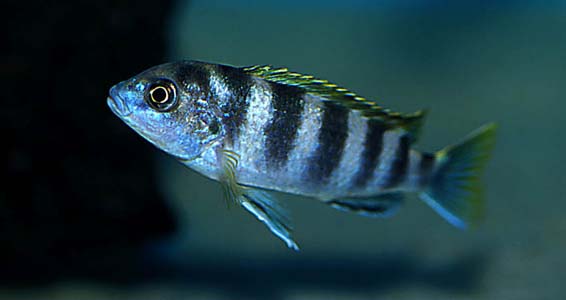
Labidochromis sp. "perlmutt"Pearly Labidochromis
Cichlidae · authority not recorded
This 'species' was only discovered in 1995, and remains undescribed to science. The common name 'perlmutt' is the German word for 'mother of pearl', and refers to the beautiful pearly white colouration of adult fish. It's sometimes sold with the alternative trade name of Labidochromis sp. 'yellow bar'. Konings has hypothesised that the Mbamba Bay Island population so closely resembles L. caeruleus that it may turn out to be a geographical variant o...
Lamontichthys llanero
Loricariidae · authority not recorded
A rarely seen species in the hobby.
Lamprologus callipterus
Cichlidae · authority not recorded
In nature, the spawning nests of large male fish may measure several meters across and contain hundreds of snail shells. Interestingly, when they are protecting brooding females males do not eat and eventually become so weak that their territories are taken over by stronger fish. Immature and sub-dominant males can be seen over areas of open substrate where they feed voraciously in large shoals. Females are only ever found in areas containing the nests of dominant males. It appears that the ...
Lamprologus congoensisCongo Lamprologus
Cichlidae · authority not recorded
An interesting species which resembles the popular Steatocranus species, both physically and in lifestyle. It has several physiological adaptations to allow it to live in rapids and fast-moving waters. The body is very streamlined, with strong pectoral fins. The swimbladder is also modified, being much reduced in size. This makes the fish less buoyant and thus less likely to be swept away by strong currents. In the aquarium it spends most of its time on the substrate, where it swims in a comical...
Lamprologus kungweensisOcellated Shell-dweller
Cichlidae · authority not recorded
L. kungweensis can be distinguished from similar species such as L. hecqui by the gold colour on the top of the eye. It also has a distinctive black spot towards the back of the dorsal fin. It is not often seen in the hobby....
Lamprologus lemairiiLemaire's Lamprologus
Cichlidae · authority not recorded
A highly piscivorous, predatory species unsuited to the general aquarium. It is an ambush predator in nature, often being seen hanging motionless around rocky structures or on the floor of the lake. It is a sedentary species and does not move around a lot. This is a behavioural adaptation known as thanatosis, or 'playing dead'. This strategy is usually used as a defensive means in other animals, but in L. lemairii it is adapted for offensive means. The fish has a mottled colour pattern...
Lasiancistrus tentaculatusL092
Loricariidae · authority not recorded
This lovely little species was only described in 2005 and the same study also reclassified most of the species previously assigned to Laciancistrus. Many were found to be of different genera or representatives of the same species. Laciancistrus can be easily distinguished from Ancistrus (and indeed all other Loricariids) by the presence of whiskerlike odontotes growing among the cheek odontotes. These are very thin and clearly visible, and are indeed reminiscent of mammalian hairs. This part...
Leiarius longibarbisMarbled Pim
Pimelodidae · authority not recorded
It's debatable as to whether this species should be considered an aquarium subject at all, given its eventual size. All too often, juveniles are sold without adequate information regarding their long term care. These cats can and will attain something close to their maximum size in captivity, and will do so quite quickly. The myth that they will only grow to match the size of the tank they're kept in is just that. It's also worth noting that species such as this can live for well ...
Leiarius pictusSailfin Pim
Pimelodidae · authority not recorded
Also known as the painted, saddle or marbled sailfin catfish, it's debatable as to whether this species should be considered an aquarium subject at all given its eventual size. All too often, juveniles are sold without adequate information regarding their long term care. These cats can and will attain something close to their maximum size in captivity, and will do so quite quickly. The myth that they will only grow to match the size of the tank they're kept in is just that. It's a...
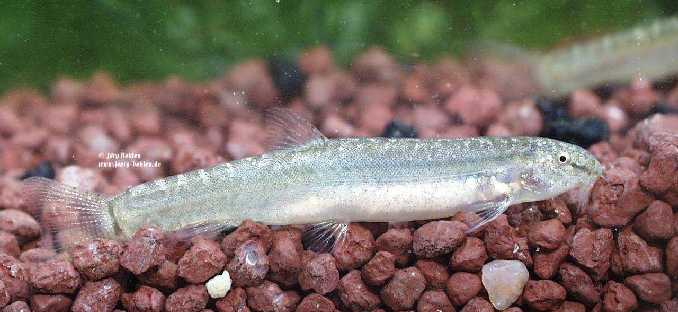
Lepidocephalichthys cf. irrorataLoktak Loach
Cobitidae · Hora, 1921
This species is not traded often but may occasionally be exported as bycatch among shipments of other species. It can be distinguished from congeners by the following combination of characters: presence of large, exposed scales on top of head; dorsal-fin origin posterior to pelvic-fin origin; moderate to small size (to 29 mm SL); caudal-fin emarginate and with dark reticulations; caudal-fin lobes with dark, elongated spots along upper and lower edges.
Lepidosiren paradoxaSouth American Lungfish
Lepidosirenidae · authority not recorded
Lungfish are among the most intriguing of "oddball" aquarium species, being able to survive in extreme conditions. They are very ancient fish, having remained virtually unchanged for millions of years. This is the only species known from South America, and is the sole representative of its genus. Most hail from Africa, with a single species native to Australia. They belong to the class Sarcopterygii (lobe-finned fishes), members of which are actually more closely related to terrestrial...
Leporacanthicus galaxiasGalaxy Plec
Loricariidae · authority not recorded
A very stylish looking plec, L. galaxias can also be seen for sale as the vampire or tusken plec. Both these names relate to features of morphology that are shared by all members of the genus. The latter arose from the presence of a characteristic growth on the head of the fish. The vampire moniker, meanwhile, is derived from the unique upper jaw dentition, consisting of, you guessed it, two large teeth or "fangs". The exact use for these is unknown, but they're probably utilised ...
Leporacanthicus heterodonGolden Vampire Plec
Loricariidae · authority not recorded
The vampire part of the common name is derived from the unique upper jaw dentition exhibited by members of this genus, consisting of, you guessed it, two large teeth or "fangs". The exact use for these is unknown, but they're probably utilised to grip prey items such as snails or other aquatic invertebrates in some way. When buying one of these (or any Loricariid), be sure to check the fish has a rounded belly and that its eyes aren't sunken, as these are classic signs of ema...
Leporacanthicus joselimaiSultan Plec
Loricariidae · authority not recorded
Leporacanthicus species are commonly referred to as "vampire plecs". This is derived from the unique upper jaw dentition exhibited by members of this genus, unsurprisingly consisting of two large teeth or "fangs". The exact use for these is unknown, but they're probably utilised to grip prey items such as snails or other aquatic invertebrates in some way. Another feature shared by all Leporacanthicus is a small bony growth of unknown use on top of the head. This particul...
Leporacanthicus triactisThree Beacon Plec
Loricariidae · authority not recorded
There are a few different colour forms of this lovely suckermouth available, each of which possess varying amounts of orange patterning in the fins. Some of these are given extravagant sounding names such as "dragon fin" or "tiger fin". What's nice about this species, is that these flashes of colour don't fade with age, as with many of its relatives, making for a striking fish when fully grown. Leporacanthicus species are commonly referred to as "vampire ple...
Leptodoras linnelliElongate Mouse Catfish
Doradidae · authority not recorded
The genus Leptodoras currently contains 10 species, none of which are particularly well known in the hobby. There is little published information regarding the genus, and its members are seldom exported for the aquatic trade. L. linnelli is no exception, usually only turning up as bycatch among shipments of other species such as Opsodoras leporhinus or Hassar orestis. According to Fishbase, it can be distinguished from all other members of the genus except L. acipenserinus by the presence of...
Lestradea perspicax
Cichlidae · authority not recorded
There is some confusion regarding the taxonomy of this species and its congener L. stappersi. L. stappersi was originally regarded as a subspecies of perspicax but is now considered a distinct species. It is not often seen in the hobby....
Limia melanogasterBlack-bellied Limia
Poeciliidae · authority not recorded
This species was originally classified in the genus Limia before this was made a sub-genus of Poecilia. Confusingly they have been reclassified once more into Limia, but are still referred to as members of Poecilia in much of the available literature. L. melanogaster is endemic to Jamaica. It is not often seen for sale in the hobby....
Limia nigrofasciataHump-backed Limia
Poeciliidae · authority not recorded
The hump that develops along the spine of adult males is caused by deposition of fatty tissue.
Liosomadoras morrowiFalse Jaguar Catfish
Auchenipteridae · authority not recorded
Often confused with its congener L. oncinus, the false jaguar cat can be distinguished by its less attractive, duller patterning. It's a good bottom dweller for the larger community....
Liosomadoras oncinusJaguar Catfish
Auchenipteridae · authority not recorded
Often confused with its congener, L. morrowi, the jaguar cat can be distinguished by its more attractive, brighter patterning and larger adult size. It's an ideal and good looking bottom dweller for the larger community. Previously considered a member of the Doradidae, due to the opercular spines, it has now been reclassified. It occurs over a wide range in nature, hence its apparent tolerance to wildly different water chemistry. In reality, its requirements are determined by collection loc...
Lophiobagrus cyclurusAfrican Bullhead
Claroteidae · authority not recorded
An interesting addition to the Tanganyikan community that is not often seen in the hobby. There is a rumour that this cat can secrete a poisonous mucous when stressed that can kill other fish in the aquarium but this has not yet been 100% confirmed. It may be wise to keep it in as large an aquarium as possible just in case. There are currently just 4 species of Lophiobagrus described. All are from Lake Tanganyika....
Macrognathus zebrinusZebra Spiny Eel
Mastacembelidae · authority not recorded
One of the newer and prettier spiny eels in the hobby, M. zebrinus was previously considered a member of the closely related Mastacembelus genus. Care should be exercised when handling spiny eels, as the common name is derived from the sharp dorsal rays that can easily puncture the skin of a human....
Marosatherina ladigesiCelebes Rainbowfish
Telmatherinidae · authority not recorded
For many years, this species was included in the genus Telmatherina, and is still listed as such in much of the avilable literature. In fact it's now the only species in the recently erected genus Marosatherina. Unfortunately, it has been overfished for the aquarium trade in its native waters and is listed as 'vulnerable' on the IUCN red list of threatened species. Thankfully, it's now being mass-produced on fish farms in both the Far East and Eastern Europe, meaning that few...
Mastacembelus armatusTyre-Track Eel
Mastacembelidae · authority not recorded
The tyre track eel is also referred to as the white-spotted spiny eel. A member of the spiny eel family, which range across tropical Asia and Africa, Mastacembelus armatus is one of the more common species available to the hobby, along with the peacock eel ((Macrognathus siamensis)and the fire eel (Mastacembelus erythrotaenia). These species are all from Asia but there are some members of the family from Africa that are occasionally seen for sale. These majority of these species are from the ...
Mastacembelus ellipsiferTanganyikan Spiny Eel
Mastacembelidae · authority not recorded
M. ellipsifer is a stunning eel that makes a nice 'alternative' species for the Tanganyikan community tank. The species in the family Mastacembelidae are known as "spiny" eels because the dorsal rays are very hard. Care must therefore be exercised when handling them to avoid injuries. The swim bladder in these eels has also disappeared completely, an adaptation to their bottom-dwelling lifestyle. The African species such as this one can be distinguished from their Asian relat...
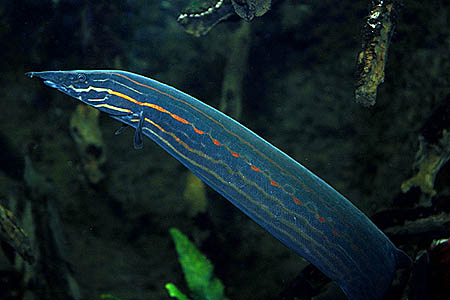
Mastacembelus erythrotaeniaFire Eel
Mastacembelidae · authority not recorded
A member of the spiny eel family, which range across tropical Asia and Africa, Mastacembelus erythrotaenia is one of the more common species available to the hobby, along with the peacock eel (Macrognathus siamensis)and the tyre-track eel (Mastacembelus favus). These species are all from Asia but there are some members of the family from Africa that are occasionally seen for sale. These majority of these species are from the Afromastacembelus genus, with the most common representative being the...
Maylandia callainosCobalt Blue Zebra
Cichlidae · authority not recorded
This species was formerly classified as Pseudotropheus callainos and Metriaclima callainos and is still named as one of these by many sources. It has also been seen for sale as Pseudotropheus zebra "pearly". The genus name Maylandia is now used to describe all former members of the 'zebra' group of Pseudotropheus. It exists in three main colour forms, namely "cobalt blue", "orange blotch" and "pearl zebra". It is very easily confused with similar...
Maylandia greshakeiRed Top Ice Blue Zebra
Cichlidae · authority not recorded
This species was formerly classified as Pseudotropheus greshakei and Metriaclima greshakei and is still named as either of these by many sources. The genus name Maylandia is now used to describe all former members of the 'zebra' group of Pseudotropheus. An albino form of this species exists in aquaria and is occasionally available....
Maylandia zebraZebra Mbuna
Cichlidae · authority not recorded
...
Mchenga flavimanus
Cichlidae · authority not recorded
The genus Mchenga was erected in 2006 by Stauffer and Konings and currently numbers half a dozen species, all of which are previous members of Copadichromis. The reclassification was based on various morphological and behavioural traits, including habitat preference and breeding strategy. Together with Copadichromis, Mchenga spp. form an exclusive group of Malawian cichlids commonly referred to as "Utaka" (prounounced "ooh-taw-kuh"). They're specialised to a pelagic l...
Megalechis thoracataSpotted Hoplo
Callichthyidae · authority not recorded
Still widely referred to as hoplosternum thoracatum the hoplo cat is a popular and hardy fish. These fish have the ability to breathe atmospheric air by gulping down mouthfuls of air and the oxygen is then absorbed into the bloodstream through the intestine. This allows the fish to endure poor conditions in the wild but it can still be observed exhibiting this behaviour in captivity. The hoplo is also eaten as a food fish in parts of South America....
Melanochromis auratusGolden Mbuna
Cichlidae · authority not recorded
Despite its ready availability, M. auratus is not recommended for the beginner due to its intolerant nature. Do not keep it with other Melanochromis species as they may hybridise. Male fish can revert to the golden colouration when stressed, and older females often darken with age until they superficially resemble males....
Melanochromis chipokae
Cichlidae · authority not recorded
This species belongs to the group of Melanochromis often called "Pike Auratus". These species predate on the fry of other species, although M. chipokae will also eat crustaceans and algae. Female and juvenile male M. chipokae are easily confused with M. auratus. However, it can be distinguished by its noticeably more pointed mouth, denoting the predatory nature of this species (auratus has a rounded mouth which is designed for feeding on algae). The striped patterning in the also exten...
Melanochromis cyaneorhabdos
Cichlidae · authority not recorded
M. cyaneorhabdos was formerly known as M. "maingano", after a village located on the shore off which it is found. It can be distinguished from the similar M. johanni by the overall blueish colouration of dominant males, as opposed to the more black patterning of johanni. It is sometimes incorrectly sold as "electric blue" johanni. Do not keep it with other Melanochromis species as they may hybridise....
Melanochromis johanni
Cichlidae · authority not recorded
This species can be distinguished from the similar M. cyaneorhabdos by the overall black colouration of dominant males, as opposed to the more blueish patterning of cyaneorhabdos. It is sometimes sold as "electric blue johanni". Do not keep it with other Melanochromis species as they may hybridise....
Melanochromis lepidiadaptes
Cichlidae · authority not recorded
This species was originally sold as M. fuscus and then M. sp. "lepidophage. The name refers to the act of lepidophagy, which is the act of a fish eating the scales of another fish. In nature M. lepidiadaptes apparently lives an opportunistic lifestyle, feeding almost solely on the scales of other species, although interestingly not other mbuna. However in aquaria this behaviour has never been witnessed. Do not keep it with other Melanochromis species as they may hybridise....
Melanotaenia affinisNew Guinea Rainbowfish
Melanotaeniidae · authority not recorded
M. affinis was one of the first rainbowfish species to be imported for the hobby in any numbers. There are several geographical variants, three of which can be found in the hobby. The "standard" form has a large natural range and is the most commonly encountered. The "Pagwi" form has a very limited distribution, being known only from a tributary of the Sepik River in New Guinea, while the "Bluewater Creek" form has only been collected from a single location close t...
Melanotaenia australisWestern rainbowfish
Melanotaeniidae · authority not recorded
This species was formerly classified as part of the Melanotaenia splendida complex, but more recent research into the genetics of the species has shown that not only is M. australis genetically dissimilar to the splendida group, but also that there are 2 clear lineages within australis This may yet result in another official member of the genus. M. australis exhibits a wide variation in colour and patterning depending on locality, and is probably the commonest rainbowfish species in Australi...
Melanotaenia boesemaniBoeseman's rainbowfish
Melanotaeniidae · authority not recorded
This uniquely-patterned species is one of the most popular rainbowfish in the hobby and can be found swimming in most dealers' tanks. However, virtually all these fish are mass-produced on fish farms in the Far East and Eastern Europe. M. boesmani is actually quite rare in nature, and is on the IUCN red list of endangered species. Unfortunately this is one species on which the aquarium trade has had a massively detrimental effect, with an estimated one million fish a year being collected to...
Melanotaenia fluviatilisAustralian Rainbowfish
Melanotaeniidae · authority not recorded
Also known as the Murray River or crimson-spotted rainbowfish, this species is not as common in the hobby as some of its relatives, but can still be found from time to time. It is easily confused with the very similar M. duboulayi, indeed these two were once grouped together as a single species. However, there are clear differences in patterning, fin ray counts and the way in which their eggs and fry develop. The range of M. fluviatilis extends further south than any other rainbowfish, and a...
Melanotaenia gracilisSlender Rainbowfish
Melanotaeniidae · authority not recorded
This uniquely-shaped rainbow is an uncommonly seen species in the hobby, mainly because it hails from such a remote area in Australia. It is currently listed on the IUCN list of threatened species as being at risk, so all attempts at captive spawning are to be encouraged....
Melanotaenia herbertaxelrodiLake Tebera Rainbowfish
Melanotaeniidae · authority not recorded
One of the more beautifull-coloured rainbowfish available when mature, M. herbertaxelrodi is probably at risk from overfishing, but not enough data is available to consider it an endangered species as yet....
Melanotaenia irianjayaIrian Jaya Rainbowfish
Melanotaeniidae · authority not recorded
This beautiful rainbow is not often seen in the hobby. It can be identified by the fact that the middle rays in the dorsal and anal fins are longer than the other fin rays. This feature is usually associated with the closely-realated Glossolepis genus of rainbowfish....
Melanotaenia lacustrisLake Kutubu Rainbowfish
Melanotaeniidae · authority not recorded
Unfortunately the prisitine environment form where this fish comes is being threatened by overfishing (much of it for the aquarium trade) and industry, with an oil development being built at one end of the lake during the 1990s. M. lacustris has therefore been given "vulnerable" status on the IUCN red list. The lake was designated a Wetland of International Importance in 1998, as both it and the Kikori Basin where it lies contain some of the earth's greatest biodiversity in terms ...
Melanotaenia maccullochiDwarf Rainbowfish
Melanotaeniidae · authority not recorded
There are a few geographical variants of this species available, which differ in colour, patterning and less commonly, size. These should not be mixed in aquaria, as they may hybridise. The differences are so apparent between some of these forms that they may well turn out to be different species in the future....
Melanotaenia praecoxNeon Dwarf Rainbowfish
Melanotaeniidae · authority not recorded
...
Melanotaenia splendida inornataCheckered Rainbowfish
Melanotaeniidae · authority not recorded
There are currently 4 described subspecies of Melanotaenia splendida. The principle differences are generally in colour, pattern and fin counts, although even these vary depending on the locality of the fish. The different forms and subspecies should not be mixed in the aquarium, as they may hybridise. Adult specimens are rarely seen for sale, and it's the much drabber juvenile fish that are almost always offered in dealers tanks. However, exercise some patience (even on a good diet, full c...
Melanotaenia splendida splendidaEastern Rainbowfish
Melanotaeniidae · authority not recorded
There are currently 4 described subspecies of Melanotaenia splendida. The principle differences are generally in colour, pattern and fin counts, although even these vary depending on the locality of the fish. M s. splendida in particular also exhibits a wide variation in colour and patterning depending on locality within the subspecies, and the species name is often suffixed with a place name when the fish are seen for sale. The different forms and subspecies should not be mixed in the aquarium,...
Melanotaenia trifasciataBanded Rainbowfish
Melanotaeniidae · authority not recorded
M. trifasciata exhibits a wide variation in colour and patterning depending on locality, and it's very important that the different morphs are not mixed in the aquarium, as they will hybridise freely. These different forms are often distinguished by the addition of the name of collection locality being added to the scientific name of the fish. It's thought that several species may in fact be in evidence here, and a reclassification will probably occur at some point As with many othe...
Metynnis argenteus
Serrasalmidae · authority not recorded
Metynnis argenteus is very similar to another member of the genus, Metynnis hypsauchen and both fish are sold in the hobby under the name "Silver Dollar". The latter species is sometimes referred to as the Plain Metynnis in an effort to distinguish it from its close relation. They are virtually indentical in terms of appearance and care requirements. The two species can be told apart as m. hypsauchen has a black blotch located slightly above and behind each eye. In addition to these tw...
Metynnis hypsauchenSilver Dollar
Serrasalmidae · authority not recorded
Metynnis hypsauchen is sometimes referred to as the Plain Metynnis in an effort to distinguish it from its close relation, Metynnis argenteus. Both fish are sold in the hobby under the name "Silver Dollar" and are virtually indentical in terms of appearance and care requirements. The two species can be told apart as m. hypsauchen has a black blotch located slightly above and behind each eye. This species also occurs in a striped colour form which is sometimes referred to as(m. hypsauch...
Microctenopoma fasciolatumBanded ctenopoma
Anabantidae · authority not recorded
M. fasciolatum is found in clear water with lots of surface and overhanging vegetation in nature.
Micronema bleekeriBleeker's Sheatfish
Siluridae · authority not recorded
An irregular import, this species is often confused with some of its congeners. It makes an interesting addition to a community of larger fish.
Microsynodontis batesiiDwarf Synodontis
Mochokidae · authority not recorded
There are a dozen described species of Microsynodontis but most are not seen in the hobby. This species is one of the commoner ones however. Microsynodontis are much smaller than Synodontis species, with M. batesii being the largest. They can be distinguished from Synos and the similar Mochokiella by the rounded or slightly forked caudal fin. The is highly forked in the other genera. Interestingly in Microsynodontis the eyeball is fixed and cannot be moved unlike in Synodontis which has a moveab...
Microsynodontis polliPygmy Synodontis
Mochokidae · authority not recorded
There are a dozen described species of Microsynodontis but most are not seen in the hobby. This species is one of the commoner ones however. Microsynodontis are much smaller than Synodontis species, with M. batesii being the largest. They can be distinguished from Synos and the similar Mochokiella by the rounded or slightly forked caudal fin. The is highly forked in the other genera. Interestingly in Microsynodontis the eyeball is fixed and cannot be moved unlike in Synodontis which has a moveab...
Mimagoniates microlepisBlue Tetra
Characidae · authority not recorded
Not to be confused with the other species commonly sold under the name "blue tetra", Knodus borki, this species is much scarcer in the hobby. It also makes a better resident of the community tank than its cousin, being less boisterous and lacking the tendency to nip the fins of other species....
Moenkhausia cerosCeros Tetra
Characidae · authority not recorded
A rather rare fish in the UK hobby. It occasionally shows up as a contaminant among imports of more popular species. The taxonomic status of all species in the genus Moenkhausia is currently Incertae Sedis, meaning uncertain. The genus is currently used as something of a catch-all for a large number of small characin species. Most experts agree that a full revision is required, with the likely outcome that many of these will be placed into new or different genera....
Moenkhausia oligolepisGlass Tetra
Characidae · authority not recorded
This species is one of a handful that closely resemble the popular red-eyed tetra, M. sanctaefilomenae. This species is seen much less often in the hobby than its relative however and is also known as the glassy tetra. The taxonomic status of all species in the genus Moenkhausia is currently Incertae Sedis, meaning uncertain. The genus is currently used as something of a catch-all for a large number of small characin species. Most experts agree that a full revision is required, with the likel...
Moenkhausia pittieriDiamond Tetra
Characidae · authority not recorded
This species is something of an "ugly duckling", as it's usually sold as a fairly bland looking, silvery juvenile. Given time and a good diet it develops into a magnificent fish as an adult, that really does sparkle like a diamond. A big shoal of these in a planted tank looks stunning. The taxonomic status of all species in the genus Moenkhausia is currently Incertae Sedis, meaning uncertain. The genus is currently used as something of a catch-all for a large number of small ch...
Moenkhausia sanctaefilomenaeRed-eye Tetra
Characidae · authority not recorded
This species can be found swimming in most dealers' tanks and is one of the best choices for the newcomer to fishkeeping. All the fish sold in the trade have been captive bred and as such are unfussy regarding water chemistry and diet. The taxonomic status of all species in the genus Moenkhausia is currently Incertae Sedis, meaning uncertain. The genus is currently used as something of a catch-all for a large number of small characin species. Most experts agree that a full revision is re...
Mogurnda adspersaSouthern Purple Spotted Gudgeon
Eleotridae · authority not recorded
This species is considered endangered across its native range, but has recently begun to appear in the hobby a little more often as a result of commercial farming. It's still by no means common though. Superficially it looks very similar to the much commoner Northern purple spotted gudgeon (Mogurnda mogurnda), but can be distinguished by the presence of only 30-36 scales along its lateral line, (as opposed to 37-48 in M. mogurnda), and a higher degree of red spotting in the second dorsal fi...
Mogurnda mogurndaNorthern Purple Spotted Gudgeon
Eleotridae · authority not recorded
A good species of gudgeon for the beginner, being tolerant of a wide range of water conditions, hardy and easily bred. We've even seen them spawning in dealer's tanks on more than one occasion. It's easily confused with the similar looking, but rarer Southern purple spotted gudgeon, Mogurnda adspersa, a fish which is now being farmed for the trade despite being endangered in nature....
Monocirrhus polyacanthusSouth American Leaf Fish
Polycentridae · authority not recorded
An incredibly-adapted species, this fish is camouflaged to mimic a dead leaf, both in body shape and pattern. It can change colour to match its surroundings and has a projection from its bottom lip that resembles a leaf stalk. When hunting, it stalks its prey in a head-down stance, appearing to drift towards it like a dead leaf drifting in a current. In reality, the fish is propelled by tiny movements of its transparent fins. When it strikes at an item of prey the entire mouth protrudes outwards...
Monopterus albusSwamp Eel
Synbranchidae · authority not recorded
An incredibly hardy species, M. albus has the ability to travel over land for short distances if kept moist and as mentioned above, often burrows into moist earth (sometimes up to a depth of 1.5 metres!) in order to survive dry conditions. It has only a single gill slit, located on the bottom of the throat, that allows it to trap air in its specially adapted gills. These contain an accessory breathing organ, which takes the form of a pair of lung-like sacs at the rear of the gill chamber. In thi...
Myleus schomburgkiiBlack-barred Myleus
Serrasalmidae · authority not recorded
Similar in care and appearance to its close relative, the Redhook (myloplus rubripinnis), myleus schomburgkii is easily distinguished by the black vertical bar on the flanks. It is also a smaller adult fish. Despite this, it is sometimes offered for sale marked as a Redhook. This fish is also variously referred to as the Black-ear Pacu, Disc Pacu and Disk Tetra....
Mylochromis melanonotusHaplochromis Yellow-black Line
Cichlidae · authority not recorded
M. melanonotus is rarely imported and little information is available regarding its captive care. The shovel-like lower jaw possessed by some individuals of this species has been the cause of some confusion regarding the fishes' true identity. It was originally placed in the genus Platygnathochromis, in which it was the only species. However, Ad Konings observed that amongst wild breeding populations there existed individuals both with and without the modified lower jaw. The specimens witho...
Myloplus rubripinnisRedhook
Serrasalmidae · authority not recorded
The Redhook is another species commonly sold as a Silver Dollar in the trade. It can be distinguished from those species as the black-trimmed, redis much more obvious than any of the metynnis species. The Redhook is also capable of growing much larger than its Silver Dollar relatives. This species was until recently referred to as myleus rubripinnis and is still widel y referred to as such. The Redhook is sometimes described as a difficult fish to care for but, given a large enough aquarium, ...
Mystus bimaculatusTwo Spot Mystus
Bagridae · authority not recorded
A delightful little species that deserves greater popularity in the hobby. All attempts at captive breeding should be encouraged, as its natural habitat is in danger of destruction by human activity.
Mystus bleekeriDay's Mystus
Bagridae · authority not recorded
This species superficially resembles the more common (in the hobby) M. vittatus, but can be distinguished by its larger adult size and much longer adipose fin. It is an ideal peaceful catfish for larger communities and as with many other bagrids, is in our opinion somewhat underrated in the hobby....
Mystus leucophasisAsian Upside Down Catfish
Bagridae · authority not recorded
Like some members of the African catfish genus Synodontis, this species spends the vast majority of it's time swimming in an inverted position. It is often seen for sale at only a couple of inches in length and may be confused with the popular (and much smaller) Synodontis nigriventris. It can easily be distinguished from this species by its patterning. It does not exhibit the or brown colours of the Synodontis and is a uniform black colour all over. Larger specimens may have some lighter c...
Mystus mysticetus
Bagridae · authority not recorded
Apparently this species is often seen living and feeding with a congener, M. multiradiatus in large shoals. It is the only species of Mystus to possess laterally positioned eyes, all the others having their eyes in a dorsolateral position. It is an ideal peaceful catfish for larger communities and as with many other bagrids, is in our opinion somewhat underrated in the hobby....
Mystus rhegma
Bagridae · authority not recorded
An irregular import and little is known about it's natural behaviour. It is however an ideal peaceful catfish for larger communities and as with many other bagrids, is somewhat underrated in the hobby.
Mystus singaringan
Bagridae · authority not recorded
This large Mystus is not often seen in the hobby. It makes a fine bottom dweller for communities containing other robust species. It is used as a food fish in many of it's native countries....
Nannacara taeniaStriped Dwarf Cichlid
Cichlidae · authority not recorded
Nannacara taenia is rarely seen for sale in local aquatic stores. Largely, because it is a fairly unremarkable fish, tending towards a drab brown appearance. You are more likely to obtain this fish through specialist cichlid dealers or amateur enthusiasts....
Nannaethiops unitaeniatusOne-lined African Characin
Citharinidae · authority not recorded
Not often seen for sale this is a pretty, peaceful little fish that deserves more popularity in the hobby. It is often confused with similar-looking members of the genus Neolebias.
Nannocharax brevisAfrican Darter Characin
Citharinidae · authority not recorded
There are currently 25 described species in the genus Nannocharax, these forming a monophyletic group with members of the very similar Hemigrammocharax. None can be described as particularly common in the hobby but N. brevis and N. fasciatus are the most often seen. They are notoriously tricky to identify though, and it's quite possible that more than two species are being sold under these names. In nature these fish occupy a similar ecological niche to the South American darter characi...
Nemadoras leporhinusMouse Catfish
Doradidae · authority not recorded
Ther are currently five described species of Nemadoras (N. elongatus, N. hemipeltis, N. humeralis, N. leporhinus and N. trimaculatus). All are rare in the hobby, although this species is the one most commonly seen. As well as the occasional import, it sometimes shows up as bycatch among batches of similar-looking Hassar or Hemidoras species. Of these, it is most often confused with Hemidoras stenopeltis. These two can be easily told apart as N. leporhinus has a clearwith a dark patch at the base...
Neoceratodus forsteriAustralian Lungfish
Ceratodontidae · authority not recorded
Lungfish are among the most intriguing of "oddball" aquarium subjects, being able to survive in the most extreme conditions. They are very ancient fish, having remained virtually unchanged for millions of years. Unlike its African relatives, N. forsteri cannot survive in completely dry conditions for long, although it does require access to atmospheric air to survive. It possesses only a single lung (the African species have paired lungs), which is formed via a modification of the swim...
Neolamprologus buescheriStriped Lamprologus
Cichlidae · authority not recorded
Not recommended for the beginner N. buescheri is one of the most aggressive small cichlids in the hobby. Several geographical morphs are available, including "gombi", "kachese", "kamakonde", and "zaire".
Neolamprologus fasciatusBarred Lamprologus
Cichlidae · authority not recorded
N. fasciatus is a predator by nature and its body shape has been adapted to allow it to enter small crevices and gaps in the rockwork of Lake Tanganyika to prey on invertebrates, eggs, fry and small fish. The lateral compression exhibited by this fish also makes the fish hard to spot head on, giving it an advantage over both its predators and prey. It hunts in a head down position a few feet above the substrate, moving its body in sinuous motions to counteract the water currents. It is sometimes...
Neolamprologus tretocephalusFive-barred Lamprologus
Cichlidae · authority not recorded
It can be distinguished from the similar N. sexfasciatus by the presence of only five, rather than six, vertical bars on it's flanks. It is not recommended for the general Tanganyikan community due to it's aggressive nature, particularly when breeding....
Neolebias ansorgiiAnsorge's Neolebias
Citharinidae · authority not recorded
This species is rarely offered for sale and often appears to be a fairly plain fish when it is seen in dealer's tanks. However, when kept in the correct conditions it is a stunning little fish that comes highly recommended.
Neolebias trilineatusThree-lined Neolebias
Citharinidae · authority not recorded
This species is rarely seen in the trade but makes a superb addition to the smaller community tank. Often appears quite bland in dealer's tanks but, in the correct environment, is a stunning little fish....
Nimbochromis livingstonii
Cichlidae · authority not recorded
Not a fish for the general Malawi cichlid community, N. livingstonii is an ambush predator in nature, often being seen hanging motionless around rocky structures, in Vallisneria thickets or on the floor of the lake. It is a sedentary species and does not move around a lot. This is a behavioural adaptation known as thanatosis, or 'playing dead'. This strategy is usually used as for defensive means in other animals but in N. livingstonii is adapted for offensive means. The fish has a mot...
Nimbochromis venustusVenustus
Cichlidae · authority not recorded
Not a fish for the general Malawi cichlid community, N. venustus is an ambush predator in nature. It is often found hanging motionless around rocky structures, in Vallisneria thickets or on the floor of the lake. It is a sedentary species and does not move around a lot. This is a behavioural adaptation known as thanatosis, or 'playing dead'. This strategy is usually used as for defensive means in other animals but in N. venstus is adapted for offensive means. The fish has a mottled col...
Ompok bimaculatusButter Catfish
Siluridae · authority not recorded
This infrequently seen (in the trade) species is also known as the two spot glass catfish, for fairly obvious reasons. It is more than likely that a number of separate species are currently considered within this one, as there are clear morphological differences between populations. Pending a taxonomic revision, these currently all remain classified as O.bimaculatus. This would also seem to explain the apparent toleration of the fish to wildly different water chemistry. Xanthic and albino forms ...
Ompok eugeneiatusBorneo Glass Catfish
Siluridae · authority not recorded
Not often encountered in the hobby, but makes an ideal schooling catfish for a community of medium to large peaceful fish.
Ophthalmotilapia boops
Cichlidae · authority not recorded
This was the first species to be placed into the genus Ophthalmotilapia.
Ophthalmotilapia nasuta
Cichlidae · authority not recorded
O. nasuta can be distinguished from other members of the genus primarily by the fleshy proboscis-like growth that extends beyond the upper lip. It exists in several different geographical morphs including "Kachese", "Mpimbwe", "Cape Tembwe" and "Chamba", among others. These should not be mixed in aquaria as they will hybridise freely....
Ophthalmotilapia ventralis
Cichlidae · authority not recorded
This is a truly stunning species that does well in a Tanganyikan community with well-chosen tankmates. It exists in well over 20 colour morphs, too many to list here. Obviously these should not be mixed in aquaria as they will hybridise freely. In nature, it is only the largest dominant males that build nests whilst the subdominant males and females shoal together. The territories of these dominant fish may measure several metres across....
Oreochromis mossambicusMozambique Mouthbrooder
Cichlidae · authority not recorded
One of the most invasive fish species in the world, O. mossambicus is one of the species farmed for supermarkets and restaurants across the globe. Several colour varieties have been selectively bred from the natural green fish to make the fish more appealing to consumers and unsurprisingly, it is these more brightly coloured forms which are usually seen in aquaria. Some of these variants are cross breeds with other species of Oreochromis. The destructive effect of O. mossambicus on non-nativ...
Oreochromis niloticus niloticusNile Tilapia
Cichlidae · authority not recorded
One of the most invasive fish species in the world but also one of the most economically important, O. niloticus is bred in huge numbers in many countries as a food fish. It is often cross-bred with other Oreochromis species for colour in order to make the fish more appealing to consumers. The destructive effect of O. niloticus on non-native ecosystems into which it escapes or is released is mainly due to it's adaptibility. It has been recorded over a temperature range of 60-110°F an...
Oreochromis tanganicaeTanganyikan Tilapia
Cichlidae · authority not recorded
This large Tanganyikan species is not seen very often in the hobby. It is often seen in shoals in nature, where it appears to feed primarily on phytoplankton. An adult male would make a truly stunning specimen fish....
Orthochromis stormsi
Cichlidae · authority not recorded
O. stormsi was previously classified as Schwetzochromis stormsi and is still named as such by many sources. Its swimbladder is modified, being much reduced in size. This makes the fish less buoyant and therefore less likely to be swept away by the strong currents in its natural habitat. In the aquarium it spends most of its time on the substrate, where it swims in a characteristic 'hopping' fashion. Unfortunately, it is rather rare in the hobby....
Osphronemus exodonElephant Ear Gourami
Osphronemidae · authority not recorded
A bizarre and very recent addition to the genus, O. exodon is infrequently imported to the hobby, but has been seen occasionally. It has specially adapted mouthparts whereby it has greatly enlarged teeth. An extra set of teeth can also be seen growing in concentric bands on the outer lips! These are used in nature to literally 'pick' fruit from overhanging branches, with the fish often leaping from the water to grab a particularly juicy fig or other fruit. When the mouth of the fish is...
Osphronemus goramyGiant Gourami
Osphronemidae · authority not recorded
An incredibly hardy, long-lived fish which can survive for over 20 years in captivity. These fish develop real personality and can learn to recognise their owner. They are often sold as cute juveniles in aquatic shops with no information provided as to their adult size. The young have an attractive barred patterning which fades as the fish grow, which they do very quickly. A golden variety also exists in aquaria. O. goramy is cultured commercially for food on a large scale in several countrie...
Osphronemus laticlaviusGiant Red Tail Gourami
Osphronemidae · authority not recorded
Still relatively rare in the hobby, this fish was only described to science in the early 1990s. It's not yet being mass-produced in any great numbers, and demand is high, so it's quite pricey when it is available. It's a stunning fish when adult, developing bright red fin edges with filamentous extensions, and a body colour varying between blue-green and almost black. It makes a great pet as it can develop real personality and learn to recognise its owner....
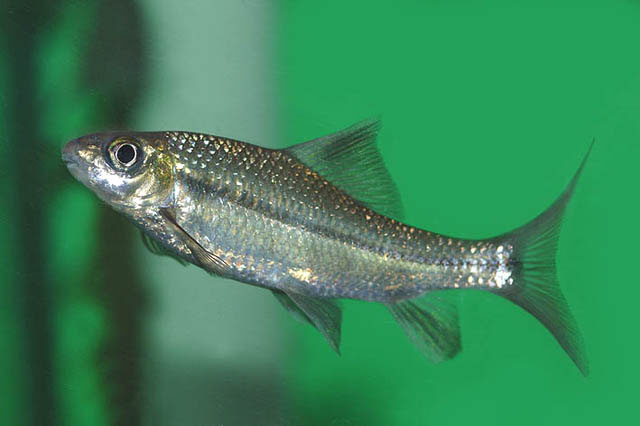
Osteochilus nashii
Cyprinidae · authority not recorded
This species is very scarce in the trade indeed and you're most likely to see it on sale as a contaminant among import of other Indian species. There are currently 34 described species of Osteochilus although none can be considered popular in the aquarium hobby. According to Rainboth's 'Fishes of the Cambodian Mekong' members of the genus are characterised by lack of aspine, presence of 11-18rays, large rostral and maxillary barbels, papillae on both upper and lower lips,...
Otopharynx lithobatesSulphur-headed Hap
Cichlidae · authority not recorded
O. lithobates is a true rock dweller and is hardly ever seen in open water, even in aquaria. In fact, the scientific name lithobates literally translates as "rock dweller". Breeding males of this species rank among the most stunning of Lake Malawi Haplochromine cichlids. The three characteristic spots on the flanks disappear and are masked by a stunning neon blue patterning. Almost the entireand top of the head turn a deep yellow-orange colour. The most colourful variant is the "...
Oxyeleotris marmorataMarbled Goby
Eleotridae · authority not recorded
One of the largest goby species in the world, O. marmoratus is unsuitable for the vast majority of aquaria, but is an interesting oddball for the true enthusiast with the facilities to house it properly. It is a nocturnal ambush predator and generally remains motionless during daylight hours unless striking at food. It is a popular food fish in some of its native countries, where it is known as soon hock....
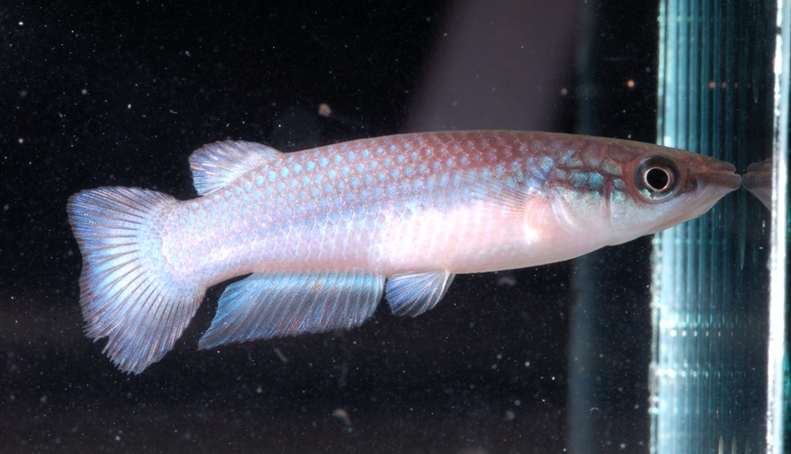
Pachypanchax omalonotusPowder-blue Panchax
Aplocheilidae · Duméril, 1861
For a number of decades this species was thought to occur throughout much of Madagsacar's western slope but populations immediately to the north and south of the range described above (see 'Distribution') are currently considered to represent unidentified species, while a number of populations from the Mahavavy du Sud and Betsiboka riv...
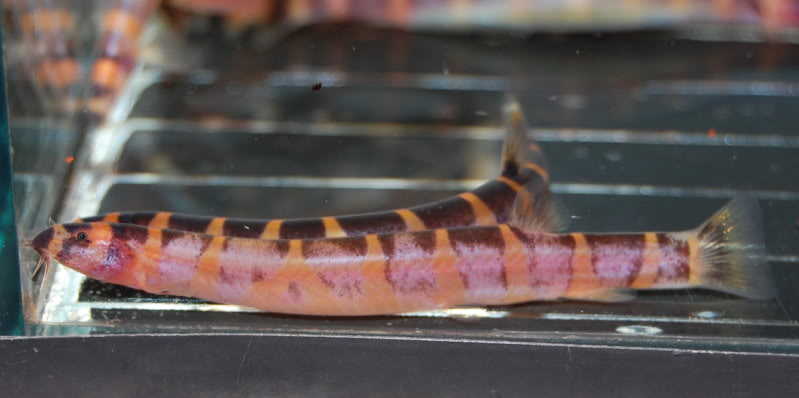
Pangio sp. 'PAN01'
Cobitidae · authority not recorded
The fish in our images above were imported together don't correspond to any of the described species of Pangio though they can be assigned to the P. kuhlii species group with a degree of certainty. Unfortunately the live appearance of P. kuhlii itself is a mystery to aquarists since it's currently considered endemic to Java and may have never been seen in the hobby.
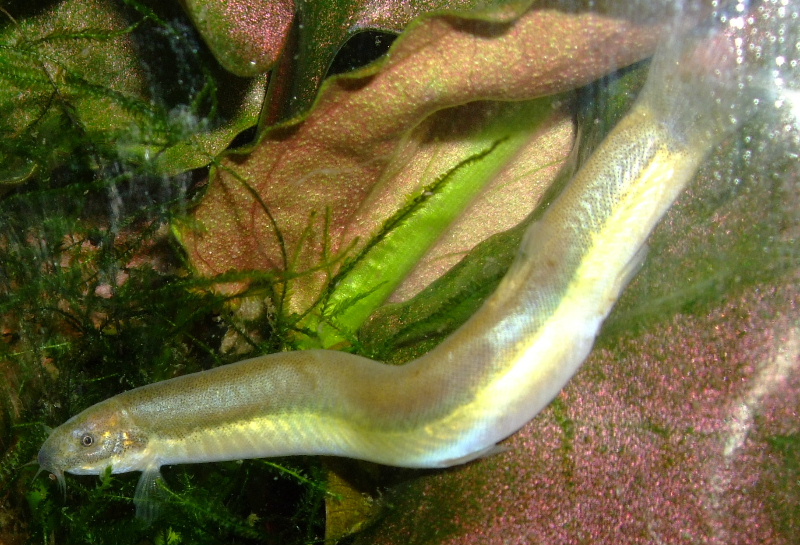
Pangio sp. 'PAN02'
Cobitidae · authority not recorded
The fish in our images don't correspond to any of the described members of the genus but can be assigned to the P. oblonga species group with a degree of certainty. It's apparently exported as a contaminant among shipments of a uniformly brown-coloured fish with unpublished genetic analyses suggesting the two might be variants of the same species (J. Bohlen, pers. comm.). Among congeners it may be related to P. alcoides Kottela...
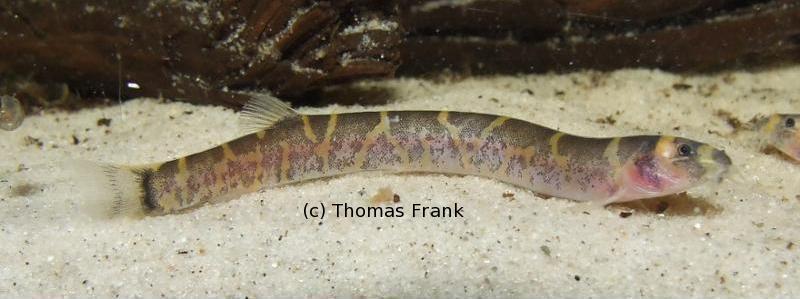
Pangio sp. 'PAN03'
Cobitidae · authority not recorded
Pangio species are often generically referred to as 'kuhli' or 'coolie' loaches in the aquarium hobby, the latter a variation of the former which was itself derived from the surname of German naturalist Heinrich Kuhl (1797-1821). Ichthyo...
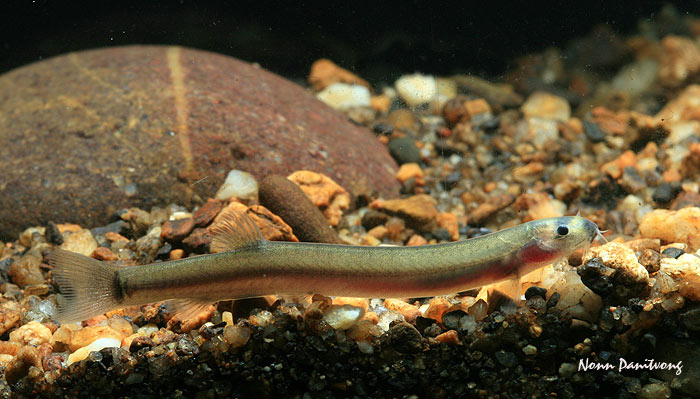
Pangio sp. 'PAN04'Panda Loach
Cobitidae · authority not recorded
This unidentified species has been traded since the mid-00s and appears to be a member of the P. khulii-oblonga species group as per Bohlen et al. (2011). There are two similar-looking forms; one has a darker body, dark pigmentation in the pectoral fins and barbels and a blue sheen on the head, while the...
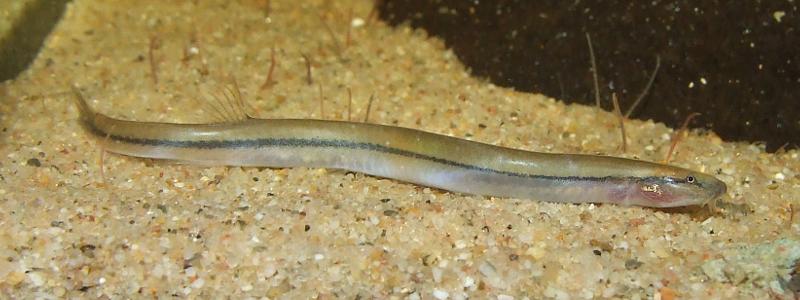
Pangio sp. 'PAN05'
Cobitidae · authority not recorded
Unclear but usually imported for the aquarium trade alongside P. anguillaris which according to current knowledge has an irregular distribution including Laos, Cambodia, Vietnam, Thailand, Peninsular Malaysia, and the Greater Sunda Islands of Sumatra and Borneo.
Pantodon buchholziAfrican Butterfly Fish
Pantodontidae · authority not recorded
The common name of this surface-dwelling species is derived from it's appearance when viewed from above, the large pectoral fins giving it the appearance of a butterfly. In reality, these fins serve a dual purpose. They help to camouflage the fish, making it look like a dead leaf floating on the surface, and along with the caudal fin, power the incredible jumps that it is capable of making. The fish jumps from the water to catch flying insects or to escape potential predators and it can mak...
Papyrocranus aferArowana Knifefish
Notopteridae · authority not recorded
Like other members of the family Notopteridae this species differs from Gymnotiform knifefish in that its anal and caudal fins are fused together into one long, undulating fin running along the underside of the fish. There is only one other species in the genus. P. congoensis is a smaller, plain brown coloured fish found only in the Democratic Republic of Congo and is very rare in the hobby. P. afer is also infrequently imported and is one of the rarer knifefish species in the hobby. It can dev...
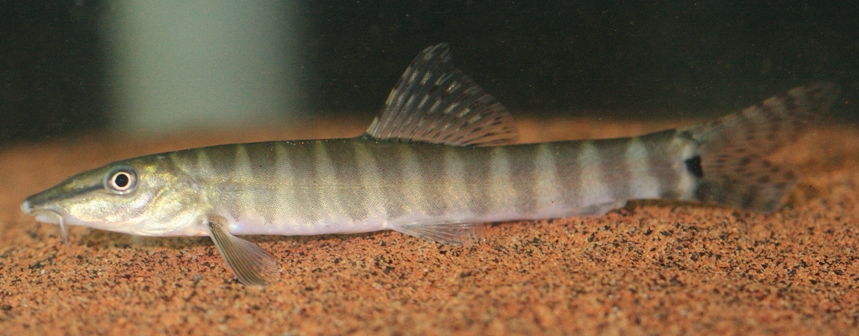
Parabotia fasciata
Botiidae · Dabry de Thiersant, 1872
P. fasciata is rarely seen in the trade and is typically available only as bycatch among shipments of Sinibotia spp., particularly S. robusta. According to current classification numerous species from several genera are considered synonymous with it.
Parachanna obscuraAfrican snakehead
Channidae · authority not recorded
This fish is spawned very infrequently in captivity but some reports have been made. Fish are sexually mature from 4" and a pair should be obtained by growing on a group of youngsters and allowing a pair to form naturally. Once this occurs the other fish will most likely be eliminated so it is wise to be vigilant in order to avoid uneccessary losses. Apparently courtship occurs in an open section of water surrounded by floating plant material. The courtship consists of the fish circling ...
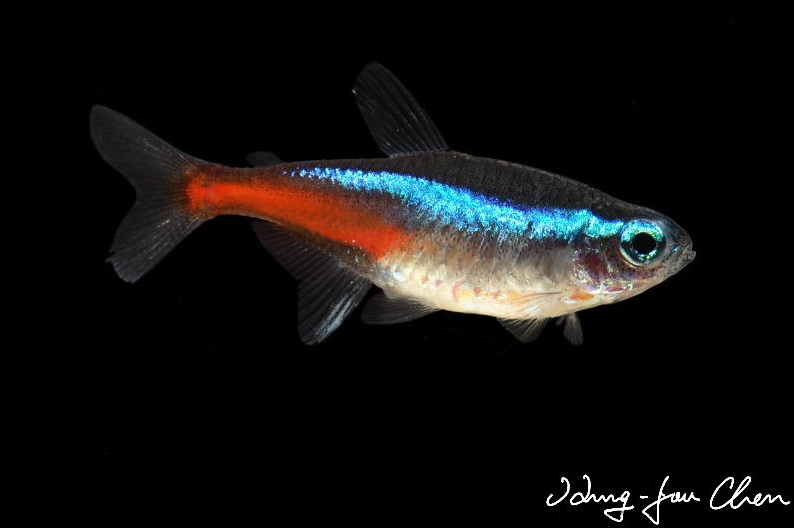
Paracheirodon innesiNeon Tetra
Characidae · Myers, 1936
One of the most popular and instantly recognisable fishes in the aquarium hobby, this species has been selectively-bred to produce a number of additional strains including albino, 'golden' (leucistic), short-bodied, long-finned and 'diamond' (in which the dorsal surface is covered in reflective scales). Unfortunately years of commercial breeding have somewhat affected the genetic vigour of the ornamental strain meaning morphological defects an...
Parachromis managuensisJaguar Cichlid
Cichlidae · authority not recorded
Parachromis Managuense are your typical north/central American large predatory cichlid. They are extremely attractive, but a large aquarium is required. They are not difficult to look after, as long as filtration is up to standard. Choose tankmates carefully - if you are hoping to breed Managuense, house a breeding pair or grow 6 juveniles up until a pair is formed. One of the biggest problems with breeding Managuense is the fact that a single spawn from 12" parents can produce 3000 f...
Parachromis motaguensisFalse Yellowjacket Cichlid
Cichlidae · authority not recorded
Parachromis Motaguensis are a truly stunning fish. They exhibit gorgeous colours, but can be a nightmare to keep. Do not even consider housing any other fish with Motaguensis when they are breeding, as the other fish will be hurt - even if significantly bigger than the pair of False Yellowjackets. Motaguensis make a nice addition to a big central/north American cichlid tank, with similarly aggressive fish - but be careful that you don't choose a compatible pair of Motaguensis or you wil...
Paracyprichromis brieni
Cichlidae · authority not recorded
Although P. brieni is better kept in a group, it tends to form much looser shoals than the similar Cyprichromis species. Male fish form territories under overhangs if they are available and can often be seen hanging upside down under these or vertically against rock walls. In the aquarium if it is not provided with such retreats, or if it is housed under bright lighting or with boisterous fish it will rapidly lose its best colouration. It is quite easily confused with P. nigripinnis, it'...
Paracyprichromis nigripinnis
Cichlidae · authority not recorded
Although P. nigripinnis is better kept in a group, it tends to form much looser shoals than the similar Cyprichromis species. Male fish form territories under overhangs if they are available and can often be seen hanging upside down under these or vertically against rock walls. In the aquarium, if it is not provided with such retreats, or if it is housed under bright lighting or with boisterous fish, it will rapidly lose it's best colouration. It is quite easily confused with P. brieni,...
Parambassis pulcinellaHumphead Perchlet
Ambassidae · authority not recorded
A new species that was only described to science in 2003, little is known about the natural behaviour of P. pulcinella. It has started to be imported quite regularly over the last couple of years, although it is still quite expensive. Unfortunately this species has suffered the same fate as some of it's close relatives, and artificiallly dyed specimens have been making their way onto the market. These should be avoided at all costs, as the processes involved are cruel and unecessary, and us...
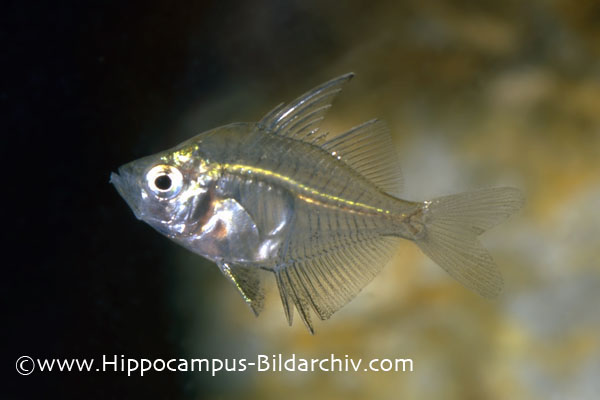
Parambassis rangaIndian Glass Fish
Ambassidae · authority not recorded
Previously known as Chanda ranga, the common name of this species arose because it's translucent skin means that the bone structure and internal organs are clearly visible. For many years it has been artificially injected with luminous dyes on fish farms in Asia and then sold as "Painted" glass fish or "Disco fish". This abhorrent act involves injecting the fish repeatedly with a large needle and most fish do not survive more than a few months afterwards. Whilst painted ...
Parambassis siamensis
Ambassidae · authority not recorded
This occasional import is sometimes offered for sale as P. ranga, the Indian glass fish. Unlike that species however, P. siamensis is an exclusively freshwater fish and should never be kept under brackish conditions. It can be distinguished from ranga by the lack of patterning behind the eye and it's generally more elongate body....
Parambassis wolffiiDuskyfin Glass Fish
Ambassidae · authority not recorded
This species is an infrequent import. It is very common in it's native countries, where it is used as a food fish.
Paratilapia polleni
Cichlidae · authority not recorded
Now the only species in the genus Paratilapia, P. polleni is known as the "marakely" to many natives in Madagascar, which means "black fish". As with most Madagascan cichlid species, it is highly endangered in the wild due to habitat destruction and competition from introduced species and all attempts at captive breeding are to be encouraged. There is still some confusion as to the identity of the "true" P. polleni as there are both large and small-spotted forms...
Paretrolplus damii
Cichlidae · authority not recorded
An attractive, if aggressive Madagascan cichlid. Not commonly available in the UK, it can occasionally be obtained through cichlid enthusiasts aor specialist dealers.
Pareutropius buffeiThree Striped African Glass Catfish
Schilbeidae · authority not recorded
Formerly known as Eutropiellus buffei, this midwater swimming, diurnal catfish is very often sold as "Debauwi catfish". Pareutropius debauwi is a closely related species which is, in fact, seldom imported. Adults of the two species can be distinguished by several characteristics. In buffei there are three lateral stripes along the body, whilst debauwi possesses only one. Buffei also has black spots in the upper and lower parts of the caudal fin, and the fin itself has rounded lobes. Th...
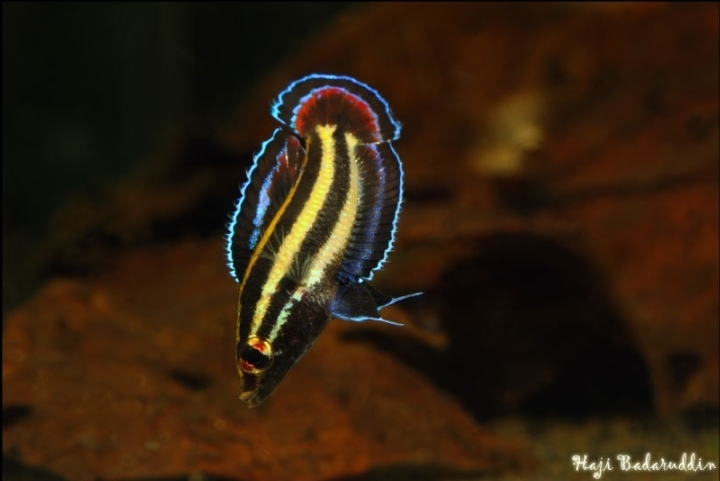
Parosphromenus alfredi
Osphronemidae · Kottelat & Ng, 2005
Type locality is 'Kota Tinggi, Mawai-Desaru road, Johor, Peninsula Malaysia' and this species is endemic to a small portion of eastern Johor state, Peninsular Malaysia around the towns of Kota Tinggi, Mawai and Desaru. A great deal of its original habitat has been lost via deforestation and other human alterations and it's considered in grave danger of extinction.
Peckoltia sp.Big Spot Peckoltia
Loricariidae · authority not recorded
Commonly known as the big spot peckoltia, there is ongoing argument that this species should be included in the genus Hemiancistrus. As things stand, there has not yet been any scientific confirmation of this and the species remains undescribed. It's also often confused with the very similar-looking L013, another undescribed fish. These two species can only easily be distinguished as they mature, as L163 retains its spotted patterning, while L013 tends to become somewhat duller. When b...
Petrochromis famula
Cichlidae · authority not recorded
The mouthparts of this species are highly specialised, reflecting its natural feeding habits of rasping algae and other organisms from rock surfaces. It feeds almost exclusively on unicellular algae and has very thick, extended lips and brush-like, mobile pads of teeth. The mouthparts thus form a rasping 'plate', used when the fish is feeding. It is somewhat rare in the hobby, perhaps due to its violent reputation or the fact that this is not a particularly gregarious species in nature...
Phenacogrammus interruptusCongo Tetra
Alestiidae · authority not recorded
P. interruptus are quite sensitive to water quality and if a high standard is not maintained the development of the males' fins may be impaired and the fish will lose colour. They are also quite an easily frightened fish, particularly if they are not maintained in numbers. This species is most often seen for sale as a fairly drab, greyish 1 1/2" fish and is often overlooked. However once they are settled into the aquarium and have begun to mature they develop spectacular colouration. ...
Piabucus dentatusPiabuco Tetra
Characidae · authority not recorded
There are only three species in this little known genus, all of which are rarely seen in the hobby. In 2007 an apparently undescribed Piabucus was seen on sale in the UK under the name "chin tetra", in reference to the black marking on the lower jaw of the fish....
Piaractus brachypomusRed-bellied Pacu
Serrasalmidae · authority not recorded
Know as the pirapitinga in its native countries, this is the one of the largest species of scaled fish found in the Amazon basin. This alone should tell you much of what you need to know about its suitability as an aquarium inhabitant. In reality it's debatable as to whether the species should be considered an aquarium subject at all. While pacu rarely reach their maximum size in captivity, they're still easily capable of growing to a couple of feet in length. The myth that fish will o...
Pimelodus maculatusSpotted Pim
Pimelodidae · authority not recorded
There are currently 32 genera and over 80 species included in the family Pimelodidae (including Pimelodus), making it the second largest and one of the most diverse amongst catfish. Most experts agree however, that a full systematic revision of the family is needed, as little information about the phylogenetic (evolutionary relatedness) relationships between the various genera exists. Taxonomy information at the species level is also basic at best. It's therefore likely that at least some o...
Pimelodus ornatusOrnate Pim
Pimelodidae · authority not recorded
There are currently 32 genera included in the family Pimelodidae (including Pimelodus), making it the second largest and one of the most diverse amongst catfish. However most experts agree that a full systematic revision of the family is needed, as little information about the phylogenetic (evolutionary relatedness) relationships between the various genera exists. Taxonomy information at the species level is also basic at best. It's therefore likely that at least some of the Pimelodids will...
Pimelodus pictusPictus Cat
Pimelodidae · authority not recorded
There are currently 32 genera and over 80 species included in the family Pimelodidae (including Pimelodus), making it the second largest and one of the most diverse amongst catfish. However most experts agree that a full systematic revision of the family is needed, as little information about the phylogenetic (evolutionary relatedness) relationships between the various genera exists. Taxonomy information at the species level is also basic at best. It's therefore likely that at least some of...
Placidochromis electraDeepwater Hap
Cichlidae · authority not recorded
The common name is derived from the fact that it was previously thought to be found only in much deeper water than we now know it inhabits. In nature, P. electra feeds from the surface of the substrate on invertebrates and other morsels stirred up by the action of digging substrate feeders such as Taeniolethrinops praeorbitalis. It is attracted to the clouds of sediment thrown up by these species. Several colour forms exist and these should not be kept together in aquaria as they may hybridis...
Placidochromis milomoSuper VC 10 Hap
Cichlidae · authority not recorded
Wild caught specimens of this fish possess a truly amazing set of lips! They are massively enlarged and designed for scraping algae and invertebrates from rock surfaces. In nature, these actually develop in direct proportion to the amount of turbidity in a given locality. Fish inhabiting more turbulent waters have larger lips, as the algae in these areas is anchored to the rocks more firmly. In the aquarium, the lips usually recede or, in tank bred fish, do not develop at all, as they are not re...
Platydoras armatulusHumbug Catfish
Doradidae · authority not recorded
This popular species is also sold as the striped dora, striped raphael or striped talking catfish. It's often seen as an ideal beginner's cat, being hardy and tolerant of a wide range of water conditions. However its secretive nature, adult size and tendency to snack on smaller tankmates mean it should only be considered for communities of larger fish. The 'talking catfish' moniker is derived from the fish's ability to produce sounds when communicating with conspecif...
Platystacus cotylephorusBanded Banjo Catfish
Aspredinidae · authority not recorded
Not a particularly good catfish for the general community tank, as it's a largely inactive, secretive species that will only emerge and become active under cover of darkness. It is, nonetheless, an interesting aquarium subject for the enthusiast, exhibiting an incredible degree of camouflage. It's designed to resemble a dead leaf, and usually will not even swim to escape a net. When released into the aquarium will simply drift in the current until it hits the bottom. All members of the...
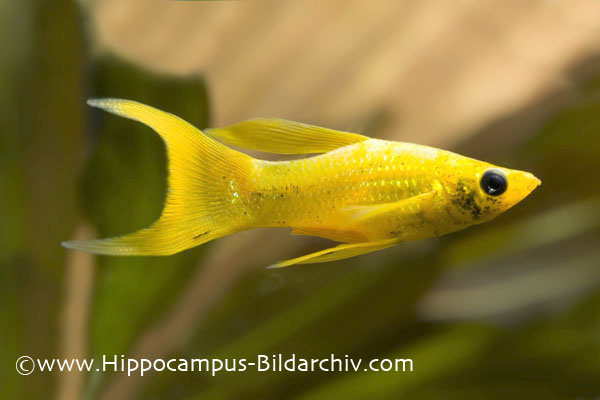
Poecilia latipinnaSailfin Molly
Poeciliidae · Lesueur, 1821
The wild fish can exhibit several different types of patterning. P. latipinna has been selectively bred into many different colour morphs for the aquarium trade, and has also been crossbred with other molly species, particularly P. sphenops. They will also interbreed readily in the aquarium and in order to avoid this we suggest keeping only one species of molly per tank. There also exists a (in our opinion) grotesque 'balloon' variety of this fish in which the body is malformed and rou...
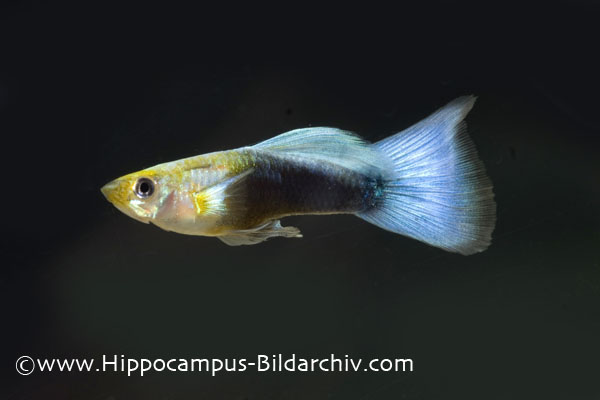
Poecilia reticulataGuppy
Poeciliidae · Peters, 1859
One of the most popular aquarium fish in the world, the guppy is instantly recognisable to most people. There are many aquarium bred varieties of this species available, most have elongated finnage and gaudy colouration. The wild form is seldom seen for sale. Unfortunately many commercially bred guppies are not very hardy due to inbreeding and over-production and are prone to disease and premature death. We therefore recommend the purchase of quality stock from breeders or society auctions. P. ...
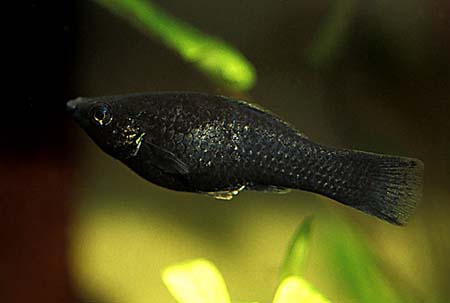
Poecilia sphenopsShort-finned Molly/Black Molly
Poeciliidae · Valenciennes, 1846
A hugely popular aquarium fish. Many aquarium-bred colour morphs of this species are available, including the ubiquitous black molly. There are also Gold, Green, Lyretail, Silver and Dalmation varieties. Some of these are the results of P. sphenops being crossed with P. latipinnis. The 2 species will also interbreed readily in the aquarium and in order to avoid this we suggest keeping only one of them per tank. There also exists a (in our opinion) grotesque 'balloon' variety of this fi...
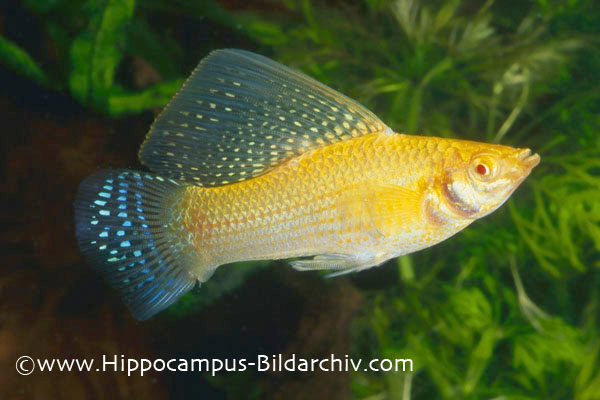
Poecilia veliferaGiant Sailfin Molly
Poeciliidae · Regan, 1914
Another popular molly in the hobby, and another that has been selectively bred to produce several different varieties, such as albino, black, red etc. Some of these are the result of cross breeding with P.latipinna. There also exists a (in our opinion) grotesque 'balloon' variety of this fish in which the body is malformed and rounded, giving a balloon-like appearance. This condition can cause swimbladder and digestive problems and may bring about premature death. It is difficult to...
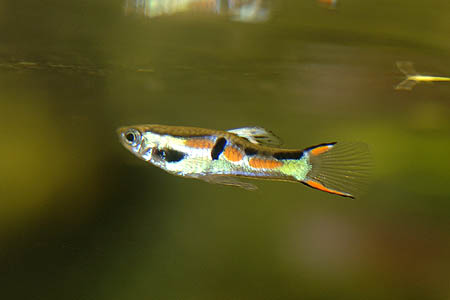
Poecilia wingeiEndler's Livebearer
Poeciliidae · Poeser, Kempkes & Isbrucker, 2005
Endler's Livebearer was actually discovered in 1937 by Franklyn F. Bond before being rediscovered by John Endler in 1975 in Laguna de Patos, Cumana, northeastern Venezuela. It was found coexisting, but not interbreeding with, a wild form of P. reticulata. Both species are native to this area of Venezuela, but P. reticulata was much less common in areas where P. wingei was thriving. This is thought to be partially related to habitat type, as guppies are usually found in colder, running water...
Polycentropsis abbreviataAfrican Leaf Fish
Nandidae · authority not recorded
Like the closely related Polycentrus species from South America, with which it is sometimes confused, this fish is camouflaged to mimic a dead leaf, both in body shape and pattern. It can also change colour to match its surroundings. When hunting, it stalks its prey in a head-down stance, appearing to drift towards it like a dead leaf drifting in a current. In reality the fish is propelled by tiny movements of its transparent hind fins. When it strikes at an item of prey, the entire mouth pro...
Polypterus bichir bichirNile Bichir
Polypteridae · authority not recorded
An incredibly hardy, nocturnal species with very poor vision, P. delhezi relies on its excellent sense of smell to locate food. This species, along with others of its genus, is one of the last surviving relatives of very ancient species. Fossils of earlier relatives have been found that date back to the Triassic Period, which occured during the early development of the dinosaurs more than 200 million years ago. They have several interesting adaptations. The swim bladder is divided into 2 par...
Polypterus delheziArmoured Bichir
Polypteridae · authority not recorded
An incredibly hardy, nocturnal species with very poor vision, P. delhezi relies on its excellent sense of smell to locate food. This species, along with others of its genus, is one of the last surviving relatives of very ancient species. Fossils of earlier relatives have been found that date back to the Triassic Period, which occured during the early development of the dinosaurs more than 200 million years ago. They have several interesting adaptations. The swim bladder is divided into 2 par...
Polypterus endlicheri endlicheriSaddled Bichir
Polypteridae · authority not recorded
An incredibly hardy, nocturnal species with very poor vision, P. endlicheri endlicheri relies on its excellent sense of smell to locate food. This species, along with others of its genus, are some of the last surviving relatives of very ancient species. Fossils of earlier relatives have been found that date back to the Triassic Period, which occured during the early development of the dinosaurs more than 200 million years ago. They have several interesting adaptations. The swim bladder is div...
Polypterus ornatapinnisOrnate Bichir
Polypteridae · authority not recorded
An incredibly hardy, nocturnal species with very poor vision, []iP. ornatapinnis relies on its excellent sense of smell to locate food. This species along with others of its genus are some of the last surviving relatives of very ancient species. Fossils of earlier relatives have been found that date back to the Triassic Period, which occured during the early development of the dinosaurs more than 200 million years ago. They have several interesting adaptations. The swim bladder is divided int...
Polypterus palmas palmasMarbled Bichir
Polypteridae · authority not recorded
An incredibly hardy, nocturnal species with very poor vision, P. delhezi relies on its excellent sense of smell to locate food. This species, along with others of its genus, is one of the last surviving relatives of very ancient species. Fossils of earlier relatives have been found that date back to the Triassic Period, which occured during the early development of the dinosaurs more than 200 million years ago. They have several interesting adaptations. The swim bladder is divided into 2 par...
Polypterus retropinnisWest African Bichir
Polypteridae · authority not recorded
Also known as the Speckled Bichir, this is an incredibly hardy, nocturnal species with very poor vision. P. retropinnis relies on its excellent sense of smell to locate food. This species along with others of its genus are some of the last surviving relatives of very ancient species. Fossils of earlier relatives have been found that date back to the Triassic Period, which occured during the early development of the dinosaurs more than 200 million years ago. They have several interesting adapt...
Polypterus senegalus senegalusSenegal Bichir
Polypteridae · authority not recorded
An incredibly hardy, nocturnal species with very poor vision, P. senegalus relies on its excellent sense of smell to locate food. This species, along with others of its genus, are some of the last surviving relatives of very ancient species. Fossils of earlier relatives have been found that date back to the Triassic Period, which occured during the early development of the dinosaurs more than 200 million years ago. They have several interesting adaptations. The swim bladder is divided into 2 ...
Polypterus teugelsi
Polypteridae · authority not recorded
An incredibly hardy, nocturnal species with very poor vision, P. teugseli relies on its excellent sense of smell to locate food. This species along with others of its genus are some of the last surviving relatives of very ancient species. Fossils of earlier relatives have been found that date back to the Triassic Period, which occured during the early development of the dinosaurs more than 200 million years ago. They have several interesting adaptations. The swim bladder is divided into 2 parts...
Potamotrygon falkneriLarge Spot Stingray
Potamotrygonidae · authority not recorded
P. falkneri is arguably among the most beautiful Potamotrygonids seen in the hobby. It's not imported with any great degree of regularity, and is usually expensive when available. There are currently three genera in the family Potamotrygonidae, all of which hail from South America. Paratrygon and Plesiotrygon are both monotypic genera (contain only a single described species) and are rarely seen in the hobby. The vast majority of imported rays belong to the biggest genus, Potamotrygon. T...
Potamotrygon leopoldiPolka Dot Stingray
Potamotrygonidae · authority not recorded
P. leopoldi is aruably one of the most stunning freshwater species in the hobby and comes with a price tag to match. A fully grown one of these makes a jaw-dropping sight. Sadly exports from Brazil are now illegal under the IBAMA regulations, although captive bred fish are available occasionally. The price tends to be even more expensive as a result. A rare form in which the light spots appear as rings with black centres is known as P. leopoldi "eclipse" is more costly still. The stunn...
Potamotrygon motoroMotoro Stingray
Potamotrygonidae · authority not recorded
P. motoro is one of the most popular members of the genus with aquarists. Whilst it is quite easily obtainable and hardy once settled in, it does grow very large so make sure you can house it adequately long term. It should also be noted that the males of this species are among the most violent when in the mood for spawning and females can end up on the wrong end of a serious beating. If you're keeping a pair or group of these keep a close eye on proceedings and be prepared to separate them...
Potamotrygon schroederiFlower Ray
Potamotrygonidae · authority not recorded
P. schroederi is one of the most attractive and sought after members of the family. Due to current export restrictions in Brazil it has become very scarce in the hobby and commands a high price when it is available, usually from captive breeders. There is another fish sold under the name "flower ray", presumably to boost sales. This is a potentially undescribed species imported from Peru and is usually referred to as "Peru flower" or P40 by ray enthusiasts. Some believe this ...
Potamotrygon scobinaMosaic Stingray
Potamotrygonidae · authority not recorded
There are currently three genera in the family Potamotrygonidae, all of which hail from South America. Paratrygon and Plesiotrygon are both monotypic genera (contain only a single described species) and are rarely seen in the hobby. The vast majority of captive rays belong to the biggest genus, Potamotrygon. This contains 17 species at present, and its members are sometimes referred to as "big-eyed" stingrays for fairly obvious reasons. There are also a number of undescribed species th...
Potamotrygon sp. "itaituba"P14
Potamotrygonidae · authority not recorded
This stunning fish is one of the more sought after rays in the hobby. Taxonomically it remains unclear whether it is a geographical variant of P. leopoldi or a distinct species. It has a smaller adult size and both pups (see section above) and adults exhibit different patterning than it's relative. In P. leopoldi the light spotted markings tend to be quite large, spaced out and do not extend to the edge of the disc. In P14 they are typically much smaller, more randomly distributed and prese...
Prionobrama filigeraGlass Bloodfin Tetra
Characidae · authority not recorded
The genus Prionobrama currently contains only one other valid species, P. paraguayensis. It is very similar in appearance to P. filigera, but lacks any red pigmentation in the caudal fin. It's probably never been imported for the hobby, although it may show up as occasional bycatch amongst shipments of more popular species. P. filigera can be easily distinguished from the "other" bloodfin tetra, Aphyocharax anisitsi by its more elongate body shape and the fact that it exhibits...
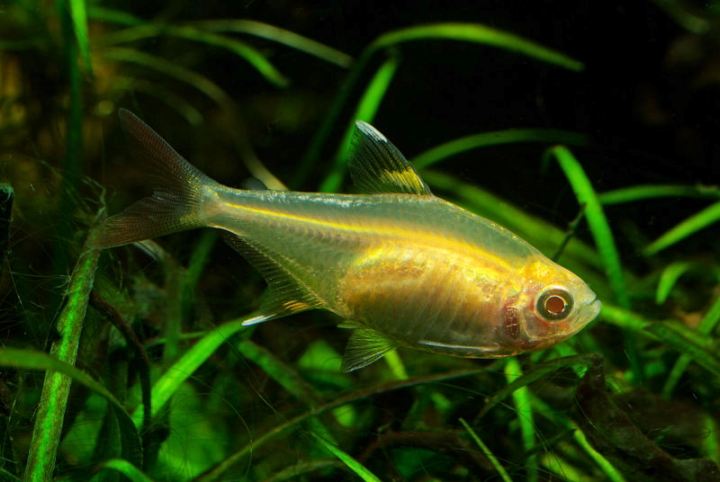
Pristella maxillarisX-ray Tetra
Characidae · Ulrey, 1894
P. maxillaris is one of the more popular tetras in the hobby, and is easily obtainable from most aquatic shops. It must rank among the very best choices for the newcomer to fishkeeping as it's peaceful, hardy and inexpensive. There's a selectively-bred "golden" strain available which is actually a semi-albino fish. Care is much the same as for the standard form. Currently the only species in the genus, in older literature it's often referred to by the now invalid name...
Pristolepis marginatusMalabar Leaffish
Nandidae · authority not recorded
Also known as the common catopra, this is still quite a rare species in the hobby, although it's becoming more readily available due to captive breeding efforts. It makes an interesting addition to the larger community or oddball tank....
Procatopus nototaeniaLarge-finned Lampeye
Poeciliidae · authority not recorded
The genus Procatopus currently comprises half a dozen members (P. aberrans, P. lambertii, P. nimbaensis, P. nototaenia, P. schioetzi and P. similis), all of which are are non-annual species existing in permanent bodies of water. They are actually more closely related to the livebearing species of the subfamily Poeciliinae than the popular Aplocheilid killifish. None are particularly popular in the aquarium trade, although specialist dealers may have them available from time-to-time. Some such as...
Protomelas fenestratusFenestratus
Cichlidae · authority not recorded
This species has an interesting method of feeding in nature. It will 'blow' sediment from the surface of rocks and feed on morsels that are uncovered. Protomelas sp. "steveni taiwan reef" is often sold as a subspecies of P. fenestratus but is actually thought not to be synonymous. P. taeniolatus is also very similar to fenestratus, and several colour forms of both these species exist. It is likely that some of these may be reclassified as distinct species in the future. None ...
Protomelas pleurotaenia
Cichlidae · authority not recorded
This species has an interesting method of feeding in nature. It 'blows' at the top layer of the substrate (usually sand) and feeds on any invertebrates or other morsels that are uncovered. It is rare in the hobby and little information regarding it's care is available....
Protomelas sp. steveni "Taiwan reef"
Cichlidae · authority not recorded
Protomelas sp. "steveni taiwan reef" is often sold as a subspecies of P. fenestratus, but is actually thought not to be synonymous and is currently undescribed. It can be distinguished from similar species such as P. fenestratus and P. taeniolatus by the bright redof adult males. None of these related species or morphs should be kept together in aquaria as they may hybridise. Some captive spawns of this species have resulted in albino fry. It is one of the more popular and readily a...
Protomelas taeniolatus
Cichlidae · authority not recorded
One of the more popular and readily available Protomelas species in the hobby, P. taeniolatus is very similar to P. fenestratus. Several colour forms of both these species exist. Some of the popular morphs of taeniolatus include "Red Empress", "Super Red Empress" and "Blue Fire". It is likely that some of these may be reclassified as distinct species in the future, as they attain different maximum sizes. None of these related species or morphs should be kept togethe...
Protopterus dolloiSlender Lungfish
Protopteridae · authority not recorded
Lungfish are among the most intriguing of "oddball" aquarium subjects, being able to survive in the most extreme conditions. They are very ancient fish, having remained virtually unchanged for millions of years. Some of the natural habitats of P. dolloi are wet for only part of the year, and it has developed several incredible adaptations in order to counteract this. When the waters begin to recede, the fish will find a suitable nesting site, usually amongst heavy vegetation. Here ...
Pseudocrenilabrus nicholsi
Cichlidae · authority not recorded
Rarely seen in the hobby, P. nicholsi is a stunning but pugnacious little fish that is nevertheless well worth seeking out. Some males develop long extensions to the ventral fins.
Pseudocrenilabrus philanderSouthern Mouth-Brooder
Cichlidae · authority not recorded
This species is not often seen in the hobby, which is a pity as it is a stunning fish with interesting behaviour. If you do manage to get some, be sure to provide the best possible conditions from the start, as they appear to travel quite badly and losses are common. There are currently 3 subspecies, Pseudocrenilabrus philander philander, P. p. dispersus and P. p. luebberti. However, recent studies suggest as many as 11 distinct populations exist, differing in location, colour, patterning, be...
Pseudotropheus demasoni
Cichlidae · authority not recorded
This dwarf mbuna is one of the more recent introductions into the hobby, being described only in 1994. It is not recommended for the beginner due to its pugnacious nature, but does make a good aquarium subject for the advanced aquarist. It exhibits some very entertaining behavioural traits, preferring to hug the rock surfaces much more than most mbuna. It will often be seen swimming on its side or upside down as it explores caves and crevices. As with other members of the genus, it possesses fla...
Pseudotropheus elongatusElongate Mbuna
Cichlidae · authority not recorded
Over 30 different forms of this species occur in Lake Malawi. These should not be mixed in the aquarium as they will hybridise freely. P. elongatus differs morphologically from other mbuna, being relatively slender and elongate. In nature females protect territories which contain 'gardens' of algae which they leave to breed before returning once they are holding eggs. Juvenile fish from previous spawns also inhabit the territory, protecting it when the female is away. This species i...
Pseudotropheus estheraeRed Zebra
Cichlidae · authority not recorded
A deservedly popular mbuna, there is ongoing debate as to the true genus of this species, it having been variously grouped in both Maylandia and Metriaclima, as well as the currently valid Pseudotropheus. It is unlikely it will remain in Pseudotropheus. To add to the confusion, it was only described as a distinct species in 1995, having previously been regarded as a morph of Maylandia zebra. Several colour forms are available and these should not be kept together under any circumstances as they ...
Pseudotropheus fainzilberiGoldbreast Zebra
Cichlidae · authority not recorded
There is ongoing debate as to the true genus of this species, it having been variously grouped in both Maylandia and Metriaclima as well as the currently valid Pseudotropheus. It is unlikely it will remain in Pseudotropheus, however. One interesting feature is the presence of additional rows of teeth when compared to others in the genus. Also, the rows of bicuspid teeth, used for rasping algae from rock surfaces, extend further back into the mouth than in other Pseudotropheus. P. fainzilberi...
Pseudotropheus flavus
Cichlidae · authority not recorded
Although it is a good choice for the general mbuna community, as mentioned above P. flavus should not be kept together with any member of the P. elongatus complex. Not only will these species interbreed, producing undesirable hybrid offspring, but males of these species will clash very heavily. As with other members of the genus it possesses flat, bicuspid teeth which are designed for scraping algae and other organisms from the surface of rocks....
Pseudotropheus lombardoiKennyi
Cichlidae · authority not recorded
A popular mbuna that has been in the hobby for many years. There is ongoing debate as to the true genus of this species, it having been variously grouped in both Maylandia and Metriaclima, as well as the currently valid Pseudotropheus. It is unlikely it will remain in Pseudotropheus, however, and many sources already consider it a member of Metriaclima. As with other members of the genus, it possesses flat, bicuspid teeth which are designed for scraping algae and other organisms from the surface...
Pseudotropheus socolofiPowder Blue Cichlid
Cichlidae · authority not recorded
This common mbuna also goes by the names "Eduard's mbuna" and "Pindani". It is one of the most popular Rift Lake cichlids in the hobby due to its striking colouration and somewhat peaceful nature (for a mbuna). Wild fish can now be quite difficult to find, as the vast majority of specimens offered for sale are tank-bred. An albino form exists in aquaria and has achieved a fair degree of popularity. A highly recommended beginner's mbuna....
Pseudotropheus tropheops tropheops
Cichlidae · authority not recorded
This species has a confusing taxonomic past. There are currently 3 subspecies, Pseudotropheus tropheops tropheops, P. t. romandi and P. t. gracilior. P. macrophthalmus and P. microstoma were also once considered as subspecies of tropheops, but are now classed as distinct species. Furthermore, it is likely that the current subspecies and their various colour forms (of which there are many) will be themselves reclassifed into the currently invalid genus Tropheops! Incidentally, none of the subspec...
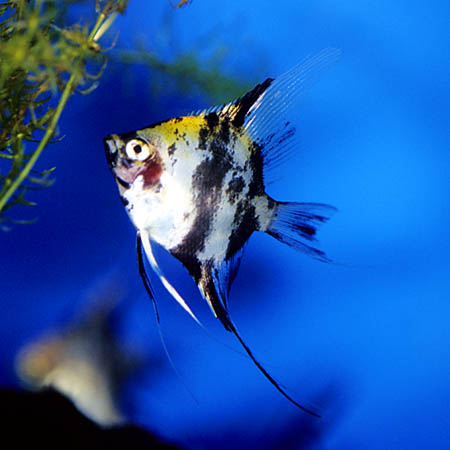
Pterophyllum "scalare"Angelfish
Cichlidae · authority not recorded
A well known and popular aquarium fish. Angels are available in a number of colour forms including black, gold and koi strains, in addition to the standard silver. It is worth remembering that although angels are generally peaceful, they are still cichilds so some aggression should be expected from time to time.
Pungu maclareni
Cichlidae · authority not recorded
This is currently the only described species in the genus Pungu. Because of it's its tiny natural range, habitat destruction due to excess water removal (the nearby town of Kumba relies on the lake for it's water supply), deforestation, the introduction of non-native species and overfishing, it is considered to be critically endangered and all efforts at captive breeding are to be encouraged. It is correspondingly rare in the hobby, and we suggest purchasing some only if you intend to ...
Reganochromis calliurus
Cichlidae · authority not recorded
A rarely seen species in the hobby due to its deep water lifestyle and the associated difficulties with collecting it.
Rhinodoras boehlkeiFog Talking Catfish
Doradidae · authority not recorded
At present there's not a great deal of information available regarding this species. It seems to be fairly easy to keep, and makes a good addition to larger community tanks.
Rhinodoras dorbygnyi
Doradidae · authority not recorded
At present there's not a great deal of information available regarding this species. It seems to be fairly easy to keep, and makes a nice, unusual addition to larger community tanks.
Rhynchodoras woodsiParrot Doradid
Doradidae · authority not recorded
An interesting but rare species in the hobby, R. woodsi is nicknamed the "parrot doradid" due to its inquisitive feeding habits, and the curious bony growth extending from the upper mouthparts. The precise use of the bony growth isn't known, although one theory suggests it provides protection for the delicate barbels. Another hypothesis considers that it's some sort of feeding tool, possibly being used to lever aquatic invertebrates from crevices in submerged logs and roots....
Rineloricaria eigenmanniCommon Whiptail Catfish
Loricariidae · authority not recorded
One of the most common of the numerous species sold as 'whiptail catfish', R. eigenmanni is an excellent species for the newcomer to Loricariids or catfish breeding. It's certainly not the most active species, but when settled and housed with the correct kind of tankmates, it is by no means shy either. It does have a bit of a confusing taxonomic past, though. Whilst currently considered a member of Rineloricaria, it was first decribed as a species of Loricaria, before being mov...
Rineloricaria fallaxWhiptail Catfish
Loricariidae · authority not recorded
One of the most common of the numerous species sold as 'whiptail catfish', R. fallax is an excellent species for the newcomer to Loricariids or catfish breeding. It's certainly not the most active species, but when settled and housed with the correct kind of tankmates is by no means shy either. In 2002 it was briefly placed in the resurrected genus Hemiloricaria, but this lasted less than twelve months, after which it was transferred back to Rineloricaria. Currently only Rinelo...
Rineloricaria morrowi
Loricariidae · authority not recorded
This species is not seen as often as some others in the genus. In 2002 it was briefly placed in the resurrected genus Hemiloricaria, but this lasted less than twelve months, after which it was transferred back to Rineloricaria. Currently only Rineloricaria is valid, but you'll still see it being referred to as Hemiloricaria quite often....
Rineloricaria parvaWhiptail Catfish
Loricariidae · authority not recorded
One of the most common of the numerous species sold as 'whiptail catfish', R. parva is an excellent species for the newcomer to Loricariids or catfish breeding. It's certainly not the most active species, but when settled and housed with the correct kind of tankmates is by no means shy either. In 2002, it was briefly placed in the resurrected genus Hemiloricaria, but this lasted less than twelve months, at which point it was transferred back to Rineloricaria. Currently only Rin...
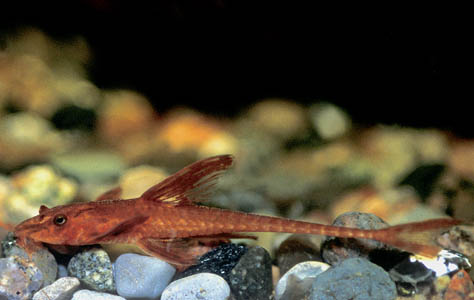
Rineloricaria sp.Red Lizard Catfish
Loricariidae · authority not recorded
As mentioned above, this fish may or may not be a man-made, or even hybrid, species. There are a few theories regarding this currently in circulation. Some believe that the fish are derived from a true wild caught fish, possibly of Paraguayan origin. These wild-caught red whiptails are supposed to breed true, producing all red fry, although there is no concrete evidence that they actually exist. The second possibility is that it's a selectively-bred form of Rineloricaria lanceolata, but thi...
Rita kuturneeDeccan Rita
Bagridae · authority not recorded
Rita species are not often seen in the hobby. When available, R. kuturnee makes a fine bottom dweller for communities containing other robust species....
Sandelia bainsiiEastern Cape Rocky
Anabantidae · authority not recorded
There are only two described species in the genus Sandelia. Both have very limited natural ranges in parts of South Africa, which in itself is odd as they're completely isolated from other genera of anabantoids. This is probably due to some ancient radiation of species, but as yet remains unresolved. Sandelia spp. are also considered the most primitive of anabantoids, as they possess a less well-developed labyrinth organ than their relatives. You're unlikely to see any of these fo...
Sandelia capensisCape kurper
Anabantidae · authority not recorded
There are only two described species in the genus Sandelia. Both have limited natural ranges in parts of South Africa, which in itself is odd as they're completely isolated from other genera of anabantoids. This is probably due to some ancient radiation of species, but as yet remains unresolved. Sandelia spp. are also considered the most primitive of anabantids, as they possess a less well-developed labyrinth organ than their relatives. S. capensis is of considerable conservation importa...
Sarotherodon melanotheron melanotheronBlack Chin Tilapia
Cichlidae · authority not recorded
At present there are 5 sub-species, Sarotherodon melanotheron melanotheron, S. m. heudelotii, S. m. leonensis, S. m. nigripinnis and S. m. paludinosus. Confusingly, some of these are maternal mouthbrooders. It has been introduced into several countries for aquaculture purposes and thriving populations now exist in areas of Asia, Europe and the USA....
Sciaenochromis fryeriElectric Blue Hap
Cichlidae · authority not recorded
This popular species was previously imported and classified as Sciaenochromis ahli, and is still named as such in much of the available literature. Many morphs exist, although males of all these exhibit the characteristic blue colouration, differing only in fin colouration and patterning. These should not be mixed in aquaria as they will hybridise. Extra care must be taken regarding tankmates, too, as male S. fryeri have been known to spawn with females of other genera, particularly Aulonoca...
Scleropages jardiniiAustralian Arowana
Osteoglossidae · authority not recorded
Although S. jardinii superficially resembles its Asian cousins, it is not considered as desirable an aquarium inhabitant, nor is it classed as being at risk in nature. It can be easily distinguished from the asian species by its much smaller scale size, greater lateral scale count (32-35 as opposed to 21-25 in the asian aros) and duller patterning. It differs from its Australian relative S. leichardtii by its more sloping head, downward-pointing barbels and patterned gill covers. The base colour...
Semaprochilodus insignisFlagtail Prochilodus
Prochilodontidae · authority not recorded
Semaprochilodus are one of the most common and widespread shoaling fish found in South America. Over a dozen species have been described but most are never imported. They are used as food fish in their native countries. It makes a stunning addition to a community of larger fish. Along with some congeners, S. insignis is commonly known as the Jaraqui in Brazil. It is an interesting species both ecologically and biologically. In nature it migrates over large distances in huge shoals according ...
Semaprochilodus taeniurusFlagtail Characin
Prochilodontidae · authority not recorded
Semaprochilodus are one of the most common and widespread shoaling fish found in South America. Over a dozen species have been described but most are never imported. They are used as food fish in their native countries. It makes a stunning addition to a community of larger fish. S. taeniurus is also sold as the Silver Prochilodus or Fei Feng. Along with some congeners, it is commonly known as the Jaraqui in Brazil. It is an interesting species both ecologically and biologically. In nature it...
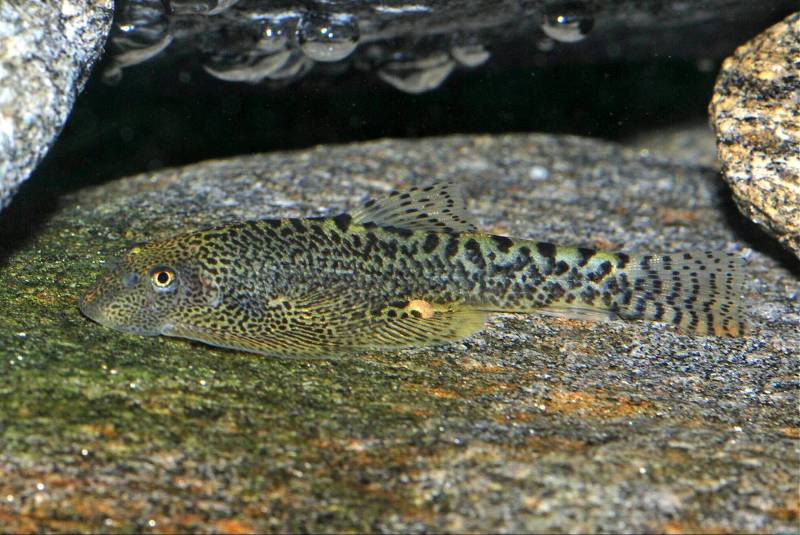
Sewellia sp. 'SEW04'
Gastromyzontidae · authority not recorded
This fish has thus far only been imported among shipments of S. sp. 'SEW02' and S. sp. 'SEW03'. It doesn't appear to correspond to any known member of the genus and may be undescribed. Prior to the mid-1990s S. lineolata was the only species in the genus but an upturn in surveys of fresh water fauna in Vietnam and Laos has resulted in the discovery of various new taxa, several of which remain undescribed.
Sperata aorIndian Shovelnose Catfish
Bagridae · authority not recorded
This "shovelnose" is unique amongst bagrids, but superficially resembles several unrelated South American catfish species. It's common name is derived from it's flattened, extended head. We cannot stress strongly enough that this is a species totally unsuited to aquarium life. Alarmingly, it is can sometimes be spotted in dealer's tanks. When small, it makes an interesting and undeniably impressive addition to a large aquarium but bearing in mind its enormous adult size,...
Squaliforma villarsiBlue Fin Thresher Pleco
Loricariidae · authority not recorded
This species is sometimes referred to as Hypostomus villarsi, and is a rare find in the hobby. If you're lucky enough to see some for sale, check the fish have rounded bellies and that their eyes aren't sunken before you part with any cash, as these are classic signs of emaciation in newly imported Loricariids....
Steatocranus casuariusBlockhead Cichlid
Cichlidae · authority not recorded
An easily kept cichlid whose character more than compensates for its somewhat drab colouration, S. casuarius is sometimes seen for sale as "Humphead", "Lionhead" or "Buffalohead" cichlid. It is a reophilic fish meaning it inhabits fast waters. Its swimbladder is modified to reduce buoyancy and thus prevent it from being swept away by the strong currents in it's natural habitat. In the aquarium it spends most of it's time resting on the substrate or hiding ...
Stigmatogobius sadanundioKnight Goby
Gobiidae · authority not recorded
Until recently the genus Stigmatogobius contained 18 species, but most have now been reclassified, leaving just 7 species currently assigned to it. S. sadanundio is by far the most common of these in the hobby. It makes an attractive addition to the brackish or hardwater community with medium-sized tankmates....
Stomatepia pindu
Cichlidae · authority not recorded
Because of it's its tiny natural range, habitat destruction due to excess water removal (the nearby town of Kumba relies on the lake for it's water supply), deforestation, the introduction of non-native species and overfishing, it is considered to be critically endangered. All efforts at captive breeding are to be encouraged. However, it is correspondingly rare in the hobby. The area around Lake Barombi Mbo has been suggested to be designated a protected area, but as yet this has not o...
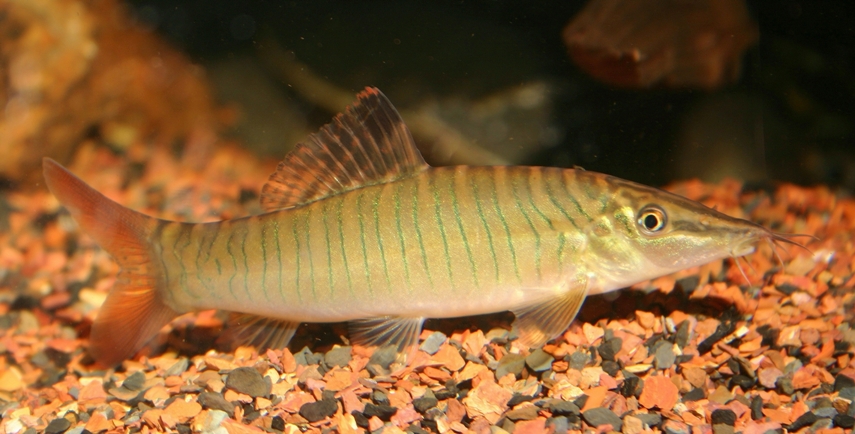
Syncrossus hymenophysaGreen Tiger Loach
Botiidae · Bleeker, 1852
Described from close to the city of Palembang, therefore presumably the Musi River basin, South Sumatra province, Sumatra, Indonesia, and since recorded from elsewhere on Sumatra plus the Malaysian state of Sarawak and Indonesian province West Kalimantan on Borneo.
Synodontis acanthomiasBlack-spotted Synodontis
Mochokidae · authority not recorded
This is one of the species of Synodontis seen less frequently in the trade and it ranks alongside S. schall as one of the more aggressive members of the genus. It is very hardy however and makes a good tankmate for large aggressive cichlid species. One unique characteristic of S. acanthomias is that the humeral process (the bony extension just above the pectoral fins) is long and tapered with a curved end....
Synodontis albertiHigh-fin Synodontis
Mochokidae · authority not recorded
S. alberti possesses an incredible set of barbels that are the longest of any Synodontis. It is also very hardy and adaptable and is therefore an ideal beginner's Syno. It has very large eyes exemplifying its nocturnal nature and also prefers cooler conditions to other members of the genus. This fish has a few common names including Bigeye Squeaker and Albert's Synodontis, though it is usually referred to as the High-fin Synodontis....
Synodontis albolineataMustard Synodontis
Mochokidae · authority not recorded
Also known as the Mustard Squeaker, this species is imported infrequently, though it sometimes shows up in mixed boxes of Synodontis from exporters. An ideal Syno for the general community due to its small adult size.
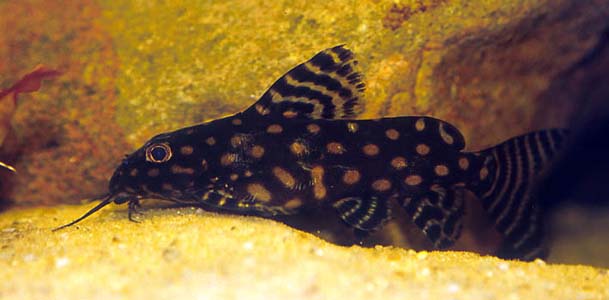
Synodontis angelicusPolka Dot Synodontis
Mochokidae · Schilthuis, 1891
A very nocturnal species that will be seen only infrequently during daylight hours. S. angelicus is very long-lived and can survive for over 20 years if maintained correctly. S. angelicus was much sought after when first imported and commanded a correspondingly large price. They are still relatively expensive, though prices have dropped considerably. It is quite a rare species in its native waters. The patterning and colour varies cosiderably, depending on type locality. Some specimens have w...
Synodontis aterrima
Mochokidae · authority not recorded
This species is infrequently offered for sale but makes an attractive addition to the medium sized community aquarium.
Synodontis brichardiBrichard's Synodontis
Mochokidae · authority not recorded
An unusual and highly adapted species, S. brichardi is one of our favourite Synos and really deserves to be kept in a biotope aquarium to be appreciated at its best. Here, it will be seen moving in and out of areas of high and low current and rasping at algae attached to rocks as in nature. It is much more diurnal than many Synodontis species, if maintained correctly. The colours of this fish intensify with age....
Synodontis contractaBig-nosed Upside-down Catfish
Mochokidae · authority not recorded
Often confused with the similar S.nigriventris, this species is imported infrequently. It is easily distinguished from nigriventris by its larger eyes and broad mouth and head. These features give rise to the common name "Big-nosed upside-down catfish". S. contracta spends the majority of its time swimming in an inverted position and this, along with its exaggerated facial features,make it a characterful and interesting addition to the community aquarium. It is also known as the Bug-e...
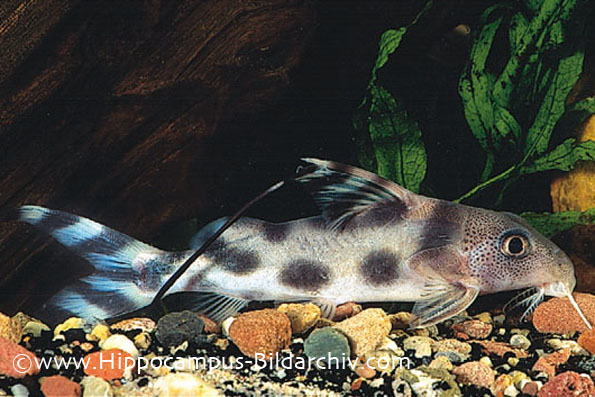
Synodontis decorusClown Synodontis
Mochokidae · Boulenger, 1899
Also known as both the Clown Squeaker and Decorated Synodontis, the first ray of theis greatly extended in this species. It is one of the more secretive, nocturnal Synos and if you wish to observe it regularly we recommend the addition of a 'moon' light or a red bulb timed to come on for a couple of hours after the main tank lights go off. If some food is added to the tank under these lighting conditions it should emerge to feed. This is one of only 3 members of the genus to exhibit...
Synodontis dhonti
Mochokidae · authority not recorded
S. dhonti's natural deep water habitat and solitary lifestyle make collection for the hobby difficult and so it is rarely seen for sale. When juvenile it may be confused with other Tanganyikan Synos but it loses its spotted patterning as it matures....
Synodontis eupteraFeatherfin Synodontis
Mochokidae · authority not recorded
One of the most popular and commonly seen Synos in the hobby, S. eupterus is usually offered for sale as a small (1-3") juvenile with no information regarding its potential size. These young fish are often sold as Synodontis "Network" due to their attractive reticulated patterning. This patterning breaks up as the fish mature and adult specimens have a simple spotted colouration. The characteristic 'feathered' dorsal also develops with age, with the first few rays develo...
Synodontis flavitaeniataPyjama Synodontis
Mochokidae · authority not recorded
Also known as the Orange Striped Squeaker, in our opinion this fish is one of the most attractively patterned Synos. S. flavitaeniata can vary considerably in patterning and colouration but is difficult to misidentify. This fish is more sensitive to deteriorating water quality than many Syno species so aquarium maintenance must be rigorous. When it was first imported 25 or so years ago it commanded an extortionate price but thankfully is affordable today. Its flexibility with regards to w...
Synodontis granulosa
Mochokidae · authority not recorded
One of the most stunning and sought after species of Synodontis and though the cost of ownership has dropped slightly, it still commands a high price. Its natural deep water habitat, limited range and solitary lifestyle make collection for the hobby difficult and so it is rarely seen for sale. It also appears that the areas of the lake in which it occurs are threatened with ecological disaster. In the aquarium S. granulosa is intelligent and can develop into a real character, with many speci...
Synodontis greshoffi
Mochokidae · authority not recorded
An attractively patterned, infrequently imported Syno that deserves more popularity in the hobby. It is occasionally confused with S. schoutedeni, which it superficially resembles.
Synodontis multipunctataCuckoo Synodontis
Mochokidae · authority not recorded
The reason we have recommended the use of non-Tanganyikan cichlid hosts above is because a successful captive spawning using Tanganyikan cichlid species has never been recorded! This may be due to an evolutionary process that has been observed in the lake, in which many cichlid species appear to have learned to avoid S. multipunctata when breeding. This is similar to the rejection of alien eggs by the host species in brood-parasatising birds. Because no species of brood parasatising catfish occu...
Synodontis nigritaFalse Upside-down Catfish
Mochokidae · authority not recorded
This is one of the most common Synos seen in dealers' tanks and is often incorrectly labelled "Upside-down catfish". The true upside-down catfish is S. nigriventris and S. nigrita inverts far less frequently than that species although it does often rest in this position. Moreover, S. nigrita grows far larger than S. nigriventris and it is a common sight to see several adult specimens in shops that have been returned by unsuspecting owners. S. nigrita is often confused with the...
Synodontis njassaeLake Malawi Synodontis
Mochokidae · authority not recorded
This is the only species of Synodontis found in Lake Malawi. There exists both large and small-spotted morphs, both of which are available in the trade.
Synodontis notataOne-spot Synodontis
Mochokidae · authority not recorded
Also known as the Domino Synodontis or the One-spot Squeaker, several regional variants of S. notata are known, some of which have 3, 6 or 12 spots and others none at all. Some of these are seen for sale under the invalid name S. ocellata. It is also often imported with similar species such as S. nummifer or S.congica. These are usually then all sold as notata. S. notata is more active during the day than many Syno species and therefore makes a good addition to aquariums with more boisterous...
Synodontis ocelliferOcellated Synodontis
Mochokidae · authority not recorded
S. ocellifer is often confused with other similar species of Synodontis but can be distinguished by the length of thewhich in this species is very long and runs from just past the base of the to just before the caudal fin. In recent years many alarming hybrids of this species have been appearing on the market and these should be avoided in our opinion. Besides being attractively marked this is one of the hardiest Synos available and is a good choice for the beginner....
Synodontis petricolaDwarf Lake Synodontis
Mochokidae · authority not recorded
One of our favourite Synos and highly recommended for any Tanganyikan community aquarium. The dwarf form can even be kept in a South American community.
Synodontis pleuropsBig Eyed Synodontis
Mochokidae · authority not recorded
S. pleurops is a very nocturnal species and unless the light in the aquarium is dim will rarely be seen. It is also very distinctive and is hard to confuse with other species. It has very large eyes and a downturned mouth, denoting its algae grazing habits. It will rarely venture into open water in the aquarium, preferring to hug the surface of pieces of driftwood, rocks and broad plant leaves. The colouration and patterning can vary considerably depending on type locality....
Synodontis polliPoll's Synodontis
Mochokidae · authority not recorded
This species is superficially similar to S. petricola but the spots on its body are larger than in petricola and it has a longer head. It is rarely seen in the trade, though can occasionally be found mis-identified as S. angelicus, S. petricola or Synodontis sp.....
Synodontis robbianus
Mochokidae · authority not recorded
S. robbianus is often confused with the similar but larger S. nigrita. They can be distinguished by the brownish base colour of this species as opposed to the greyer patterning exhibited by S. nigrita. It is also similar to several other Syno species, especially when juvenile. A hardy, adaptable species ideal for the newcomer to Synodontis but not often seen for sale....
Synodontis schall
Mochokidae · authority not recorded
S. schall is regarded as the 'bad boy' of the genus in aquarium circles. It is randomly aggressive and not particularly attractive. It is often confused with other similar species of Synodontis such as S. budgetti or S. clarias but can be distinguished by the length of thewhich, in this species, is very long and runs from just past the base of the to just before the caudal fin. It is an important food fish in some of its native countries....
Synodontis schoutedeniVermiculated Synodontis
Mochokidae · authority not recorded
In our opinion, this is one of the most attractively marked Synos commonly available in the hobby. The colour and patterning can vary considerably and the vermiculated pattern seems to intensify with age in well kept fish. When taken into consideration with its moderate adult size, this is an ideal beginners's Syno. One point worth noting is that this species seems very susceptible to bloating. While the cause of this is unknown, we suggest that feeding of dried foods be kept to a minimum. ...
Synodontis waterloti
Mochokidae · authority not recorded
This is an uncommonly imported Syno that is nevertheless very attractive. It has distinctive serrated edges to the pectoral fins and will exhibit its strongest colouration over a light coloured substrate....
Taeniacara candidi
Cichlidae · authority not recorded
Taeniacara Candidi are the source of much discussion amongst dwarf cichlid keepers. They are a highly attractive species, but require very specific water parameters and as such are seen as a challenge amongst even experienced south american cichlid keepers. Candidi are renowned for not liking water changes - they will commonly get "moody" after a water change, and will sulk at the bottom of the tank for over a day in some cases. Try to keep new water at the same temperature as the C...
Tanganicodus irsacae
Cichlidae · authority not recorded
This is one of the so-called Tanganyikan Goby Cichlids. They occur only in the upper few feet of water around rocky shores, also known as the surge zone, where they scrape algae from the rocks with their specialised teeth. This habitat is typified by breaking waves and strong currents. They have a few adaptations allowing them to inhabit such an environment. The swim bladder is rendered useless to reduce their buoyancy. They also have a longand a laterally compressed body shape to allow them to ...
Tateurndina ocellicaudaPeacock Goby
Eleotridae · authority not recorded
This beautiful little fish is not actually a goby, it's a member of the Eleotridae family, commonly known as sleepers or gudgeon. Members of this family lack the fused pectoral fins of true gobies. This species is one of the smallest and most attractive in the family, and makes an ideal resident of the planted community tank....
Telmatochromis vittatus
Cichlidae · authority not recorded
Similar in lifestyle to Julidochromis species, Telmatochromis vittatus is ideal for the smaller Tanganyikan community and is also a good choice for the beginner. It can be distinguished from the similar T. brichardi and T. bifrenatus primarily by its larger size, smaller eyes and more rounded nose. Like other Lamprologines, Telmatochromis have fang-like, caniform teeth, which they use for scraping microrganisms from rock surfaces. On adult specimens these are clearly visible....
Tetraodon biocellatusFigure Eight Puffer
Tetraodontidae · authority not recorded
Puffer fish are so called as they have the ability to inflate their elastic stomachs with water or air. This is usually a response to some kind of threat, although in the aquarium many specimens appear to inflate themselves for no apparent reason. The fish becomes 2 or 3 times its normal size, big enough to scare away many potential predators, or difficult to swallow. Puffers also have several other interesting adaptations. They are one of the few fish that can actually blink or close their ...
Tetraodon cochinchinensisFang's Puffer
Tetraodontidae · authority not recorded
Puffer fish are so called as they have the ability to inflate their elastic stomachs with water or air. This is usually a response to some kind of threat, although in the aquarium many specimens appear to inflate themselves for no apparent reason. The fish becomes 2 or 3 times it's normal size, which makes the fish both big enough to scare away many potential predators, and difficult to swallow. Many parts of the body of puffers contain the deadly neurotoxin tetrodoxin. This is the same ...
Tetraodon fluviatilisGreen Puffer
Tetraodontidae · authority not recorded
Puffer fish are so called as they have the ability to inflate their elastic stomachs with water or air. This is usually a response to some kind of threat, although in the aquarium many specimens appear to inflate themselves for no apparent reason. The fish becomes 2 or 3 times its normal size, big enough to scare away many potential predators, or difficult to swallow. Puffers also have several other interesting adaptations. They are one of the few fish that can actually blink or close their ...
Tetraodon mbuGiant Puffer
Tetraodontidae · authority not recorded
Puffer fish are so called as they have the ability to inflate their elastic stomachs with water or air. This is usually a response to some kind of threat, although in the aquarium many specimens appear to inflate themselves for no apparent reason. The fish becomes 2 or 3 times its normal size, big enough to scare away many potential predators, or difficult to swallow. Puffers also have several other interesting adaptations. They are one of the few fish that can actually blink or close their ...
Tetraodon miurusCongo Puffer
Tetraodontidae · authority not recorded
Puffer fish are so called as they have the ability to inflate their elastic stomachs with water or air. This is usually a response to some kind of threat, although in the aquarium many specimens appear to inflate themselves for no apparent reason. The fish becomes 2 or 3 times its normal size, big enough to scare away many potential predators, or difficult to swallow. Puffers also have several other interesting adaptations. They are one of the few fish that can actually blink or close their ...
Tetraodon nigroviridisGreen Spotted Puffer
Tetraodontidae · authority not recorded
Puffer fish are so called as they have the ability to inflate their elastic stomachs with water or air. This is usually a response to some kind of threat, although in the aquarium many specimens appear to inflate themselves for no apparent reason. The fish becomes 2 or 3 times it's normal size, which makes the fish both big enough to scare away many potential predators, and difficult to swallow. Many parts of the body of puffers contain the deadly neurotoxin tetrodoxin. This is the same ...
Tetraodon palembangensisHumpback Puffer
Tetraodontidae · authority not recorded
Puffer fish are so called as they have the ability to inflate their elastic stomachs with water or air. This is usually a response to some kind of threat, although in the aquarium many specimens appear to inflate themselves for no apparent reason. The fish becomes 2 or 3 times it's normal size, which makes the fish both big enough to scare away many potential predators, and difficult to swallow. Many parts of the body of puffers contain the deadly neurotoxin tetrodoxin. This is the same ...
Tilapia guinasana
Cichlidae · authority not recorded
Rare in the hobby, this species is unfortunately considered critically endangered in the wild. The lake in which it is found is receiving less groundwater than it once was, due to extraction of water for agriculture. Even if this were not the case, the species is found over such an enclosed range that it would still be at extreme risk. All attempts at captive breeding are therefore to be encouraged, with care being taken to keep the different lines pure. Interestingly, as there are no natural...
Toxotes chatareusLargescale Archerfish
Toxotidae · authority not recorded
The Largescale Archerfish is one of a fascinating group of fish that have evolved this very distinctive feeding pattern. The family contains six species, of which toxotes jaculatrix is the most commonly available (sometimes sold incorrectly as t. jaculator). Toxotes chatareus is offered for sale in the UK although much less frequently. There are reports that juvenile archers can be kept in fresh water but it is recommended that a brackish setup is always used. Eaten as a food fish in many...
Toxotes jaculatrixBanded Archerfish
Toxotidae · authority not recorded
The Banded Archer fish is one of a fascinating group of fish that have evolved this very distinctive feeding pattern. The family contains six species, of which toxotes jaculatrix is the most commonly available (sometimes sold incorrectly as t. jaculator). Occasionally, the similarly marked toxotes chatareus is offered for sale in the UK although much less frequently. There are reports that juvenile archers can be kept in fresh water but it is recommended that a brackish setup is always used. ...
Trachelyichthys decaradiatus
Auchenipteridae · authority not recorded
Very similar to its congener T. exilis, it can be distinguished by looking at the position of the eye which is set much further forward in exilis. Also, the humeral process (long spine extending from the back of the gill plate), is broader and shorter in this species than exilis. Neither are seen very often in the hobby....
Trachelyichthys exilisPygmy Driftwood Catfish
Auchenipteridae · authority not recorded
Very similar to its congener T. decaradiatus, it can be distinguished by looking at the position of the eye, which is set much further back in decaradiatus. Also, the humeral process (long spine extending from the back of the gill plate), is longer and thinner in this species than decaradiatus. Neither are seen very often in the hobby, but are sometimes available at specialist outlets....
Trachydoras steindachneri
Doradidae · authority not recorded
A rare sepcies in the hobby that is seldom offered for sale.
Tramitichromis intermedius
Cichlidae · authority not recorded
Sand dwelling Malawian cichlid species such as this can be somewhat delicate in the aquarium. A rigorous tank maintenance schedule is recommended to keep them in top shape; with small, regular partial water changes a necessity. Also take care with feeding as discussed above. It is likely this species will eventually be assigned to a different genus, as there is some confusion surrounding Tramitichromis and it's scientific validity. The fish included in the genus differ from Lethrinops sp...
Trematocranus placodonSnail-Crusher Hap
Cichlidae · authority not recorded
An ideal species for the larger Malawian community but one not often seen for sale. In nature, it is a molluscivore, feeding primarily on snails. It has specially developed pharyngeal teeth, which can crush and grind the shells of these animals with ease. Several other species were originally assigned to the genus but currently, only 3 species of Trematocranus exist, most having been reclassified as Aulonocara or Alticorpus....
Trichogaster labiosaThick-lipped Gourami
Osphronemidae · authority not recorded
Despite its ease of keeping and peaceable nature, this species is not particularly popular in the hobby, although it is imported quite regularly. A gold or 'sunset' strain exists, in which the barred patterning is replaced by an overall orange/gold colouration. This is not a natural variation, but has been selectively bred for the trade. The female of this form is almost as colourful as the male. Like others in the suborder Anabantoidei, the species possesses an accessory breathing...
Trichopodus leeriiPearl Gourami
Osphronemidae · authority not recorded
A very hardy, beautiful species which is highly recommended to the beginner. A male in full breeding dress is one of the most stunning fish available in the hobby. T. leerii is alo fairly long-lived and may survive for 8 years or more in the aquarium. These fish will also consume the aquarium pest hydra....
Trichopodus microlepisMoonlight Gourami
Osphronemidae · authority not recorded
T. microlepis is not as colourful as some other gouramis but can make a striking addition to the community tank. The modified ventral fins are considerably longer than in other gourami species. It is often used as a food fish in its native countries....
Trichopodus pectoralisSnakeskin Gourami
Osphronemidae · authority not recorded
This species is not often seen for sale but is a very good addition to the larger community tank. It is cultured commercially for food in it's native countries, and is used to make a particularly tasty fish soup! The snakeskin gourami can also produce 'cracking' noises, especially during breeding or territorial exchanges....
Trichopodus trichopterusThree-spot Gourami
Osphronemidae · authority not recorded
This species is available in many different colour forms and varieties, all of which have been selectively bred for the aquarium trade. These are seen much more often than the natural form, which is the blue-grey three spotted fish. They include gold, opaline, cosby, marbled and silver forms. T. trichopterus is one of the hardiest fish commonly available in the trade and can adapt to many different water conditions. However it is recommended to the beginner with reservations regarding it's ...
Triportheus angulatusDusky Narrow Hatchetfish
Characidae · authority not recorded
An attractive but not often seen species in the hobby. This is quite odd considering how common it is in many of its native habitats, where it is known as sardina. It has very strong pectoral muscles, and uses these to jump from the water to catch flying insects or to escape potential predators. It can make leaps of several metres in length....
Tyrannochromis macrostomaBig-Mouth Hap
Cichlidae · authority not recorded
T. macrostoma is an ambush predator in nature, lurking behind rocks and in crevices as it stalks its prey. It is rarely seen in the hobby and is usually quite expensive. Juveniles are easily confused with the similar T. nigriventer, but are easily distinguished when adult, as nigriventer does not develop the dark belly of macrostoma. Interestingly, this species exhibits reverse countershading, as also seen in the common Upside-down catfish, Synodontis nigriventris. This means that unlike the...
Vieja argenteaSilver Cichlid
Cichlidae · authority not recorded
A strikingly coloured, if somewhat aggressive fish. Also referred to as the White Cichlid, it is occasionally available in the UK through specialist cichlid dealers.
Vieja fenestrata
Cichlidae · authority not recorded
A very attractive fish when in adult colouration, vieja fenestrata is not all that common in the UK hobby. It can is often confused with the more commonly available v. synspila.
Vieja maculicaudaBlackbelt Cichlid
Cichlidae · authority not recorded
The Blackbelt Cichlid gets its name from two things: firstly the vertical black stripe around its flank, and secondly its toughness. Vieja maculicauda is a tough, aggressive fish and should be respected as such. Maculicauda is a relatively easy fish to keep. They are not impossible to breed, but not the easiest fish either. If you seriously intend to breed this fish, it is a wise decision to house 6 juvenile fish in a large tank (212 litres at least), and let them pair off. When a pair has be...
Wallago attuHelicopter Catfish
Siluridae · authority not recorded
This species is clearly not an aquarium fish, and thankfully is not imported with any great regularity. Young specimens are occasionally seen for sale however and no matter how cute they look, don't be tempted to buy one. The gigantic adult size is not the only problem with W. attu, as the mouth is filled with needle sharp, backward-pointing teeth. The fish will bite aggressively when being fed, especially when handled and larger individuals could easily sever a hand or worse. It is a genu...
Xenomystus nigriAfrican Knifefish
Notopteridae · authority not recorded
Originally classified in the genus Notopterus and reclassified in 1984, this is now the only described species of Xenomystus and has several interesting characteristics. Its swim bladder is specially adapted to act as an accessory breathing organ in a similar fashion to Polypteriids. It must rise to the surface to take a gulp of air periodically, often emitting a bell-like sound as it does so. X. nigri is often confused with the similar looking but far more aggressive Asian knifefish, Notopt...
Xenopterus naritusGolden Puffer
Tetraodontidae · authority not recorded
Puffer fish are so called as they have the ability to inflate their elastic stomachs with water or air. This is usually a response to some kind of threat though in the aquarium many specimens appear to inflate themselves for no apparent reason. The fish becomes 2 or 3 times its normal size, big enough to scare away many potential predators, or become difficult to swallow. Puffers are also one of the few fish that can actually blink or close their eyes. Many parts of the body of puffers contai...
Xenotilapia flavipinnisYellow Sand Cichlid
Cichlidae · authority not recorded
In nature, the pair bond formed by this species lasts only for the duration of the breeding season. However, in aquaria this bond can last much longer, with the pair remaining in their territory and defending it even when not spawning. It is thought that this is directly due to the fish being kept in the confines of the aquarium, where the territory is a permanent fixture. X. flavipinnis is very sensitive to deteriorating water conditions and regular water changes are essential to its good heal...
Xenotilapia melanogenysBlack-Chinned Xenotilapia
Cichlidae · authority not recorded
This fish feeds in a similar way to Geophagus species in that it will sift sand through its gills to extract invertebrates and morsels hidden in the substrate. It was until recently classified in the genus Enatiopus and is still named as such in much of the available literature. There are slight geographical variations in colour but these are not major. Interestingly, the shoals in which these fish live in nature appear to be fixed. That is, that an individual will remain in the same group for ...
Xenotilapia simaBig-Eyed Xenotilapia
Cichlidae · authority not recorded
A rarely seen species in the hobby, X. sima is nevertheless a charming species for the peaceful Tanganyikan community. It feeds in a similar way to the well-known South American Geophagus species in that it will sift sand through its gills to extract invertebrates and morsels hidden in the substrate. It is quite a skittish fish and may react very nervously to rapid movements outside the tank or when lights are switched on and off....
Xenotoca eiseniRedtail Goodeid
Goodeidae · authority not recorded
An incredibly hardy and adaptable species that is not so popular in the hobby as it once was, probably due to its often aggressive nature. As with other goodeids, there is less of a size difference between the sexes than in many other livebearers. This is thought to be related to the relatively primitive structure of the andropodium, as the fish tend to choose mates that are of similar size so that the sex organs are synchronised. Goodeids are unique among livebearers in that the developi...
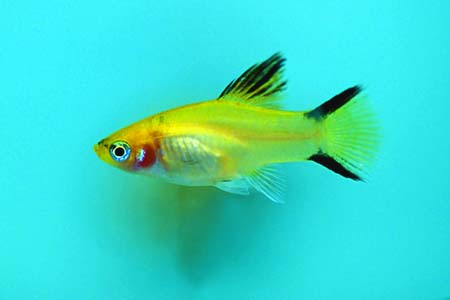
Xiphophorus maculatusPlaty
Poeciliidae · Gunther, 1866
Another massively popular aquarium fish, with dozens of selectively bred varieties available, including mickey mouse, wagtail, tuxedo, moon, blue, red, comet and hi-fin. Some of these are produced by crossbreeding with X.helleri or X. variatus. Unfortunately many commercially bred platies are not very hardy due to inbreeding and over-production and are prone to disease and premature death. Wild fish are almost never seen in the hobby. As long as the ph remains above neutral this fish is ...
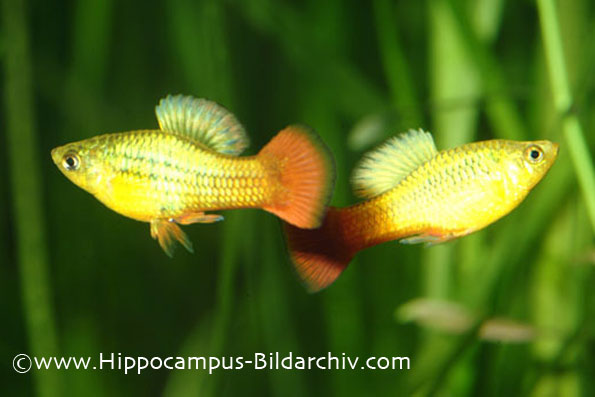
Xiphophorus variatusVariable Platy
Poeciliidae · Meek, 1904
Another massively popular aquarium fish, with dozens of selectively bred varieties available. Some of these are produced by crossbreeding with X.helleri or X. maculatus. Unfortunately many commercially bred platies are not very hardy due to inbreeding and over-production and are prone to disease and premature death. The wild X. variatus can be distinguished from X. maculatus by its slimmer, more elongated body shape and slightly longer dorsal fin. This last feature has been seized upon by many...
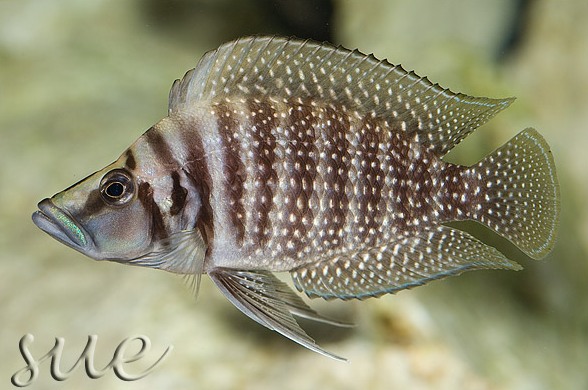
Altolamprologus calvusCalvus Cichlid
Cichlidae · Poll, 1978
A. calvus is a predator by nature and its body shape has been adapted to allow it to enter small crevices and gaps in the rockwork of Lake Tanganyika to prey on eggs, fry and small fish. Its laterally compressed shape makes the fish hard to spot head on, giving it an advantage over would be predators and prey alike. It is also quite well-armoured, possessing thick scales which can be turned towards potential attackers. These can cause real damage with their serrated edges. Several colour form...
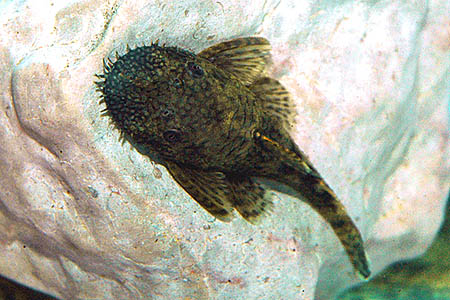
Ancistrus triradiatusHorned Bristlenose Pleco
Loricariidae · Eigenmann, 1918
Often confused with the common bristlenose, Ancistrus sp. (3) and some other members of the genus. This species is imported quite often, but unlike sp. (3) is almost always wild caught. So similar are some of these species that a definite id is sometimes impossible without knowing the collection locality of the fish. When buying Loricariids always check that the fish has a rounded belly and that its eyes aren't sunken, as these are classic signs of emaciation in newly imported specimens...
Carinotetraodon travancoricusDwarf Puffer
Tetraodontidae · authority not recorded
C. travancoricus is probably the smallest species of puffer, and is certainly one of the more diminutive fish regularly found in the trade. It's cute looks, amusing personality and fascinating swimming action make it a justifiably popular import, although it's all-too-often sold without the correct information needed for its long-term health and care. It's also known as the Malabar puffer, in reference to the area of southern India that contains much of the species' natural r...
Chaca bankanensisChocolate Frogmouth Catfish
Chacidae · authority not recorded
Chaca are unsuitable subjects for the general aquarist, but are relatively popular among lovers of oddball species. This species is very similar in appearance to the closely related C. chaca. However, it is somewhat darker and redder in colour than its relative, and lacks the hooklets that occur on the lips and body of chaca. It is a true master of disguise, and is also known as the angler catfish, due to it's ability to use its barbels as a kind of lure, using them to simulate the movement...
Chaca chacaFrogmouth Catfish
Chacidae · authority not recorded
Chaca are unsuitable subjects for the general aquarist, but are quite popular among lovers of oddball species. This species is very similar in appearance to the closely related C. bankanensis. However, it's usually a bit lighter in colour than its relative and possesses small hooklets on the lower lip and body that are not present in bankanensis. It's a true master of disguise and is also known as the angler catfish, due to its ability to use its barbels as a kind of lure. These can be...
Chaetostoma sp.Spotted Bulldog Plec
Loricariidae · authority not recorded
Also known popularly as the rubbernose plecs, Chaetostoma species are seen for sale quite often these days. This is one of the more commonly seen, and provided its needs are adequately met, is a very hardy little fish. There's a bit of mystery surrounding its true identity, hence the species name, and it's sometimes misidentified in shops. The true L187 is currently known as Chaetostoma pearsei, and is a white-spotted fish. When buying Loricariids such as this always check the fish ...
Cichla monoculusTucanare Peacock Bass
Cichlidae · authority not recorded
Due to their large size, Peacock Bass are only really recommended for the experienced fishkeeper that can house them adequately. That said, they are a hardy and robust species that will adapt to a variety of conditions. Peacock Bass are becoming much more available in the hobby and are often seen for sale as cute 2" babies, often tempting people into buying a fish they will not be able to care for in the long term. Peacock Bass are also fished as a sport fish....
Cichla ocellarisPeacock Bass
Cichlidae · authority not recorded
Due to their large size, Peacock Bass are only really recommended for the experienced fishkeeper that can house them adequately. That said, they are a hardy and robust species that will adapt to a variety of conditions. Peacock Bass are becoming much more available in the hobby and are often seen for sale as cute 2" babies, often tempting people into buying a fish they will not be able to care for in the long term. Peacock Bass are also fished as a sport fish....
Cichla orinocensisOrinoco Peacock bass
Cichlidae · authority not recorded
Due to their large size, Peacock Bass are only really recommended for the experienced fishkeeper that can house them adequately. That said, they are a hardy and robust species that will adapt to a variety of conditions. Peacock Bass are becoming much more available in the hobby and are often seen for sale as cute 2" babies, often tempting people into buying a fish they will not be able to care for in the long term. Peacock Bass are also fished as a sport fish....
Cichla temensisSpeckled Pavon
Cichlidae · authority not recorded
One of the largest cichla species. Due to their large size, Peacock Bass are only really recommended for the experienced fishkeeper that can house them adequately. That said, they are a hardy and robust species that will adapt to a variety of conditions. Peacock Bass are becoming much more available in the hobby and are often seen for sale as cute 2" babies, often tempting people into buying a fish they will not be able to care for in the long term. Peacock Bass are also fished as...
Cichlasoma bolivienseBolivia Cichlid
Cichlidae · authority not recorded
Sometimes referred to (incorrectly) as cichlasoma boliviensis, the Bolivia cichlid is not commonly seen in the hobby. A good candidate for a community of medium sized cichlids, assuming aggression problems can be overcome.
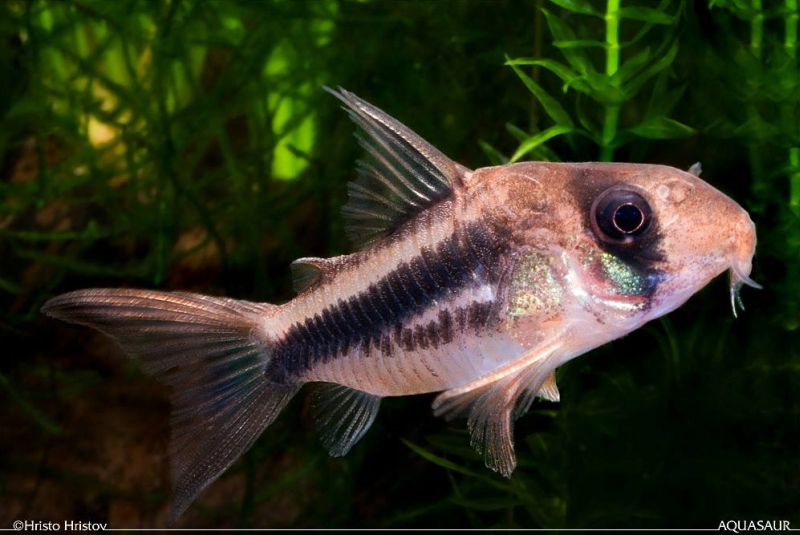
Corydoras axelrodiAxelrod's Cory
Callichthyidae · Rössel, 1962
This species is somewhat variable in appearance and can have between 1-3 dark lateral stripes on each flank, for example. It's also known by the alternative common name 'pink corydoras'. It looks similar to the congener C. loxozonus plus unidentified fishes which have been assigned the codes C003 and CW021, and all four are sometimes traded under the fabricated names C. 'deckeri' or C. sp. 'decker/deker'.
Ctenopoma kingsleyaeTailspot Ctenopoma
Anabantidae · authority not recorded
This species can be exceptionally long-lived and there are reports of specimens surviving in aquaria for over 30 years. It is named after the explorer Mary Kingsley, and often goes by the common name of Kingsley's climbing perch. While Ctenopoma are closely related to the Asian climbing perch (Anabas sp.), they are not known to have the ability to cross areas of land like this species. Like others in the suborder Anabantoidei, the species possesses an accessory breathing organ known as t...
Ctenopoma weeksiiMottled Bushfish
Anabantidae · authority not recorded
There are currently 20 species of Ctenopoma, most of which most are seldom seen in the aquatic trade. Originally the genus was significantly larger, but a number of original members were reclassified by Norris in 1995. Whilst describing what were apparently two new Ctenopoma, he discovered sufficient morphological anomalies in the fish to erect a new genus for them. The name Microctenopoma was chosen, although this does not relate to the size of the fish. Similar defining characteristics were al...
Dicrossus filamentosusLyretail Checkerboard Cichlid
Cichlidae · authority not recorded
Dicrossus Filamentosa were once part of the Crenicara genus, but now share the Dicrossus genus with Dicrossus Maculata. The two species look similar, but the Maculata lack the lyretailed of the Filamentosa. Some say however, that the Maculata has even more striking body colouration than the already impressive Filamentosa. These fish aren't impossible to find, but aren't readily available in local fish shops either. They are seen as a challenge to breed, but plenty of breeders have h...
Distichodus lusossoLong-nosed Distichodus
Citharinidae · authority not recorded
One of only a handful of Distichodus seen with any regularity in the hobby. This species is undeniable attractive when juvenile, but unfortunately loses much of its colour and patterning as it matures. It is superficially similar to the more commonly seen D. sexfasciatus but has a much smaller adult size and a narrow, pointed head....
Dormitator lebretonisClay Goby
Eleotridae · authority not recorded
Not often seen for sale, but if you can find it, it makes a peaceful addition to the brackish or hardwater community of medium-sized fish. It was previously considered a member of the now defunct genus Batanga. The fish in our picture is a young specimen. Adults develop a pleasing pattern of reds and blues and are most attractive....
Electrophorus electricusElectric Eel
Gymnotidae · authority not recorded
One of the most notorious fish in the world, the electric eel is a truly fascinating species. Its vital organs are contained in the front portion of the body, with up to 80% of it being reserved for the enormous electricity-producing organs. It uses electricity in several ways. The species is nocturnal and has very poor eyesight and so uses a weak electric field to navigate and identify its surroundings. This weak, pulsing signal is produced by the Sachs organ, one of 3 electricity-producing org...
Gambusia affinisWestern Mosquitofish
Poeciliidae · authority not recorded
For many years G. affinis was thought to be the same species as the Eastern Mosquitofish, G. holbrooki, but has since been given distinct species status. They can be distinguished by several means. In G. holbrooki the leading ray of the males' gonopodium has a serrated edge, theusually has 7 rays and males also generally have a higher degree of dark spotting on the body than G. affinis males. Male G. affinis also lack the serrated leading ray of the gonopodium and this species usually has o...
Gymnogeophagus balzaniiParaguay Eartheater
Cichlidae · authority not recorded
A very interesting species that sadly is only recommended to the specialist able to provide it with the specific conditions it requires for its long term health. There are a couple of different colour forms available, dependant on locality.
Gymnotus pedanopterusZebra Knifefish
Gymnotidae · authority not recorded
The genus Gymnotus has undergone considerable taxonomic revision in recent years, with over 20 new species being described since 1994, of which this stunning species is one. It's still very rare in the hobby and tends to command a high price when available. Like other Gymnotids, it produces a weak electric field using specially-adapted muscle tissue located towards the tail. It also possesses electroreceptors which allow the fish to receive electrical signals. With these the fish can sense ...
Hemichromis elongatusFive Star General
Cichlidae · authority not recorded
A real bruiser of a cichlid, H. elongatus is not seen for sale very often, and with good reason. Pound for pound it must rank as one of the most aggressive cichlids available in the hobby. It is such an efficient predator that, in some of its native countries, it is used to control populations of Tilapia. As a result it's definitely not recommended for the inexperienced aquarist. The common name is derived from the row of 5 dark markings that run laterally along the flanks of the fish. I...
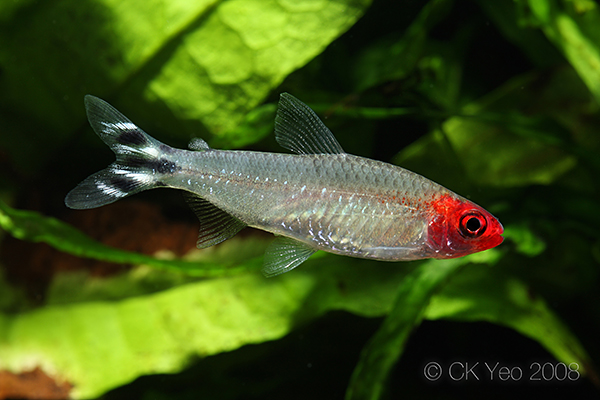
Hemigrammus bleheriFirehead Tetra
Characidae · authority not recorded
This is the species most commonly sold as 'rummy-nose tetra' in aquatic outlets. A selectively-bred "golden" variant has also been produced by commercial breeders and is available from time-to-time. The natural form is very similar to both the "true" rummy-nose, Hemigrammus rhodostomus and the 'false' rummy-nose, Petitella georgiae in appearance. The 3 species can distinguished by several factors. The first is by the extent to which the red colouration...
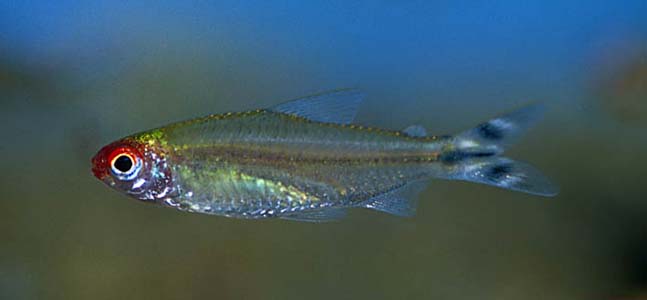
Hemigrammus rhodostomusRummy-nose tetra
Characidae · authority not recorded
This is the 'real' rummy-nose. The species most often sold as such is, in fact, the firehead tetra, H. bleheri. These 2 are very similar in appearance, as is the 'false' rummy-nose, Petitella georgiae. The 3 species can distinguished by several factors. The first, is by the extent to which the red colouration on the head of the fish extends into the body. H. bleheri is the only one of the 3 in which the red extends beyond the gill covers. The amount of red colouration on ...
Herotilapia multispinosaRainbow Cichlid
Cichlidae · authority not recorded
Relatively common in the hobby, the Rainbow Cichlid makes an ideal CA cichlid for those who do not wish to manage the challenge of the more aggressive CA species.
Hoplerythrinus unitaeniatusGold Wolf Fish
Erythrinidae · authority not recorded
Also known as the golden trahira, H. unitaeniatus is the only one of the three recognised species currently in the genus to appear in the trade with any regularity. It's really a fish suitable only for the specialist, and as with any predatory species, care must be taken when performing tank maintenance. It's a representative of an ancient group of fishes, and possesses a modified, highly vascularised swim bladder that acts as an accessory breathing organ, allowing the fish to survi...
Horabagrus brachysomaSun Catfish
Bagridae · authority not recorded
Also known as the bullseye, solar, eclipse or golden red-tailed catfish, this species is relatively common in the trade. Unfortunately, it's a victim of some rather misplaced marketing, as it's often sold as being suitable for the general community tank found in homes worldwide. The majority of specimens seen for sale measure only 2-3", which only serves to make the situation worse. Obviously, given its adult size it's totally unsuitable for this kind of setup, but makes a fi...
Hydrocynus goliathGiant Tigerfish
Alestiidae · authority not recorded
A voracious piscivore this species is perfectly designed for its lifestyle. It is very streamlined and muscular and has one of the most amazing sets of teeth of any freshwater fish. These are dagger-shaped and interlock, meaning the fish can rip chunks out of its prey. The teeth are visible even when the animal's mouth is closed, which makes for a fearsome sight. It is one of the world's most infamous game fish and specimens weighing over 100 pounds have been recorded. We cannot st...
Hypoptopoma incognitum
Loricariidae · authority not recorded
Hypoptopoma incognitum
Hypostomus reganiGiant White Spot Plec
Loricariidae · authority not recorded
An attractive and very hardy larger plec.
Hypostomus sp.
Loricariidae · authority not recorded
This undescribed species is part of the Hypostomus cochliodon species complex, all members of which were previously included in the genus Cochliodon, now considered a synonym of Hypostomus. Members of this group can be distinguished from congeners by several differences in morphology, most notably the hump-backed profile of mature fish and spoon-shaped dentition. These features, along with the fishes tendency to eat wood, are shared with the Panaque genus of the Ancistrinae subfamily, but the tw...
Julidochromis marlieriMarlier's Julie
Cichlidae · authority not recorded
Julidochromis are commonly known as "Julies" in the hobby. This particular species may also be seen for sale as the Chequered Julie. A truly characterful cichlid exhibiting quirky behaviour, it will swim hugging the rock surfaces no matter what the angle is. As with other Julies, large water changes should be avoided as this can cause mated pairs to turn on one another. Several geographical morphs are available. However, no two species or morphs of Julidochromis should be kept togethe...
Julidochromis ornatusGolden Julie
Cichlidae · authority not recorded
Julidochromis are commonly known as "Julies" in the hobby. This is one of the most common Julie species encountered in aquaria and may also be sold as the Yellow or Ornate Julie. The majority of specimens available are tank bred and do not exhibit as bright colouration as wild fish. As with other Julies, large water changes should be avoided as this can cause mated pairs to turn on one another. Several geographical morphs of this species are available, as is an aquarium sport albino...
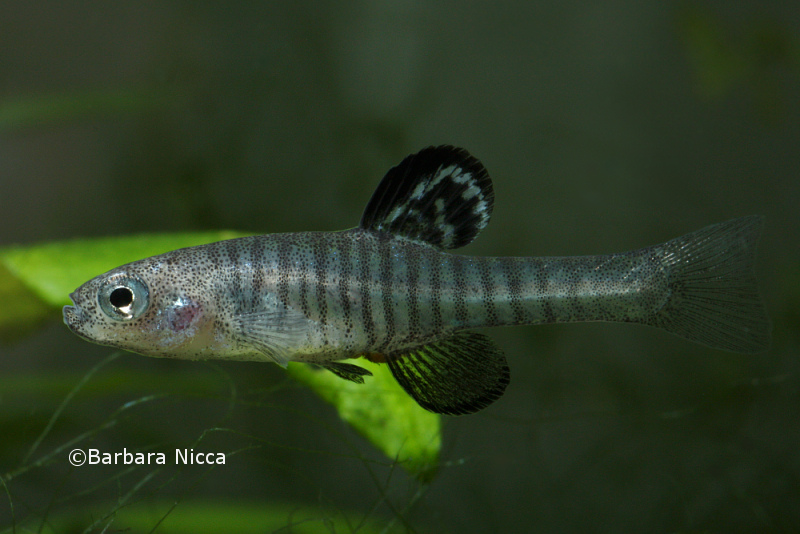
Kosswigichthys asquamatusHazar Toothcarp
Aphaniidae · Sözer, 1942
This little-known, relict species possesses some unique morphological and behavioural traits when compared with its congeners and the genus Kosswigichthys was erected for it in the original description. It has a much more elongate body profile than other Aphanius spp., almost total absence of scalation on the body and three rows of conical (as opposed to tricuspid in all other species) teeth which set it apart. Work by Franz and Villwock in the 1970s revealed it to be a member of Aphanius and showed ...
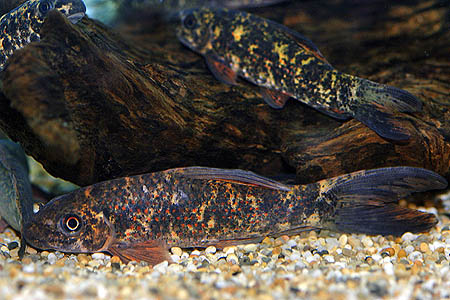
Labeo cyclorhynchusHarlequin Shark
Cyprinidae · authority not recorded
L. cyclorhynchus was described twice in the space of two years, with Pellegrin erecting Labeo variegatus for it in 1901. Although the invalidity of the variegatus name is quite well-documented you may still see the species named as such in older literature, trade lists and by some websites. It's also worth noting that the attractive patterning seen in young fish does fade with age, the adults being much darker in colour. The genus Labeo currently contains over 100 species but is in dire ...
Lamprologus ocellatusOcellated Shell-dweller
Cichlidae · authority not recorded
A charming little cichlid with real character, L. ocellatus is a deservedly popular hobbyists' fish. It has an endearing habit of burying its shell and defending it against all-comers. Many an unsuspecting hobbyist has recieved a sharp nip from an ocellatus who feels its territory is being invaded. Neighbouring shells may also be buried to prevent other fish moving in. Koning has hypothesisesd that the burying of the shell and the resultant pile of sand around it not only provides additiona...
Lamprologus signatus
Cichlidae · authority not recorded
Care must be taken when purchasing this species as females look so different to males that the sexes were initially described as separate species!
Lamprologus speciosus
Cichlidae · authority not recorded
This species is very similar to L. ocellatus and often carries the trade name "black ocellatus". It is found living alongside L. stappersi in nature....
Lamprologus stappersi
Cichlidae · authority not recorded
This fish was originally thought to be a morph of L. ocellatus but has now been described as a distinct species. It is still occasionally offered for sale as "pearly ocellatus" and may also be seen under the invalid name L. meleagris....
Lates angustifronsTanganyika Lates
Latidae · authority not recorded
We've included this species on the site purely because there have been an alarming number of juvenile fish showing up in some aquatic stores, and as a result, in hobbyists tanks. This species is simply not suited to captive life in any respect. If you see one for sale, and they are undeniably an attractive fish, please don't be tempted to buy it. As responsible fishkeepers, we should consider the long term well-being of any fish that we buy, and housing a L. angustifrons for life is ev...
Lates calcariferBarramundi
Latidae · authority not recorded
This species is included purely because there have been an alarming number of juvenile fish showing up recently in some aquatic stores and as a result, in hobbyists tanks. This fish is simply not suited to captive life in any respect. To know that it's one of the most sought after sport fish in Australia should tell you all you need to know about it. Although undeniably attractive when juvenile, please don't be tempted to buy if you see these for sale. Housing one for life is beyond th...
Lates niloticusNile Perch
Latidae · authority not recorded
This species has been introduced into many areas in Africa for commercial purposes, and it's had a hugely detrimental effect on local fish populations in some of these environments. The most notable case is that of Lake Victoria, where much of the endemic cichlid population has been wiped out. L. niloticus is thought to have directly contributed to the extinction of over 200 endemic species in the lake by predation, or outcompeting them for food. The IUCN have included it in their list of t...
Loricaria simillimaMarbled Whiptail
Loricariidae · authority not recorded
The pictures here show the fish that is most commonly referred to as L. simillima, but there is a great deal of uncertainty surrounding its true identity. As suggested above, it seems unlikely that its natural distribution is so wide, and we are probably dealing with several species or subspecies. This argument is strengthened by the fact that several differently coloured fish are imported as this species, with darker specimens being collected from acidic blackwaters and lighter fish hailing fro...
Luciocephalus pulcherGiant Pikehead
Osphronemidae · authority not recorded
With a reputation as a difficult species to maintain in captivity, L. pulcher is recommended only to those enthusiasts able to provide the specialist diet and care it requires for its long-term health. It seems to travel very poorly, and is often seen on sale in a weakened, emaciated state. It is also particularly susceptible to bacterial infections when initially imported. Observe the fish carefully when buying and avoid any that are showing red patches around the mouthparts or fins, or that ap...
Megalodoras uranoscopusGiant Raphael Catfish
Doradidae · authority not recorded
This species is also known by the vernacular name "ripsaw catfish" (U.S.) and was often referred to by the scientific name M. irwini, now considered a junior synonym of M. uranoscopus, in older literature. Within the family Doradidae the genus Megalodoras is considered most closely-related to Lithodoras, Centrodoras and Platydoras, respectively. Members of the family Doradidae can be distinguished from all other Siluriformes by possession of a unique infranuchal scute, a dermal bon...
Melanotaenia splendida rubrostriataRed-striped Rainbowfish
Melanotaeniidae · authority not recorded
There are currently 4 described subspecies of Melanotaenia splendida, of which this species is one of the most colourful. The principle differences are generally in colour, pattern and fin counts, although even these vary depending on the locality of the fish. The different forms and subspecies should not be mixed in the aquarium, as they may hybridise. Adult specimens are rarely seen for sale, and it's the much drabber juvenile fish that are almost always offered in dealers tanks. However,...
Mesonauta festivusFlag Cichlid
Cichlidae · authority not recorded
Flag Cichlids are enduringly popular in the hobby and can be found in most aquatic stores. Interestingly, this species is not the species most commonly sold as the Flag cichlid. It is usually m. insignis that makes it into dealers tanks....
Mesonauta insignis
Cichlidae · authority not recorded
There is some debate that this species is actually the fish that finds its way into aquatic stores under the name of the Flag cichlid (normally attributed to m. festivus). The two fish look very similar and, in reality, it is likely that both species are sold under the same name - depending on the area where the fish were originally caught and exported from....
Microctenopoma ansorgiiOrnate ctenopoma
Anabantidae · authority not recorded
This is the most colourful of the African anabantoids and is much sought after by hobbyists. A male in full breeding dress is truly a sight to behold. In nature it can be found in small streams, inhabiting areas of dense vegetation close to the riverbanks. It is difficult to collect a lot of fish from these habitats and so M. ansorgei is relatively rare in the hobby. These fish can be difficult to acclimatise but once settled are very hardy and can live up to 5 years in the aquarium....
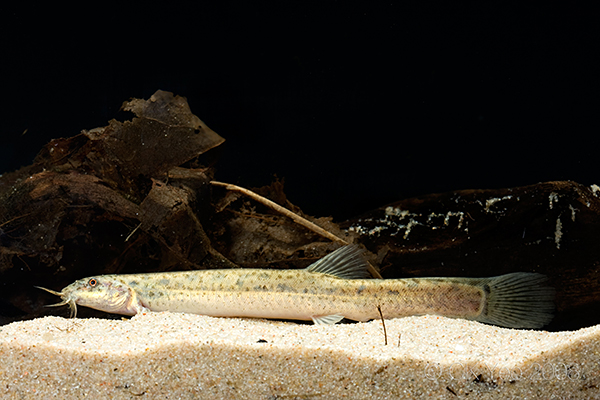
Misgurnus anguillicaudatusOriental Weather Loach
Cobitidae · authority not recorded
An exceptionally hardy and adaptable species tolerant of a wide range of physiological variables and flexible of diet, factors which have allowed it to become established as an alien species around the globe. Its high reproductive potential and low vulnerability to predation have made it a cause for concern to conservation scientists although as yet there remains no proof of it exerting a negative effect on native fishes in countries outside its natural range.
Nannacara anomalaGolden Dwarf Cichlid
Cichlidae · authority not recorded
Nannacara Anomala are widely available in the trade, and are generally regarded as an excellent beginner's fish. If a beginner is interested in keeping Cichlids and learning about breeding, then these fish are absolutely ideal. Anomala are attractive, hardy and usually quite cheap to purchase. Like some species of the Apistogramma genus, the mother may use fascinating body language to communicate with her fry when she is caring for them. If there is more than one male in a tank smalle...
Nanochromis nudiceps
Cichlidae · authority not recorded
This species is rarely imported. It is easily confused with N. parilus but can be distinguished by the fact that male fish lack the barring seen in the upper part of the of parilus and have dark edges to the scales on the body. Females can be distinguished by the spotting in the lower part of the caudal, which is unpatterned in parilus. We do not recommend this species to the beginner due to its very specific water and care requirements....
Nanochromis parilus
Cichlidae · authority not recorded
N. parilus is one of the commoner Nanochromis in the hobby as it is more easily collected from its natural waters than most species. It is easily confused with the less often seen N. nudiceps but can be distinguished by the fact that male fish exhibit a barred patterning inn the upper half of the which is not present in nudiceps. Females can be distinguished by the unpatterned lower part of the caudal, which is spotted in nudiceps. There are a couple of geographical variants available. We do ...
Nanochromis transvestitus
Cichlidae · authority not recorded
One of our favourite dwarf cichlids, N. transvestitus is a truly stunning fish when in good condition. However, it is not recommended to the beginner due to its very specific water requirements. The scientific name is derived from the fact that the female is the more colourful fish, making it something of an oddity....
Neolamprologus boulengeri
Cichlidae · authority not recorded
N. boulengeri can be distinguished from the similar N. hecqui and Lamprologus kungweensis primarily by the orange border on the dorsal and anal fins, although its adult patterning is somewhat different to the other species. Unlike many other shell dwellers, it will spawn in small caves if no shells are made available....
Neolamprologus brevis
Cichlidae · authority not recorded
N. brevis is one of the commoner species of shell dweller available in the hobby. Several colour morphs are available including "sunspot", "katabe" and "sambia". As mentioned above, it is often found in areas within Lake Tanganyika where relatively few snail shells collect and in these areas, pairs of fish will share the same shell. This behaviour may or may not be observed in the aquarium, depending on the number of shells provided and the individual fish. The terr...
Neolamprologus helianthusSunflower Lamprologus
Cichlidae · authority not recorded
This stunning species was only described in 1997 and is included in the so-called "Brichardi complex", which also includes N. brichardi, crassus, falcicula, gracilis, pulcher, savoryi and splendens. The species should not be mixed in aquaria as they will hybridise freely. N. helianthus can be distinguished from others in the complex by its overall yellow-orange patterning and v-shaped cheek marking....
Neolamprologus leleupiLemon Cichlid
Cichlidae · authority not recorded
One of the most popular Tanganyikan species in the hobby, N. leleupi is a stunning fish when in good condition. However, it is not as easy to maintain as its popularity suggests, due to its disagreeable attitude towards conspecifics and its sensitivity to deteriorating water conditions. It is a solitary species in nature, with male fish entering females' caves as they find them and spawning with receptive females. This explains the weak pair bond formed by spawning fish in aquaria and also ...
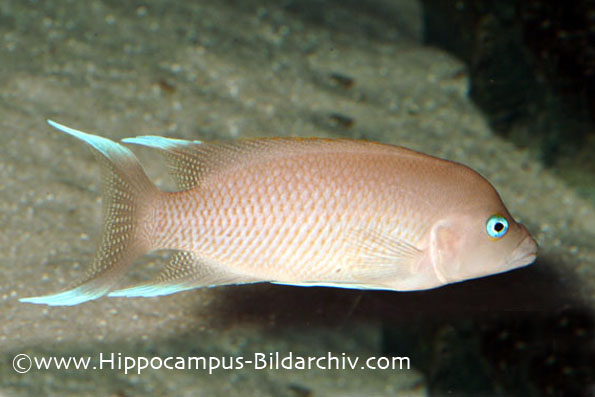
Neolamprologus marunguensis
Cichlidae · authority not recorded
A less often seen but good looking species with a deeply forked tail. It was previously sold as Neolamprologus sp. "walteri".
Neolamprologus multifasciatus
Cichlidae · authority not recorded
This is probably the smallest known cichlid species and exhibits truly fascinating behaviour. The territories it establishes are very small, usually measuring no more than 6" across, but they are defended vigorously. The tiny fish will even bite hands or fingers that invade their 'personal space'! Highly recommended to anyone wishing to observe some unique behaviour on a small scale....
Neolamprologus olivaceous
Cichlidae · authority not recorded
This species is included in the so-called "Brichardi complex", which also includes N. brichardi, crassus, falcicula, gracilis, pulcher, savoryi and splendens. These should not be mixed in aquaria, as they will hybridise freely. N. olivaceouscan be distinguished from others in the complex by the two curved markings on the gill cover. It is possible that it is synonymous with N. pulcher, as proposed by Konings (1993)....
Neolamprologus savoryiStriped Brichardi
Cichlidae · authority not recorded
This species is included in the so-called "Brichardi complex", which also includes N. brichardi, crassus, falcicula, gracilis, helianthus, olivaceous, pulcher, and splendens. These should not be mixed in aquaria as they will hybridise freely. N. savoryi can be distinguished from others in the complex by it's distinctive patterning of vertical bars....
Neolamprologus sexfasciatusSix-barred Lamprologus
Cichlidae · authority not recorded
Several geographical morphs of this species are available, including "Sambia" and "Kipili". These vary in base colour from blue to yellow to white. It is not recommended for the general Tanganyikan community due to its aggressive and predatory nature....
Neolamprologus similis
Cichlidae · authority not recorded
N. similis is one of the less frequently seen shelldwellers in the hobby but has no less personality than its cousins. The territories it establishes are very small, usually measuring no more than 6" across, but they are defended vigorously. The tiny fish will even bite hands or fingers that invade their 'personal space'! It can be distinguished from the similar N. multifasciatus by the presence of additional barring on the head and neck and also in this species the stripes appear...
Osteochilus hasseltiiHard-lipped Barb
Cyprinidae · authority not recorded
There are currently 34 described species of Osteochilus although none can be considered popular in the aquarium hobby. According to Rainboth's 'Fishes of the Cambodian Mekong' members of the genus are characterised by lack of aspine, presence of 11-18rays, large rostral and maxillary barbels, papillae on both upper and lower lips, darkened but not black median fins and the fact that the lower lip is not separated from the isthmus by a deep post-labial groove. O. hasseltii can be f...
Oxydoras nigerRipsaw Catfish
Doradidae · authority not recorded
Previously referred to a Pseudodoras niger, the Ripsaw Cat is a fish only for the experienced fishkeeper due to its large adult size. Although a visually stunning fish, realistically, it is best suited to public aquaria. Much more peaceful than its common name suggests, which it gets from the spines that run down the lateral line of the fish. This fish is becoming more readily available to the hobby and prices are also falling, meaning that many fishkeepers are being tempted into buying a fis...
Pangasianodon gigasGiant Mekong Catifish
Pangasiidae · authority not recorded
Pangasianodon is separated from other pangasiid generea primarily on the basis of some morphological differences including a lack of teeth and massively reduced barbels in adult specimens. Sadly it's numbers are declining rapidly in nature, through a combination of unsustainable fisheries, damming and habitat destruction. Since 1990 wild stocks are thought to have undergone a decrease of over 80%. From an annual catch of over 60 specimens in 1990, only 8-11 were being caught per year in ...
Pangasionodon hypophthalmusIridescent Shark Catfish
Pangasiidae · authority not recorded
Previously referred to as Pangasius sutchi, this is the commonest of the Pangasiid catfish seen in the aquatic trade. It's usually seen for sale as a cute silvery-blue 2-3" youngster, most often without adequate information regarding its long term care requirements and potential size. Unfortunately this means it makes it's way into many a beginner's community tank, as it's undeniably attractive when small. The use of common names such as the one stated here don't he...
Pangasius sanitwongseiParoon Shark
Pangasiidae · authority not recorded
In size and weight terms Pangasius sanitwongsei is second only to the giant Mekong catfish, Pangasianodon gigas in the family Pangasiidae, easily qualifying it as one of the largest freshwater fish species in the world. Alarmingly it's been exported for the trade in quite large numbers in recent years. It's usually seen for sale as a cute silvery 2-3" youngster, most often without adequate information regarding its long term care requirements and potential size. Unfortunately ...
Pelvicachromis humilisYellow Kribensis
Cichlidae · authority not recorded
A rare species in the hobby, P. humilis is also the largest known species in the genus. Several morphs are available, including "Guinea" and "Liberia red". Some of these may eventually be described as distinct species, as they are quite different in colouration and, to a lesser extent, morphology. This has already occured with P. rubrolabiatus and P. signatus, both of which were originally assigned to the humilis complex but have recently been reclassified. The easiest wa...
Pelvicachromis pulcherKribensis
Cichlidae · authority not recorded
One of the most common and popular Cichlid species in the hobby, the vast majority of Kribensis (often simply called "Krib" by many fishkeepers) seen in the hobby today are captive bred and are far more adaptable in terms of water chemistry than the wild fish. They also tend to be less aggressive when breeding. An aquarium sport albino form is available and is fairly popular. This fish is one of the best choices for newcomers to both Cichlids and fish breeding, being of a manageable...
Pelvicachromis subocellatusOcellated Kribensis
Cichlidae · authority not recorded
This is one of the less commonly seen Pelvicachromis species in the hobby. There are a few morphs available, including "Matadi" and "Moanda". Males and females of these should not be cross bred in order to keep the lines pure. It can be distinguished from others in the genus by it's higher, shorter body shape and by the fact that the spotting in the upper part of the is much lighter in this species than in others. A female condition is hard to confuse with anything else....
Pelvicachromis taeniatusStriped Kribensis
Cichlidae · authority not recorded
This stunning species is now much more readily available than it once was. There are over a dozen morphs available, including "Dehane", "Moliwe", "Kienke", "Lobe", "Wouri", "Nigeria Red" and "Calabar". Males and females of these should not be cross bred in order to keep the lines pure. It can be distinguished from others in the genus by the more pronounced upper lip, which is often bright yellow in colour. Males of this spe...
Periophthalmus barbarusAtlantic Mudskipper
Gobiidae · authority not recorded
Due to its highly amphibious nature this must be one of the most interesting, endearing species that can be kept in aquaria. Some specimens rarely enter deep water, preferring to sit in the shallows with the body submerged and eyes protruding above the surface. Others seem to favour resting completely exposed on rocks, sand or bogwood, returning to the water periodically to wet themselves. Subdominant individuals (those that are unable to secure a favourable territory) tend to attach themselves ...
Periophthalmus novemradiatusDwarf Indian Mudskipper
Gobiidae · authority not recorded
Due to its highly amphibious nature this must be one of the most interesting, endearing species that can be kept in aquaria. Some specimens rarely enter deep water, preferring to sit in the shallows with the body submerged and eyes protruding above the surface. Others seem to favour resting completely exposed on rocks, sand or bogwood, returning to the water periodically to wet themselves. Subdominant individuals (those that are unable to secure a favourable territory) tend to attach themselves ...
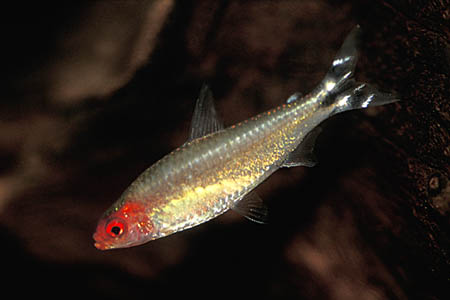
Petitella georgiaeFalse Rummy-nose
Characidae · authority not recorded
This is one of three species commonly sold under the name "rummy-nose tetra". The commonest of these is the firehead tetra, Hemigrammus bleheri, whilst the "true" rummy-nose is Hemigrammus rhodostomus. All three are very similar in appearance, but can be distinguished by several factors. The first is by the extent to which the red colouration on the head of the fish extends into the body. H. bleheri is the only one of the 3 in which the red extends beyond the gill covers. ...
Phractocephalus hemioliopterusRed-tail Catfish
Pimelodidae · authority not recorded
Although this profile has been included for information purposes, we do not recommend keeping this species in the home unless you are one of the select few with the facilities available to house it for life. The aquarium dimensions quoted above should be considered an absolute minimum and in reality this fish requires a phenomenal volume of water if it is to be housed long term. Unfortunately, the price of red-tails has fallen considerably in recent years and "kittens" are readily a...
Potamotrygon hystrixPorcupine Stingray
Potamotrygonidae · authority not recorded
P. hystrix is sometimes sold as P. sp. "C", and is much sought after in the hobby. The species is usually recommended as a good beginners' ray due to its relatively small adult size. However due to current Brazilian legislation regarding the export of rays it's almost never available at present, and tends to command a high price when it is. The fish sold as hystrix in the trade are almost always Peruvian in origin and erroneously labelled. We've seen P. humerosa, P. yep...
Potamotrygon orbignyiSmooth-back Stingray
Potamotrygonidae · authority not recorded
P. orbignyi is one of the species often labelled as "teacup ray" in dealers' tanks. It can be tricky to identify when young, and we have seen it misidentified on numerous occasions. The species it resembles most closely is P. humerosa, although these can be distinguished by examining the skin of the fish. The texture of this is typically rough in P. humerosa and noticeably smooth in P. orbignyi. Provided you're sure what you're buying, it is one of the best species for t...
Potamotrygon sp. "pearl"Pearl Ray
Potamotrygonidae · authority not recorded
This undescribed species must rank among the most jaw-dropping freshwater fish yet seen in the hobby. A good-sized adult makes a truly incredible sight. Unfortunately due to the current ban on ray exports from Brazil it is almost unobtainable and correspondingly expensive when it is. The handful of captive-bred specimens released each year can cost up to £1000 each, and we know of only a single breeder in the UK. The patterning of this "species" is highly variable, with...
Protopterus annectens annectensAfrican Lungfish
Protopteridae · authority not recorded
Lungfish are among the most intriguing of "oddball" aquarium subjects, being able to survive in the most extreme conditions. They are very ancient fish, having remained virtually unchanged for millions of years. The natural habitat of P. a. annectens is wet for only part of the year and the fish has developed several incredible adaptations in order to counteract this. When the waters begin to recede, the fish will find a suitable nesting site, usually amongst heavy vegetation. Here...
Pseudanos trimaculatusThree-spot Headstander
Anostomidae · authority not recorded
This species was formerly known as Anostomus trimaculatus and this name is still used in much of the available literature. It is now invalid, however. The genus Pseudanos contains 3 other known species, P. gracilis, P. irinae and the recently described P. winterbottomi. Care for these species is as for P. trimaculatus....
Pseudocrenilabrus multicolorDwarf Egyptian Mouth-brooder
Cichlidae · authority not recorded
This species was one of the first cichlid species to be spawned in captivity and has been in the hobby for over a century. It is less popular than it once was but remains a good choice for the beginner as it is tolerant of a wide range of water conditions and is easily bred. There currently exist 2 subspecies, Pseudocrenilabrus multicolor multicolor and P. m. victoriae. These are quite distinct in terms of colouration and patterning and exist as separate populations in nature. Both subspecie...
Pseudogastromyzon laticeps
Balitoridae · authority not recorded
It appears that this species has not yet appeared in the western hobby, probably because commercial fish collections don't normally take place in its native waters although the goby Rhinogobius zhoui has been available occasionally. We're unable to provide details of distinguishing characters since no diagnostic key to the genus exists in English at time of writing, but based on the images available it does appear to possess reddish dorsal and caudal fins. The specimens pictured were i...
Pseudogastromyzon myersi
Balitoridae · authority not recorded
This species is traded under various vernacular names including 'Chinese hillstream loach', 'Chinese butterfly plec' and 'Hong Kong Otocinclus. It's the commonest member of the genus in the hobby but has been frequently misidentified as the congener P. cheni in the past with the two often said to be indistinguishable in terms of colour pattern. Some sources additionally suggest the sole defining external character to be that in P. cheni the distance between the resp...
Pseudomystus siamensisAsian Bumblebee Catfish
Bagridae · authority not recorded
This species was formerly included in the genus Leiocassis, and is still referred to as such in a great deal of the available literature. The current genus Pseudomystus contains many similarly patterned species, some of which may be being imported and sold as P. siamensis. Its commonly encountered congener is P. stenomus, but this can be plainly distinguished by its lack of "bumblebee" patterning. The Asian bumblebee can also be easily told apart from the South American Pimelodid &q...
Pseudomystus sp. cf stenomusFalse Asian Bumblebee Catfish
Bagridae · authority not recorded
This fish is usually imported as Pseudomystus stenomus but actually seems to be an undescribed species, as it's collected from the Malay Peninsula. P. stenomus is endemic to the island of Java and supposedly exhibits a higher degree of light-coloured patterning on the body. The genus Pseudomystus contains many similarly-patterned species, of which the most common in the hobby is the Asian bumblebee catfish, P. siamensis. This can easily be distinguished from P. sp. cf stenomus by its cha...
Pseudoplatystoma fasciatumBarred Shovelnose
Pimelodidae · authority not recorded
It's debatable as to whether this species should be considered an aquarium subject at all, given its eventual size. All too often juveniles are sold without adequate information regarding their long term care. These cats can and will attain something close to their maximum size in captivity, and will do so quite quickly. The myth that they will only grow to match the size of the tank they're kept in is just that - a myth. It's also worth noting that species such as this can live f...
Pseudoplatystoma tigrinumTiger Shovelnose
Pimelodidae · authority not recorded
It's debatable as to whether this species should be considered an aquarium subject at all, given its eventual size. All too often juveniles are sold without adequate information regarding their long term care. These cats can and will attain something close to their maximum size in captivity, and will do so quite quickly. The myth that they will only grow to match the size of the tank they're kept in is just that - a myth. It's also worth noting that species such as this can live f...
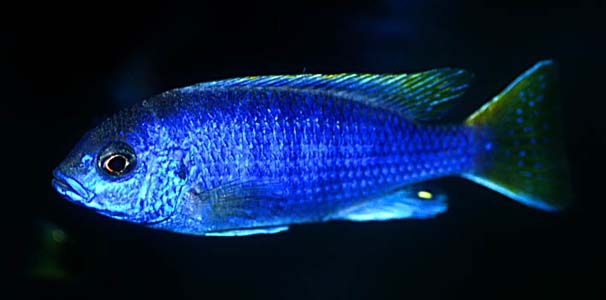
Pseudotropheus sp. 'acei'
Cichlidae · authority not recorded
This is an excellent beginner's species as it is relatively peaceful and easily bred. Despite being undescribed to science it is widely available in the hobby. It is sometimes sold as Gephyrochromis acei. Several colour forms are available, including "yellow tail acei" and "white tail acei". None of these should be kept together in aquaria to prevent hybridisation. In nature it feeds specifically on algae and other organisms growing on submerged wood, and is the only ...
Pterophyllum altumAltum Angel
Cichlidae · authority not recorded
Altum Angels are a lot less common in the trade than their well known (arguably the best known tropical fish) relatives Pterophyllum Scalare, the common Angelfish. However, they are still available from some of the better tropical fish suppliers. They are a challenge to keep - they share all of their relatives' difficulties (susceptible to hole-in-the-head disease, very weak to nitrate buildups, extremely prone to stress-related diseases, commonly eat their own spawns etc.) and have a fe...
Rasbora borapetensisRed-tailed Rasbora
Cyprinidae · authority not recorded
R. borapetensis is one of the more commonly-encountered rasboras in stores and is particularly recommended for newcomers to the hobby. While it can appear a little plain or 'washed' of colour when seen on sale once settled and in good condition it is an eye-catching little fish that often schools quite closely. It's sometimes sold with the alternative trade names of black-line or magnificent rasbora. R. rubrodorsalis is a very similar-looking congener that occurs sympatrically...
Rasbora caudimaculataGreater Scissortail Rasbora
Cyprinidae · authority not recorded
This striking species may also be seen on sale with the trade name of 'red scissortail'. It can be distinguished from the similar-looking R. trilineata by the presence of orange/red colouration in the with other diagnostic features including black tips to the caudal lobes, 11-12 predorsal scale rows and a dark reticulated pattern to the edges of the scales. The 'scissortail' moniker is derived from the characteristic twitching motion of the when the fish is at rest. Rainb...
Rasbora cephalotaeniaPorthole Rasbora
Cyprinidae · authority not recorded
This species is not often exported which is a shame as it makes an elegant, peaceful resident of the larger community tank. It can be easily distinguished from similar-looking congeners such as R. einthovenii and R. jacobsoni by examining the dark lateral stripe that extends lengthways along the body of the fish as in R. cephalotaenia it is composed of a series of dark spots whereas in the other species it forms a continous solid line. Rainboth's 'Fishes of the Cambodian Mekong'...
Rasbora cf. dandia
Cyprinidae · authority not recorded
This fish may well be a form of R. dandia itself but in the absence of scientific confirmation we list it with a 'cf' abbreviation for the time being. It appears to be widely available in the trade but is often (mis)identified as R. wilpita, a species now confirmed as endemic to a small number of streams in Sri Lanka and which is probably much rarer in the hobby than previously thought. Valenciennes initially described Leuciscus dandia as a new species from Sri Lanka in 1844 but the...
Rasbora einthoveniiBrilliant Rasbora
Cyprinidae · authority not recorded
This is one of the more commonly-seen rasboras in the hobby and is ideal for the medium-sized community set-up. It shares some close similarities with R. jacobsoni but can be most easily identified by the fact it lacks dark reticulated scales above the lateral stripe. This stripe also has noticeably more uneven or "crinkly" edges in R. einthovenii than in R. jacobsoni or indeed any other species of laterally-striped Rasbora. A further distinguishing combination of characters for both t...
Rasbora elegansElegant Rasbora
Cyprinidae · authority not recorded
This species is not especially popular in the hobby and is only infrequently seen on sale. It is clearly distinguishable from similar-looking members of the genus by lacking a dark stripe along the lateral line. Instead it possesses two spot-like markings on each flank, one below theorigin and lateral line and another at the caudal peduncle. The intensity of these can vary depending on the collection locality of the fish and they can be quite faint in some forms. There is also a third, smaller m...
Rasbora kalochromaClown Rasbora
Cyprinidae · authority not recorded
R. kalochroma exhibits variable patterning across its range according to locality with some forms possessing a line of spot-like markings connecting the two dark blotches on the flanks and others more intense body colouration. Juveniles are sometimes confused with Boraras maculatus and adults with the similarly-patterened R. elegans although the latter is easy to identify by its overall silver, as opposed to pinkish/reddish, colouration. The only congener for which it may be genuinely mistake...
Rasbora kottelati
Cyprinidae · authority not recorded
It is unclear if this species has been available in the aquatic trade as collections from its native waters only occur sporadically, therefore we have based much of the information here on experience with its closest relative R. kalochroma. These two are almost identical in appearance and share some meristic features but R. kottelati possesses an additional, oval-shaped dark blotch on the caudal peduncle, lacks the stripe in the middle of the seen in R. kalochroma and is consequently easy to dis...
Rasbora lacrimulaRed Cherry Rasbora
Cyprinidae · authority not recorded
This species is also traded as 'Bornean redfin rasbora', 'sunshine rasbora' and 'dwarf volcano rasbora' and first appeared in the hobby during the latter part of 2010. It can be told apart from all other members of the genus by a combination of the following characters: possession of small tubercules on the dorsal surface, posterior to theand continuing onto the upper part of caudal fin, visible as an irregular 'crest' when a specimen is viewed laterally; ...
Rasbora paucisqualis
Cyprinidae · authority not recorded
Rainboth's 'Fishes of the Cambodian Mekong' characterised members of Rasbora by possession of an unbranched, non-spiny firstray and seven soft dorsal rays, origin of thein the middle of the body, five branchedrays, a small mouth not extending below the eye and a lack of barbels. It's long been recognised as a polyphyletic lineage as noted by Kottelat (1999) amongst others, and in 2010 the results of a phylogenetic analysis by T. Y. Liao et al. suggested a number of changes in...
Rasbora paviana
Cyprinidae · authority not recorded
In much of the literature this species is pictured with the invalid name R. paviei, due to an issue with spelling which was corrected by Kottelat (2005), and the common name 'sidestripe rasbora' although the latter has yet to find popularity in the aquarium hobby. There are a number of similar-looking species including R. sumatrana, R. hobelmani and R. laticlavia and it can be problematic to separate members of this 'group'. If the collection locality of the fish is known ide...
Rasbora rasboraGangetic Scissortail Rasbora
Cyprinidae · authority not recorded
This species is rarely seen in the trade and little has been written regarding its captive care. It's possible that several colour forms may exist depending on collection locality. Rainboth's 'Fishes of the Cambodian Mekong' characterised members of Rasbora by possession of an unbranched, non-spiny firstray and seven soft dorsal rays, origin of thein the middle of the body, five branchedrays, a small mouth not extending below the eye and a lack of barbels. It's long b...
Rasbora rubrodorsalis
Cyprinidae · authority not recorded
R. rubrodorsalis occurs sympatrically with the very similar-looking R. borapetensis over some of its natural range but is much the rarer of the two in the aquarium hobby. They are easily distinguishable from one another because R. rubrodorsalis has a bright red blotch in thewhilst in R. borapetensis the dorsal is colourless and only the base of the is coloured red. This species is sometimes sold under the erroneous name(s) R. beauforti or R. sp. cf. beauforti, probably because it was picture...
Rasbora sarawakensis
Cyprinidae · authority not recorded
R. sarawakensis is poorly-documented in the aquarium literature and we're not even sure if it has been exported for the hobby although it may be worth looking out for among shipments of wild fish from southern/western Borneo. We find this a little odd as it is an attractive, very peaceful little fish that would suit many home aquaria and is apparently quite common across its natural range. Rainboth's 'Fishes of the Cambodian Mekong' characterised members of Rasbora by poss...
Rasbora trilineataScissortail Rasbora
Cyprinidae · authority not recorded
This popular species is also known as the 'three-lined' rasbora and provided a large enough tank is available it is an excellent choice for those new to the hobby. The 'scissortail' moniker is derived from the characteristic twitching motion of the when the fish is at rest. It can be distinguished from the similar R. caudimaculata by lacking red colouration in the and from R. spilocerca by its much larger size. Several geographical forms appear to exist as some wild populatio...
Rasbora vulcanus
Cyprinidae · authority not recorded
This species was described in 1999 and may still occasionally be seen on sale under the incorrect names R. reticulata or R. cf. reticulata as well as the trade name 'volcano rasbora'. The real reticulata is endemic to the small island of Nias which lies off Sumatra's northwestern coast and is virtually inaccessible to fish collectors so is unlikely to be in the hobby although it may have been exported on a couple of occasions. It's a deeper-bodied fish and does not exhibit th...
Rasbosoma spilocercaDwarf Scissortail Rasbora
Cyprinidae · authority not recorded
This miniature look-a-like of the popular Rasbora trilineata is rarely seen in the aquatic hobby, probably as a result of its relatively plain patterning and rather delicate nature. However if a group is well looked-after they will exhibit some interesting behaviour and surprising colour. As it also makes an ideal resident of the ornamental planted aquaria that are currently so popular in the hobby we'd love to see it become more widely-available. The genus is currently monotypic and dis...
Rineloricaria lanceolataWhiptail Catfish
Loricariidae · authority not recorded
One of the most common of the numerous species sold as 'whiptail catfish', R. lanceolata is an excellent species for the newcomer to Loricariids or catfish breeding. It's certainly not the most active species, but when settled and housed with the correct kind of tankmates is by no means shy either....
Salminus brasiliensisDorado
Characidae · authority not recorded
The common name of this species is derived from the Portugese dourado and refers to the beautiful golden colour of the fish. We've included this species on the site purely because there have been an alarming number of juvenile fish showing up in some aquatic stores and, as a result, in hobbyists tanks. This species is simply not suited to captive life in any respect. If you see one for sale, and they are undeniably an attractive fish, please don't be tempted to buy it. As responsib...
Scleropages leichardtiSpotted Australian Arowana
Osteoglossidae · authority not recorded
Although S. leichardtii superficially resembles its Asian cousins, it is not considered as desirable an aquarium inhabitant, nor is it classed as being at risk in nature. It can be easily distinguished from the asian species by its much smaller scale size, greater lateral scale count (32-35 as opposed to 21-25 in the asian aros) and duller patterning. It differs from its Australian relative S. jardinii by its spotted scales, forward-pointing barbels, lack of sloping head and unpatterned gill cov...
Serrasalmus elongatusPike Piranha
Serrasalmidae · authority not recorded
S. elongatus is known as "Caribe Pinche" in its native countries and is a rare find in the trade, tending to be quite expensive as a result. Individuals seem to vary in personality. While some are particularly fearless and will actively chase and attempt to bite hands or fingers placed in or up against the aquarium, others will always appear to be shy and nervous. The streamlined body form that gives rise to the species name is unique among serrasalmids, and has probably developed as a...
Serrasalmus geryiGéry's Pirambeba
Serrasalmidae · authority not recorded
S. geryi is sometimes sold as the "violet-line piranha" in reference to the unusal purple stripe that runs from the base of the lower jaw over the top of the body. It makes a stunning aquarium fish as it also possesses highly reflective scales, deep orange/red eyes and a compressed, high-bodied shape. Far from widespread in nature or the hobby, it tends to be pricey and highly sought-after when available. There are currently 24 described species of Serrasalmus, many of which look s...
Serrasalmus maculatusMac
Serrasalmidae · authority not recorded
S. maculatus is one of the better choices for aquarists new to this group of fishes. It grows to a manageable size, is relatively hardy, attractive and usually quite inexpensive. It's sometimes referred to by the alternative vernacular names "gold piranha" or "golden mac" in the hobby. There are in excess of 30 described species of Serrasalmus many of which appear superficially similar and have confusing taxonomic histories. S. maculatus and S. spilopleura have often ...
Serrasalmus marginatus
Serrasalmidae · authority not recorded
There are currently 24 described species of Serrasalmus, many of which look superficially similar. S. marginatus has at various times been considered a synonym of S. rhombeus and S. humeralis, but is currently considered to be distinct. It's main distinguishing feature is usually given as the thick, black, v-shaped marking in the anterior portion of the caudal fin. Juveniles are said to differ from similar-looking species such as S. compressus and S. altuvei because the dark body "spot...
Serrasalmus rhombeusBlack Piranha/Rhom
Serrasalmidae · authority not recorded
There are in excess of 30 described species of Serrasalmus many of which appear superficially similar and have confusing taxonomic histories. S. rhombeus is among the most convoluted of all with numerous synonyms of which S. niger is the most well-known. There has also been a muddle surrounding the common names "white" and "black" piranha, both of which have been used to describe the species. Of greater interest to both scientists and hobbyists has been the discovery of n...
Serrasalmus sancheziSanchez's Piranha
Serrasalmidae · authority not recorded
There are currently 24 described species of Serrasalmus, many of which look superficially similar. S. sanchezi has frequently been confused with S. spilopleura in the past, and is sometimes still sold as "Spilo cf" or "Ruby-red Spilo". It actually appears to be more closely related to S. rhombeus or S. irritans than S. spilopleura. The characteristic red throat has also led to it being confused with S. medinai and even the red-bellied piranha Pygocentrus nattereri on occasion...
Serrasalmus serrulatus
Serrasalmidae · authority not recorded
There are currently 24 described species of Serrasalmus, many of which look superficially similar. S. serrulatus occupies a particularly confusing taxonomic position and is very tricky to identify positively. According to scientific literature it is very close in appearance to several congeners, most notably S. eigenmanni, S. hollandi, S. humeralis and S. nalseni. The separation of these is largely based on geographical range and it's possible that some of them may turn out to be synonymous...
Sorubim limaDuckbill Catfish
Pimelodidae · authority not recorded
This species is also known by the vernacular names "Hockey Stick Catfish", "Lima Shovelnose", "Chiripira", "Chucharón" and "Pico de pato". The genus Sorubim currently contains five recognised species. Of the others S. cuspicaudus is recorded from the parts of the Rio Essequibo, Rio Orinoco, Amazon and Lake Maracaibo basins, S. elongatus from the Rio Essequibo, Rio Orinoco Rio Mamore and Amazon and S. maniradii from the mid-to-upper Amaz...
Squaliforma cf. emarginataRed Fin Thresher Plec
Loricariidae · authority not recorded
This attractive species is often seen for sale at around 3-4" in length (often as Hypostomus cf. emarginata or H. emarginatus), but given its adult size, its not a terribly good choice for the general community tank. Due to its very wide natural distribution, there are a number of known geographical variants, and this has resulted in four L numbers currently being assigned to it. In reality, there are many more variants than this, and all share the characteristic elongated which gives rise...
Steatocranus tinanti
Cichlidae · authority not recorded
S. tinanti has a confused taxonomic history, having been previously classified in the genera Gobiochromis and then Leptotilapia, before being assigned to Steatocranus. Further taxonomic revision is likely, as it exhibits both behavioural and morphological differences to other species in the genus. It is a reophilic fish, meaning it inhabits fast waters. Its swimbladder is relatively small to reduce buoyancy and thus prevent it from being swept away by the strong currents in its natural habita...
Sundadanio axelrodi
Cyprinidae · authority not recorded
This species was initially described as Rasbora axelrodi and is referred to as such in older literature, but in 1999 was moved into the new genus Sundadanio where it remains the monotype. Its wider placement within the family Cyprinidae is still not fully resolved. Following Rüber et al. (2007) it is most closely-related to the miniature species of the genus Paedocypris, the two genera characteristically lacking bones in the roof of the skull as well as exhibiting genetic similarities. Howe...
Synodontis nigriventrisUpside-down Catfish
Mochokidae · authority not recorded
One of the commonest Synos seen for sale, S. nigriventris is occasionally confused with S. contractus. However, on close inspection the species are easy to tell apart as S. nigriventris lacks the large head and mouth and larger eye of S. contractus. The scientific name nigriventris refers to the fact that the belly of this fish is darker than the dorsal area. This is a form of camouflage, making the fish harder to spot by predators above, such as predatory fish, birds etc. It is a basic re...
Taenioides cirratusBearded Worm Goby
Gobiidae · authority not recorded
Something for the true oddball enthusiast, this bizarre looking goby has been imported at least once over the last few years. It's a mud-burrowing species that digs networks of sloping tunnels in the substrate in nature. Apparently each series of burrows has several openings, one of which has a mound outside. According to Itani and Uchino (2003), this mound suggests that the fish "actively process sediment". Even more odd is its appearance (see picture). It has greatly reduced eye...
Tetraodon baileyiHairy Puffer
Tetraodontidae · authority not recorded
Puffer fish are so called as they have the ability to inflate their elastic stomachs with water or air. This is usually a response to some kind of threat, although in the aquarium many specimens appear to inflate themselves for no apparent reason. The fish becomes 2 or 3 times it's normal size, which makes the fish both big enough to scare away many potential predators, and difficult to swallow. Many parts of the body of puffers contain the deadly neurotoxin tetrodoxin. This is the same ...
Tetraodon lineatusFahaka Puffer
Tetraodontidae · authority not recorded
Puffer fish are so called as they have the ability to inflate their elastic stomachs with water or air. This is usually a response to some kind of threat, although in the aquarium many specimens appear to inflate themselves for no apparent reason. The fish becomes 2 or 3 times it's normal size, big enough to scare away many potential predators, or difficult to swallow. Puffers are also one of the few fish that can actually blink or close their eyes. Many parts of the body of puffers cont...
Tetraodon suvattiiArrowhead Puffer
Tetraodontidae · authority not recorded
Puffer fish are so called as they have the ability to inflate their elastic stomachs with water or air. This is usually a response to some kind of threat, although in the aquarium many specimens appear to inflate themselves for no apparent reason. The fish becomes 2 or 3 times its normal size, big enough to scare away many potential predators, or difficult to swallow. Puffers also have several other interesting adaptations. They are one of the few fish that can actually blink or close their ...
Thalassophryne amazonicaPrehistoric Monster Fish
Batrachoididae · authority not recorded
There are currently six described species in the genus Thalassophryne, of which T. amazonica is the only freshwater representative. The others (T. nattereri, T. maculosa, T. megalops, T. montevidensis and T. punctata) are all estuarine animals distributed along the western Atlantic coastlines of Central and South America and inhabit brackish-to-marine waters. They are members of the family Batrachoididae or toadfishes, of which most are exclusively marine species. All batrachoidids are ambush pr...
Thayeria boehlkeiFalse Penguin Tetra
Characidae · authority not recorded
There are only three species in the genus Thayeria, of which T. boehlkei is by far the most popular in the hobby. Of its congeners, it was the type species T. obliqua that was originally given the common name of "penguin" fish or tetra, although T. boehlkei is usually sold under the same name (we've also seen it on sale as "hockeystick" tetra). The two are easy to tell apart, as in T. boehlkei the thick black stripe extending from the lower lobe of the travels laterally ...
Thayeria ifatiHalf-striped Penguin Tetra
Characidae · authority not recorded
There are only three species in the genus Thayeria, of which T. ifati is the least often seen in the hobby. This is a shame as it's a very pretty little fish. The holotype was collected from the upper Rio Maroni, close to the settlement of Gaa Kabaon on the French Guiana/Suriname border by the famous ichthyologist Jacques Géry in 1957. Géry also described the species in 1959. Of its congeners, it was the type species T. obliqua that was originally given the common name of &quo...
Thayeria obliquaPenguin Tetra
Characidae · authority not recorded
There are only three species in the genus Thayeria, of which Thayeria boehlkei is by far the most popular in the hobby. This is a shame, as T. obliqua is an equally attractive fish. It is the type species of the genus and was the original "penguin" fish or tetra, although Thayeria boehlkei is now usually sold under this name. T. sanctaemariae, described by Ladiges in 1951 is now classed as a synonym of T. obliqua. The species are easy to tell apart, as in Thayeria boehlkei the thic...
Theraps bocourtiChisel-tooth cichlid
Cichlidae · authority not recorded
A rather elusive species in the hobby, this beautiful cichlid is sometimes referred to as the "Chisel-toothed" cichlid. Despite being described in 1902 it was not until the mid-1990s that it appeared in the aquarium trade, wild specimens being collected by American aquarists Ross Socolof, Harry Specht, and Rusty Wessel in 1994....
Trichogaster fasciataBanded Gourami
Osphronemidae · authority not recorded
This species is a popular food fish in it's native countries. It is not often seen for sale these days, although it is both beautiful and peaceful. The alternative common name of 'Giant Gourami' is not particularly apt, although it is the largest species in the genus. Like others in the suborder Anabantoidei, the species possesses an accessory breathing organ known as the labyrinth organ. So-called due to its maze-like structure, this organ allows the fish to breathe atmospheri...
Trichogaster laliusDwarf Gourami
Osphronemidae · authority not recorded
The Dwarf Gourami is one of the most ubiquitous freshwater species in the aquarium hobby, and is unarguably a beautiful fish. Several colour forms have been line-bred for the trade and have also proved popular. These include "Sunset" (also sold as "Red" or "Robin") and "Neon" varieties, although it's highly debatable whether these come close to matching the brilliance of the natural form. Unfortunately the general quality of dwarf gouramis availab...
Tropheus brichardi
Cichlidae · authority not recorded
Like others in the genus, Tropheus brichardi is something of an enigma in the aquarium hobby, and is not a good species for the beginner. There has been much arguement and discussion about how best to maintain it in the aquarium, and some of these debates still rage on. We have provided the generally accepted method of keeping the fish, but in reality what works for one aquarist may not for another. One aspect which is always true is that water quality is of the utmost importance in a Tropheus t...
Tropheus duboisiWhite-Spotted Cichlid
Cichlidae · authority not recorded
Like others in the genus, Tropheus duboisi is something of an enigma in the aquarium hobby and despite it's popularity, is not a good species for the beginner. There has been much arguement and discussion about how best to maintain it in the aquarium, and some of these debates still rage on. We have provided the generally accepted method of keeping the fish, but in reality what works for one aquarist may not for another. One aspect which is always true, is that water quality is of the utmos...
Tropheus moorii
Cichlidae · authority not recorded
Like others in the genus, Tropheus moorii is something of an enigma in the aquarium hobby, and despite it's popularity is not a good species for the beginner. There has been much arguement and discussion about how best to maintain it in the aquarium, and some of these debates still rage on. We have provided the generally accepted method of keeping the fish, but in reality what works for one aquarist may not for another. One aspect which is always true, is that water quality is of the utmost...
Uaru amphiacanthoidesUaru
Cichlidae · authority not recorded
A large, peaceful South American cichlid. Uaru can make very interesting aquarium subjects. They require clean, well filtered water on the higher end of the temprature scale. Avoid keeping with overly aggressive fish, Uaru are happiest when kept in groups or pairs....
Variabilichromis moorii
Cichlidae · authority not recorded
V. moorii exists in several geographical morphs but interestingly the only variation in colour occurs in juvenile fish. All adults exhibit a dark patterning but depending on locality the fry may be dark (like adults), yellow or orange with the yellow and orange juveniles taking on the adult colouration as they mature. It is has been observed that the forms which undergo this colour change may 'plant' broods among fry of other species with similarly coloured young, leaving them to be gu...
Vieja bifasciataRed-spotted Cichlid
Cichlidae · authority not recorded
Vieja bifasciata are often confused for vieja synspilum but can be told apart as bifasciata have two prominent horizontal lines running between their eyes (hence the name). They are a very colourful fish and respond to their owner's presence - usually looking for food! Bifasciata are not particularly demanding in terms of water parameters and easy to keep, especially if suitable tankmates can be found. It is sometimes the case that a pair of fish that will not live together in a tank on ...
Vieja reganiRegan's Cichlid
Cichlidae · authority not recorded
An attractive, if uncommonly seen cichlid. In common with many Central American cichlids, these fish can pose in a challenge in terms of accomodation and it not uncommon to end up having to house these fish individually. Previously described as cichlasoma regani, it is still occasionally sold under this name.
Vieja synspilaRedhead Cichlid
Cichlidae · authority not recorded
Widely and incorrectly referred to as vieja synspillum, this colourful fish is the most commonly available of the vieja species to the hobby. Although not as aggressive as some of its family, it is still a fish to treat carefully. It can be found in mildly brackish waters in its natural range but this is not recommended or required in captivity....
Vieja zonataOaxaca Cichlid
Cichlidae · authority not recorded
A hardy and easy to keep cichlid, albeit a moderately aggressive one. Rarely available in aquatic stores, this fish is occasionally available through specialist cichlid dealers.
Wallago leeriiStriped Wallago Catfish
Siluridae · authority not recorded
Wallago are fearsome predatory catfish that are fairly widespread in southeast Asia. There are currently five recognised species, W. attu, W. leerii, W. hexanema, W. maculatus and W. micropogon. The latter was described to science in 2004 by renowned catfish expert Heok Hee Ng and was previously considered to be a geographic variant of W. leerii. All members of the genus possess an enormous mouth full of backward pointing teeth, which are used to rip chunks from their prey. Smaller fish or amphi...
Craterocephalus stercusmuscarum stercusmuscarumFly-specked Hardyhead
Atherinidae · authority not recorded
A rarely seen species in the trade, although it's kept quite often by Australian hobbyists. Members of this genus are thought to have a more ancient association with Australian freshwaters than most others found in these habitats. Craterocephalus also contains the most species of any Australian freshwater fish genus. It has been shown that there are quite large genetic differences between groups of the species living in close proximity to each other, and even sharing the same waters. In ...
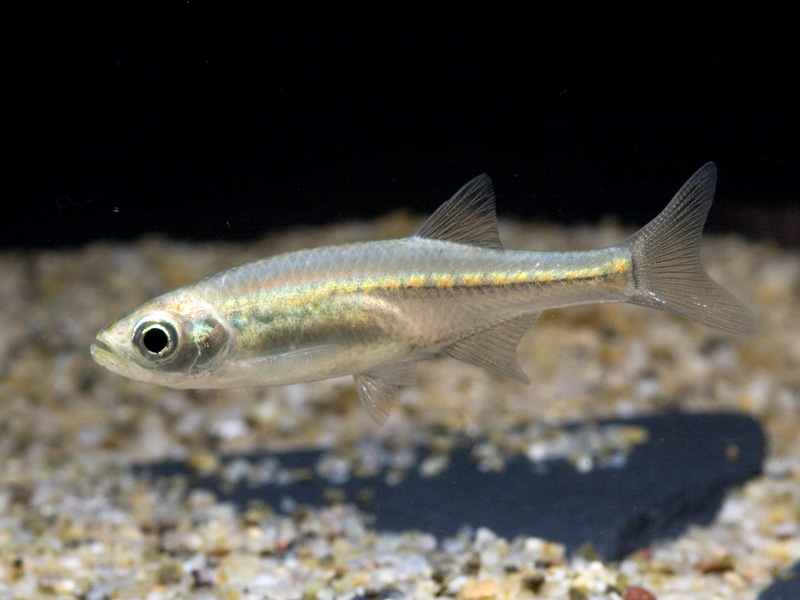
Devario sp. 'purple cypris'
Cyprinidae · authority not recorded
This unidentified species has only appeared in the aquarium trade on a handful of occasions and it has been widely misidentified as Devario jayarami (Barman, 1984). It differs from D. jayarami by possessing 9-10 lateral bars which progressively increase in size posteriorly (vs. 12-13 bars which decrease in size posteriorly), 12 anal-fin rays (vs. 15-16) and a blunter head profile with a lack of convexity behind the head (vs. head profile conical with noticeable convexity behind the head).
Herichthys cyanoguttatusTexas Cichlid
Cichlidae · authority not recorded
Like many cichlids, members of the genus Herichthys share something of a confused taxonomic past. Erected in 1854 with H. cyanoguttatus the type species, its members were moved into Cichlasoma by Regan in 1905. However following a reclassification of Cichlasoma by Kullander in 1983 it was once again deemed valid. In 1996 Kullander suggested Herichthys should only contain species "sharing a colour pattern of short vertical bars or black spots posteriorly from the middle of the side, and a un...
Ivanacara adoketaZebra Acara
Cichlidae · authority not recorded
This species was previously included in the genus Nannacara before being moved to the newly-erected taxon Ivanacara by Römer and Hahn (2006)....
Polypterus weeksiiMottled Bichir
Polypteridae · authority not recorded
P. weeksii is one of the "upper-jawed" tribe of polypterids so named on account of the upper jaw being longer than or equal in length to the lower jaw. It is one of the rarer bichir species in the hobby. Like other bichirs it is an incredibly hardy, nocturnal species with very poor vision, relying on its excellent sense of smell to locate food. This species along with others of its genus are some of the last surviving relatives of very ancient species. Fossils of earlier relatives have...
Potamotrygon castexiOtorongo Ray
Potamotrygonidae · authority not recorded
In Brazil P. castexi is currently banned from export, although it can still be legally obtained from other countries. There's a high level of polychromatism (differences in colour and pattern) displayed by this species, and in the hobby some of the colour forms have been given distinguishing names. Below is a list of some of the commoner varieties, along with some defining characteristics: Otorongo Ray (also known as "Jaguar" Ray, P25, P26, P28 or P35): This popular variant has...
Potamotrygon henleiBlack Stingray
Potamotrygonidae · authority not recorded
P. henlei is one of the more sought after ray species in the hobby due to its striking colours and impressive adult size. A fully grown one of these makes a stunning sight. Sadly exports from Brazil are now illegal under the IBAMA regulations, although captive bred fish are available occasionally. The price tends to be very expensive as a result. The species exists in various colour forms, with either white or yellow spots and a background colour varying between black and dark brown. The patt...
Potamotrygon yepeziMaracaibo River Stingray
Potamotrygonidae · authority not recorded
This species is often confused with P. reticulata, P. humerosa and P. scobina. Such specimens are usually imported and sold as "teacup" stingrays and it is important to correctly identify what you are buying. There is also a ray sold as P. sp. "Nazca" that is often said to be P. yepezi; unlikely given that it is imported from Peru. This latter fish is one of the commonest rays seen in the trade and is usually quite reasonably priced, making it a good choice for newcomers to k...
Serrasalmus altuveiAltuvei
Serrasalmidae · authority not recorded
S. altuvei is very scarce in the hobby, most commonly being found among imports of juvenile S. rhombeus (the type species of the genus). It's also known as the "Caribe azul" or "blue caribe" in the trade. There are currently 24 described species of Serrasalmus, many of which look superficially similar. This one is considered a member of the "compressed group". This grouping of morphologically similar species currently comprises S. altuvei, S. geryi, S. compress...
Serrasalmus manueliManny
Serrasalmidae · authority not recorded
The native name for this species is Caribito Parguasero. It's sometimes sold as the "green tiger piranha" in the trade and is usually highly coveted and expensive when available. A notoriously sensitive traveller, mortality rates are sadly quite high among imported fish. The lack of fully-grown specimens known to the hobby is also a worry, and would suggest that the majority are not being maintained correctly. This really is a species for the specialist with the resources necessar...
Silurus glanisWels catfish
Siluridae · authority not recorded
Juvenile specimens are occasionally available in the aquarium trade but this species is clearly not a viable subject for the vast majority of private aquarists. While it's considered a sport fish in some countries (France, Italy, Spain, UK) it's flesh and eggs are considered a delicacy in others (Hungary, Poland, Slovakia, Lithuania) and its skin is also used in the manufacture of leather and glue. The family Siluridae comprises those catfsh species commonly referred to as freshwate...
Ctenochromis polli
Cichlidae · authority not recorded
...
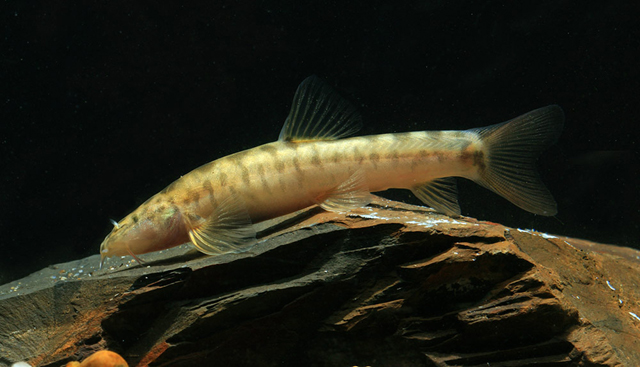
Schistura jarutanini
Nemacheilidae · Kottelat, 1990
This species' conservation status clearly precludes its suitability as an aquarium fish so it's included here for reasons of interest only. It's protected by Thai national law and illegal to remove from its habitat. Species exhibiting morphological, physiological or behavioral adaptations to a subterranean existence are often referred to as troglomorphic.
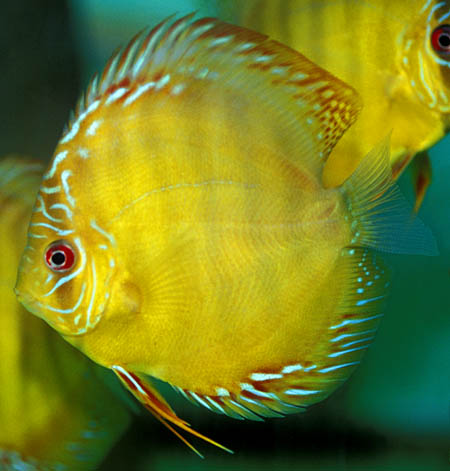
Symphysodon aequifasciatusDiscus
Cichlidae · Pellegrin, 1904
Symphysodon aequifasciatus
Channa stewartii
Channidae · authority not recorded
Channa stewartii
Vanmanenia hainanensis
Balitoridae · authority not recorded
Vanmanenia hainanensis